
Policing the Womb
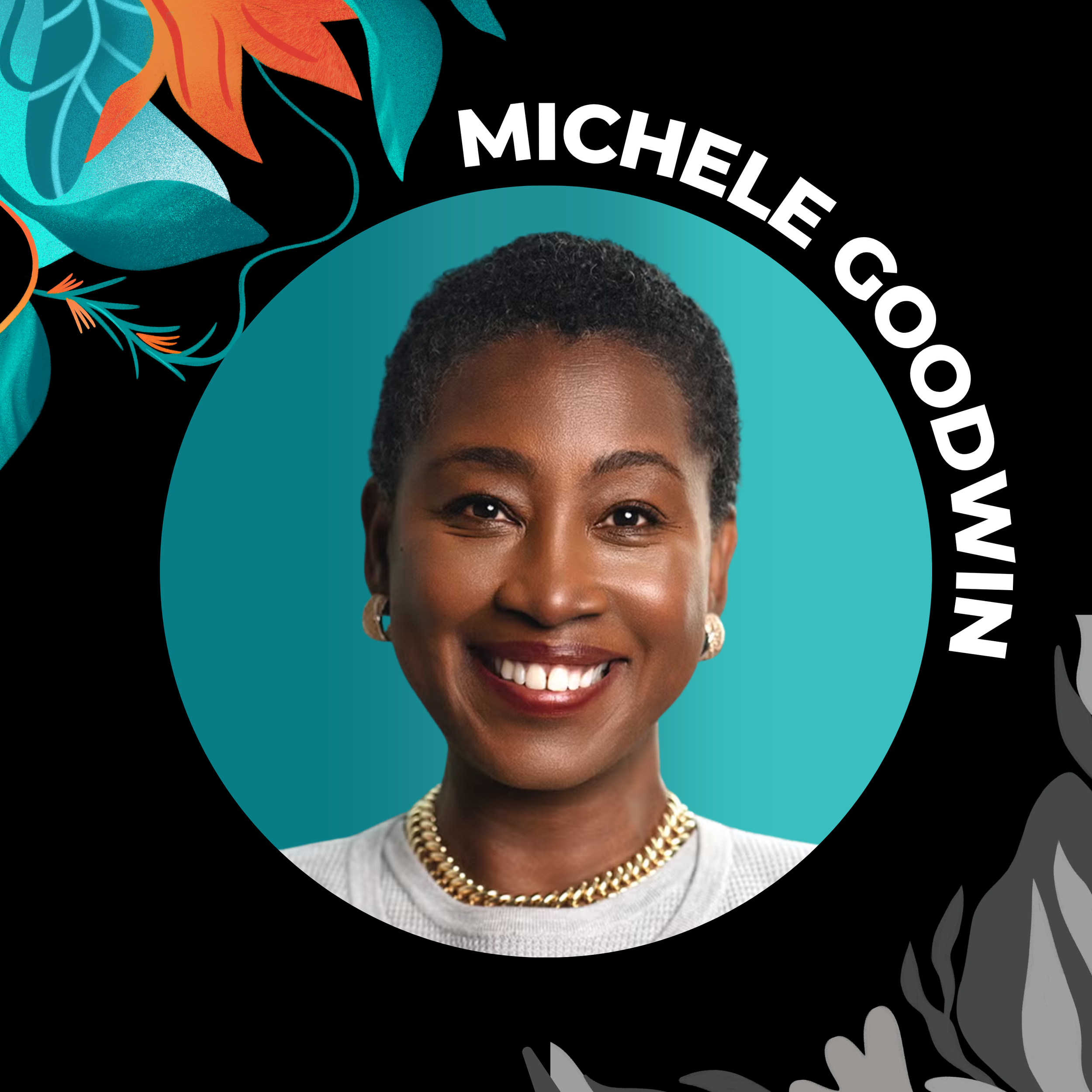



Low-fertility alarmism is rampant in many countries. Who is and isn't encouraged to reproduce has always been a question of power in the US. Legal scholar Michele Goodwin traces a disturbing lineage from the forced breeding of enslaved women and the sterilization of primarily poor white women deemed genetically unfit to the very different reproductive choices available to women on the basis of race and class. She reveals how reproductive rights in the Roe era came to focus on abortion rights and failed to address broader reproductive injustices, especially the use of state power to police the wombs of Black and brown women. Highlights include:
How Michele's visits to her relatives in the Deep South of the US in the 1970s, and seeing their lack of basic necessities like clean water or indoor plumbing, heightened her desire to address social injustice;
How US pronatalism up until the Civil War was characterized by promoting reproduction of the enslaved girls and women for the sake of increasing the value of property;
How the practice of 'hypodescent', or the one drop rule, in the US of determining blackness, allowed for the systematic and ongoing rape of Black women, while guaranteeing all their children remain property as slaves;
How following the US Civil War, a fear of newly freed African Americans outnumbering the white population led to the implementation of coercive pronatalist policies pushing reproduction among white women;
Why, with restrictive Jim Crow laws that maintained the low status of African Americans as the servant class, early 20th century eugenics, as marked by forced sterilization laws in the majority of US states, was primarily directed at poor white people deemed genetically unfit;
How both Jim Crow laws and eugenics practices in the US became the primary models for Nazi Germany;
How Michele's travels to India revealed the severe limitations on reproductive freedom of young women, with many resorting to becoming child brides, prostitutes, or gestational surrogates for survival;
How Black women's pregnancies during the half century of Roe V. Wade abortion legality were marked by policing of low-birth weight babies and an assumption of drug use; whereas the mostly white IVF pregnancies and their offspring's low-birth weights were given broad cultural support;
How the reproductive rights movement in the time of Roe became limited to abortion rights, driven primarily by the needs of white women, while ignoring larger issues plaguing Black women, such as lack of availability of sex education, contraception, and cancer screening.
MENTIONED IN THIS EPISODE:
-
Michele Goodwin (00:00):
Right now, we are looking at a pronatalism that very much seeks to put pressure on a certain category of people to reproduce in the United States, and that would be white women. And clearly it is for a political purpose of those who wish to wield power and continue with power, believing that the way towards power is purifying the United States with as much whiteness as possible.
Alan Ware (00:27):
That was Michele Goodwin, American legal scholar of constitutional law, health care, bioethics, and civil liberties. On this episode of the OVERSHOOT Podcast, we discuss the social and legal history in the United States of pronatalism, eugenics, abortion, and reproductive justice, especially within the context of race, ethnicity, and class.
Nandita Bajaj (01:01):
Welcome to OVERSHOOT, where we tackle today's interlocking social and ecological crises driven by humanity's excessive population and consumption. On this podcast, we explore needed narrative, behavioral, and system shifts for recreating human life in balance with all life on Earth. I'm Nandita Bajaj, co-host of the podcast and executive director of Population Balance.
Alan Ware (01:25):
I'm Alan Ware, co-host of the podcast and researcher with Population Balance. With expert guests covering a range of topics, we examine the forces underlying overshoot - the patriarchal pronatalism that fuels overpopulation, the growth-obsessed economic systems that drive consumerism and social injustice, and the dominant worldview of human supremacy that subjugates animals and nature. Our vision of shrinking toward abundance inspires us to seek pathways of transformation that go beyond technological fixes toward a new humanity that honors our interconnectedness with all of life. And now on to today's guest.
(02:05):
Dr. Michele Goodwin is professor of constitutional law and global health policy and co-faculty director of the O'Neill Institute for National and Global Health Law at Georgetown. She is author of the award-winning book, Policing the Womb: Invisible Women and the Criminalization of Motherhood. She's one of the most cited health law scholars in the world and a highly regarded public intellectual with commentaries appearing in the New York Times, Washington Post, The Atlantic, The Nation, The LA Times, Newsweek, Ms. Magazine, and other publications. She has appeared on national news programs broadcasted by NBC, ABC, CBS, MSNBC, NPR, PPS, as well as international news in Europe, Africa, Asia, Canada, Australia, and South America. And now on to today's interview.
Nandita Bajaj (02:57):
Hi, and welcome to the OVERSHOOT Podcast, Michele. It is truly wonderful to have you on the show.
Michele Goodwin (03:03):
Thank you. It is a pleasure to be with you. Thank you so much for having me.
Nandita Bajaj (03:07):
Of course. And Michele, I followed your work through your writing, mainly for Ms. Magazine for some time, and it was such a pleasure to meet you for our discussion with Shoshana Ehrlich recently on the Ask a Feminist podcast, which we ended up republishing on our own podcast. And as you know from our conversation, a big focus of our work is on the millennia-old history of pronatalism, how it became institutionalized with the emergence of patriarchy in the early states and empires, and also its strength and pervasiveness in the modern world. And your work is very complimentary to ours as it provides a rich and essential historical and legal perspective of pronatalism, specifically within US history in terms of who gets encouraged to reproduce and who gets discouraged based on race, ethnicity, and class. And you've spent decades exploring how hierarchies of power operate through our laws and institutions and how those differences in power impact life outcomes, including in reproductive autonomy and also health.
(04:17):
So we're really thrilled to be in conversation with you today, Michele. Thank you again for your work and for being with us. And Michele, we'll start with a little bit of your background. You've been advocating for greater equality and social justice through the law for decades. What were some of the early life experiences that helped create that strong desire for both social and reproductive justice?
Michele Goodwin (04:42):
If we are making our way through this world with the senses that we have, then it's almost impossible not to see, not to experience what inequality and injustice means in this world. So unique or not unique to my own background is the potentiality for us to understand what colonialism means and post-colonialism, what conditions of Jim Crow and Jane Crow mean and how that translates around the world, what systems of slaveries of the various kinds mean. All of those injustices are around us. And then for some of us, it's a question of what stirs in our bellies. I will share that my background was privileged in a number of ways and privileged by a sense of exposure. I had the exposure to the American South as a child through summer visits, which were quite profound in my life. I was born in Wisconsin. I grew up in New York.
(05:47):
I had the privilege of very elite private schools that I attended as a child, but that was balanced against going to Memphis, Tennessee, Mississippi, Alabama, Arkansas during summers and seeing spaces where people had no drinking water, lovely family members who were so warm and gracious and I was so excited to see them, but when the dust settled on the roads and you want drinking water, what comes out is brown and it's not out of a tap because there is no running water, there's no toilet, there's no sink or there's a sink but not with a faucet that is connected. And this is the 1970s, not the 1940s, 50s, 60s, the 1970s in America. And so how do you reconcile that in an America that articulates its power and articulates its financial strength and articulates its equality and articulates all of these different things and you have to try to reconcile that as a child.
(06:51):
Why is it that these people don't have drinking water? Why is there no toilet? I remember every year going back because my great-grandfather lived in Mississippi, one of them, and my maternal grandmother's father. And every year I would wonder, will there be a toilet? I remember being shown the trees, the grass, the yonder and wondering if next year there will somehow be. I mean, there wasn't even an outhouse. So as a child, there are the multiple of things, right? So I'm excited to see relatives because I was an only child, so it's exciting to see people, to see children and people. That's exciting. It's exciting to see people who are so loving and so kind and generous, but then I notice the things that I notice, the fragility of the homes in which they live, strong love, but this is out of what is the fairytale of the three bears and how the houses are built and all of that.
(07:50):
And so how do you reconcile that against the various types of lessons academically that you receive in terms of what our nation represents?
Nandita Bajaj (07:59):
Yeah, I really appreciate you've talked a lot about how you were kind of born to be a sociologist and you've just been observing the juxtaposition of being raised in these two very different settings with two sets of grandparents who had different lives.
Michele Goodwin (08:15):
Very, very different lives. I will say that between my two sets of grandparents, that one set, my paternal grandmother, she took me to the opera, took me to the ballet whenever I would visit her. Classical music was a part of my life from the very beginning and ballet and things like that and opera. I saw those things, which was also a very interesting juxtaposition, a juxtaposition against the stereotype of people of color, this stereotype of people of color in the United States being fastened to that which lacked a sense of culture and appreciation, which of course is just absolutely ridiculous when you think about the myriad cultures from which people of color come and those deep histories of music and the arts and all of that and architecture and that. So these juxtapositions were very informative for me just in terms of the witnessing.
Alan Ware (09:11):
You've written extensively about how pronatalism when backed by state power can be focused on encouraging some groups of people to reproduce while discouraging others. And now we're seeing that play out on the political stage within the US and many Western countries. As the fertility rates are declining, there's growing alarmism over concerns about race suicide or the erasure of western civilization. Meanwhile, the global population is still growing and is expected to surpass 10 billion this century. How has that dynamic of race-based pronatalism played out throughout the US history?
Michele Goodwin (09:48):
It's a great question. So there has been the multiple pronatalisms. Right now we are looking at a pronatalism that very much seeks to put pressure on a certain category of people to reproduce in the United States, and that would be white women. The target is young white women. We hear ridiculous rhetoric about even white young teenagers should be reproducing and thinking about that. And clearly it is for a political purpose of those who wish to wield power and continue with power, believing that the way towards power is purifying the United States with as much whiteness as possible. Now that might sound strange to people, but let's back this up and the multiples. Well, so pronatalism has had multiple forms. So early on after the colonization of the United States and the systems of slavery, which started from the very beginning, there is an interest, and we wouldn't necessarily call it pronatalism, but it is, have as much reproduction as possible amongst individuals who are enslaved.
(10:54):
They are property that can pick your cotton, wash your sheets, fold your bed, build your house, plow the fields, do all of these things. And guess what? You don't have to pay them. And guess what? If you treat them poorly, law will protect your interest and law will fasten these people for generations forward into a classification of property. So hypodescent in the United States, meaning that one drop rule. So long as we can trace any ancestry back to Africa, that means you will forever be enslaved in the United States. And so this is incredibly profitable, this version of a pronatalism. It doesn't align with how we think about it today, but that was very powerful foundational aspect of the United States in terms of how to grow wealth. And Thomas Jefferson wrote about this. He advised people to stock their plantations full of women and girls.
(11:51):
He said because they turn a profit every year or two. And what Thomas Jefferson is referencing is not that this eight-year-old or nine-year-old girl is somehow much stronger than a 32-year-old man in picking cotton. No, what Thomas Jefferson is saying in that is that this eight-year-old will be known in his records and others' records as a breeding wench. And as soon as her body is able to deliver more property for his plantation, that will be the expectation. And this is the expectation throughout. So there are certain ironies in this, right? The desire of procreate, procreate. It creates wealth. It generates wealth. Wealth that these individuals will not see because they are not even considered in American law as individuals. They are literally considered property, no higher than a mule, a goat, a sheep, a horse in the field. Famously in the United States case before the Supreme Court, Dred Scott v. Sanford, where Dred Scott is actually seeking the freedom not only for himself, but his two daughters and his wife, the Supreme Court, in an opinion written by the Chief Justice, says that Black people will never be intended for citizenship, are never intended for citizenship, will never be citizens in the United States. And again, it's this notion of property. You are property and as much as is procreated amongst you, the future will always be property in you. Now, the psychology behind this shifts a bit when the horn of freedom is being heard, the horn of abolitionism is being heard, and it's being heard because there are people who are coming to their senses and it's hard to reconcile. Imagine as we read newspapers these days, most people are seeing it online, but whether online or in print, imagine that what you get is full of advertisements for breeding wenches and they're explicit.
(13:48):
They're not trying to hide it. And this is very interesting in the United States. Gang of breeding wenches, ages 10 to 12 for sale. And you'd have to ask yourself as you're sipping your cup of coffee or your tea, what makes someone a breeding wench? What does that mean? Ages 10 to 12, breeding wenches for sale? Or the other advertisements, 1850 Congress passes its second fugitive slave law. Why? Because who wouldn't want to escape these systems? So people are trying to run. They're trying to get away. And so then we'd have to say, Well, who are the people trying to run and get away? Because this is very important. We must ask ourselves these questions. All right. Well, here's more advertisements. Maria, age 15, has absconded with her two-year-old mulatto child, Lisa, who's two. Okay. Maria's 15 years old. How'd she get a mulatto child who's now two?
(14:46):
How old was she when this happened to her? And then you have to sit with that in your chest and she's escaped. What did it take for her to escape? But then you have to think, here is a person advertising to get her back. So there is no shame about what was done to Maria and to Lisa. None. And it reaches the newspapers in Connecticut, Philadelphia, New York, because it's so normalized. And imagine the full pages of the classified ads are like this. We're selling, we're trading, we're looking to get them back, and yet we've had a declaration of independence. We are refining the constitution. How do we make any of this make sense? How can we say we have fought against the tyranny of the crown and yet we're tolerating this tyranny right here, including against children? How do we reconcile that when people are visiting from Europe because the United States is doing quite well economically and they are taken on tours shamelessly to the south, given tours, see how we're running things.
(15:54):
There were writings of people who toured the United States talking about the suicides of Black girls jumping off of barns. So we've had these multiple pronatalisms. So as then this time of abolitionism is taking its drumbeat, and this is abolitionism, that is white men who are saying they've had enough of this in the northeast and those who are journalists who've covered this and what's happened to them. These are the things that we don't talk about in the United States. These are the things that scholars have left behind. There are white men who are being hung, who are saying, no, I cannot take this anymore. Seeing this, journalists whose printing presses are being set aflame. Their homes are being bombed. Their churches are being bombed. White men are being tarred and feathered who are saying, this is wrong, these systems, that system of pronatalism. And the very interesting thing is that what gets America towards its ending of slavery and that pronatalism was explicitly because of that.
(16:58):
In the period before the Civil War, Charles Sumner, who is a senator from Massachusetts, he was one of the leading figures articulating about this harmful pronatalism, slavery, sexual assault, rapes, all of that. And he is nearly killed by another member of Congress three days after giving a speech called rape where he is articulating this is exactly what you were subjecting Black girls and Black women to. Let us be clear, American slavery is this. It's sexual assault. It is rape. It is worse. He writes about it being worse than any kind of polygamy. It's worse than any kind of thing and that it's not even concubinage. It is just the most prurient thing that anyone can imagine. And imagine a country where you have a colleague who serves beside you, then comes in with his cane and tries to beat you to death because you have said what is already in the newspapers.
(17:54):
All right, but this gets us to a second pronatalism because it's clear that these are systems that are going to come to an end. And so this next pronatalism, which is the boomerang and what we're experiencing now in the United States, which is, okay, if it's going to happen that these systems fail, that there is a civil war, it's going to be important as then this is what was captured by those who were orating at the time, that white women were needed to spread their loins east, west, north, and south to counter then Black people, Black people who will have citizenship, Black people who will be able to make decisions. And so it comes down to this deep fear that we can't live or we can't trust people of color to be good stewards of our country. And somehow the only good stewardship comes through a certain kind of race classification that needs white pronatalism. And that is what we're seeing right now. And that was a very long detailed way of explaining that to you, but I think that it's important for your listeners to know.
Alan Ware (19:01):
And as you've talked about too, abortion becomes criminalized only after the Civil War, right?
Michele Goodwin (19:07):
That's right. So one of the things that Americans began to see after the Dobbs decision, which overturned Roe and then meant that states could criminalize abortion is that they began to see that there were states that had these abortion criminalization, but that abortion criminalization is after the Civil War, right? Why is that? And it's there because there's the desire that white women not be able to terminate pregnancies, right? It is utilizing the involuntary conscription of white women's uteruses in order to carry out a political agenda. There is very deep fear about these systems changing. And so then we'd have to ask questions about, well, what are those systems and how do these tie together? These are systems that were brutal and people who wanted to keep these systems of brutality where you don't want to pay people any wages or you definitely don't want to pay them fair wages.
(20:04):
How do you do that? You need to be able to make sure that you've got enough votes to keep things where they are. And so let me just share with your listeners a little bit about those Black codes, because that's part of it. What do these political systems represent? So after the Civil War in the American South where there had been slavery, we see the range of these various what are called Black codes come into being and then they flow later into Jim Crow laws. But these laws are, if you're Black, you may not sell rice. If you're Black, you may not sell wheat. If you're Black, you may not sell corn. If you're Black, all of these various things, which you can imagine then slavery is over and I should be able to make a living, make a living in this agronomy. But now there are laws that say I can't sell produce and I can't sell these various things.
(20:57):
And these laws were meant to make Black people beholden to the white people who had previously enslaved them. So I can't sell it, but I could work on your plantation where you won't pay me fairly and you sell the corn and you sell the wheat and you sell the rice. And if I do it, I am in competition with you. And this also means then that Black people can't sell amongst each other to help each other out.
Nandita Bajaj (21:24):
Yes. And I think this kind of ties in nicely with what you're already starting to talk about in terms of this kind of race-based pronatalism. Many Americans are unfamiliar with the extent and influence of the eugenics movement in the United States before World War II. Could you give us an overview of that history and what it reveals about how the US attempted to determine who should and should not reproduce, particularly on the basis of disability, class, perceived intelligence, and other perceived measures of human worth?
Michele Goodwin (21:56):
W.E.B. Du Bois wrote in the period post-Reconstruction, so after the Civil War, there is a remarkable period in American history that leans towards the arc of justice in profound ways. Those are our 13th, 14th, and 15th amendments. The 13th Amendment abolished slavery and involuntary servitude, which also then got rid of this forced sexual assaults, rape, forced birth, and involuntary servitude. And the 14th Amendment was quite profound. It gave citizenship to Black people and that the citizenship could not be denied at the state level or federal level. That was profound equality. 15th Amendment voting rights. The period of enforcement was short-lived. A lot of that had to do with United States Supreme Court and the rise of these Black codes then, as I was mentioning before, which could then be enforced. So post this reconstruction, this incredible period, still part of our constitution, but the enforcement was lacking.
(23:02):
So W.E.B. Du Bois began writing about the color line, and what he was writing about in terms of a color line was not just the color line that was a binary of Black and white. He was recognizing that amongst elites who crave power and are used to craving power, that they have not only a sense of disdain for, distaste for, lack of respect for Black people and equality, but these are also people who are not fans of poor white people either. Now, he began writing about this. If attention had been paid to W.E.B. Du Bois, perhaps for those who would galvanize around the concerns of poor white people, they would've had a head start because what we then see at the turn of the 20th century is an effort by elites to, it's hard to frame the words, but removal, right? It is own genocide in a way of poor white people.
(24:02):
Now, of course it makes no sense. At the turn of the century in the United States, there were like over 30 categories of whiteness. So how people understand white today is just there's white, that's not the case. There's Irish white. Irish white wasn't perceived as having the same humanity as what would be London white. Being from Spain or Italy was not the same as being from London. So there was these various categories of whiteness. And then to further drill that down, and that mattered in terms of immigration into the United States, that states began passing these eugenics laws, these ideas that who you are as a human being is connected, your value, your worth, your potential for intelligence, your sense of ethics or morality is tied to who you are genetically, and who you are genetically is a predictor for who you will be in society - your potential for criminality, your potentiality for laziness, your potentiality for addiction, all of these things.
(25:08):
And there were these significant conflations, which were inaccurate, let's be clear, became embedded in state laws. So there's a case in 1927 where in the state of Virginia, and these laws are being passed, but it's at this point where there's an interest in making sure that what is being done and what is proposed to be done will not be stopped, meaning that it will be legal in the United States and what is being done is sterilizations. So let's make sure that poor people, and this is really being targeted at that time against poor white people. You might ask, well, what's happening with other people of color? What's happening with Black people? Well, Black people are locked into Jim Crow and they're working in poor wages in white people's homes and things like that. So it's a system that white people are fine with, right? Who's driving you to work?
(26:02):
Who's taking care of your kids? Who's taking care of the lawn? These are Black people and it's a system that works just fine. It keeps systems of hierarchy in place and it allows for the same kind of deliverables. Slavery, you do have to pay these people something, but it turns out you don't have to pay them a whole lot. And you have various systems of laws that support your ability to enforce your power. Lynching is one of them. Step out of line, lynching is definitely an option, and it turns out law enforcement does very little to stop it. So that system's in place. But how do we address this issue of poor white people? Well, eugenics becomes it. Sterilization, forced coercive sterilization becomes it. Virginia is so emboldened in it. It has a colony, it calls it, where it has decided to place people that it deems to be socially, mentally, morally unfit.
(27:00):
And they begin sterilizing girls and boys, but as young as 10, 11, 12 years old. And so there is a test case and the test case is brought with Carrie Buck. Notably, the person who's assigned as her lawyer is a person who has eugenics sympathies, right? So this is really a test case. It is let's just get something before the Supreme Court so that what we are doing will be considered legal and then we can spread it across the country. So the case comes before the United States Supreme Court and Justice Holmes, who's the Chief Justice of the Supreme Court, who is otherwise a revered jurist, he says that three generations of imbeciles are enough, that the power that the state has to impose inoculation is broad enough to cover cutting the fallopian tubes. He says better than to let them starve for their imbecility society can prevent those who are manifestly unfit from continuing their kind.
(27:53):
So we have to unpack that a little bit. What makes you manifestly unfit? It's your genes. Carrie, let's look at her. There is nothing mentally disabled in Carrie. What is true is Carrie is poor. Her mother was poor. So now what we have baked in not only law, but with the Supreme Court upholding it is that if you are a poor white person in America, we can perceive you as being manifestly unfit and not deserving a reproductive future. After this, we have nearly three dozen US states enact eugenics laws where people are being coercively sterilized all across the country. And it's really important that we remember that this is first white people that this is being imposed on, right? Justice Thomas has told a fiction that, Oh that was like Black people from the start.
(28:38):
No, it wasn't. It was poor white people in this strange, crazy notion that somehow you get rid of poverty by getting rid of the people. But I also will say this too, which is very important because most people associate that with Nazi Germany. The US started it first and it was the Germans that came to the United States understanding that the United States had figured out what to do with its undesirables. It had figured out through Jim Crow how to handle Black people through systems of lynching, through systems of basically labor trafficking when you're not paying people fairly, how you confine people to certain areas and you create laws that restrict them from education, where they will socialize, accommodations, all of those things that you could do. Germany learned that from the United States, right? And they took almost verbatim this Virginia law became the German law.
Nandita Bajaj (29:32):
And I think this notion of genetically being superior, the race superiority, but then also you see that in American supremacy, you see that in Western supremacy, you see that on the global scale playing out today in various ways where we're looking at pronatalism that ties to hierarchies of oppression, but also population, how population growth has always happened on the backs of the most marginalized women and girls. And so today we are seeing population is still growing. Fertility rates remain high in areas and countries where reproductive rights don't really exist for the most part or have not been realized. And so when we see a lot of this population alarmism, specifically around not having enough babies, the low fertility alarmism of today, it's very much tied to what kind of people are not producing enough babies because we are still expected to grow and we're growing still in most parts of the world.
Michele Goodwin (30:35):
Right. So there are certain ironies that are baked into this, which is to say that there are spaces in which population growth is extending and where there are very limited reproductive protections, if any. And we know in those spaces that there are social conditions that are beyond challenging, where sanitation virtually inexistent, clean water not in existence, and without the support that is necessary despite the efforts by the United Nations and the WHO, but still not fully recognized. And then sadly in some of those spaces also been perhaps not enforced, but abortion criminalization. And we know in these spaces as well that there are illegal abortions that take place whether people survive them or not because for those who want a better life, and here I want to just take a moment. I think it's important that we understand if and how a person wants to become a parent or not should be within their own decision-making.
(31:46):
So one of the challenges in the United States has been when women of color have wanted to be able to have children, there has been the demonization of it. What was noticeable during the Clinton years was the way in which poverty became weaponized against poor women, right? So that if you need government assistance because you have these children and you are poor, you must go work. And at the same time, a narrative about white women should be at home able to care for their children. How do you reconcile this? So poor women and with the face in newspapers and magazines is that this is a poor woman of color. If she has two kids, she must be working. Her value to society, her proof that she's worthy of being in our society is that she's working. This is how she shows us that she's one of us, that she's deserving of being an American, a true patriot, however many jobs it's necessary to take care of those two kids.
(32:51):
How white women show that they are real Americans is that they're not working. You should be home being cared for. And again, we're in a society that doesn't spend the time reconciling its own narratives that are right in front of us. And on the global stage then, as you've mentioned, because this is really important, I've been through various parts of India, Bahar, Patna, Pune, all over Dali, Mumbai. And in Bahar is some of the most frightening experiences that I've ever had in my life and also heartbreaking. The most frightening, I remember being put in a hotel, which was not really a hotel by a judge with armed guards and the judge telling me, Do not open this door until you hear my voice tomorrow morning. And feeling like I do not want to open this door until I hear your voice tomorrow morning. But that's also where I met families that had basically sold their daughters off into marriage.
(33:50):
I remember interviewing a mom and a translator with me and this mother whose daughter was about to be married the second time because the first husband had died and the girl was 15. And the mother saying, Well, maybe if I had to do it over again, I would've allowed her to go to school like I had allowed her brothers to go to school. Imagine 15 and you're on your second marriage because the first one has died. Or that these systems are so ubiquitous that the persons who are introducing me to these families are the judges who are performing the marriages that are illegal. And judges hearing judges say, Well, there's local and custom law and then there's Delhi law." Meaning that yes, there's Delhi law, meaning federal laws. Yes, it's a nation law, but custom really matters and this is just what people do. It's heartbreaking.
Alan Ware (34:40):
Yeah. And as we move deeper into ecological overshoot with climate disruption and other forms of ecological degradation, that can mean more conflict and war. And as we know, girls and women suffer the most during that, right?
Michele Goodwin (34:54):
Oh yeah. In Bahar, they're the people who are making the dung patties on the side of the road that provide fuel. And the options basically for those girls are, do you get sold off into a family? Does your family send you or you escape to a brothel where there's some sense that you have some version of agency or this other category that began to emerge is do you go to Mumbai and be a surrogate, a gestational surrogate? So use your uterus for the benefit of someone else and with the sense that, well, you'll have clean water, you'll have a bed and maybe they'll teach you how to read. Maybe because for the most part, these are girls who are illiterate and who are signing surrogacy contracts with an X or their thumbprint.
Nandita Bajaj (35:45):
Yeah, there's layers of pronatalism that we can unpack here if we had a little more time, but you're talking about surrogacy and fertility markets. There's a real lack of recognition of the class and race aspects of it when people just say surrogacy should be legalized and it should just be available to anyone who wants to realize the dream of creating a family. We're not talking about the conditions under which surrogacy is happening.
Michele Goodwin (36:15):
Right. So I spent a couple of years talking with reporters at Vice and they do investigative reporting. And so we were involved in these conversations about what was taking shape in India. And a reporter went and your listeners can find this interview of me online and along with the reporter going to India. And what you see are a couple things that are worth noting. One, the industry that has emerged in terms of selling, offhanding the babies. So Americans and people from Europe may want to maximize their chances of having just one child. And we know that with in vitro fertilization, the failure rate is about 66%. People perceive it as I use it and then a baby results. That's not actually the case. It's very expensive. And 66% of the time it's not going to work. And you maximize the chances of it actually working of a pregnancy resulting the multiple of embryos that you implant.
(37:26):
Well, now the multiple of embryos that you implant, you also then escalate the risk of there being more than one pregnancy that develops. And so that means there could be twins, triplets, quadruplets, et cetera. Your listeners will remember Nadia Solomon who had eight births out of six embryos implanted. All right, so then what happens? How to figure this out for the Americans that want only one? Which is that they go and they bring back only one. They put in the contract that they can demand what is called selective reduction, but is actually abortion. So if our implanting of three or four embryos results in what's called multiple gestations, which means now you're carrying four fetuses, that we can selectively reduce. We can have an abortion to reduce those others so that there's only one. Or what the Americans will do, I arrive, here's my one, there may be another one left over, but I'm taking back the one.
(38:27):
Well, what happens to the one left over? Now here's a market, a marketplace in a space where there are multiple markets. The other thing that you see if you look at this Vice clip is how quickly it all happens. So here's this person who's been gestating for nine months, person's now on the gurney on the bed, the American or the Nigerian or whomever is waiting because this is an international marketplace. They can time it to the minute. The car's waiting outside. The baby's supposed to be extracted X time, go up the stairs. The womb is being slit because a lot of these are C-sections because that's how you can time it. You can time a C-section, much more difficult to time labor. So slit open, baby's plucked out, cleaned, swaddled, and literally off now in the hands of the person who's coming to retrieve and the car is being driven off. And just think about how many of these you can time back to back, maybe 15 minutes in between, 30 minutes in between.
Nandita Bajaj (39:26):
Gosh.
Alan Ware (39:27):
That's a sad story. And you've written about within the US context, you've been writing about reproductive justice and abortion in particular both pre-Roe and post-Roe. You wrote Policing the Womb: Invisible Women in the Criminalization of Motherhood in 2020 before the nationwide right to abortion in the US was overturned in 2022. What were some of the most egregious forms of reproductive policing that you documented during the roughly 50-year Roe era nationwide abortion? And how do you see those forms of control changing post-Roe?
Michele Goodwin (40:03):
Alan, thank you so much for that question because what I saw exposes our continued blind spots with regard to class and race. That is to say that while Roe was legal and then further instantiated, further bolstered in law through Planned Parenthood v. Casey and a series of cases before the Supreme Court where the Supreme Court was over and over again saying this is a fundamental right, over and over again, Roe was being supported by the Supreme Court. As recently as 2019, the Supreme Court had further affirmed Roe. Before that 2016, right? So it's a hoax. It's a joke on the American people. It's a joke on people who just don't know. But that said, in the space along the way, there were any number of things that led me to write about and say folks should be really concerned about how long the constitutionally protected right to abortion could federally exist given the efforts that were taking place on the ground.
(41:07):
So what were some of those things? Well, in the 1980s and '90s, Black women began being targeted with criminal laws associated with their reproduction. And as I mentioned already, we had this norm taking shape with regard to poverty and motherhood, which was you should be out working or you shouldn't have those babies. There was this sort of stereotype of the bad mother, the crack mother, all of these different things. And one of the things I began to notice, again, this sort of distinction based on race, is that states began policing low births of Black women. And there should be nothing illegal with having a low birth weight baby, but its connection was to these women using drugs during pregnancy, and that began to be criminalized. Now, because very often these children were, and this is hard for people to understand and believe, these babies were being born healthy for the most part.
(42:02):
There were some cases of stillbirth. And in those cases of stillbirth that were not explicitly connected to drug use because stillbirth does actually take place in 20 to 30% of pregnancies. But if these women had said, as doctors were speaking with them, if they said, yes, I used a drug during pregnancy, for Black women, this then would mean that police were being called. And in fact, there's research that showed that Black women were 10 times more likely in telling that story to a doctor for that doctor then to call the police. So white women could say, I used drug during pregnancy. Okay, let's get support for you, help for you, et cetera. Black women saying that and the police being called, child protective services being called. Professor Dorothy Roberts has written brilliantly about this. And so I noticed that. Now what was very interesting in the justifications behind police being called, criminal prosecutions, the arrest, and then also Black women serving time.
(43:01):
So any number of cases that I've written about where these women are coerced into plea deals of 10 years, 15 years, 20 years incarceration because they had a baby that was born low birth weight but healthy or that they had a stillbirth. And what I began to notice in the space of assisted reproductive technologies, which people would say, Well, that's different. It's different. That woman over there took a drug, this woman didn't. But actually that's not the case. In assisted reproductive technologies and IVF, there are drugs that are being used to hyperstimulate the ovaries to produce these conditions. But what was fascinating are the numbers of deaths of the babies after being born that were being born severely low birth weight. So you have states policing low birth weight in Black women because they had a child that was five pounds. And you have with assisted reproductive technologies and IVFs, these multiple gestations, multiple birth, this family has had five, this family has had six and they're being born at one pound.
(44:00):
And then sadly, tragically, and I know it's absolutely heartbreaking for those families, then those children dying because the technology is not available to keep alive a baby that's born at one pound in all cases. But what I began to notice is very different rhetoric. So with this family here that's used assisted reproductive technologies that had five children, six children, four children, where a lot of resources being spent to keep them alive, neonate units, presidents expressing support, families getting gifts, people saying we'll pray for them, a very different kind of social framing. And they deserved all the love that they got, all of the love. But on the other hand, what's happening to Black and brown women? A very different response. And I began to get very concerned about that. And I wanted to go to the places. I spent a lot of time in Alabama and speaking with prosecutors there and going to various places to get an understanding of what was afoot.
(45:00):
And one of the things that I learned from speaking with prosecutors was this sense that they needed to save the Black babies and they needed to save the Black babies from these Black mothers that were harming the Black babies. And I got another sense from them is that they were also using personhood language in a way in which personhood had not been instantiated in American law. In fact, when there had been referenda, even in Mississippi, Mississippi voters had rejected personhood in fetuses and yet prosecutors were using that. So they would talk about fetuses as children so that a pregnancy at four months was being talked about as if that was a five-year-old child. And that mattered in law because Roe was still the law of the land and a pregnancy was a pregnancy, right? So a pregnancy is not a birth, it is a pregnancy.
(46:00):
And then if we understand a pregnancy in scientific and health terms, then we know that pregnancies don't survive all the time. They don't. That's millennia truth. That's not just 1990s and 2000s truth. That's thousands of years of truth. And so there was a breakdown. The one other thing that I will say with this is that I also began to see the way in which state courts were beginning to take on this kind of messaging. And I also began to see the way in which organizations were spending a lot of money in order to push certain kinds of messaging to prosecutors, to attorneys general, to pharmacists, to judges to instantiate this kind of new belief that a three-month-old pregnancy is like a three-year-old.
Nandita Bajaj (46:50):
Yeah. And on the back of that, you've also argued, because I think one of the reactions from this has been this heightened awareness about abortion rights and abortion law. And you've argued that reproductive justice is much broader than abortion rights alone because of this kind of personhood argument. And your argument is that reproductive rights movements primary focus on abortion in the time of Roe sometimes overshadowed other reproductive issues. What are those overlooked issues and how has the fall of Roe changed the way you think about that concern?
Michele Goodwin (47:27):
One of the blind spots in the way in which civil society organizations that were committed to reproductive freedom, one of the blind spots in the approach was to solidify reproductive rights as being synonymous with abortion alone. So reproductive rights means abortions. Reproductive rights, that's a plural. And if you learn from the civil rights movement, it meant more than Brown v. Board of Education, meaning that it meant more than education. Civil rights, that was then we want and deserve. Human rights, civil rights in terms of education, housing, employment, accommodations, all of these, was that was what was understood with civil rights. It's not one thing. And it's been socialized where people understand that. If you say civil rights, people understand, okay, that's not just kids and schools. It involves many other matters. In the space of reproductive rights, that was a real blind spot amongst the movements, amongst the movements that really had in their view how to protect the interest, let's say, of a working white woman, mom or not, who has decided that the pregnancy should be terminated.
(48:44):
That was the vision. The vision wasn't during the 90s when there are these attacks on women who need government assistance. That wasn't seen as a reproductive rights issue, but it is a reproductive rights issue for you to be able to have a healthy relationship with your child. And if that means that you need government assistance because of your impoverishment to be able to care for your child, then that shouldn't be weaponized against you and you shouldn't be stigmatized and stereotyped because you happen to be poor and you have two kids. So a reproductive justice meant also the ability to be able to have a child in dignity, but reproductive justice also means education, right? Sex education is critically important. Access to contraception is critically important. Access to the myriad kinds of reproductive health cares, whether that is testing for sexually transmitted infections and diseases, if it's breast cancer screening, ovarian cancer screening, whatever those issues are.
(49:47):
And I would extend that reproductive justice also extends to your ability to be able to have a child that grows up in a healthy environment, is able to survive past two, past six, past eight, into adulthood as reproductive justice issues that also then involve questions of criminal law enforcement. When I think about a case that will be familiar to some of your American listeners, Trayvon Martin. Trayvon Martin was a boy who was going home with a packet of candy called Skittles and iced tea, minding his very own business in his neighborhood to get home and was killed on his way home because it was perceived that he did not belong there. My heart broke with that. The justification behind that was that Trayvon Martin, on the night that he was walking home with candy and iced tea, had on what many people wear, which is a hoodie.
(50:46):
And when his death became known to me, I'll just digress with this story. I was just coming back from China because my daughter was study abroad in China as a 16-year-old. And before I left China and it was cold, what did I do? I bought my daughter a hoodie and I bought her this hoodie that had a dragon on it and I bought her this hoodie because I wanted her to keep warm. I wanted her to keep her head warm. Kids don't always wear their hats or they lose their hats. And so I figured with a hoodie, she would be able to put that hood on. The day that I arrived back in the United States, I was connecting in an airport and I went into the lounge and I looked up on the television on this lounge and there was this mother crying and underneath and there was the flash of Trayvon's photo.
(51:37):
So I was like, who is this boy and why is his mother crying? And then I read underneath that this was a boy who had worn a hoodie who had been killed carrying iced tea and Skittles, and I began to weep in this lounge. The very last thing I had given my daughter before getting on a plane was a hoodie. So this means that you have to be worried about your child's survival based on that clothing. So anyway, the reproductive justice movement, which was founded by black women saying that, look, this is not enough, these conversations about abortion, they have to reach other spaces. And I'll say that part of Roe's vulnerability became the failure to pay attention to these other issues because in fact, had those other issues been sort of at the forefront and resources being used, then there would've been the recognition of those criminal punishments of those women for having low birth weight babies, with the justification being that this was like personhood and needing to protect the personhood of the babies and the fetuses and so forth.
(52:42):
So that blind spot, that class blind spot ended up, if that was the cold, then the fever and the flu became Dobbs and it could have been stopped at the level of the cold.
Nandita Bajaj (52:53):
Wow. Michele, there was so much there and I'm sure Alan and I both have dozens of follow-up questions, which I know we cannot engage in today. This was a really powerful conversation. You are such an amazing communicator and scholar. Thank you so much for your commitment to your work in both better understanding these issues and then advancing social and reproductive justice, for navigating such complex issues with so much sensitivity, paying attention to the context and the cultural values of your audiences. We know you're out of time today, so we can't extend this conversation as much as we'd like to, but we are so grateful for the time you did spend with us today. Thank you very much.
Alan Ware (53:38):
Thank you, Michele.
Michele Goodwin (53:39):
Thank you so much. I appreciated being with you both.
Alan Ware (53:42):
That's all for this edition of OVERSHOOT. Visit populationbalance.org to learn more. To share feedback or guest recommendations, write to us using the contact form on our site or by emailing us at podcast@populationbalance.org. If you enjoyed this podcast, please rate us on your favorite podcast platform and share it widely. We couldn't do this work without the support of listeners like you and hope that you will consider a one-time or recurring donation.
Nandita Bajaj (54:10):
Until next time, I'm Nandita Bajaj, thanking you for your interest in our work and for helping to advance our vision of shrinking toward abundance.