
Pronatalism, a Conversation with Nandita Bajaj and Michele Goodwin
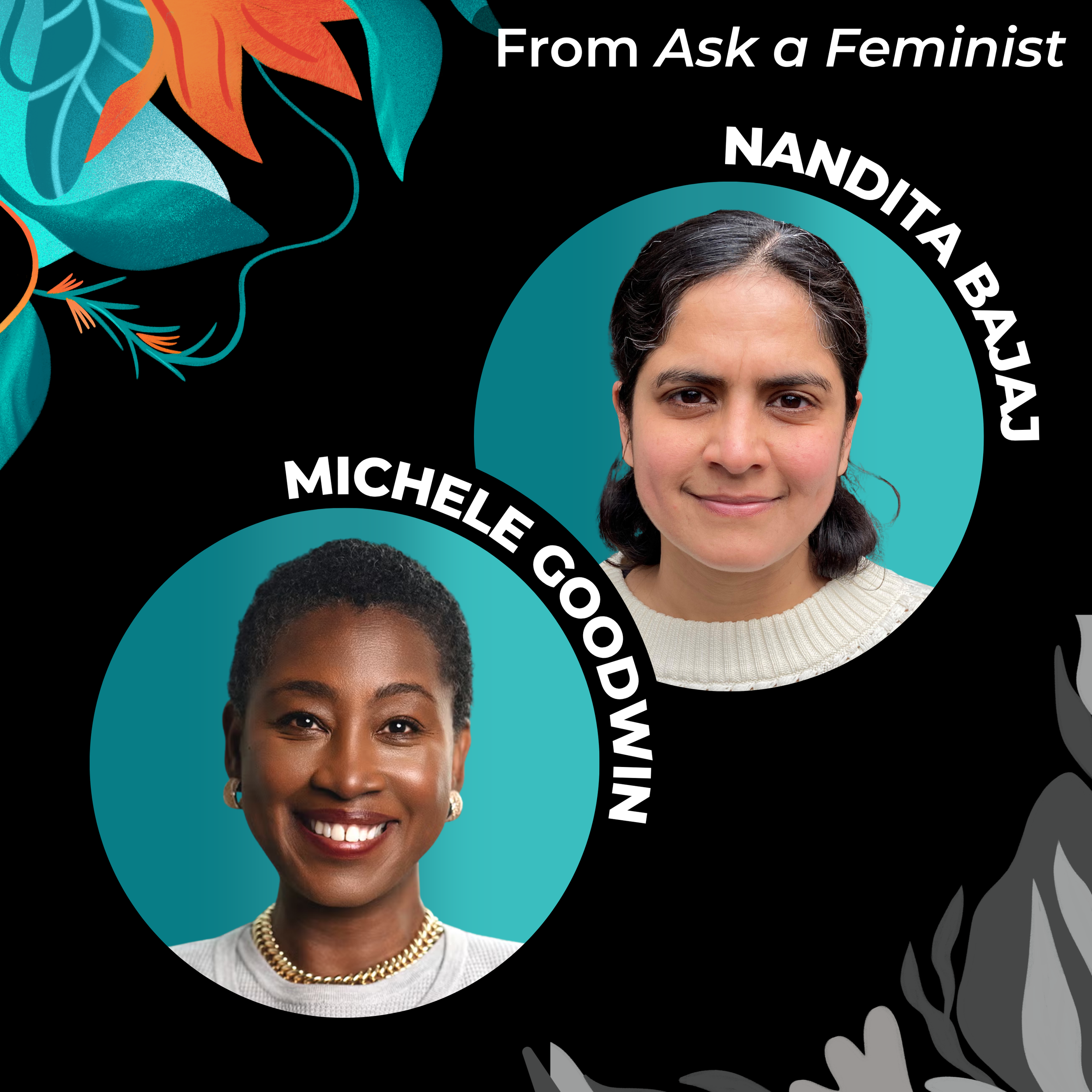



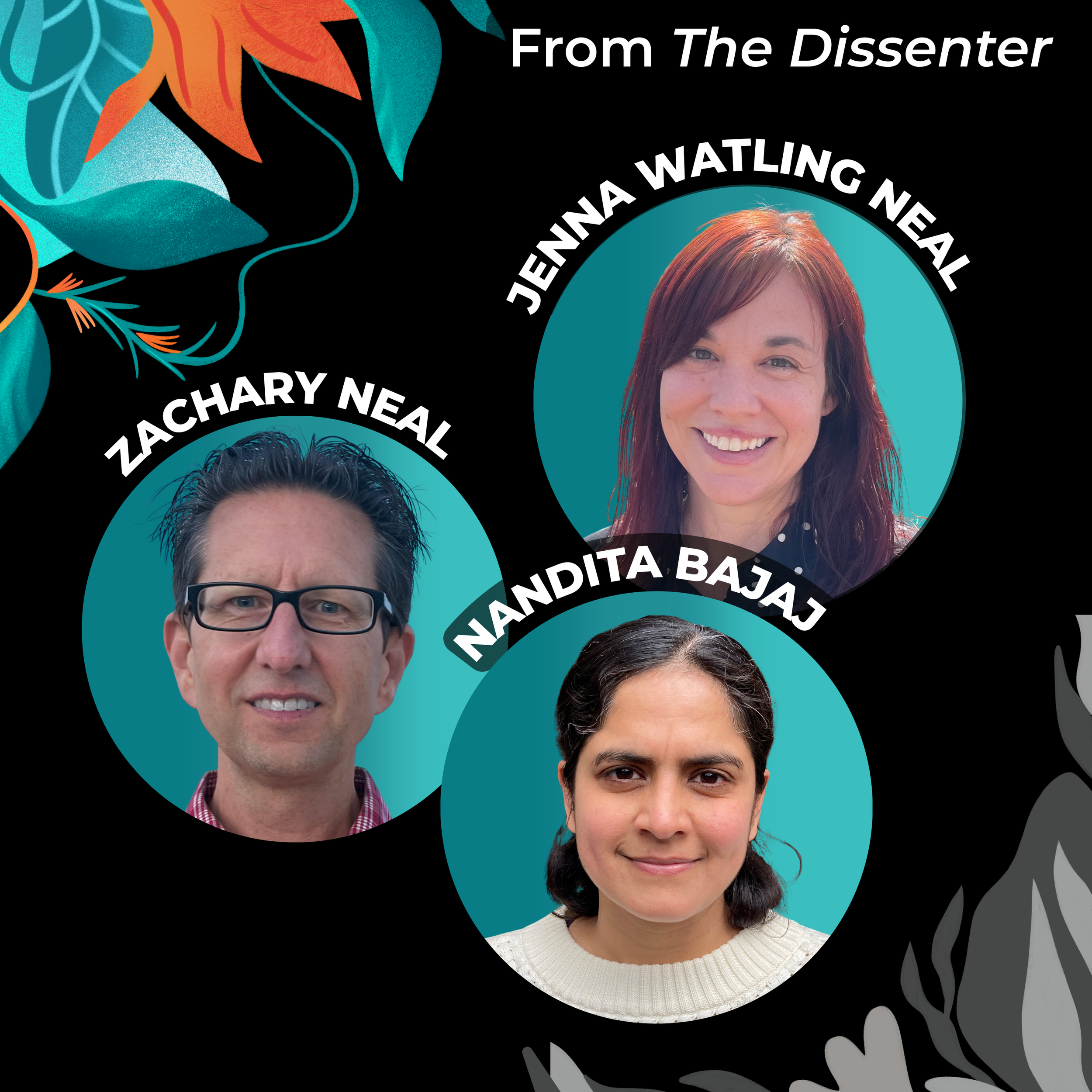
Pronatalism is the oldest form of reproductive control. Population Balance Executive Director, Nandita Bajaj, joins fellow guest and legal scholar Michele Goodwin and host Shoshanna Ehrlich in this republished episode of Ask a Feminist, a podcast from the Signs Journal. They discuss the rise of patriarchy and pronatalism in the first empires, the racist and eugenicist history of pronatalism in the U.S., and why 'progressive' pronatalism must be resisted as forcefully as pronatalism from the right. Highlights include:
How pronatalism arose with patriarchy in the first states and empires to serve economic, nationalist, religious, and expansionist state goals;
How pronatalism has historically been shaped by racism, classism, and eugenicist beliefs - with some people encouraged to reproduce and others discouraged;
How pronatalism and 'fertility crisis' rhetoric has been embraced not only by racist, anti-immigrant far-right advocates but also by mainstream liberals and progressives who advance growthist, supposedly 'pro-family' agendas;
Why pronatalism, as a primary feature of patriarchal control, must be challenged by anyone committed to feminist principles.
MENTIONED IN THIS EPISODE:
-
Nandita Bajaj (00:00):
Fertility decline is one of the greatest positive trends in human history where women especially are able to determine for themselves if, when, and how many children they want. And you have to ask why and who would call this a crisis? It's the people who have relied for millennia on women's reproductive labor to produce laborers, consumers, taxpayers, soldiers, and religious followers. And so I see really no universe in which pronatalism can be justified through a feminist lens because at the very heart of pronatalism is a desire to raise birth rates.
Michele Goodwin (00:45):
And in the United States, you see this as being very much racialized, being packaged in white nationalism. And you can see roots with that is dating back to pre-reconstruction era or the era of reconstruction. For example, during the period of abolitionist movement leading to the Civil War, there was a narrative about replacement theory, this idea that if slavery would come to an end, that black people would overwhelm the United States. It would no longer be what had come about with colonialism. And you see the very vestiges of that argumentation today, the hyperbole that there are certain communities that seem to be dying out. It connects to anti-immigration policies that are contemporary, but were actually in existence around that very same period of time.
Nandita Bajaj (01:40):
That was legal scholar Michele Goodwin and me, your co-host, Nandita Bajaj, discussing our work on pronatalism on the Ask a Feminist Podcast. Hi, everyone. We are doing something a bit different today on our OVERSHOOT podcast. Recently, I was a guest on Ask a Feminist, a podcast from the Signs Journal, the leading international journal in women's studies, where I discussed my research on pronatalism and its historical and contemporary expressions. The conversation was hosted by scholar-activist, Shoshanna Ehrlich, and joining me as a second guest was Michele Goodwin. The three of us had an excellent discussion deconstructing the harmful ideology of pronatalism and what this means for the state of reproductive rights and planetary health today. And we wanted to share it with all of you. So we're really excited to republish this episode on OVERSHOOT and we hope you like it. You can find the links to the original episode from the Ask a Feminist Podcast, as well as to the Signs Journal in the show notes. And here is that conversation.
Suzanna Walters (02:59):
I'm Suzanna Walters, and welcome to Ask A Feminist, a podcast from Signs Journal of Women in Culture and Society. On this podcast, we actually ask feminists about the pressing issues of the day to provide the kind of feminist analysis and context that is often missing in mainstream coverage. This episode features a critical dissection of a political movement and philosophy that is unfortunately enjoying a global resurgence, and that is pronatalism. The Trump administration, having successfully killed Roe, pursues policies incentivizing certain groups to have more children. Many key administration figures, most prominently J.D. Vance and Elon Musk, are avid promoters of pronatalist worldviews, in which women's efforts to exert control over their own reproductive capacities are portrayed as threats to Western civilization itself. Our interviewer for this episode is Sign's associate editor, Shoshanna Ehrlich, an expert on the legal regulation of women's reproduction and sexuality in the US and Professor Emerita of Women's Gender and Sexuality Studies at the University of Massachusetts, Boston.
(04:14):
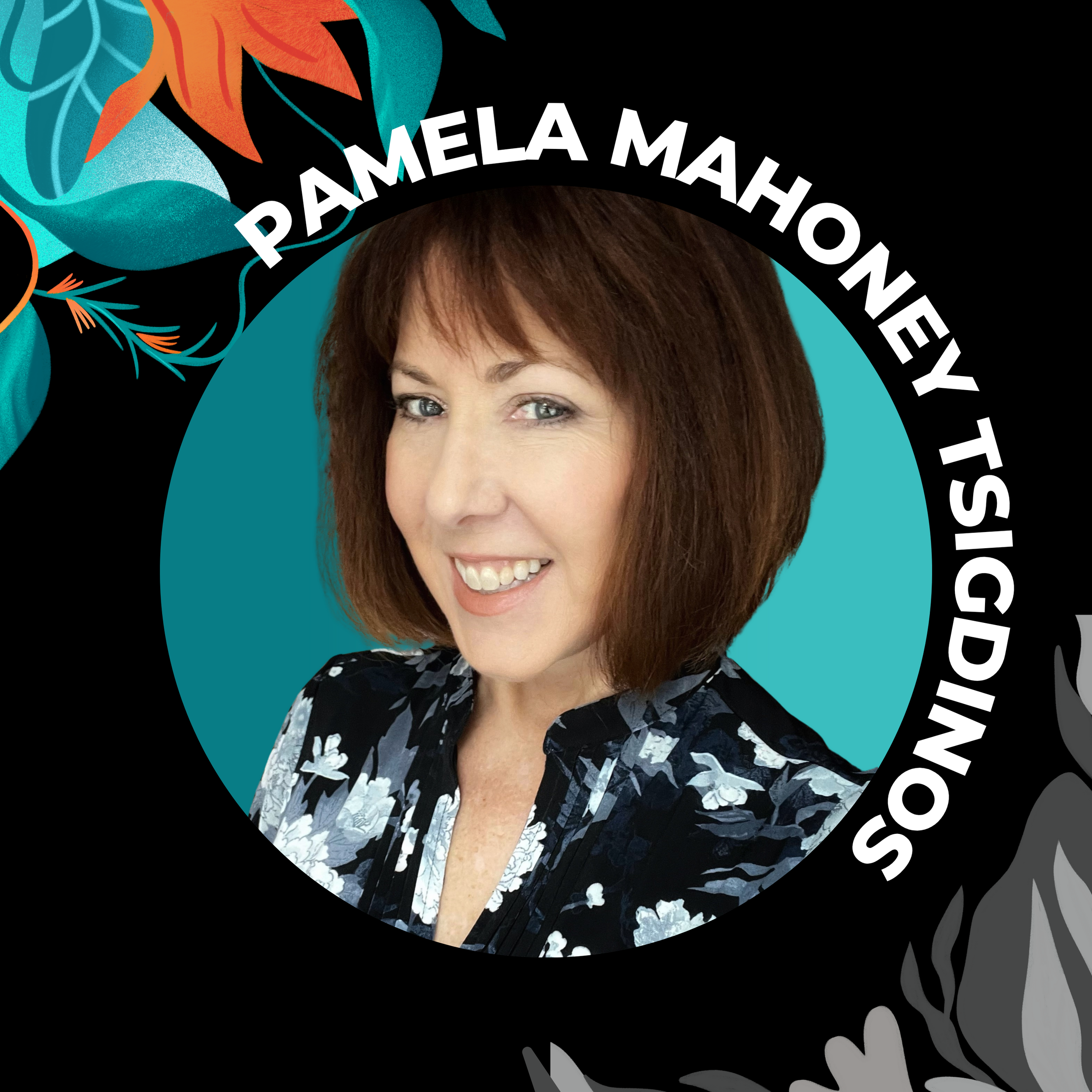
She is joined by Nandita Bajaj and Michele Goodwin. Nandita is the Executive Director of Population Balance, a US nonprofit that works to inspire narrative, behavioral, and systemic change that shrinks our human impact and elevates the rights and wellbeing of people, animals, and the planet. Her research and advocacy work focuses on addressing the combined impacts of pronatalism and human expansionism on reproductive, ecological, and intergenerational justice. Michele is the Linda D. and Timothy J. O'Neill Professor of Constitutional Law and Global Health Policy and Faculty Director of the O'Neill Institute for National and Global Health Law at Georgetown University. She is a sought after thought leader and public voice on matters of constitutional law, healthcare, bioethics, and civil liberties. She is also the executive producer of Ms. Studios and host of the popular podcast On The Issues with Michele Goodwin. Together, they offer a compelling deconstruction of the anti-feminist underpinnings of pronatalism and explicate its historical links to nativism, eugenics, and other forms of racism. There's a lot to take away from this conversation. Hope you enjoy.
Shoshanna Ehrlich (05:40):
I'm delighted to be here with the two of you and looking forward to a really exciting conversation. So we have lots to talk about. All of our listeners may not really be familiar with pronatalism, and we're going to get into a lot of detail as our conversation progresses. So let's just lay the foundation. How would you characterize, define what pronatalism is? And Nandita, why don't we start with you?
Nandita Bajaj (06:15):
Thank you, Shoshanna. And I must start by saying that it's an honor to be in this conversation with both of you. Thanks for having me. So to start, pronatalism is a set of cultural and institutional pressures placed on people, primarily women, to have children and large families for other agendas. It is the proverbial water that we're swimming in. It's everywhere. It comprises pressures from family for grandchildren and messages in media that romanticize marriage, pregnancy, and motherhood while stigmatizing those who are single or childfree. It includes religious messages to be fruitful and multiply and nationalist and economic state sanctioned restrictions or bans on contraceptives and abortions or tax credits and baby bonuses. I see pronatalism as the oldest form of reproductive control and as patriarchy's most successful project. And I'll explain that a bit more later.
Shoshanna Ehrlich (07:25):
Terrific. So you planted the seeds for many of the themes that I think we will elaborate on. Michele, let's turn it over to you to see how you would frame a basic definition of pronatalism.
Michele Goodwin (07:38):
I don't have disagreement at all. In fact, embrace what we've just heard. And in fact, it's universal, so it's not confined to one specific country. It's strategically as old as humans have roamed the earth in some instances and cases. I think in modern times, the ways in which we've seen it has been quite coercive. If we took, let's say as a slice, the US, because the US has been a focal point in the news with questions of birthright citizenship, with the Supreme Court overturning Roe v. Wade and Planned Parenthood v. Casey it raises significant questions about a political agenda that we can see right in front of us, a political and legal agenda. This notion that there are certain communities that seem to be dying out. Now, that's not actually the case, but that is the hyperbole. This is the concern. And in the United States, you see this as being very much racialized, being packaged in white nationalism, unfortunately.
(08:46):
And you can see roots with that as dating back to pre-reconstruction era or the era of reconstruction where you see narratives that linked to today. For example, during the period of abolitionist movement leading to the Civil War and the reconstructed constitution, there was a narrative about replacement theory. This idea that if it were that slavery would come to an end, that black people would overwhelm the United States. It would no longer be what had come about with colonialism. And you see the very vestiges of that argumentation today, the very same type of language. It connects to anti-immigration policies that are contemporary, but we're actually in existence around that very same period of time. If you think about the Page Act, which sought to make sure that women of Chinese descent would not be able to come into the United States to join their partners who were laboring in the United States, that is a version, a different version of a pronatalism.
(09:55):
One could say a pronatalism would be, let's encourage them to come and let's encourage them to get married and let's encourage them to have children. But that was not the case because of a white nationalist agenda that was about the US can have laborers who are indigenous, black, of Asian descent, but these people shall not be citizens of this country. And so the political aspect of this pronatalism is very important in and around what we do in the United States, but the United States is not the only country that practices a pronatalism. And it can also have its linkages to who do we want to have reproduce, right? We had a period of eugenics in this United States. We didn't want poor white people to have children, thus practices that forced their sterilization. And we have in other nations in the world, a sense that there should be more boys, let's say, than girls. So pronatalism can also have its various nuances as well for us to keep in mind.
Shoshanna Ehrlich (10:57):
Terrific. You've both set out looking sort of backwards in time and projecting forward some of the powerful impetuses behind pronatalism and making clear that as we now will delve into more, that it's not simply about having babies, that it encompasses very profound and deeply problematic political and structural agendas. So let me ask this question of you. In 2023, what is generally regarded as the first natal conference in the US was held in Austin, Texas, and it bills itself very openly, quote, it's right on the landing page, as a gathering of the brightest minds in the world. The claim was to find a sort of politically neutral solution to what they claim is a global fertility crisis, and is argued that this crisis, as women are having fewer babies, is going to lead to an older population. It'll have greater drain on social welfare systems. It'll lead to a slowdown in economic growth and productivity resulting in as Elon Musk apocalyptically declared the end of civilization.
(12:46):
Can you speak to the claim that we are in an era of dangerously low birth rates, which will destabilize the world as we know it, because that really is what the claim was behind the pronatalist conference, and it started in 2023. It's been held every year since, and I believe in 2025 was the largest such gathering in the world, and they simply claim they're trying to protect our future from these sort of dire consequences. So why don't we start with that question now, and either one of you, let's hear what you have to say.
Nandita Bajaj (13:34):
I'll be happy to start since my entire career is founded on demography and reproductive rights. And Shoshanna, since we will be touching on the real motivations behind the natal conference shortly, I'll address the claim about the so- called fertility crisis that is prevalent across the political spectrum, not just the far right, even though a lot of the architects of the natal conference are affiliated with nationalist, religious, and far right alliances. For example, writers at North American media outlets that are considered culturally liberal, such as New York Times, The Atlantic, Jacobin, Vox, they are increasingly joining this pronatalist chorus that we need to boost birth rates. In fact, this is the title of a recent New York Times article, The Feminist Case for Spending Billions to Boost Birth Rate: Fertility Decline is a Devilish Problem. What if the Only Solution is to Treat Parenting as a Public Service Worth Paying For?
(14:46):
So let's be clear, there is no feminist case to use women's reproduction as a public service. That is and has always been the goal of patriarchy. So pronatalism and feminism are mutually exclusive. And just to give a little bit of a historical background around this fertility decline narrative, why is it so prevalent? Why is it happening now? And why is it so ruthless? So in terms of history, so humans have been around for 300,000 years, and for most of that history, our population did not exceed 10 million. So just for context, Toronto, Canada, where I am, the population is six million, and that was around the population of the entire world for most of our history. And fast forward thousands of years, about 5,000 years ago, we saw the rise of civilizations, and this is when empires were starting to build. And part of their mission to strengthen state power was a focus on population, because you needed people to strengthen the state, the empires, but you also needed people to protect the state.
(16:14):
You needed soldiers, you needed slave labor, you needed to create social hierarchies in order to be able to control people. And one of the social hierarchies that came about lockstep with the rise of civilization was patriarchy, which is when women were pushed into reproductive roles and men were pushed into military roles to protect the state. And even though, as Michele said, pronatalism in some way or form has probably been around for most of human history, the institutionalization of pronatalism started 5,000 years ago with the rise of patriarchy. And believe it or not, prior to that, people were living in largely egalitarian societies, lacking these social hierarchies of racism and sexism and pronatalism and misogyny that we see today, where women actually enjoyed much greater reproductive and personal liberties and autonomy. So I just want to be clear that pronatalism within kind of the larger historical context is a much more recent phenomenon.
(17:31):
And starting with patriarchy, our population has been growing from a few million to today, over eight billion and counting. And despite the fears of the so-called population collapse from the likes of Musks and Trumps, we are expected to add another 2.3 billion this century. And this is the largest population we've ever had in the history of homo sapiens. So there is no scientific reason to call what we are seeing a demographic crisis. In terms of fertility rates, fertility rates have been declining for the last 70 years. About 70 years ago, women were having on average five or more children for their lifetime. Today, the average fertility rate is 2.3. This is one of the greatest positive trends in human history because of increase in gender equality and reproductive autonomy, where women especially are able to determine for themselves if, when, and how many children they want.
(18:43):
And it's being described as a crisis. And you have to ask why and who would call this a crisis. It's the people who have relied for millennia on women's reproductive labor to produce laborers, consumers, taxpayers, soldiers, religious followers, et cetera. And so there are real issues for any economy and for nation states that are built on this Ponzi scheme of growth. We have really built our entire globe on this notion of growth. And so now that growth is showing signs of slowing down and eventually stopping, all of these architects are freaking out because they will not be able to exploit women primarily, but also all of the social hierarchies that have emerged, that have allowed for cheap labors that Michele spoke about, that have allowed for exploitation of resources from the global south, et cetera, to cease. And we will have to look at other ways of reorienting our economies and nation states that don't rely on growth.
Shoshanna Ehrlich (20:02):
Okay. So what's being decried, at least in part, as a crisis reflects not for all people who have the capacity to become pregnant, but for many, the decline reflects increasing ability to control one's fertility rather than this dramatic crisis. So pronatalism, as both of you have suggested quite clearly, is linked to a number of far right ideologies, including white nationalism, eugenics, and anti-feminism, and I'm sure there's more, but those I would say are the three most prominent tropes. For example, Kevin Dolan, he's considered the brainchild behind this natal conference, declared in response to apparently some people when he was organizing this conference raised this concern, this is a quote, "We can't have natalism because we have too many stupid people." What Dolan said directly in keeping with this idea behind the conference that it was the gathering of the quote brightest minds in the world, his response was that no one needs to worry because quote, The only people who are going to respond to our natalism conference are going to be at the higher end of the distribution, further announcing that the pronatalist and the eugenic positions are very much not in opposition, they're very much aligned. So Michele, if you would speak to the eugenical, the white nationalists, the anti-immigrant implications, strands, historical roots of pronatalism, that would be terrific.
Michele Goodwin (22:08):
Let me start by further expanding our nuance as to what pronatalism can look like and its political motivations. So during the period, the antebellum period in the United States or in any part of the world where you want a class of people to be engaged in exploitative labor where their labor is exploited, then you also see vestiges of pronatalism. So Thomas Jefferson wrote to other politicians that he preferred to stock his plantation with girls and women because he said they turn a profit every year or two. The expansion of that enterprise was a version of a pronatalism, but not the way in which we see it today, but that is something. Let me exploit labor, let me extricate as much and squeeze as much as I possibly can out of individuals that are perceived as expendable, fungible, with no citizenship, with no rights. And I think it's important to take this moment that I sometimes ask audiences, which is, what story does a mother tell her child the night before the slave auction when either one will be sold off and never see again?
(23:26):
And I really want audiences to rest on that question because if we look at this, and again, not to US naval gaze, but I think the US serves as an important case study right now. And if we think about what that institution truly meant as one that was not just simply picking puffy balls of cotton in bucolic green fields, but sexual exploitation and rape such that girls as young as eight years old were not spared from this type of capital-seeking enterprise where advertisements across the country advertised for breeding wenches. And I then ask a question about what is a breeding wench? What makes you a breeding wench at eight or nine years old so that right in front of us, we can address in a more honest way what that enterprise looked like, which demanded the reproductive capacities, extracted that from girls and from women in order to satisfy the hunger of what became the United States.
(24:34):
And that's all factual. And so a system like that then has other laws that buttress it. Those are laws that make it such that you may not learn to read and write, that it is against the law to teach people who have this being extracted from them to learn how to read, to learn how to write. The earliest laws are this. And then these earliest laws also instantiate something else in terms of one's positionality within a state. And that positionality, we have dating to the 1600s in the United States and Virginia, laws that made it clear that children born of enslaved women would take on the status of their mother. Now, this becomes very important in a system that is seeking to extract, seeking to multiply, seeking to make these demands, but it seeks to make these demands such that those offspring do not inherit what the Constitution provides.
(25:30):
Now, those children do not inherit the plantations, the estates. They do not inherit America. And we don't see that change federally until after a civil war, until after our 14th Amendment, which then gives birthright citizenship. Now, why is this important with the question that you ask? It's because these are systems that morph and shift. So on one hand, if you want many, many people to engage in this labor that helps to fuel the hungry beast of the system that never seeks to invite them into citizenship, in fact, slams the door on their personhood that relegates them to the status of a cow mule or goat, which is why I asked the question, what story does a mother tell? Because it takes so much in a society such as that that says by federal law, by state law, by custom, that you are no higher than a goat or a mule in the field.
(26:26):
So then what does that mean when the system then shifts, right? Because we have to pay attention to the political shifts. And you talk then about your question about eugenics, because then we have in 1927, after there has been a reconstructed constitution, after there's equality under law, all of these amazing things of this reconstructed constitution. In 1927, we have coming into manifestation what W. E. B. Du Bois was writing about in the late 1800s and the early 1900s, 1903, The Souls of Black Folks. And what W. E. B. Du Bois spoke about is there is going to come a time in which this country will be confronted with questions about poor white people. And at the time, if you think about this is only about black and white or indigenous, you're missing out because W.E.B. Du Bois was raising a flag to a country that lacks its moral compass in these ways, will continue to have a sort of lacking moral compass.
(27:22):
And that's 1927 and we see in the case Buck v. Bell, which goes up before the United States Supreme Court, where the United States Supreme Court upholds a Virginia eugenics law that provides for the compulsory sterilization of individuals that are considered to be unfit. Now, what makes one unfit? Essentially in the United States, that was poverty, being poor and white. And that was not at that time enforced against black people. It was not with indigenous people in mind. It was this bizarre thinking amongst an industrial class, amongst wealthy elites that somehow the shadows of whiteness that they wanted to distance themselves from could be eradicated by just simply imposing forced sterilization. The Chief Justice of the Court, Oliver Wendell Holmes, one of the most revered jurists on the United States Supreme Court, opens the case with saying, Carrie Buck is a poor white girl from Virginia. We get it straight from the Supreme Court what is really taking shape here.
(28:27):
And the court says that three generations of imbeciles are enough. Now, there is nothing that connects the record that there was anything mentally impaired about Carrie, but she was poor. The court further says that better than just let them starve for their imbecilities, society can prevent those who are manifestly unfit from continuing their kind. And if we break that down, and we need to, Carrie's poor and she's white. This is all that we know and that she's had a baby out of wedlock, and yet she's considered manifestly unfit. Imagine that, and we don't talk about it. Poverty, whiteness, baby out of wedlock, manifestly unfit. So this pronatalism has its ways of weaving, because if we were truly committed to pronatalism, let all of the Carrie Bucks in the world have the babies that they want. But instead, there is this sense about who it is that we want under our nationalist theme and lens to reproduce.
(29:25):
And let me just stitch this question to a close with the following, which is that we are woefully unprepared for a discussion about how the United States is implicated in one of the gravest travesties of the 20th century. And I say one of, but it's a very important one of, and that's the Holocaust. It is after 1927 that the Third Reich comes to visit the United States because after that case, then dozens of states in the United States passed eugenics laws, they went into effect. It was so popular that in the coming attractions in movie theaters were advertisements about how many successful sterilizations were taking place all across the country. There were fitter family contests where in the United States before the Nazis got to it, that we were looking for the bluest eye and the blondest hair and people were being given medals for what their babies looked like.
(30:25):
And it is after the Third Write comes to visit the United States. I mean, they adopt almost verbatim the law that the United States Supreme Court upholds. 80 years ago, we have the Nuremberg trials, and I'm going to conclude with this, and there's a doctor's trial. And the prosecutors in the case, one was Justice Jackson who left the United States Supreme Court to lead the prosecutions in Nazi Germany. And the Nazi doctors start off their defense with, "How dare you come here? We did what you did." Now, of course, they took it to extremes that the US had not, but this point of adopting US law and US practices of ghettoization and all of that was not untrue. So when we think about pronatalism, we have to understand these political through wins in terms of what that represents.
Shoshanna Ehrlich (31:15):
Terrific. So I just want to pull together a few threads, and then I definitely want to talk about this in the context of anti-feminism. So one of the things that I was struck by, Michele, in what you were saying is, if I have the quote from you correctly, Buck versus Bell, this history of eugenics was to prevent the manifestly unfit from reproducing themselves, which is exactly what Kevin Dolan said to the sort of person who is afraid that the pronatalist conference would encourage those who were too stupid to reproduce. So I think we see a direct through line. I do want to talk about a little bit in greater detail about kind of the anti-feminist component of pronatalism. But again, I just want to start with a quote from one of the speakers from the pronatal conference. Her name is Peachy Keenan, and she's the author of this book called Domestic Extremism.
(32:26):
And as she made clear and has made clear that pronatalism is as she pretty much proclaims proudly anti-feminist. And she states that, here's one of her quotes. "We really don't want to market natalism to the progressive feminists. The people maxing out their fertility should be people ideally who won't raise their children to be gender neutral furries who want to join Antifa one day." I guess if you would speak either in the US stage or in the global stage, the connection between pronatalism and anti-feminism, that would be terrific.
Nandita Bajaj (33:17):
One of the things I look at in a graduate course that I teach on Pronatalism, Population and the Planet is the failure of feminism to have totally and correctly critiqued pronatalism within a feminist framework. So I didn't think there would be a universe where I would agree with Peachy Keenan, but her claim that pronatalism is proudly anti-feminist is correct, but I will go a step further and say, I wish that feminism had actually owned that narrative as it has so many other areas of reproductive rights and women's rights. The reason I said earlier that pronatalism is one of the most successful projects or maybe the most successful project of patriarchy is because it has weaved its way into not just anti-rights narrative of the far right, of the religious and political and economic forces, but also because it is very much present within progressive discourse.
(34:25):
This notion that all women want to and should become mothers, even including neoliberal feminism, where there is this notion that women can have it all, really failed to look at the roots of pronatalism. And its ties to, as Michele has already spoken about, racist, eugenicist, nationalist, political and economic agendas that have always seen women's reproduction as a tool for continuing on or strengthening these institutions. Challenging pronatalism doesn't challenge procreation or motherhood, and we need to separate those two. Incredible feminist work has looked at motherhood as an institution and motherhood as a relationship. And we need to be clear that when we talk about pronatalism, it is only seen through the lens of institutional strength. I see really no universe in which pronatalism can be justified through a feminist lens, because at the very heart of pronatalism is a desire to raise birth rates for external agendas that we've spoken about at length.
(35:48):
And if we were to speak truly about the tenets of reproductive justice, to truly give people, especially women, the power to decide if they want to parent, when they want to parent, and the ability to raise children in environments that are ecologically, materially, emotionally secure, pronatalism will never even enter the discourse. It has no room for it within that discourse. And I want to congratulate you all for considering this conversation as a feminist conversation, because in my work, looking at the link between population and pronatalism, there is so much negation of population as an issue of looking at the environmental crisis as an issue, because there have been so many cases, as Michele laid out, where even the population narrative was used as a means to control women's reproduction, whether through forced sterilizations or through coerced family planning programs, et cetera. But if we get to the very, very heart of why population ever became an issue, it was because of patriarchal control over women's reproduction to grow the numbers of people for external agendas.
(37:14):
So for me, population is a major feminist concern because at the root of it is the growth that has happened on the backs of the most marginalized girls and women. To state some stats, 640 million girls and women alive today were married as child brides. Half of all pregnancies around the world are unplanned. That's 121 million pregnancies globally. And with your work, Shoshanna, around narratives around abortion, narratives around family planning and contraceptives, these are the real barriers that are preventing people, primarily women from accessing reproductive health services, not because they're not physically available, but because the religious and political and economic motivators are keeping them from psychologically crossing that barrier to their own liberation. And that's why population has grown for the most part. And so to me, there is no room for pronatalism within progressive feminist discourse.
Shoshanna Ehrlich (38:30):
Okay. That was terrific. Thank you because as you noted earlier, there has been in some of the sort of mainstream liberal press, an attempt to kind of link pronatalism with what's been a long-time feminist agenda, which is to provide family supports for those who want to have children. And I think you've done a really nice job of kind of decoupling those and saying that that linkage doesn't hold water. But I want to ask if you can link what's happening here, which is the focus has been rather US in terms of the natal conferences, the Trump administration, some of the proponents of this movement. Is this a US phenomena solely or can you link this to the global stage?
Nandita Bajaj (39:30):
Yeah, very quickly, it is definitely a global phenomenon. As I said, it's not being driven by the same motivations in every place. In the US currently, it's very, very rooted in religious and white nationalist propaganda, but white nationalism may not be at play in India or in other global south countries where there are other motivators pushing women to bear children. Often it is ethnonationalism, the drive to produce more children of a certain kind, anti-immigration. So in Hungary, for example, the so- called fertility crisis is being dealt by having women pay no taxes if they produce four or more children. In Russia, Putin is giving mothers who produce 10 or more children a motherhood medal with some money.
Shoshanna Ehrlich (40:25):
If I may interrupt for one second, I believe that is where this idea of the national motherhood medal that's been floated in the Trump administration comes from.
Nandita Bajaj (40:36):
Exactly. And it has its roots in the Stalin government. That's where Russia is kind of recapturing it. In other places in the world, in a lot of global south countries within, let's say, African countries, there are so many religious narratives that are preventing people, specifically women from being able to access contraceptives, notions that contraceptives will make you permanently infertile, or you are committing a sin, or that you are being promiscuous by using contraceptives. So there's all of these myths that are preventing women from actually becoming liberated. And what we are seeing, and this is the trend across the globe, is in every place around the world, regardless of education level, regardless of political ideology or religious alliance, wherever and whenever women gain access to reproductive freedom through education and fertility and reproductive healthcare, we see fertility rates decline. And that's a global phenomenon. And that is partly why there is such a strong response to this because no amount of bribery or coercion is able to reverse that trend is because women are refusing to comply as they have been forced to for thousands of years. Once you gain freedom, no amount of coercion will make you give that back.
Shoshanna Ehrlich (42:13):
I think we're going to end there, but I think that you both have brought incredible richness and depth to this conversation and really unpacking the structural, historical, global implications of a doctrine that is deeply pernicious, opposed to ideas of bodily autonomy, decision making, owning one's labor. So I thank you both for really bringing a needed depth to this conversation. Thank you.
Suzanna Walters (43:10):
Thanks so much to Michele and Nandita for this compelling conversation and to Shoshanna for facilitating. Please consider subscribing to the podcast and leaving us a review. Ask a Feminist is part of a larger project we're doing at Signs called the Feminist Public Intellectuals Project, which is all available for free on our website at signsjournal.org. You can find tons of fabulous, free feminist content there, including our shorttake series where we offer commentaries on feminist books. Most recently, Soraya Chemaly's book, All We Want is Everything: How We Dismantle Male Supremacy. You can find us on Bluesky and Instagram at Signs Journal. I'm Suzanna Walters, editor of Signs. Thanks for listening.
Nandita Bajaj (43:58):
That was a republished episode from the Ask a Feminist podcast. If you enjoyed this conversation, be sure to check out that podcast as well as the Signs Journal. We will return with a regular interview for our next episode of the OVERSHOOT podcast in two weeks. Thanks everyone.