
The Rise of One-Child Families
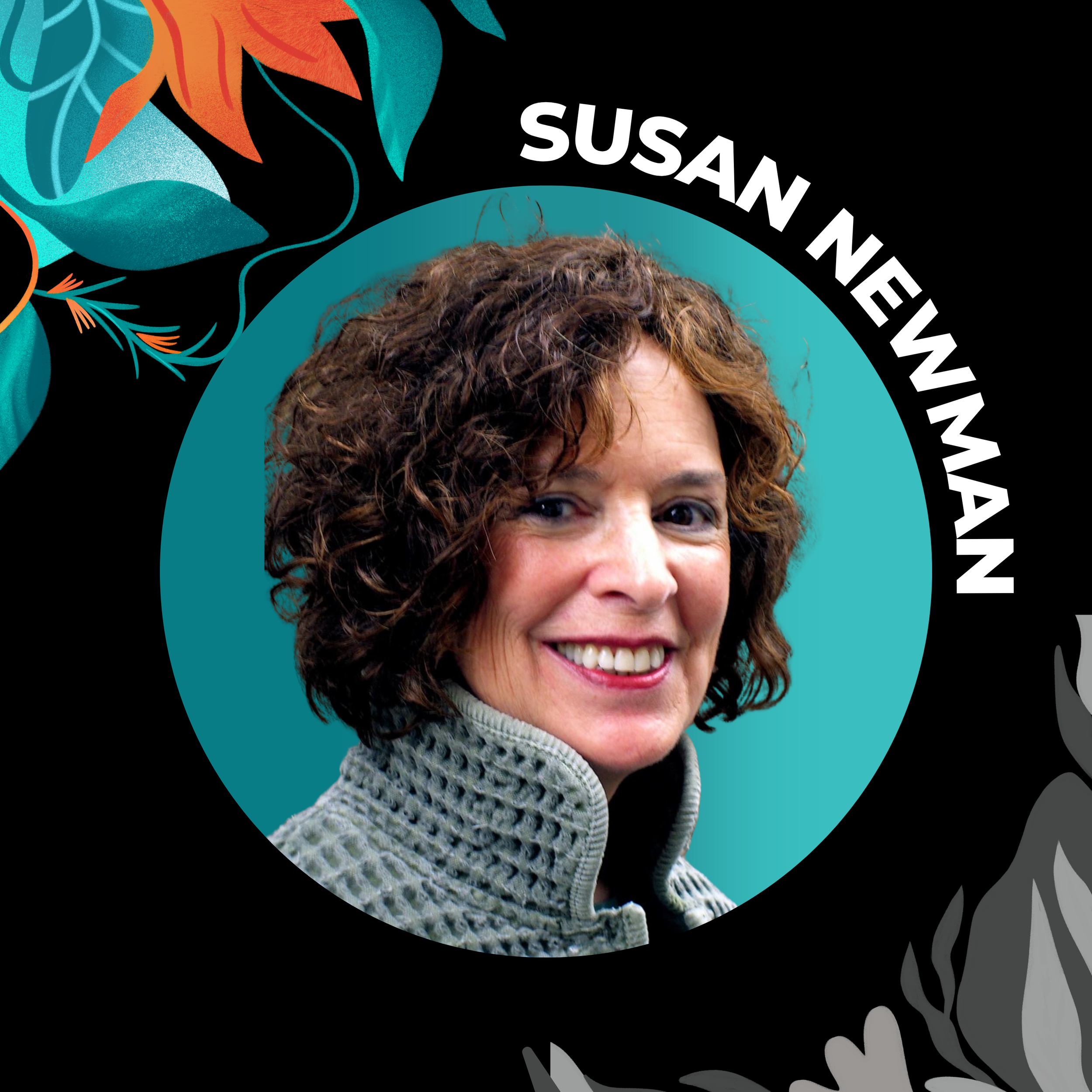



The one-child family is becoming the fastest-growing family size in many countries. Social psychologist Susan Newman, author of Just One, shares the abundant research challenging long-held myths that only children are lonely, selfish, or spoiled, and why the growing popularity of one-child families reflects greater parental and child satisfaction and ecological awareness. Highlights include:
How Susan’s experience parenting four stepchildren earlier in her life and one biological child later in life shaped her understanding of one-child families;
Why negative stereotypes of only children as spoiled or lonely stemmed from flawed early research and cultural bias;
What modern cross-cultural studies reveal about only children being as well-adjusted and socially capable as those with siblings;
Why mothers of only children often report higher happiness and lower stress than mothers of larger families;
Why parental influence and home environment matter more to child development than the number of siblings;
How the one-child family has become normalized worldwide amid rising costs, alternative life opportunities, and climate anxiety;
Why pronatalist government policies are failing to reverse declining birth rates;
What parents of only children can do to foster independence and realistic expectations for their child;
Why the choice to have one child is increasingly pursued as a proactive, deliberate, values-based decision rather than a perceived limitation.
MENTIONED IN THIS EPISODE:
-
Susan Newman (00:00:00):
The notion of the traditional family being two children is fading. And I see the one child family as the new normal. Parents are happier. The closeness and the available resources is a benefit to both the parent and the child. And that closeness lasts well into adulthood. And when that's coupled with the lack of concern about the only child stereotypes - that kids are not lonely, they're not spoiled, they're not aggressive, they don't have more imaginary friends, more and more people are opting for one
Alan Ware (00:00:40):
That was social psychologist Susan Newman. In this episode of OVERSHOOT, we'll be discussing Susan's latest book, Just One: The New Science, Secrets, and Joy of Parenting an Only Child. Susan debunks the many myths surrounding this increasingly popular family structure and offers insights into why one child families are great for parents, the child, and the planet.
Nandita Bajaj (00:01:12):
Welcome to OVERSHOOT where we tackle today's interlocking social and ecological crises driven by humanity's excessive population and consumption. On this podcast, we explore needed narrative, behavioral, and system shifts for recreating human life in balance with all life on Earth. I'm Nandita Bajaj, co-host of the podcast and executive director of Population Balance.
Alan Ware (00:01:37):
I'm Alan Ware, co-host of the podcast and researcher with Population Balance. With expert guests covering a range of topics we examine the forces underlying overshoot - the patriarchal pronatalism that fuels overpopulation, the growth-obsessed economic systems that drive consumerism and social injustice, and the dominant worldview of human supremacy that subjugates animals and nature. Our vision of shrinking toward abundance inspires us to seek pathways of transformation that go beyond technological fixes toward a new humanity that honors our interconnectedness with all of life. And now on to today's guest.
(00:02:16):
Susan Newman is a social psychologist specializing in parenting concerns, family dynamics and trends. Her work examines building strong family bonds, raising only children, and strengthening relationships with adult children as well as the difficulties of working and raising a family. She has appeared on Good Morning America, the Today Show, ABC's 20/20, CBS Sunday Morning, MSNBC, NPR's Talk of the Nation and Marketplace, NBC Nightly News, CBS and Fox News, discussing breaking news and parenting issues. She is a regular contributor to Psychology Today with a focus on only children. Her work has been featured in Harvard Magazine, Parents, USA today, US News and World Report, the New York Times, the Washington Post, the Boston Globe, London Telegraph, Huffington Post, and The Times of India among many others. And now on to today's interview.
Nandita Bajaj (00:03:15):
Hi Susan, and welcome to our podcast. It is wonderful having you here. Thank you for joining us.
Susan Newman (00:03:22):
Wonderful to be here. It's one of my favorite topics.
Nandita Bajaj (00:03:25):
It's fantastic and we're excited to delve more deeply into this topic. As you may have noticed from our podcast, we cover a range of topics that explore the factors underlying our social and ecological crises of which pronatalism is one of the major ones, and pronatalism, which is the societal pressures to have children or large families undermines authentic choice-making around the decision to have or not have a child as well as the number of children one may choose to have. And since harmful pronatalist norms span millennia, a lot of our work involves challenging dominant norms and celebrating and normalizing alternative definitions of family such as voluntarily single, childfree, or one-child families. And of course you have done decades of research on one-child families and we are excited about having you illuminate that aspect of challenging pronatalism today. So Susan, you've written more than a dozen books in the family, relationships, and parenting fields. What in your background led you to focus on only children, an area you've spent decades exploring?
Susan Newman (00:04:50):
Yes, it has been decades exploring. My first marriage I married a man who had full custody of his four children and the children actually got me into the parenting field. They were so much fun and I was very young and didn't know a lot about parenting, so that kind of tipped me in the parenting direction. But it was my divorce and second marriage when I had a baby and people jumped on me and it was attack, attack, attack. How can you do that to your child? When are you having another? It was even by one person called child abuse not to have another child. And that's when I kept saying what could possibly be wrong with the only child? And that was the nucleus for this decades-long study of only children.
(00:05:48):
And so when somebody says to me, 'How many children do you have?', I say it depends how you count. I have one or five. I've got the four step kids and the singleton. And my position is that because I had this larger family and then had a one-child family that I feel I'm pretty objective about how I do my research, the results I get and the comments and findings that I have. It isn't a question of I'm totally pro one-child families. I do lean a little in that direction, but I also feel this is such a personal choice that people need to have unbiased opinions.
Nandita Bajaj (00:06:38):
Totally. And one thing I've heard you say that our own history often dictates our choices in life. Had you had any exposure to one-child families in your own upbringing?
Susan Newman (00:06:52):
No, I hadn't. This was a whole new world of 'you can't do that to your child'. Like so many women today, I was older and my husband is older, and we decided, as many of my subjects and my varied studies over the years have, that they didn't want to try their luck. They felt one child's good and in summary, one child is a family. Attitudes have changed, everything is switched up in the last 20 or 30 years. It used to be some people didn't even talk about it. As women, you knew. You got married, you had the requisite two children, what has been called the new traditional family or the old traditional family now for decades and decades. And that is not what's been happening in the last 10 or 15 years. There's a huge movement and acceptance of the only child.
Alan Ware (00:07:58):
And as your book, Just One, makes clear in many of the countries that you've studied, that decision to stop at one child is rapidly gaining social acceptance, which we find very encouraging. But of course in the not too distant past, and some of what you encountered having one child, there was a lot of cultural stigma to having one child. So we'd like to start there as you do talk about in your book some of the only child negative stereotypes and wondering historically what are the roots of those stereotypes?
Susan Newman (00:08:31):
The stereotypes started way back in 1896 by a psychologist called G. Stanley Hall, and he decided that only children were aggressive, lonely, selfish, spoiled. They had more imaginary friends. He had a litany of negatives about only children, but when you look at his research, you realize how flawed it was. If you go back, that was a period when children lived on farms. They were isolated from other children and they didn't have the kind of controls on studies that they have now. So he basically could do and say whatever he wanted. And then some of his disciples jumped on the bandwagon and came up with more negatives - that only children are below average in health and vitality, they have less regular attendance at school, which in a very recent study has been shown to be absolutely the opposite. So that was 1896 and then somewhere around 1930s people started challenging Paul and his findings.
(00:09:50):
And there's still people out there, not in the last 10 years but prior to that, who love to come up with these crazy studies finding that only children have more eating disorders, that they're prone to asthma or eczema, and equally bizarre that they swallow more coins and go to the emergency room more often. I mean it's just kind of craziness. But all those negatives - lonely only - have been refuted in more modern studies and in my studies. The Chinese, they're always doing studies in China because they have so many only children. But in one study, those children had lower levels of loneliness than children who had siblings. Same thing was found in a US study. Only children reported having as many friends as their peers who had siblings and they were very satisfied the young adults with their social lives today. So there's little evidence that the absence of siblings has much bearing on only children having social deficits or being lonely.
(00:11:06):
Then when they talk about only children as being selfish and self-centered, one study, German study, found that that is not true. Another study looked at American college students and reflected the same. They didn't have an exaggerated sense of self-importance. To me, one of the most interesting studies came from a Chinese professor who works here in America at a university. She took her toddler to China and enrolled her in a preschool and studied the children in this preschool for a year. And because only children in China and some here in the rest of the world are doted on by parents and in China, particularly grandparents, she was completely surprised by how seamlessly these toddlers worked with each other, shared, learned to fit in. And they didn't act like the little emperors that we heard so much about coming out of China. So these long held stereotypes which have been completely refuted, they don't necessarily weigh into the equation when people are deciding how many children to have. The stigmas around only children and these stereotypes seem to have faded pretty drastically in the last 10 years.
Alan Ware (00:12:40):
Well, yeah, that's great to hear. And it was an impressive amount of research that you cited in the chapter disputing all the negative stereotypes. I thought one of them was interesting. The US, Canada, Germany study, finding no link between personality and presence of siblings on everything from extroversion, emotional stability, agreeableness, conscientiousness, imagination, leadership, maturity, cooperativeness, autonomy, flexibility, self-control, anxiety, pure popularity. It sounds like there's nothing they can find.
Susan Newman (00:13:12):
One of the reasons for that is because it's parental influence that has the most effect on a child's development. It isn't the number of siblings he or she has or doesn't have, and that's one of the spots I think most people who are interested in this subject get caught up. My child has to have a sibling, my child needs a sibling to develop all the critical social skills when in fact, in this day and age, unlike going back to Hall and his studies in 1890s, children are socialized so early today. They're in daycare, they're in pre-K, they're in school six to eight hours. They are overloaded on afterschool activities that they get more than enough opportunity to interact with other kids, to learn how to argue, to learn how to step back, to learn how to share. And that's also an interesting finding that many of the people in my study talking about their only child said, my only child will share everything she has or he has. They're very generous or tend to be very generous. Of course, you can't apply that to every single child. I mean it's just like you can find a lonely child in a household with a sea of siblings. It's so individual.
Nandita Bajaj (00:14:48):
Yeah, I found it so fascinating along that line that the overemphasis on looking at the negative stereotypes for only children has actually prevented a lot of research from being done around children who have siblings. And you found that in a lot of cases, it's not a guarantee that having a sibling is going to create some of the conditions that people think are necessary for these qualities of cooperativeness, sharing, et cetera. You actually find sometimes sibling presence can lead to chipping away at other children's self-esteem. Parents' favoritism toward one sibling could lead to this sense of anxiety or poor self-esteem. Can you speak to some of the negative impacts that don't often get talked about around having siblings?
Susan Newman (00:15:49):
One of my favorite subjects that I talked to, she was an older female only child and she said, I am going to have two children. I want two children. So they get along and they talk to each other every day when they're young adults. And she got two daughters, that's what she wanted, but they can't stand each other. They cannot be in the same room together. And that is just an example of what can happen. Parents fantasize that their children will get along and they'll be lifelong buddies and yeah, there'll be some sibling rivalry, but the sibling rivalry is very detrimental to, can be, to self-esteem, to how you view yourself in the world. People overemphasize the fact that a sibling is essential and it will make your children's lives better. That isn't necessarily what happens. When it happens it's fabulous, when kids get along and they grow up together. I have a brother I adore. He and I were not friends. We couldn't stand each other until the day he walked out for college. And ever since then we couldn't be tighter. But you have to accept that there could be some rough years in there and that siblings aren't all they're cracked up to be.
Nandita Bajaj (00:17:25):
And what does the research say on the happiness of the parents who decide to stop at one child versus parents who have multiple children?
Susan Newman (00:17:32):
The research has a lot to say on the happiness of parents having one or multiple children, especially the effect on mothers. In Australia, they did a study of 20,000 families. They followed these families from the time they entered the study. The children were all 1-year-old and they followed them for 16 years and found that women's mental health was negatively affected. But interestingly, men's happiness didn't change at all. It didn't matter how many kids you had, the men were fine. There's a professor, Laurie Santos at Yale and she's the happiness professor, and she says that natural selection is about getting our genes into babies, but we need to prioritize our individual joy and contentment. And she claims that that's under our control if we apply some effort to do so. So for those who have an only child or contemplating an only child, that means weighing in on your job, career, your home life, your support system, your lifestyle, the kind of things that will make you a happy parent.
(00:19:00):
And often people don't stop, although lately they do, those contemplating one child to weigh these things. They may think about one of them, but it's a bigger package they need to think about. And on a different note, Hans Peter Kohler, a number of years ago at the University of Pennsylvania did a study on whether you're happier with one or more and he concluded you should stop after one child. His study found that child number two or three doesn't make parents any happier and for dads additional children had no effect zero on their wellbeing. So it's just the happiness factor relates very strongly with time pressure, and clearly mothers are pressured more. With each additional child you have less and less time. And the happiest parents are when their children leave home. I'm just saying.
Alan Ware (00:20:08):
Yeah, I thought it was interesting in the book that you mentioned the Spanish study where the fathers do take parental leave and take care of their infants or toddlers, that those men wanted to stop at one child even years later. They wanted to maintain smaller family size, which goes to show the time pressure is typically put on the mother.
Susan Newman (00:20:29):
Right, and the men did not like it one bit.
Alan Ware (00:20:32):
Yeah, right.
Nandita Bajaj (00:20:33):
What you also said about that researcher about natural selection, passing down your genes is just one aspect, but then all of the nurturing that goes into raising that child or children plays such an incredible role in who that child ends up becoming. And it flies against a lot of the really impoverished notions of repopulating our planet coming out of tech billionaires like Elon Musk. He himself has a ton of kids and is pushing people to have a ton of kids because in their very impoverished view, there's still kind of this notion that you pass down characteristics like intelligence through your genes and there's no relationship whatsoever with their children. There's just this notion that you need to produce as many as possible.
Susan Newman (00:21:26):
Absolutely. I mean, Elon Musk, I believe he has 14 children and counting with, I forgot how many wives, but he's not alone in this push for more children, but I don't think it's working or working to the extent that the Musks and Trumps of this world would like. People are smarter, but the pressure comes not necessarily from what's going on this minute, but from deeply entrenched thinking. It's like ageism and sexism and other stubborn biases and fictions that we all have. I mean for us in the US, the traditional family was a boy for you, a girl for me, mom, dad, home with a white picket fence. I mean it's so deeply seated in traditions and norms that it is hard to change, but it is changing. So when the pressure doesn't necessarily come from outside sources as much as it can come from your own inner upbringing or the things you always thought were the way you wanted them to be, but now people are realizing it doesn't have to be two children and the house with the white picket fence. Even grandparents are realizing this and easing up on the pressure for their child-bearing age children. They know it's tough out there.
Nandita Bajaj (00:23:09):
One of the things I find fascinating is if you go to a certain community where the norm is say three children, and you ask people within that community, how many children do you want to have, they'll more often than not say three children because so much of our desires are shaped by our surroundings and our need to belong. And conversely, as we are seeing, especially with research like yours, the more one-child families or zero-child become normalized, more number of people are likely to follow that path because it's easier for them to make that decision in order to belong within that community.
Susan Newman (00:23:59):
The changes in the social culture right now, I don't know if it's making the decision to have one child easier or the practical aspects of having more children can be difficult in so many families that the decision seems to me, from what I've seen, easier for a lot of people because the pressure has lightened up. I think people are really, as Lori Santos at Yale suggested really looking into what can we do? How well can we do it? Can we handle a second child? They're taking their personal lifestyle and thinking about it and how they want to live. Do they want to feel financially strapped all the time? And then there's also the infertility problem that comes up. So I just think in spite of what people say they want to do, and even today most people or a large number will say I want two children because that's been ingrained for so long, but that's not actually what they end up doing.
Alan Ware (00:25:16):
Right, and we're seeing, as you've mentioned, the fast growth of the one- child family around the world in the past few decades, that the proportion of mothers who had one child at the end of their child-bearing years has more than doubled since the 1970s. And now one-child families are the most common family size in nations ranging from South Korea, China, Japan to England, India, and Italy. That's an enormous social change that's occurred in just a few decades. And could you share some of the statistics on that and what do you think are some of the major factors explaining that shift?
Susan Newman (00:25:51):
Well, some of these countries already been labeled one-child nations, the UK and Canada for example, 45% of families are one-child families. And even here in the States in Seattle, that number of one-child families goes up to 47%. So in big cities like Seattle, probably attributed to the high cost of living, but not solely. I attribute the global scope of this to the fact that having one child is probably a really good solution for many more people for the way we live now, given all the factors like climate change, the expense, infertility, starting family later and on and on. So those are the big factors. Most of the births are to women now of 35 and up, staying in school longer, getting more education, wanting to be financially able to raise a child factor in. And also we should include in this the marked visible growth in single parents, women who say, I'm not waiting for Mr. Right, I'm going ahead, I'm having a baby on my own. And people who just choose to be single who are not having children, that's a whole other area.
Alan Ware (00:27:27):
And all of those seem like very positive developments to us, that women are waiting longer because they have more options and choices in life between contraception, more education, more job opportunities. A lot of them are choosing that. And we're seeing greater acceptance, as you mentioned, of one-child families. So we are seeing people accept partly I suppose, the freedom of choice that a lot of women have and the women not being willing to give that up. And yet we definitely see the rise of pronatalist policies being pushed around the world in places like the US and Hungary and Russia and India and China. The list could go on and on. What are your thoughts on the rise of these pronatalist policies trying to incentivize people that have children in response to these declining fertility rates?
Susan Newman (00:28:20):
Basically, I don't think they really work. I don't think that they're going to make a big difference because look at China, which had a one child policy for decades from 19, about 79 to 2015. In 2015, they said, you can have two children if you like, and they went on a campaign to get two children. That didn't work so well. And more recently they said, okay, you can have three children. And they went as far as they have a lot of outdoor artwork and sculptures and the original had a mom and dad and one child, then they put two children and now they have sculptures outside with three children, and I don't think it's making a big difference. Italy did something similar. They tried a scare campaign, implying that if you waited, because women were postponing becoming pregnant, you ran the danger of having only one child turning the one child negative.
(00:29:30):
That didn't work. Copenhagen did something similar on billboards reminding women that their biological clock was ticking. That was not well-received. So this is all a kind of bribery to me, particularly the bonuses and the tax credits and everything even that they're trying in the US basically. I think people are smarter and that these governments are failing because having a baby or a second baby is way too personal for people to be influenced by a $5,000 tax credit. They're too smart. That's not going to last very long. And when people are talking about having children, I don't believe that they are worried about the state of their country's economy or their aging population. They're making concrete individual personal choices, particularly in these countries that are being called one-child nations. People know what it costs to raise a child and a tax credit or a bonus or some other relatively temporary incentive is not going to fool them.
Nandita Bajaj (00:30:52):
Yeah, exactly. And as you mentioned, even countries that are trying to do things that are actually good for people, like putting in policies that support childcare or subsidized education and healthcare or paid parental leave. I mean those are policies that should just be the norm, but there should be policies in place that support all sorts of families, but even they are doing it really as a means to try and increase population, to try and promote greater childbirth and even they're not working. Then of course, you see on the other hand, countries like the US and Hungary are turning to more coercive policies like banning abortion or restricting it or taking away access to contraceptives. And that's the part that is actually worrisome is where countries will turn to as more and more people make these decisions for their own benefit and the economy or whatever other external ulterior motives end up suffering as a result.
Susan Newman (00:32:03):
No argument there. Government coming in and banning abortion, making it difficult to get contraceptives, I think we have reached the point where we have women particularly rebelling against being essentially pushed around about their bodies and what they can do with them and when, and that will add to fewer children as opposed to the goal of all these government ideas, which is to have more children.
Nandita Bajaj (00:32:40):
And what does your research tell us about only children when it comes to caring for aging parents? Do they feel a greater burden in supporting their parents in old age compared to those with siblings?
Susan Newman (00:32:55):
Only children are well aware pretty early on when they get into young adulthood that they are going to be responsible for their parents. And it's not easy to care for an aging or ill parent no matter how many children are in your family. But the attitude among only children is that overall my parents took really good care of me, I'm going to take care of them. And at that point in life, for both the parents and the only child, you have already forged a whole other family. You may have a spouse, a partner, sibling substitutes, and you're really good friends, cousins and other relatives who will pitch in and help and only children are quite aware of that. This is a question that comes up for parents way back when they're starting their families. They fantasize that their offspring will have siblings that rally around the bed and they all help each other, and they get along.
(00:34:09):
And apparently that doesn't happen all the time and the only child parent often feels guilty about not providing a sibling for this very duty or job of caring for them. But the reality is, when you parents starting their family, does my child need a sibling in this particular area of 'who will care for me' there's such an unequal division of tasks and differing perceptions of what a parent needs and persistent old resentments come up, that the conflicts often are permanent and do put a permanent division between the siblings. When you look at what's been done in the caregiving literature, you find out that 43% of adult child caregivers report getting no help from their siblings. And at the prime age, you might be caring for your children around age 50, somewhere between 50 and 63 only children provide significantly more care than children with siblings.
(00:35:26):
So when somebody said to me, I don't care if I have one child or five children, I don't want to be a burden to them. And that kind of sums it up. When it comes to caring for your parents, it usually falls to one child. It's the oldest, often a daughter and the one who lives closest. But there's a lot parents can do beforehand before they get infirmed to the point where they need help on a regular basis. And I outline in my book a whole series of things that parents can do. As one person was telling me, I walked in the funeral home and the director of the funeral home said to me, oh, you don't have to do anything. Your father took care of it all. And the father had gone in and picked out what kind of coffin he wanted. He arranged for the cemetery, he paid for everything. So parents of only children have a way if they're worried there's no sibling to help, which as we just discussed, they often don't do. You can handle all these details yourself and be sure your only child isn't left guessing what you might like, who you might like to invite to a memorial service or whatever the issue is, spell it out and that will make it so much easier for your only child.
Nandita Bajaj (00:36:56):
Yeah, those are such excellent points, whether you have one child, several children or no children, I think the advice that you offer in that chapter is just good for all of us to think about how do we take responsibility for our own retirement planning, old age planning in a way that doesn't put this kind of expectation on others, especially children, that it is a duty that they must fulfill. But rather as you're saying, a lot of children will do it out of love and care for their parents, but not all of them show up during that time. And I think we've talked to other people as well. It's just not a great reason to bring children into this world as your old age insurance policy. Children provide a lot of other meaningful experiences, and I think it can make for a much more meaningful relationship with children when this kind of transactional expectation isn't there.
Susan Newman (00:37:59):
Oh, agreed. Having another child just so they will be at your bedside is a very poor reason for bringing another child into the world, because only children are so grateful for the advantages they've had and the care they've had, the focused attention, the resources that don't get diluted between siblings and the support just basically throughout their lives, that they want to do it.
Alan Ware (00:38:35):
And as we talk a lot about on this podcast, OVERSHOOT, we anticipate and we're seeing growing social, ecological crises accelerate and we anticipate they will in the coming decades. How do those concerns about the future, the anxieties of climate change, economic instability in general, uncertainty about the future, figure into the people that you've interviewed their decision to stop at one child?
Susan Newman (00:39:03):
Surprisingly, they figure in more than I had anticipated, climate change became an enormous factor in people's decisions, and that's in my studies, but the American Psychiatric Association did a study and it came out that 40% of adults have climate anxiety and those of childbearing age have it even more so. They're worried, would-be parents and future parents and parents considering a second child, about having resources left for these children. The impact of climate change has been just gargantuan in terms of decisions of how many children to have. There was a study done in Sweden that looked for the most effective individual actions that people could take, and they were studying carbon emissions and their recommendation, the first thing on the list was have one fewer child as the most effective thing that people can do to calm this climate change issue. Kids make a big footprint, they use up a lot of resources.
(00:40:26):
So that definitely factors in and the uncertainty, I did a lot of my interviewing and data collection during the pandemic and the uncertainty that the pandemic created in terms of jobs and security that was causing a number of people to say, whoa, we're stopping at one because they were worried that you didn't know how secure your job would be. Nobody knew exactly what the fallout from the pandemic was going to be in terms of job security. So that was another factor that is influencing, and I think that still holds. People are worried about job security in how many children they are going to have.
Alan Ware (00:41:22):
Yeah, that makes sense that all of that, well, the uncertainty won't be going away anytime soon. It appears between climate and economics and political instability and all of those elements, and having one child, you do get the experience of having a child. So in that way, it's different than childfree.
Susan Newman (00:41:41):
Yeah, what I'm trying to achieve is the people who are on the fence for them to understand that having one child is a family, and I think the notion of the traditional family being two children is fading and I see the one child family as the new normal. So my job is to convince people that this is the way to go. Parents are happier, they are less stressed, and the benefits of one, particularly in the closeness and the available resources, is a benefit to both the parent and the child. They have more time to be together and that closeness lasts well into adulthood. The people who are getting a lot of flack now are the people who are not having children at all. The so-called, they call them dinks, dual income no kids, and they are feeling a lot of the pressure to have children and the shift in thinking is noticeable. Women no longer feel like they have to get married, they no longer feel they have to have the two requisite children. That was the expectation, but that expectation, given the number of only children we're seeing, is dissipating. When that's coupled with the lack of concern about the only child stereotypes when fiction becomes fact that kids are not lonely, they're not spoiled, they're not aggressive, they don't have more imaginary friends, more and more people are opting for one.
Nandita Bajaj (00:43:31):
Right. It was very heartening to see in your work you also highlighted Bella DePaulo and her work around the rise in voluntarily single people and people who are single at heart and kind of creating these alternative versions of what might be considered family. And we also had Rhaina Cohen, her book's called The Other Significant Others, and she talks at length about how so many people are redefining family by partnering up with best friends. And as you said, single parenting has gone up as well. So instead of necessarily finding a romantic partner, people are co-parenting as friends or retired widowed individuals are moving in together to help each other out. And so many of these more traditional expectations around family or having children to care of you are starting in some places to break down in a really healthy way, and people are creating and imagining new forms of partnerships and companionships that don't always involve a nuclear family makeup.
Susan Newman (00:44:48):
Exactly. I mean, we're talking about Bella DePaulo and how things can actually change. I mean, when was the last time you even heard the term 'old maid'? I mean, we don't hear that anymore. That's gone by the wayside, and it's very similar to the only child stereotypes that are going by the wayside and this acceptance of the only child. People are opening their minds and the number of singles rising, the number of women who choose to have babies on their own has gone way up. And the cost and difficulties facing some people to have a second child are no longer frowned upon. Thirty years ago, if you had an only child, people would say, well, what's wrong with them? Why can't they have another baby? What's going on in that family? What's wrong with the child? People don't think that way anymore. And what I found in doing the research for Just One is that this surprised me.
(00:45:59):
We are seeing a lot of only child dynasties where generation after generation are having one child. Who knew? I did not know that. I have one family where there are four generations of only children. And when you ask people about their sibling status or a sibling-less status, it's shocking how many only children are actually out there that are even older that don't get talked about and don't get factored in. And one of the biggest driving forces to me in the only child dynasty, obviously we're doing generation after generation because those in that family really liked it, but it's the realization that only children are not different from other children who have siblings. They're more alike than they're different. And I think that's a huge message to get out there, that only children do really well. They are content, of course not all, but you're going to find that in any family you go in, no matter how many children there are, somebody's going to be unhappy with something.
Nandita Bajaj (00:47:18):
Yeah what I appreciate about this comment and how your research highlights that the parents of only children are happier, but that only children do just as well as children with siblings, is that it makes it a very positive decision for parents to make. It's not a decision they're making out of necessarily prohibitive factors. Of course, those do factor in like cost of living or career motivations, et cetera. But I find a lot of times when journalists or demographers are trying to explain away why people are having fewer children or no children, they often frame it as something negative. Well, if only they had more money, if the climate was better or if the demands on parents weren't so high, then they would have more children kind of perpetuating the stereotype that people naturally want more children. But your research highlights the fact that it's actually a happy and conscious decision for a lot of people because it's just what they desire.
Susan Newman (00:48:29):
What underscores the point you're making is that people are often shocked when they find out that someone's an only child because they still have that stereotype in their head, because you're a wonderful, loving, caring person because you had these two parents who took such good care of you. They're surprised. But the surprise element, even that is going away because the numbers are so large and people are finding having one child is the best solution for them for the way they want to live their lives, that they can be a wonderful parent and they can retain their identity as a person, that they can go to baseball practices and sit in the stands and watch performances and all the things that parents do that are fun for most of us and still not feel pressured and rushed and strapped and running. Parents who have a number of kids often don't have time to even think about whether they're happy or not.
(00:49:43):
They're on a treadmill, it's a speed race. These are all considerations and thoughts that go through the minds of people who want a calmer life, who want to be engaged with their child and want to be a family and enjoy everything they can enjoy without being second guessed and have negatives. The negatives of being an only child have been categorically erased. There are none developmentally, socially, inter-family relationships. Having a sibling is great when it's great, but being an only child is also great and almost always great because you have your parents focusing attention on you, giving you extra time. It's why we seeing more of these only child dynasties and why people are making the choice as a positive rather than a default position. It is not a default position. I mean, I chose it. I could have tried to have another. We wanted one, that was it. We were done.
Alan Ware (00:51:01):
And in this book, Just One, and in your previous books, you also lay out step-by-step guides for parents who are raising or planning to raise only one child. Some elements including like how to manage the pronatalist pressure to have another from friends and families and others, how to maintain a balance of power within a three member household, how to help foster high achievement, creativity, independence of only children. Could you elaborate on some of those and any other strategies that you offer to parents of only children?
Susan Newman (00:51:36):
In terms of the pronatalist pressure to have another, well, it's way, way less than it ever was. There are still people who are very comfortable being invasive in your personal life. You have options. You could be really testy if you come up against one of those and say, I don't ask you about your womb. Why are you asking me about mine? That's one way to get them off your back. Or you can take the easy way out and say, we're thinking about it. Those are two extreme options or change the subject. I'm very good at that. Oh, let's change the subject now. So moving to in the three person family, there is always the chance that your only child starts running the show. That child is given way too much power, too much power in decisions that should be adult decisions, decisions like what kind of car do we buy or where are we going on vacation or even what restaurant we're going to.
(00:52:47):
I mean, a lot of parents say, give the child options. We forget that this one little person is not an adult. It's a child. And take him to restaurants that are way too fancy where he has to sit still way too long or concerts that he has absolutely no interest in. Those are all places that parents with only children can be alert and think about not letting their child essentially push them around and tell them what they're doing. In terms of achievement only children have been found to be highly motivated. They want to please their parents, but they also know that there's only one report card coming home and it's their's. They're very well aware of that. You want to be careful as the parent of one child. There's no diffusion of the intensity of pushing and wanting your child to succeed, and that can backfire.
(00:53:51):
So there are ways to pull back. On the opposite end of that spectrum you don't want to help your child, doing his homework for him, doing his chores for him. That would be on the achievement. Only children strive to do well in school and academically and they don't need excessive pressure from their parents. I think probably my best advice comes back to my four step kids, and as a parent of an only child, I highly recommend you pretend you have three or four children in your house and you don't do for your child what he or she can do for himself. It's so easy with one child to pick up their dirty laundry, to take their dishes to the dinner table, to put their clean clothes away and that sort of thing. It's easy to do everything for one child, and that is a really big pitfall.
(00:54:59):
I'm guilty. I stopped though. I used to do a lot of things and said, whoa, I wouldn't do this if I had my four kids back in this house. So that's one thing. You want to lay out boundaries because only children tend to be pretty easy to manage, so you want to have rules, lay up boundaries, have some consequences, and treat him as if there were other kids in the house. You wouldn't let everybody run crazy. And chores is another similar but different area you want to pay attention to because like taking dishes to the sink and putting his laundry away, age dependent. Harvard has this 85 year study where they've been tracking the participants and they have found that the most successful people in this study were people who did chores at young ages. So as ridiculous as it may feel when you're in your house, give your child chores, because what they do is they help kids gain confidence, build resilience, and as they become older, they learn how to do things.
(00:56:19):
You might teach your child how to fix the latch on a gate. So when he's 35 or 40 and has his own house, he knows how to do it. He knows how to do laundry. I mean, my son went away to camp one year where they had to do their own laundry for, it was a week camp, and he was with a friend of his who had two siblings, and my son had to teach this poor kid how to do laundry because the kid with all the siblings didn't have a clue how to do laundry. I think he was about 12 or 13, that was one of his chores. He had to do some of the laundry, not all of it. So while they seem seemingly insignificant, they do help you as a parent and they're the building blocks of independence. So those are some of the ways that parents can guard against some of the common areas that are pitfalls with an only child, but they're easy to correct.
Nandita Bajaj (00:57:28):
One aspect of only children negative stereotype that you also help debunk is around boredom, that they get bored and it's not a good thing to leave them alone for too long. But one thing I appreciated so much in your work is how you encourage that there be some presence of boredom, and that's not just an important element for children, but for all of us, right?
Susan Newman (00:57:54):
That's correct, boredom and alone time. Mom, I'm bored, is one of the areas that only children parents are very concerned about because they don't quite get the idea that having a bored child and alone time is super-beneficial. As you mentioned, it's beneficial for adults, but it's particularly beneficial also for children in terms of feeding their creativity. They will figure out a way to fill that time, particularly with young children, if you leave them the right props, you know a bag of blocks, a bunch of books, age-dependent, they will learn to fill that time. And when we think about it, we're all alone at some point in our lives and have to learn how to fill that time. But this alone time also that downtime feeds creativity. They come up with ideas. It's totally beneficial to have this alone time rather than the constant cultural norm today of busy, busy, busy, every single time slot filled. You want to feed your child's independence and creativity with that alone time. You may have a reluctant child depending on age, particularly the very young ones to be left alone in a room, but there you can start your child on a project and as I mentioned, have props and things and then leave the room and let him fire away at whatever he's going to build, create, or think about.
Nandita Bajaj (00:59:46):
Yeah, definitely. And I think more and more adults need to cultivate that comfort with being alone with ourselves and being alone with our thoughts and not constantly looking for things to distract us, especially today in the age of so many distractions. Yeah. I'd like to wrap up this really wonderful and helpful conversation with you, Susan, by thanking you, first of all, for your decades long dedication to this topic and for helping to debunk so many harmful stereotypes around one-child families, for helping to normalize one- child families, and bringing in so many helpful strategies for people who are considering for a number of reasons, stopping at one. And I'd also like to add the latest UN population projections show that just a 0.5 reduction in the total fertility rate would lead to about 7 billion people on the planet by the end of the century compared to about 10 billion under the most likely median projection. So your research actually has great implications. You're not only validating those who fall into that family type, but you're also helping to fuel this growing trend even further, thereby alleviating the severity of our ecological overshoot. Thank you so much for joining us today. This was a really wonderful conversation.
Alan Ware (01:01:25):
Thank you.
Susan Newman (01:01:26):
Oh, my pleasure. I was happy to be here. As the only child dynasties grow, and we're seeing that one child is just like other children, I think we are on a path to saving our land and prospering for the future.
Nandita Bajaj (01:01:48):
Absolutely.
Alan Ware (01:01:49):
That's all for this edition of OVERSHOOT. Visit populationbalance.org to learn more. To share feedback or guest recommendations, write to us using the contact form on our site or by emailing us at podcast@populationbalance.org. If you enjoyed this podcast, please rate it on your favorite podcast platform and share it widely. We couldn't do this work without the support of listeners like you and hope that you'll consider a one-time or a recurring donation.
Nandita Bajaj (01:02:18):
Until next time, I'm Nandita Bajaj thanking you for your interest in our work and for helping to advance our vision of shrinking toward abundance.