
Capitalism’s War Against Animals
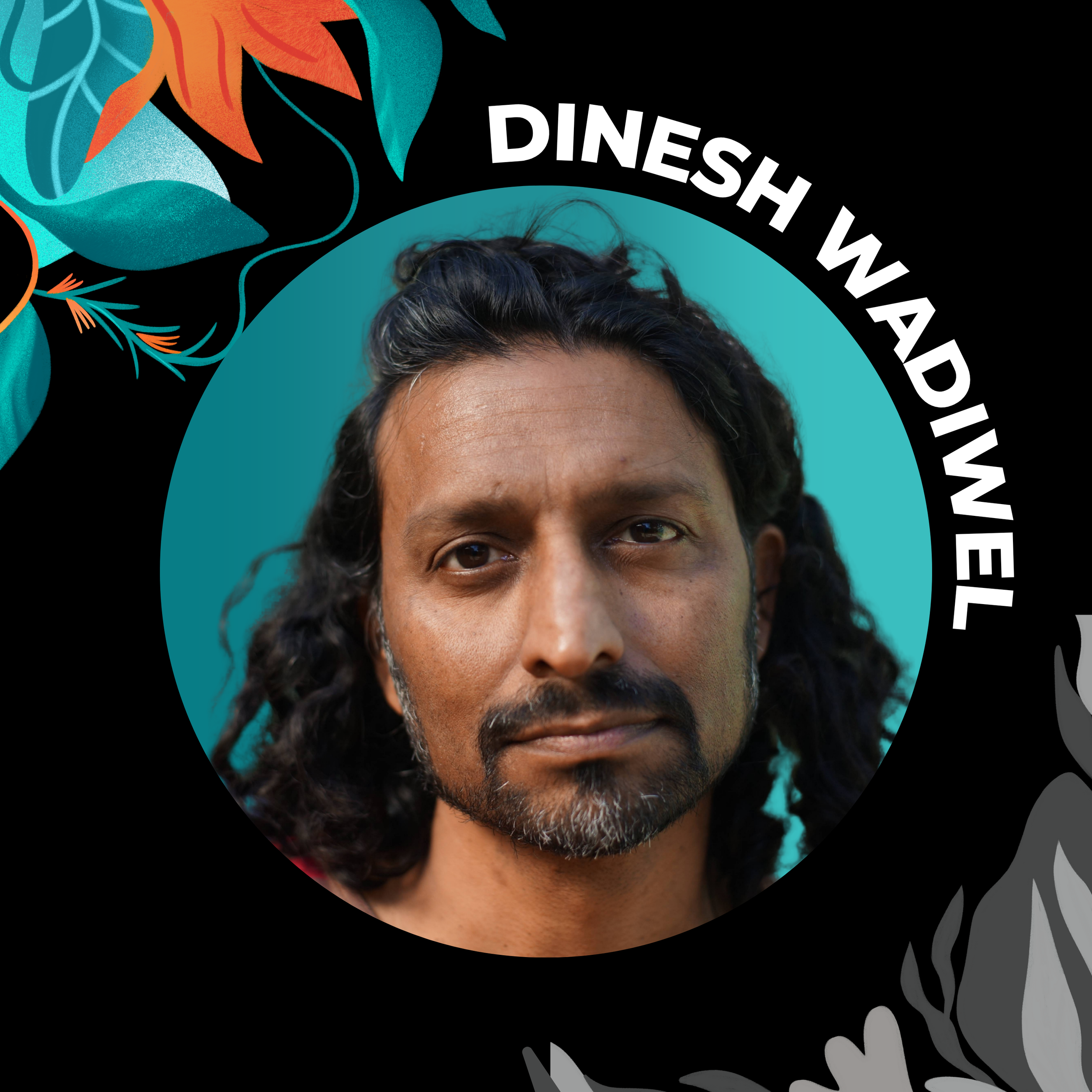



A global war against animals is driven by capitalist exploitation and profit. Dinesh Wadiwel, author of Animals and Capital and The War Against Animals, shows how capitalism treats animals as commodities, raw materials, and self-reproducing labor. He advocates for an anti-capitalist animal politics that builds alliances with social justice movements to advance both animal and human justice. Highlights include:
Why the concept of 'hierarchical anthropocentrism' is essential in revealing how human-centered thinking and systems of hierarchy together justify domination over both animals and marginalized human groups;
How 'hierarchical anthropocentrism' spread globally through colonialism with its racial and ethnic hierarchies and was then exponentially increased in its destructiveness by global capitalism;
How human relationships with animals - from industrial farming to pet ownership - reflect human domination and control of animals;
How we are waging a war against animals, even as we try to hide the reality of industrial animal killing through consumer distance and sanitized language;
Why animals’ physical resistance to human violence is politically significant and doesn't rely on moral appeals to animal sentience;
Why the rise of utilitarianism within animal rights philosophical theory coincides with the rise of neoliberal capitalism;
How animal agriculture has grown so large - not because of human need - but to serve capitalist profits by stimulating demand for cheaply overproduced animal products;
How capitalism sustains animal exploitation by treating animals as laborers that reproduce themselves as profitable commodities;
Why an effective animal rights movement must have a structural critique of capitalism that allows it to build alliances with social justice groups, such as labor and indigenous rights, in order to resist the capitalist structures that oppress both animals and people;
Why the lack of a theory of the state weakens animal advocacy by leading activists to overestimate the role of liberal democracies and legal reform, even as both animals and many humans experience increasingly totalitarian relations to the state.
MENTIONED IN THIS EPISODE:
-
Dinesh Wadiwel (00:00):
One of the common critiques when you have conversations about vegetarianism or veganism is that, oh, you are being culturally imperialist. And I found this really strange because actually the main force of cultural imperialism is capitalism. It's completely changed the diet of everybody. Even if we think about, say, the United States or Australia or countries that actually maybe had traditionally high rates of meat eating, what we've seen is actually increased meat eating and increased fish eating in ways that have completely recomposed the diet. And that has been a result of the capitalist production process, which has multiplied the number of animal lives that are there, has intensified that production, driven down costs and made this food available.
Alan Ware (00:42):
That was social and political theorist Dinesh Wadiwel. In this episode of OVERSHOOT, we'll talk with Dinesh about how capitalism and anthropocentrism fuel the exploitation and mass killing of animals and what kind of social movements could build resistance and advance the cause of animal liberation.
Nandita Bajaj (01:09):
Welcome to OVERSHOOT, where we tackle today's interlocking social and ecological crises driven by humanity's excessive population and consumption. On this podcast, we explore needed narrative, behavioral, and system shifts for recreating human life in balance with all life on Earth. I'm Nandita Bajaj, co-host of the podcast and executive director of Population Balance.
Alan Ware (01:35):
I'm Alan Ware, co-host of the podcast and researcher with Population Balance. With expert guests covering a range of topics, we examine the forces underlying overshoot: the patriarchal pronatalism that fuels overpopulation, the growth-obsessed economic systems that drive consumerism and social injustice, and the dominant worldview of human supremacy that subjugates animals and nature. Our vision of shrinking toward abundance inspires us to seek pathways of transformation that go beyond technological fixes toward a new humanity that honors our interconnectedness with all of life. And now on to today's guest.
(02:15):
Dinesh Wadiwel is a political theorist and associate professor in human rights and socio-legal studies at the University of Sydney Australia. He is author of the 2023 book, Animals and Capital, and the 2015 book, The War Against Animals, and is co-editor of Foucault and Animals. Dinesh was part of a team of researchers who produced two reports in 2022 and 2023 for the Royal Commission into Violence, Abuse, Neglect, and Exploitation of People with Disability. He has a background working within civil society organizations including in anti-poverty and disability rights roles. And now on to today's interview.
Nandita Bajaj (02:58):
Hi Dinesh, and welcome to our podcast. It's great having you on.
Dinesh Wadiwel (03:03):
Thank you so much for having me on the show.
Nandita Bajaj (03:05):
It's our pleasure. And Dinesh, over the years we've had many animal advocates and ethicists and we appreciate your unique analysis that reveals a deeper structural critique of systems of human domination over animals, specifically how you use a Marxist-inspired framework to challenge capitalism and its instrumental role in normalizing and propagating mass violence against animals. And we're really looking forward to exploring many of these ideas with you today. And we can begin with your latest book, Animals and Capital. We know that industrial animal agriculture is expanding rapidly across the globe, and in your book you argue that industrial animal agriculture as typified in the factory farm embodies both capitalist production and what you call hierarchical anthropocentrism. And many of our guests have used terms like human exceptionalism or human supremacy. What does the concept of hierarchical anthropocentrism add to our understanding that these terms might miss?
Dinesh Wadiwel (04:21):
Thank you for the question and it's great that you've picked up on this term that I use, which is quite a specific one. It's something that I've been working through for a number of years. Anthropocentrism essentially expresses that we have a human-centric viewpoint and some scholars will say that's the core of the problem. We see the world just through human eyes. What I noticed about this term is that it lacks specificity. So one issue we have with it is that it's kind of impossible as humans to see the world through the perception of other creatures or from other perspectives - that we have to look through a human lens. What I've particularly noticed is that actually the concern isn't we have an anthropocentric lens, it's that we look at the world in a particular way and it's a particular kind of anthropocentrism that's the problem.
(05:08):
Many scholars, particularly in the space of critical race theory, point out that the enlightenment is associated with a particular kind of ordering of life. So you have humans at the top, animals below, plants below, and it's a hierarchy. Some scholars will trace this to almost religious ideas of what might be called a 'great chain of being'. What's of interest to critical race scholars is that that ranking doesn't just include humans at the top and then animals. It's actually a ranking of humans too. And this gives birth to modern enlightenment views around racial separation between humans. To me, actually this is really useful because it highlights that we're not dealing just with human supremacy where all humans are the same. We're actually dealing with a knowledge system that ranks life but also ranks human life as well. And that's why I use the word hierarchical anthropocentrism.
(06:01):
It both indicates something like human supremacy because humans are definitely at the top of the tree, but it also keeps alive the idea that humans themselves are ranked by this particular knowledge system, this particular way of viewing the world. It's important to note that other knowledge systems don't necessarily rank humans in the same way or position humans as the most important beings on the planet. So that's why I think it's interesting to think about it as a knowledge orientation that we have inherited from that enlightenment tradition. So key to this idea is that the expansion of this particular knowledge system wasn't just because it was a good idea and some people told other people and said, oh, this is the way we should look at the world. We know that it's actually due to a set of geopolitical military relations of force, colonialism. We can look at history and we can see the accounts of particularly indigenous peoples globally, where the emphasis of European colonizing nations wasn't just we are going to take your land.
(06:59):
It was actually, you are going to look at the world the way that we look at the world. And that was part and parcel of that process of European colonization. Tied to this is that we can't flatten indigenous peoples, but there are certainly many indigenous people who we know had a very different relationship to nonhumans. That included a perception that humans were just one other group of beings alongside nature, and that the construction of social relations was tied to nurturing land or nurturing relations with nature. Key to European colonialism was the transformation of those relations into one of acquisition where there's a perception that nature is there for the taking. And you can see this in a range of enlightment philosophers. An example would be someone like John Locke who says, well, I've read Genesis from the Bible and God gave us the Earth as a commons and our right is to transform that commons to private ownership.
(07:57):
And that's the story of the last 300 years, and it is about a knowledge system that is imposed as part of a process of colonial conquest. It's also why it's hard to separate between the history of capitalism and the history of colonialism. Clearly colonialism is part of the resource extraction process of capitalism, but it's also about a knowledge relation. It's about making available through that knowledge relation nature as a resource for capitalist accumulation. So those two things go hand in hand, and in my view, hierarchical anthropocentrism was a useful way to describe that particular approach, that knowledge approach.
Alan Ware (08:35):
Yeah, and in your 2015 book, The War Against Animals, you frame the human-animal relationship as an ongoing war that's systematic, normalized, and most often invisible. So what led you to characterize that relationship as war and what do we risk overlooking in the human-animal relationship if we see the human domination of animals as anything less than war?
Dinesh Wadiwel (08:59):
That book was my first attempt to try and make sense of this mass scale violence we see all around us. Our normal association of war is that it's about two armies facing each other and they engage in mutual form of contest. The reality though is of course war today is conducted in a range of different ways that look nothing like that. So we have war by remote, we have cold war, we have guerilla warfare. There's actually modes of war, informational war, different ways of using that word war that evolve. And actually in some ways this reflects theoretically with what war is about. So I was particularly influenced by the German theorist of war, Carl von Clausewitz. And Clausewitz makes this argument that war is effectively about a kind of violence that seeks to achieve domination over a population. So against the idea that war is you just annihilate the enemy, actually the goal of war is domination.
(09:55):
And so he makes the argument that actually let's not worry about how war is carried out. Let's try and understand war as this sort of corporate act of violence that aims to achieve domination over another person or another group. And this became really interesting to me because I think actually if we look at human-animal relations, the kind of violence that we see, it's wide-scale spread, in almost every case it's about achieving domination over populations. In the book, I make it clear that we are not just talking about food systems, which are actually the most prominent visible site of that war. So at this point in time, probably we're talking about 90 billion animals are killed each year for food, land animals. Probably in the order of two to 3 trillion fish are killed for food each year. The numbers are absolutely intoxicating and this is mass scale violence to achieve domination for human utilization.
(10:48):
But we can also look at any number of different areas - research, animals used for recreation and sport, hunting. We could even look at another mainstay relation, which is companion animal relations, where although these animals are protected and many people have beautiful relations with these animals, they're also relations that are founded on domination and this includes societies or the owners of pets firstly having a property relation. Secondly, having rights to absolutely control movement, sexuality, sociality, food, these are relations of domination effectively. When I looked at all of that, I thought, well, this is pretty intoxicating. I make the claim in the book that most of our relations with animals involve violence and domination. And it's interesting that no one's really contested me on this question. I think it's true. It's very hard to analytically say this is not the case. But it was another theorist that really helped to shape how I looked at this.
(11:43):
And this is the French sociologist, philosopher Michel Foucault. I think it's the 1976, 1977 lectures he gave at the College de France. He makes this observation that in some ways our societies are examples of societies that have internalized war-like relation. And how does he make this argument? He actually goes back to that other theorist I mentioned, Carl von Clausewitz. And Clausewitz has this famous aphorism where he says that war is policy or politics pursued by other means. And what he means by that is that in peace time we have politics where you have different interests contesting with each other in peaceful but antagonistic ways and war is the moment when those relationships break down. That's when people give up diplomacy and pick up their guns. Foucault flips this and says, well, does this mean that politics is war pursued by the needs? And he notes that actually, if you look at the history of nation states, typically they're not founded through mutual agreement.
(12:42):
They've been founded through bloody processes of colonialism, war, slavery. These are the founding moments of most societies and certainly if we look at say the United States or Australia, this is actually part of the fabric of the founding of those societies. It's actually conquest and war, not peace, that found those societies and the remnants of that war continue to shape today's relations in those societies. And certainly that's, we can see this say in the US where the history of colonialism and indigenous dispossession combined with racialized slavery continues to actually shape everyday relations many centuries later. In Australia where I come from, the fact that Australia is a settler colonial society that has systematically erased indigenous sovereignty or seek to erase indigenous sovereignty continues to shape that nation state. You could say in a sense there's a continuing war against indigenous people in Australia that is carried out through policy, not through guns.
(13:38):
When I read this, I thought, well, isn't that what we do to animals? And what Foucault points out is that in this state of war, you carefully construct relations in that state to pretend that the war is not happening. So everybody says we're at peace, we get on with these people. But beneath that, there's this ongoing conflict that means that certain population groups experience violence, exclusion, dispossession, and immiseration as part of that process. And to me this I thought, well, this is useful for describing what we do to animals. We carry out mass scale violence against trillions of animals across the planet, yet we constantly pat ourselves on the back and pretend that this is not happening, that we have good relations with animals. Some of us even claim to be animal lovers while we are doing what we do. To also point out that these relations of intense violence and domination coincide with this curious misperception about what our relations are.
(14:35):
One reason I think that it remains important to use this frame or I'm not pretending it's a perfect frame, but again, I mean we lack words to describe because it's quite unique. But one reason I think it's important is that it helps us to understand what we're up against. We are up against a extraordinarily widespread form of mass violence that numerous humans are involved in, that our economy is interconnected with. And to unseat that is going to require a lot of work to happen. So that to me, it's not just work at a material level, it's also what I'd say ideological or epistemic work in terms of our knowledge systems. How do we see this problem? How do we see that it's happening and how do we see alternatives to it?
Alan Ware (15:15):
Yeah, and as you mentioned too that the animals resist the violence, they resist the domination, and you talk about the biting, the escaping, the stampeding, withdrawing, refusing to breed within that system. And you've also talked about often it's not in relation to humans and industrial ag, it's this fixed capital of metal chutes and ladders and ramps, and they're interacting with our machines, which also kind of made me think about how we hide the violence and distance ourself from the war in a way that similarly modern warfare, dropping bombs from 20,000 feet to our drone warfare, we try to distance ourselves from the direct experience of the suffering of the humans or animals that we're trying to subjugate.
Dinesh Wadiwel (16:02):
And there are two different ways to hide. One would be to sequester and obscure from site and certainly for land-based animal agriculture, that's the standard way to do it. And there's numerous ways you can do that. You can privatize the property where animal agriculture happens. You can intensify it and enclose it so that it's not visible from the outside world. You can criminalize those who seek to show what's going on. But it's also important to note what I call the epistemological or the knowledge relations that also hide from view and sometimes they hide from view what is in plain sight. So you know I talked about companion animals. We tend not to see a human walking a dog on a leash as domination, but that's precisely what we're seeing. Again, I don't mean to be critical because sometimes in these cases, humans have beautiful relationships with these creatures who have saved a life that might be otherwise horrific.
(16:55):
So I know many animal activists who rescue animals, and I don't mean to be negative about that work, but it's also an epistemological relation that allows us to not see those domination. But we can also see just related to more intense sites of violence, it's particularly in the area of say, fishing and fisheries that I'd say we see the most strong epistemological violence happening. And although we sequester land-based animal production, you can find any number of videos or either people catching fish or people on their dating apps putting up a fish or whatever it is. Coming back to this question of resistance, what I find just sobering but also just curious, is that you can google purse seine fisheries and see footage of industrial purse seine nets or trawlers hauling up hundreds of thousands of fish. Those fish are literally struggling for life as they drag from the waters.
(17:50):
And we don't see this as resistance. We tell ourselves these are barely sentient creatures who don't know what they're doing. The official nomenclature is to say, these are animals that are harvested from the oceans. That's what the food and agriculture organization tells us. But when you look at those videos, they're actually the individual beings resisting to the death what is being done to them. And that to me is a really good example of the epistological challenge we have that we can actually even see this in front of our face and we can tell ourselves that this is not happening. We are not seeing resistance, we are not seeing violence, we're seeing something else. And I think that's the big challenge ahead of us in terms of how we challenge that.
Nandita Bajaj (18:30):
You had talked about how even for animal advocates who are fighting for the abolition of many of these oppressive systems to look at animal liberation from a framing of resistance, not exclusively, but more than just looking at it from a framing of suffering because of this challenge that we have, especially around marine animals, where there's just so much contestation around whether they even are sentient, do they experience pain, do they have emotions or cultures or language? And I found that very helpful to reframe that perspective of do they resist? There's absolute and clear resistance in how they respond. And yeah, I think that's not to minimize the framing of suffering, but to add that extra layer for people who are still not convinced that fish and marine creatures have consciousness or sentience.
Dinesh Wadiwel (19:31):
Yeah, thank you for that. One thing I'd say is that every frame we use for thinking about a problem has its limits and that frame of sentience was very powerful. So we know that certainly for say someone like Peter Singer who is incredibly influential in terms of the modern animal rights movement, that sentient frame was very useful for being able to make an argument which fit his utilitarian perspective. Note that the sentience frame or even frames around say capacities for intelligence, they fit also that narrative of hierarchical anthropocentrism I just described. So they also happen to participate in this ordering of being. But I'm not a moral philosopher, I'm a political philosopher, and for me, the bread and butter of analysis isn't about whether a being is sentient. It's not unimportant, it's just not where I focus my work. I'm interested in questions of power, the distribution of resources, questions of justice, and here a word like resistance actually is useful and means a whole range of different things than sentience.
(20:34):
Resistance to me is really useful because it indicates the way that an individual or collectivity of individuals assert their rights and sometimes their sovereign rights against somebody who would seek to intrude upon those rights. And as you point out, to me it sidesteps a whole range of arguments that are necessary when we look at say, fish communities asserting their rights or their sovereignty or their self-determination to me, whether or not they're sentient is beside the point. We can see what's happening before us. To me, it's no surprise that during this period of time, over the last 40, 50 years that we've seen the rise of utilitarianism within moral philosophy in animal rights theory, that it's happens to coincide with the rise of neoliberalism. So the two philosophies actually sit side by side, and it's no surprise that utilitarianism in this period happens to have ended up becoming the main voice of animal protection because it just neatly coincides with it. To me, it's just interesting that at this time of neoliberalism where global economies were reorganized, we've seen an expansion, acceleration in capitalist processes over that time that this particular philosophy that had no power to actually challenge the structures, the drivers of the expansion of animal utilization, this particular philosophy came into force. And it's a bit unsurprising from that perspective, it's domination of the field.
Nandita Bajaj (22:01):
And in that regard, coming back to your latest book, Animals and Capital, you argue also that within this system of profit maximization animals are not just a raw material that they then become a food commodity within this process, but they're also laborers. And another point that was interesting within this framing was how dramatically our diets have changed in the 20th century and how intensive animal agriculture has allowed that to happen or has benefited from that. So could you unpack both of those ideas, animals as laborers, raw material, as well as the food commodity?
Dinesh Wadiwel (22:46):
Yes. In the book, I make an argument that animals appear before us in three different ways within a capitalist economy. Two of them are really familiar. So the first one I'll just say is they appear as a commodity form as food. So this is really familiar. Just go to the supermarket and you'll see the products of that production process, the parts of dead animals for sale, and that's the animal as a commodity, consumption commodity. Another life of animals that we're seeing that in this case they're actually alive is as raw material. So globally, there's probably a standing stock of about 50 billion land animals alive at any one point, in animal ariculture systems probably three to 400 billion fish. We don't have exact numbers on fish, so lots of its estimates. So they're alive at any one point. The fish are alive in aquaculture facilities and land-based animals largely in intensive animal agriculture but not only.
(23:42):
These animals appear on the balance sheets of economies as raw materials. So they're treated like any other raw material, bits of wood or plastics or minerals that are to be used towards the manufacturer of a consumption commodity. So in the case of animals, they'll spend their lives in these facilities and they will be transformed into food. One variation of course is animals that are in production as producers of raw materials. So dairy cows is an example. So there's a slight variation on that story. In the book I say, well, this is actually the prominent ways that we've seen animals is through these two different lenses, consumption commodity, raw material, and it doesn't matter who you ask. It could be a producer, it could be an animal rights activist. We all see the world through those two lenses. One of the innovations in the book is to make an argument that animals also appear as laborers.
(24:37):
I make that argument that this is actually a big hidden part of the process, but noticing the labor of animals is transformative in different ways. To make the argument, I look at some recent work on labor and particularly reproductive labor. So there's been particularly growing scholarship, particularly in the feminist labor studies space, which highlights the ways that bodily processes get drawn into the commodity production process of capitalism. That's particularly influenced by a scholar called Amrita Panda who does this fantastic work on the commercial surrogacy industry formerly in India. I think now it's officially outlawed in India and Panda notes the way in which people with gestational capacity can be effectively turned into laborers for profit through this process. But here the labor is quite different from the labor that say Marx would've described in the pages of his text, Capital. Instead of the worker working on a raw material that is outside their body, so say a worker sanding a piece of wood to turn it into a table, instead, the commodity or the raw material is inside the body and will become the commodity. The embryo becomes the baby. And at that point, just like every other worker under capitalism, the object of labor ceases to become via the workers. It becomes somebody else's, and it sort of fits perfectly the capitalist production process. The reason I found this really fascinating is that Panda and others theorize the way that the metabolic processes of the body become labor, not because they look like labor in a kind of traditional sense, like hammering a nail into a piece of wood, but because that particular process becomes a surplus-producing activity for the economic system, that for Marx is actually what labor is about. In my view there's all sorts of evidence that that's precisely why capitalism leapt upon animals.
(26:35):
It is because their unique metabolic and gestational capacities. It's gestational in the case of say, animals that do reproductive labor, these unique processes can be left upon and turned into value-producing activities. And what I mean by value-producing is that the reproductive costs of that labor, the cost to keep that animal fed so it can keep doing what it does are less than the value that it produces. This actually conforms precisely with Marxist formula for capitalist exploitation. So if you've read Marx, you'll know that key to capitalism is that the work is always paid less than the value that they produce, and that's what keeps the whole world ticking, right? McDonald's worker churns out burgers, is paid whatever the minimum wage is, $17 an hour, but they produce over that one hour that they're paid $40 a profit or whatever it is, right?
(27:25):
And the difference is taken by the capitalists. In my view, this is key to understanding the labor of animals. It's also key to understanding part of the reason that we've seen an explosion in the number of animals using capitalist animal agriculture. The long run tendency of animal agriculture, which happens to be the long run tendency of almost all capitalist production, has been the introduction of machines, technologies, enclosures, or what I would call fixed capital into production, which typically displaces human labor and reduces human labor time to produce more and more profit. In the case of animal agriculture, what we're seeing is the arrival of full scale automation, particularly we're seeing this in dairy industries, but you also see this in aquaculture where human labor is completely out of the equation. Actually there's just a relationship between animals and technologies to produce profit. You asked a second question, which is about the change in human diets, and I think this is an important part of the story.
(28:20):
So I've said that one driver for the expansion in the number of animals used for food is driven by the surplus that can be gained from production. So in the classic Marxist analysis, what marks out capitalism is that the reason that you produce something isn't because somebody needs it. It's because you can make dollars from producing that thing. Animal agriculture produces and researches around the world in a constant search for the optimization of what is called feed conversion ratios, and this is the volume of feed that goes into the system versus the so-called yield or end weight of the animal. For animal agriculture producers, the key is to put in as little or as cheap feed into the system so you can gain the most yield, and there's this constant search race to the bottom to get this number correct. That's key to the kind of Marxist understanding of capitalism.
(29:15):
To me, this is really important because it tells us that the reason that animals have been amassed in our food systems isn't because there was a human need for this. It's because dollars could be made through that production process. But this creates an immediate problem of how do you dispense with those products? That's typically by generating needs, generating the need for those commodities. We can see this all around us by the way. So mobile phones, all the commodities we have in our houses, all the pointless things that we are told that we need and something we desire. That's of course the story of capitalism. And when we are looking at these processes, it's interesting to just see how human food consumption practices have changed over time in the history of the 20th century. If we look at say, chicken production, what you see is an exponential growth in chicken consumption during the 20th century.
(30:08):
And what I mean by this is that at the turn of the 20th century, very few people ate chicken as a core thing. Today we basically kill about 55 billion chickens per year, and they're the most eaten food commodity. To me, this is a very good illustration of the way that capitalism has recomposed human food supplies based upon its model of accumulation, which is to use animals for mass accumulation of profits. Some of these perversities are extreme. So if we look at something like dairy, for many people across the world, the idea of consuming the lactations of animals is just weird. It's not part of human diets, but we know that actually as a result of this production model, dairy has become a staple for most of the world's population. Another areas we look at seafood, for most of human history, you wouldn't eat seafood unless you're a coastal person.
(30:58):
And there's good reasons for that because we didn't have industrial forms of refrigeration to enable other people to eat it. That's the same for dairy, because of these processes actually increasingly, I mean seafood consumption is also exponentially rising and a whole range of humans are eating this who never did because of this recomposition of food supplies. So something that often happens when you have conversations about vegetarianism or veganism is that one of the common critiques is, oh, you're being culturally imperialist. So I've heard this critique a lot, and I found this really strange because actually the main force of cultural imperialism is capitalism. It's completely changed the diet of everybody. Everybody, right? Even if we think about, say the United States or Australia or countries that actually maybe had traditionally high rates of meat eating, what we've seen is actually increased meat eating and increased fish eating in ways that have completely recomposed the diet.
(31:54):
This has been driven by the mass availability of animal source foods, which have been made cheap and available and recomposed the diet. And that has been a result of the capitalist production process, which has multiplied the number of animal lives that are there, has intensified that production, driven down costs and made this food available. So to me, this is, again, it's a very structural analysis, but it gets around the problem that animal rights theory faced previously, I'd say, where it imagined that either humans were deceived about what animals were experiencing or that humans somehow desired this. Some people woke up in the morning and said, I want to eat chicken today. This actually missed the fact that you don't desire things unless it becomes available. And we know this from all the commodities that are around us now that suddenly we desired, but we know that actually consuming these products is destroying the planet. We don't need another T-shirt, we don't need another car. It's actually, that's the problem, right? And it is a problem of economy, if you like, not necessarily human desire. I think human desire is tied to it, the problem, but we also need to talk about an economy that makes available these products and as part of its motivation is to overproduce products and then stimulate demand for those products.
Alan Ware (33:10):
And we've had a lot of people on the podcast also that have talked about the liberation of animals and pushing for the liberation from these oppressive systems, but many others, as we know have been focused on reducing the suffering and improving animal welfare within that system and not really fundamentally changing the system. And we've had plenty of guests on critiquing that welfarist approach. What is your main critique and what do you think the animal welfarists are missing?
Dinesh Wadiwel (33:38):
So I really understand the welfare/rights divide, but I don't rest on that, though I think it's an important distinction. One reason I don't want to hinge my analysis on this is that maybe it's possible to imagine certain forms of welfarism that might head towards more radical change. Maybe it is possible, and I'll give you an example in a second of maybe where that is possible. However, in this book and in The War Against Animals too, I make clear that typically welfarist approaches tend to work within the logic of capitalism. And what I mean by this is that typically welfarist reform firstly doesn't intervene with the general rationality of capitalism, which is to expand accumulation and use of animals for profit. And this is, of course, this is tangibly true that say over the last 40 or 50 years, we've seen heightened concern around animal welfare and changes in animal agriculture systems to meet those emerging views and maybe even sometimes consensus about how animals should be treated.
(34:41):
But none of that has actually slowed down the rate at which animals are used. In fact, we've seen perhaps diabolically this exponential increase in the use of animals for food. But secondly, if we look at examples of the specific welfare interventions that are used, sometimes the things that are done to make production kinder or reduce suffering or trauma for animals are precisely the things that speed up production. So let me give you an example. It's one that I use in The War Against Animals but also in Animals and Capital is the example of curved corrals in slaughterhouses. So in traditional slaughterhouses, there was a straight shoot that led to the point of slaughter. Animals, because they're not stupid, could smell and hear what was coming, and they tended to balk and to stop and hesitate when they were heading up into the ramps. Different welfare scientists, including people like Temple Grandin devised alternative chutes and particularly curved corrals.
(35:39):
And these were curved or spiral corrals that hid from view what was going to come. The claim from some of these scientists was that it matched the ways that animals move more naturally. This had the effect of reducing suffering and trauma, so the animals did not have to see ahead about what was happening to their companions. However, it also speeded production. The two things went hand in hand. And I think actually this is true if we look at lots of animal welfare interventions that they actually also happen to speed up production. I don't want to say all welfare is bad. We could imagine welfarist interventions that work against capitalist rationalities. An example would be slowing down line speeds in factory farms. So to me, this is welled in that we know that animals probably are treated better when the line speeds are slow. We certainly know that in slaughter facilities, the rates of animals that might be killed without being stunned effectively will reduce If you have slower line speeds.
(36:34):
Workers actually will be treated better if you have lower line speeds. And that's why trade unions typically argue for that. That's a welfarist intervention, but it actually slows the number of animals that animal agriculture can kill. And that's why I would argue as a Marxist that there's every reason for animal welfare organizations to work with trade unions to argue for low line speeds because it will have a system-wide effect, right? And to me, that's a very welfarist intervention, but it actually meets some animal rights demands in that it reduces the number of animals used and killed by animal agricultural systems. So to me, there's benefit in thinking about it that way. So it's one reason, again, to emphasize that I don't rest my whole analysis on saying I'm an animal rights person versus an animal welfare person. To me, the distinction is important analytically, but we don't need to let this shape or dominate our understanding of how we move forward.
(37:29):
And I want to keep open the idea that maybe there are some welfarist strategies that could head us in the right direction. Though I want to also note very clearly that many of the welfarist interventions have actually made the problem worse in terms of this process of mass accumulation and acceleration in the use of animals for food. But one challenge I think with the animal rights movement is that it doesn't come with that structural analysis. It doesn't say, actually the problem is not only about speciesism, for example. It's actually about the capitalist production process that has produced this horror show that's before us. And in order to take on this problem, we need to take on both. It's hard, right? But we need to understand that that's the cause of this particular thing before us. Some people have objected to me and said, well, humans have been cruel and dominated animals forever.
(38:20):
Isn't that the cause of the problem? But I actually think that's a bit of an historical way to read this problem. And to me, the thing that is in front of us is this unprecedented in human history explosion of the use of animals, but a use of animals that is egregious because of the particular form, which is about capitalist accumulation. That doesn't mean that I'm apologizing for other uses of animals. I'm just saying that this is actually the main form that we see in front of us. And to take that on, we need to take on the economic system as well. It just happens, by the way that I'm saying this at exactly the same time as say environmental economists and green movements are saying this economic system is incompatible with where we need to go with the planet. So to me, there's something interesting about making this point at this time, and as part of the maturation of the animal rights movement to be able to be in sync, if you like, with those other movements.
Nandita Bajaj (39:16):
And then given your analysis of capitalism's drive to extract maximum value from animal life, how do you see industrial animal agriculture fitting into the broader picture of ecological overshoot? And what insights does that offer about the nature of the overshoot crisis?
Dinesh Wadiwel (39:36):
Overshoot is not the framing I necessarily use in the book. Actually, the framing I use is around capitalism as the source of the problem. As I mentioned, the capitalist economic system relies upon the use of a production process where the goal of production is profit, not meeting a need. And one way to think about this is that capitalism has sucked planetary systems into its works in order to print money. I want to emphasize that it is this economic system that has transformed our relationship with life on the planet. The reason that human population is interconnected is that capitalism has to compose a workforce to make this all happen. And it's no surprise in the 20th century in the rise of industrialization and capitalism, we see the rise of human populations and also as my book describes, the exponential rise of animal populations. So the two populations have been composed as workforces, but also as the beings who consume the products of this machine. If we had economies that met needs, we would be in a very different circumstance. I'm not advancing a critique of the overshoot framing. It's just to say that's not really the framing I use and though I think it intersects with that sort of understanding.
Alan Ware (40:50):
Right. And as you've talked about the economic system and people on the political left who do care about human and non-human exploitation, but most leftist groups focus mainly on human justice, human social justice. How do you think animal rights advocates can build stronger alliances with movements like labor rights, indigenous sovereignty, environmental justice, even when animal issues aren't their primary focus?
Dinesh Wadiwel (41:16):
So part of the reason, the rationale for the book is to bring together anti-capitalist movements and rights movements. So in my view, this is the only way we are going to make substantial change, and that's by treating this as a structural problem and recognizing that we need mass social movements to achieve changes to these sorts of structures, and that requires alliance building. It also requires an understanding of how do you work with others around common interests, even if you don't share the same philosophy. I would say that's something that animal rights people are pretty bad at. I say this as an insider. I'd say that generally one of the problems with the framing that came from moral philosophy is there's a tendency to view that our allies are people who look at the world and look at how we see animals, they have to see the world in exactly the same way.
(42:07):
So for example, they have to be vegans, otherwise I'm not going to work with them. To me, this is highly problematic for the animal rights movement. It's led to isolationism. It's led to an inability to understand structurally how do you make change in society. I don't want to put the blame all at the feet of animal rights people because I've also seen the antagonism from other progressive and left movements towards animal rights people. So it's going both ways. But from the perspective of an animal advocate, I would say it's our job as animal advocates to make these linkages. The reason is that the only way that we're going to change vast structures in our society, including economies, is by working with other people. Part of the book is really to show that there are actually lots of different ways we can imagine working with other groups where even though we don't share the same philosophies, we actually have resonant interests.
(42:59):
Two examples that relate to both labor movements but also indigenous movements that I talk about in the book. Firstly, if we look at the space of industrial wild fishing. At this point in time, wild fish capture is just an absolute environmental disaster globally. And there are some scientists that say that core fish species that are used for food by 2050 or beyond, that they're going to be disappeared from the planet because of the rate of overfishing on the oceans. There's also a labor rights crisis. So much of the world's fish is caught in the Asia Pacific. The conditions are well-documented where there's vast use of low paid and even forced labor. And labor rights groups are active in that space trying to attain rights for workers in that industry. In my view, there's a missed opportunity for animal rights advocates to actually be involved in the alliance, the global alliance campaign to phase out world fisheries or reduce the intensity.
(43:55):
The reasons that animal rights people have not been involved, the various, one is that I'd say that animal advocacy has largely been focused on land-based animals, and this is a problem. It's a problem, an epistemic problem as I described earlier. Secondly, there's generally reluctance to work in alliance with people who don't share the same interests. It's a very clearly workers in those industries want a job, and they're not going to react well if you tell them, I'm not going to work with you unless you go vegan or you stop doing what you're doing. But we probably need a different strategy and a different theory of change to be able to work with those groups. And my view, a structural approach is useful because if we increase rates of pay for fisheries workers, this will increase the cost of wild fish captured and help to reduce the number of fish that are used captured. To me, these are the structural drivers.
(44:43):
Again, we don't have a crystal ball. Producers might find a way to automate elements of that industry, and that might get around the labor costs. So there's things that could change over time, but to me, there's the opportunity to use the structural analysis to determine the kind of alliances you make and the interventions you make to make change over time. That's not going to help us abolish fisheries, though there's lots of good reasons to imagine that this is happening as we speak. Wild fish capture rates have been declining, and that's partly because of the growth in land-based aquaculture. So the structural drivers are in place to make this industry end. The question is where is animal advocacy in this story? And largely I'd say it's not in this story at the moment, and I think, so to me, that's one example of where this sort of analysis and this sort of approach pushes us towards different alliances, but it's not an alliance where we go in there and say, go vegan or we're not going to work with you.
(45:36):
That's not going to work. We need actually a more nuanced approach and a long-term approach to how do we reduce the number of animals that are used and killed within animal food systems. A second tangent I think is interesting is around working with indigenous self-determination movements globally. If you look in this space and you look up, so if you google animal rights indigenous, you get these lots of these ridiculous debates around subsistence hunting and bizarre stuff. I think it's bizarre because again, from a structural perspective, the main game is industrial animal agriculture. I mean, that's the main game. And unless you have that structural analysis, you can't see that industrial animal agriculture and capitalist processes that are tied to colonialism have displaced the lifeways of vast array of beings on the planet. And in the case of indigenous communities, they've displaced some economies that maybe used animals, but used them in very different ways.
(46:31):
So to me, again, I don't want to say that firstly, that animal rights considerations around the moral worth of animals are not meaningful or that there isn't place for those sorts of discussions with different communities globally. I think that's important, but tactically, there's every reason for alliance in settler colonial states. There's every reason for alliance with indigenous sovereignty movements because of maybe that shared critique of land use and the role of animal agriculture in settler colonialism. If I take the case of Australia, vast sections of the Australian continent are locked up in these large, what are called pastoral leases. So the government give these long 99 year leases to largely wealthy farming families and multinational corporations. Largely on those past leases the two main economic activities are mining and animal agriculture. To me, there's every, in Australian context, it varies per country, but in Australian context for animal advocacy to work with indigenous sovereignty movements about claiming land back.
(47:39):
And that's just because we largely have large sections of grazing land that it's typically for sheep and cows. If we want to stop animal agriculture, a structural driver of that is land, and there's every reason to work in alliance. It doesn't mean that we agree on what we're going to eat for dinner tonight, but that's beside the point. So to me, this is one of the problems we have with the framing of the movement, and it has stopped this sort of alliance building that to me seems quite natural. So hopefully that helps to illustrate, I guess my thinking about it. It's also why I'd always say that our theoretical frame of how we understand the problem is useful for the kinds of strategies we imagine and the kind of alliances we have to build. And the hangover for the animal rights movement is that its prominent framing was born in analytic philosophy departments. In my view it's reached its limit of its usefulness. We need different framings, different ways of understanding if we want to take on what I see as largely a structural problem.
Nandita Bajaj (48:38):
And we see that in a lot of other movements as well, where there is a lot of siloing happening because of a lack of fluidity in terms of worldviews and like you're saying, a lack of structural analysis of the shared history of oppression, which creates so much opportunity for alignment for our many movements. You are also working currently on a book project called Animals and the State. What are some of the primary themes that you'll be exploring in that book?
Dinesh Wadiwel (49:09):
Thank you. Yeah, so it's a new project. It's many years away unfortunately. I'm a slow writer. It took me 10 years to write The War Against Animals and probably about 10 years to write Animals and Capital. Hoping it'll be sooner, but probably that's how long it's going to take to write this third book. When I wrote Animals and Capital, I noted that in some ways it's part two of The War Against Animals. In some ways, this new book I'm writing Animals and the State, is part three. A question that I partially addressed in The War Against Animals and didn't have space to address in Animals and Capital is what is the role of the state in all of this? Something that occurred to me when I was writing Animals and Capital is that animal advocates don't really have a theory of the state. Sometimes there's an implied assumption of the role of the liberal democratic state in facilitating change.
(49:58):
This seems to me to be erroneous for a couple of reasons. Firstly, I've heard a statistic that around 70% of the world's nation states are effectively totalitarian. Secondly, if you're watching events in the US and elsewhere, we will see that authoritarian forms of government are unfolding everywhere. And so to me, to keep fixating on the ideal of the liberal political state seems a bit misguided. Thirdly, if we look at the actual relationship between animals and the state, there's nothing democratic about it. It's actually closer to a totalitarian relationship, meaning that the state has what we might describe as an exceptional relationship to animals where there is no constitutional arrangement of power. There's no legal personhood for animals. There's limited capacity for animals, let alone animal advocates, to be recognized by the state. And the state authorizes mass scale violence against these beings with no recourse and no defense.
(50:56):
So to me, that's actually an honest and frank account of the relationship. I'm influenced here by actually not just animal rights theory. It's actually lots of theory in critical race theory or studies of colonialism. Catherine McKinnon's towards the political theory of the state, a feminist analysis of the state, which basically point out that actually for many humans, the relationship to the state is effectively totalitarian. There's no democracy as such. But the second half of the book is really about strategy, and it's really to say, if we acknowledge that the state is largely antagonistic towards the interests of animals, that if the state is actually present in relations, there's lots of examples where the state is almost just completely absent. If we look at something like fisheries, we've composed the planet's oceans as effectively commons where there's a free-for-all. So we basically, by international agreement, create a legal free-for-all for nation states to just plunder the oceans.
(51:47):
That's actually the absence of the state, right? Actually, if we look at recreational fishing, the same thing happens, right? Effectively, it's a private right to use violence in almost unfettered ways in waterways in most nation states. So firstly, the state can be absent. Sometimes the state is there to aid and abet mass violence against animals through legalization, regulation, through sometimes active subsidization, through criminalization of those who seek to oppose this use. Recognizing this, I think, is useful for animal advocates, because we stop pretending that we're dealing with this democratic nation state that uses constitutional processes that we can engage with. I don't want to discard those processes, but I want us to be really clear as advocates that we are dealing with a state that's antagonistic, and we need different strategies to engage with that state. And here I just want to remind advocates that they're long traditions outside of liberal democratic traditions for thinking about the state.
(52:42):
And these are used by social movements globally, which have tried to take on a state that is largely antagonistic to their needs. And these are questions around, for example, to what extent can we work with the state? To what extent do we need to actually hide or ignore the state in order to make change? Sometimes these might be questions about how do we strategically capture the state in some way, for example, through parliamentary processes in order to make change. So these would be questions that I think are worth asking tactically. These are questions that in some ways, radical green activists are asking to, so they're not discordant with what is happening elsewhere. But again, I think one of the challenges we have in the animal rights movement is that we haven't theorized the state adequately, and that's what this book tries to do.
Alan Ware (53:26):
We've interviewed Christopher Ketcham, who's written about the American West, which certainly showed that private business, cattle, ranching, mining, all of those interests can capture Department of Interior, Fisheries and Wildlife and all these organizations that are supposed to have a dual mission. Part of it being to steward those resources for future generations. And they just end up selling out to the pressure of the state of big business. And to the extent in the US, those two groups are just moving together to push greater deregulation and executive power and weakening the courts. And we'll see if they get to the point of directly working against the courts, they're pushing it.
Dinesh Wadiwel (54:09):
Yeah, I think that's a really good example. And maybe an example again that I want to emphasize the important role of theory. I say this as a political theorist, I'm selling my own brand, but we lack a theory of law as animal advocates. There are important figures such as Gary Francione, who have theorized the law to an extent, but we actually lack a theory of what the law does. And this has led to, I don't want to speak negatively about all the work that's done around personhood, animal personhood, achieving that sort of status of animals. But lots of it assumes a kind of an optimism about what the law can do that in my view, doesn't quite work, and that's a result of an incomplete theorization of what the law is. And from that theorization then, to me, should follow this question of tactics.
(54:57):
What are the limits of what we can do with the law? And when we get those limits, what should we pursue instead? So an elemental question there would be, for example, is it more effective for animal advocates to capture the legislature than to fight cases in courts? Where should we put our resources? And in my view, probably capturing the legislature makes more sense than fighting battles in courts. I don't want to completely dismiss the work of animal lawyers, but there's probably advantage in liberal democratic states for animal advocates to actually be focusing energies on that, whatever that is, whether that's capturing the agendas of major political parties or running animal justice parties or whatever it is. Maybe that's actually a more useful strategy, and I don't want to say either/or. It's just being clear tactically, what are we doing?
Nandita Bajaj (55:42):
Yeah, that's extremely helpful framing. It was really a pleasure being able to hear such a rigorous analysis by you of the relationship with animals within this capitalist state, but also just the different forms of hierarchies that exist and just, yeah, the takeaway of why so many of these anti-oppression movements need to be working together more and more. We really appreciate your time. Thank you so much for joining us today.
Alan Ware (56:14):
Thank you.
Dinesh Wadiwel (56:15):
It's been a real pleasure and I really appreciate the opportunity to speak to you and to obviously engage with the audience.
Alan Ware (56:22):
That's all for this edition of OVERSHOOT. Visit populationbalance.org to learn more. To share feedback or guest recommendations, write to us using the contact form on our site or by emailing us at podcast@populationbalance.org. If you enjoyed this podcast, please rate us on your favorite podcast platform and share it widely. We couldn't do this work without the support of listeners like you and hope that you'll consider a one-time or recurring donation.
Nandita Bajaj (56:50):
Until next time, I'm Nandita Bajaj, thanking you for your interest in our work and for helping to advance our vision of shrinking toward abundance.