
Oscar Winner Fighting for Animals
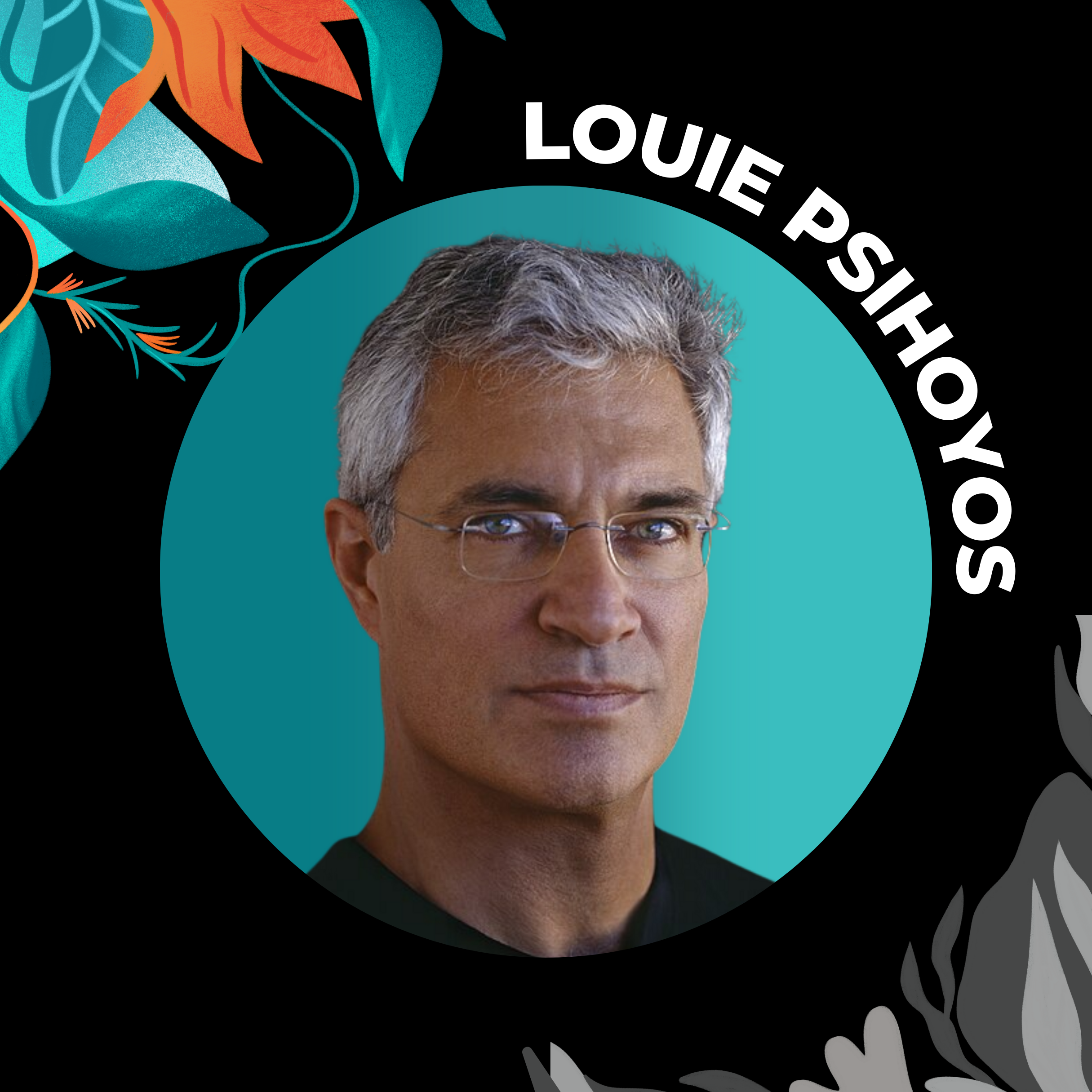



Academy Award-winning vegan filmmaker and former National Geographic photographer Louie Psihoyos joins us to share how he is using the power of storytelling to spark transformation for animal rights, human health, and environmental conservation. Highlights include:
How The Cove, his Oscar-wining documentary and the first documentary to sweep all the film guilds, inspired activism that helped reduce dolphin and porpoise slaughter in Japan by over 90%
How his team’s audacious projection events of endangered species on iconic buildings including The Empire State Building, The United Nations and The Vatican for their film Racing Extinction, received over 5.4 billion media views and led to laws that protect some of the earth’s most endangered animals;
How his third film, The Game Changers, a film about plant-based super athletes that exposes the myth that meat is necessary for protein, strength, and optimal health, triggered a 350% spike in online searches within a month of premiering on Netflix;
What his Netflix Series, You Are What You Eat: A Twin Experiment, uncovered about the 8-week health benefits of plant-based eating, and how the results went viral;
His most recent film, Mission: Joy a buddy film about how to find joy in a world of sorrow, stars his Holiness, The Dalai Lama and Archbishop Desmond Tutu and has been seen by 10’s of millions of people around the globe;
Where Louie’s focus is turning next: a new film exposing the destructive health impacts of plastic.
MENTIONED IN THIS EPISODE:
-
Louie Psihoyos (00:00):
The way I see my job as a filmmaker is like, how do you use storytelling to change or influence culture? To use a metaphor, it's like, I feel like as a filmmaker we're like the first mate on a boat with a drunk captain, and once in a while we can get up there cause he has to go and sleep and where you can you know adjust the course so we don't crash into the docks or into the bridge or whatever. And when you get a film that you can tell a really good story, but you can take the ship with tens of millions of people, you can start to embed yourself into the brain of all those viewers. I look at storytelling as the way that we change the world is that we change individuals one person at a time.
Alan Ware (00:45):
In this episode of OVERSHOOT, we talk with Academy Award-winning documentary filmmaker Louie Psihoyos. We explore how his emotionally powerful visuals and storytelling combined with this covert activism have inspired global movements for change, from saving dolphins to addressing mass extinction, to revealing the positive benefits of a plant-based diet to human health and the natural world.
Nandita Bajaj (01:18):
Welcome to OVERSHOOT, where we tackle today's interlocking social and ecological crises driven by humanity's excessive population and consumption. On this podcast, we explore needed narrative, behavioral, and system shifts for recreating human life in balance with all life on earth. I'm Nandita Bajaj, co-host of the podcast and executive director of Population Balance.
Alan Ware (01:43):
I'm Alan Ware, co-host of the podcast and researcher with Population Balance. With expert guests from wide ranging disciplines, we examine the forces underlying overshoot - the patriarchal pronatalism that fuels overpopulation, the growth-obsessed economic systems that drive consumerism and social injustice, and the dominant worldview of human supremacy that subjugates animals and nature. Our vision of shrinking toward abundance inspires us to seek pathways of transformation that go beyond technological fixes toward a new humanity that honors our interconnectedness with all of life.
(02:21):
And now on to today's guest. Louie Psihoyos is an Oscar-winning director, former National Geographic photographer and co-founder and executive director of Oceanic Preservation Society, a California-based nonprofit organization which uses media and groundbreaking projection events to scale social change. His first film, The Cove, which exposed the brutal slaughter of small cetaceans in Japan, became one of the most award-winning documentaries in film history. It was the first documentary to sweep all the film guilds and went on to win more than 70 film and environmental awards, including the academy award. For their film Racing Extinction he and his team led massive projection events where images of endangered species were projected onto iconic buildings, including the Empire State Building, the United Nations, and the Vatican. Those events received over 5.4 billion media views and led to laws that protect some of the earth's most endangered animals. His third film, The Game Changers, a film about plant-based super athletes exposes the myth that meat is necessary for protein, strength, and optimal health. And his most recent film Mission: Joy is a buddy film about how to find joy in a world of sorrow and stars His Holiness the Dalai Lama and Archbishop Desmond Tutu, and has been seen by tens of millions of people around the globe. And now on to today's interview.
Nandita Bajaj (03:50):
Hi Louie. It is such a great honor to have you on our show. It's not every day that we get to talk to Academy-Award winning filmmakers, so thank you so much for joining us today.
Louie Psihoyos (04:02):
Thank you. It's an honor to be here. Oh, don't let the accolades think anything different. Filmmaking is such a team sport really. It's like to take credit for any project really feels like I'm suffering from imposter syndrome. There's so many people that are involved in it. Hundreds, literally.
Nandita Bajaj (04:21):
Yeah. Well, we're thrilled about the work that you are manifesting under your leadership, and we have long admired your work and how you've used the power of storytelling with your films to help us all look in the mirror and reckon with our own role in the ecological destruction and as a result to inspire us to change our behaviors. And we're very excited to explore those ideas with you today. And Louie, you're the executive director of the nonprofit Oceanic Preservation Society, which according to the website works to combine state-of-the-art technology, courage, and covert operations, harnessing the power of the camera to expose crimes against nature and illuminate solutions. And your first film, The Cove, which exposed the brutal slaughter of dolphins in Japan, became one of the most award-winning documentaries in film history, including winning the 2010 Academy Award for best documentary. Having watched it several times, I can attest to the combination of your imagery, sound, and story that made the film so compelling. What impact were you hoping to achieve with the film? And looking back, what do you feel has been its most significant and lasting accomplishment?
Louie Psihoyos (05:48):
Oh boy. Our intention was to stop what's going on in Japan. And at the time they were killing about 23,000 dolphins and porpoises every year for human consumption. Even though the meat of all the dolphins that have been tested in the last 20 years from Japan have been shown to be toxic, anywhere from five to 5,000 times more mercury than allowed by Japanese law if it was a fish. But these are mammals. So the slaughter was escaping under this loophole. The last I checked, they were killing about 1,610 a year, which is I think over a 93% drop since the film came out because of the activism around it. It's still going on, but not to the same extent. So it did have a huge impact. I think in the first year it went down 60%. The mayor of Taiji, the town where they were doing most of the killing, was lamenting that their market dropped 60%.
(06:37):
And for them of course, it was a detriment, and to us it was a victory. And I think that's kind of what we're up against is you have perceptions in one culture where it's healthy. They always say it's part of their culture. It's true that about 400 years ago, two brothers were documented of capturing pilot whales by pounding rocks underwater, like chasing these dolphins, or pilot whales are just large dolphins, into a cove and then killing them. But they've really only started doing it like since the 1960s with fast boats. So the idea that this is tradition when you're doing a mass roundup of dolphins, that's bullshit. This is a modern blood sport for mass extinction, and it doesn't have any role in a civilized society. In fact, most Japanese people didn't even know this was going on. I think that's why it was such a shocker to even in people in Japan, because this happens in a very remote area of the country where it's a dialect where even Japanese people have trouble understanding them.
(07:37):
So Japanese people really didn't understand what's going on there. It can be very private. But to me what was so bizarre about the whole thing is that this was being done, this slaughter is being done in a national park, a wildlife protection zone. And the irony was just like you come into town and they have statues of dolphins and whales and literally painted on the walls that said we love dolphins, and they're celebrating dolphins because this is a place where they captured and trained more dolphins than any other place in the world for the dolphin amusement/abusement trade. There's I think over 50 dolphinariums in Japan. A lot of these were being trained and exported and sold for at the time it was like a quarter million dollars for a trained dolphin. So there's exporting into Middle East and China, places around the world. So the cove is happening right in the middle of town, between city hall and the whaling museum was the secret cove.
Nandita Bajaj (08:34):
I found it very interesting, some of the backlash, for example, you got around cultural tradition. And it's so interesting what you said that it really only started in the 1960s and it was a little rich to call it a tradition. But often when anybody, any kind of an advocate, whether it's a filmmaker, a writer, podcast producer shines a light on any form of animal exploitation, that is one of the first arguments people go to is cultural tradition. And it's interesting, we talked to social psychologist Melanie Joy recently, who's done a lot of work in exposing this worldview or this term carnism. And different cultures will consume different types of meats, as you saw dolphins versus pigs and cows here. But all of them kind of share this worldview of human supremacy, that it's okay for us to exploit animals. So for us, the work we're doing and the work you're doing is just exposing that worldview. You're not trying to shame this culture or that culture, it's just really exposing what's supremely wrong with the way that we have commodified nature and the nonhuman world. But what's really admirable about the approach that you've taken, the thing you're after is the behavior change. And I like that you mention, you go in to any of these films and your projects with the very clear intention of enabling that behavior change. And it's a testament really to why your films have been so successful.
Louie Psihoyos (10:18):
The way I see my job as a storyteller, as a filmmaker is like how do you use storytelling to change or influence culture? To use a metaphor, it's like I feel like as a filmmaker we're like the first mate on a boat with a drunk captain, and once in a while we can get up there because he has to go and sleep and we can you know adjust the course so we don't crash into the docks or into the bridge or whatever. And when you get a film that you can tell a really good story, but you can take the ship with tens of millions of people, if you tell a good story, you can start to embed yourself into the brain of all those viewers. I look at storytelling as the way that we change the world. It's we change individuals one person at a time. The stories that your parents told you when you were a kid, when your grandparents told you, those are all stories.
(11:11):
Every interaction is a story. They're shaping you. It's coming into you somehow. And it works in neuroplasticity. It's not just information. It's changing the way that you behave. People say all the time, oh, your movie changed my life. This had this effect on me. Well, I don't tell stories just to tell stories. We step out of the door with intent of trying to change the world with storytelling and the stories we do tell why they are seemingly if you were to break it down, what is that film about The Cove? I think Rolling Stone to me said it best. It's a cross between Bourne Identity and Flipper.
Nandita Bajaj (11:44):
Yeah, I saw that. It's a great description
Louie Psihoyos (11:48):
To me when I look at the first few films that we did, Racing Extinction and The Cove, they're a really result of watching when I was a child, too many James Bond movies and Jacque Cousteau specials. I love the tech, I love the excitement, I like the travel and I also liked doing something good with what I work on. A bit of my own background, I was a photographer for National Geographic. They hired me right out of college. I was the first new photographer they hired in more than a decade. And it was really unusual. There's a lot of National Geographic photographers now, but I was the first new one within quite a while. In fact, when I was a kid, you either wanted to be an astronaut or a photographer for National Geographic and you had a better chance of becoming an astronaut than a geographic photographer.
(12:31):
They were hiring astronauts, but they weren't hiring new photographers. So I squeaked through this sort of vetting process, but even back then, when I was just out of college, 23 years old, I wanted to use my photography, still wanted to do the same thing. So the first story I did for the magazine was on garbage and recycling. And this was at a time when there was only one mandatory recycling program in all of America. And I remember I had an internship and then I proposed this story and they accepted and I was so excited. And then I remember talking to my mother and saying, well, I just got a job at National Geographic. What are you going to be doing? And I was like, I'm going to be photographing garbage.
(13:13):
But that story became the most popular story of the year by readership surveys. But my idea was always like, how can you use art? How can you use storytelling to change the way people perceive something? So the original story, the title of that story that I proposed, I called it Urban Ore because at that time there was only one mandatory recycling program in America and we're throwing away glass, we're throwing away aluminum. There was no mandatory recycling going on. And I thought, we need to change the way that we perceive this because this is a potentially valuable resource. Other countries, they were guarding the waste with the army so it wouldn't be taken away and sold to a higher price outside the garbage dump. The irony was not lost on me as a young kid that we're off course, this ship that we're on. Maybe we could start to steer it.
(14:00):
And then when that story became very popular, they had more people write in that year, I think to a single story to National Geographic than any other one. And here's this new kid. I'd say the problem that I had back then is Geographic saw me as this kid. Oh man, he can make garbage look good so he can do anything. I like that though. It was a nice feeling to my young ego to be say, oh, here's this magazine I've adored since I was five years old looking at a copy at my mother's hairdressing shop and they liked me and I could do good stuff. I could travel the world. I never hopped on a plane until I started meeting the Geographic people. I mean, literally, I never went out of a three state area until I was 16 years old, until I got a car.
(14:41):
The other two states I could see from my window. I mean, that's how little I had traveled. And so the Geographic became a ticket to not just see the world, but to potentially do some of this work where you could change things. But they had a different idea. They wanted me to use my skills to make unpopular stories more popular or something that they couldn't see. I remember one of the stories that they wanted me to do was on the sense of smell and how do you photograph a smell? And I remember having a meeting with a managing editor of the magazine, Bill Garrett at that point, and he said, well, we're going to cancel the story. There's no way you can photograph the smell. And I said, hold on, hold on, hold on. Just give me six months, which back then wasn't a lot of time.
(15:22):
Usually those kinds of big stories like that were like nine months to a year and a half. And that story became the most popular story in the magazine's history ever shot by a single photographer. But I liked that challenge when somebody says it can't be done. That's like catnip for me. But it also got me off track like, okay, I can do something on smell, but to what end? And it wasn't until I got into filmmaking that I think I got back on course some 30 years later. I was 50 years old when I picked up my first film camera and that was The Cove. And The Cove became, you said, one of the most winning documentaries in history. It won 70 awards. It was the first documentary to sweep all the film guilds, but for the goals of the film, to get back to your original question, I wish it was all over and now I wish people in Japan would say, look, this has to end.
(16:16):
And we made a huge dent in that business, but it's still going on. I think there's, because for a lot of different reasons, it's the old guard, the people that do that. They need to die out first. New people aren't eating whale meat and dolphin meat. They don't want to be poisoned. They don't want to be poisoners. It's not that they're evil. I don't think anybody goes out the door in the morning and says, how can I be evil? How can I do harm to animals? They all make a rationalization. To give you an idea, I love this story. We were still working on The Cove. We had shot most of the sequences that most people that burns the retina, the people that watch it, the killing scene. And we were going down to the International Whaling Commission meeting down in Chile, and we wanted to talk to some of the Japanese people from the International Whaling Commission.
(16:58):
We were also going to be talking to Paul Watson who ran Sea Shepherd, a lot of other people on our roster. But talking to the Japanese people that ran the IWC was really gonna be important to us. So the plane is full. My memory, we were in Dallas taking a nonstop flight down and the plane's full. It was so full I couldn't even sit next to the people, my own crew. There's one seat next to me empty and the plane's being held for somebody that's trying to get onto another part of the airport. So our plane's waiting there for 10 minutes and then comes this Akira Nakamae, he's the head of the Japanese delegation of the IWC, and he sits down right next to me. I'm looking at my other crew who sees who sat down next to me. I'm going like...
Nandita Bajaj (17:41):
You recognized him?
Louie Psihoyos (17:42):
Oh yeah, yeah. In my world, he was pretty famous. It's like he's the guy I probably would most want to sit next to and talk. And at those times it's like another friend of mine calls it a 'god wink'. What are the chances? It's like, I don't know, 250, 300 people on this plane and the guy that you most want to see in the world sit down next to you. And strategically, I waited till the plane took off and we're getting served dinner.
Nandita Bajaj (18:09):
So he couldn't switch seats.
Louie Psihoyos (18:11):
Couldn't switch seats, right. Captive audience for like 10 hours. And I said, do you know who I am? He says, no. I said, I know who you are. And I said, I want to show you a film that I've been working on. We didn't have the whole film then. We just had we call it a sizzle reel in the business. And it was like nine minutes and it's pretty shocking. And we had a pretty long discussion. I said like how do you reconcile? You're killing all these animals. And at that time they had a plan in Japan to not just kill dolphins and porpoises and serve them to this prefecture, the Wakayama prefecture, but all over Japan to school systems, give it out for free as a way to promote eating dolphin meat. And I said, this meat is toxic. How do you reconcile serving toxic meat to school kids?
(19:02):
The nubile brains that are most susceptible to mercury poison. Mercury is the most toxic non-radioactive element in the world. There's nothing in your body that it's not like some element that you need a little bit of trace elements. It's toxic. A little bit of it is damaging. It starts to destroy the neurons. And I said, how do you reconcile what you're doing? And he says, well, I'm in charge of food security, not food safety. If you go onto the Japanese Minister of Health site, I haven't been on it lately, but back then it gave recommendations for pregnant women to eat dolphin meat. And that's where it's the most detrimental is why the brain is just forming. And by saying on the site that it's allowable to eat any of it, it's almost like validation. Like, oh, I guess it's okay. But we got into also discussions about at that time they were overfishing intentionally.
(19:53):
This guy was the minister of overseas fisheries. So he's in charge of not just dolphins and whale slaughters but of fish all over the world. And just a few weeks before that, the Japanese were found by the Australians to have been over-harvesting bluefin tuna, which is endangered by, I remember it was the equivalent of a couple of long train loads of fish being harvested illegally. So it's not just taking them out of the ocean, it's actually taking them out of this pool that was supposed to be divided up to other countries. And I remember reading that the Japanese was trying to negotiate with the Australians, like we'll do anything, just don't announce it. And they announced it. And I said, well, how do you reconcile? You're purposely going out there shirking international law and knowingly over-harvesting fish. That's part of the commons. They call that tragedy of the commons, right?
(20:48):
When a resource is common to a lot of people, we have one outlaw that goes and they'll say, oh, I'm going to go graze more sheep over there, but it's to the detriment of the community, not to mention fish, right? And he said, well, our country is mostly steep. Only 17% of it is arable, that we can grow crops on, so we have to look to the sea. He says, you're from California. Our country's as big as California and we have 145 million people I think in it. And you guys have a few tens of millions in comparison. We have to look to the sea for food. I'm sympathetic on one hand, but on the other hand, it's like there's got to be laws. There's got to be regulation. Otherwise that's what happens. You have people poisoning children. You have people taking more than the share that's agreed by community to do this. I mean, I guess it probably doesn't matter what I think, but the film shows no matter what you think that whether dolphins or porpoises should be eaten, we can all agree that kids shouldn't be poisoned and that the same laws that apply to eating poisonous fish should apply to poisonous anything. Just because it's a loophole doesn't mean it should be a way to get out of doing something that's illegal or immoral, let's call it immoral.
Nandita Bajaj (22:05):
Yeah, and that's probably what made your argument so compelling because of course like you we are interested in looking at both the animal sentience and animal wellbeing, but also health, you know environmental health, human health, animal health. And I feel like your argument to really go for the mercury poisoning argument was so compelling in terms of deterring them from engaging in this practice. As you say, there's been a 93% drop in the killing of dolphins and other cetaceans because of this argument. And I think it was absolutely egregious that when we were looking that school lunch programs were kind of instituting the dolphin meat to students. So they didn't have a choice but to eat that.
Louie Psihoyos (22:55):
Yeah, they were force-fed, children were force-fed. And I know that sounds really strong, but need some description here. At least back then, we're looking at it 15 years ago now, children, at least back in that prefecture, weren't allowed to bring their own lunches because they have a special diet. You had to eat what everybody else ate and you had to eat everything that's on your plate. So they were being force-fed toxic meat. That's not happening anymore. That's what I've come to understand. I haven't been keeping up on the issue, but when Rick O'Barry, the star of that film, he's the guy that captured and trained the five female dolphins that collectively played the part of Flipper for the Flipper TV series, a series that was very popular on television when I was a kid. We kind of made it a pact between us that whenever we talked to the Japanese press, we always tried to use the word mercury in every sentence.
(23:43):
So whenever, let's say we're talking to the Japanese press and they said, well, what about cows, pigs and chickens and pigs are pretty smart too, we would say, yeah, we're looking at that. And if our pigs had 5,000 times more mercury than allowed by our laws, I would hope that anybody from a foreign country or within the country would say something because that's wrong. There's always a way to turn the argument to the Achilles heel, which is the mercury argument. But I had to look at that too. At that point when I was doing The Cove, I was a pescatarian. It might sound hypocritical, and it was is that in 1986, I went to a slaughterhouse. I was doing a job for Fortune Magazine on the biggest independently owned cattle ranches in America. One was so big that they had their own slaughterhouse. It was in Oklahoma.
(24:33):
And if people don't know they kill the cows. I spent, I don't know, all morning on a slaughterhouse line. You can't help but be affected by that. They have what's called a captive bolt, which is a pneumatic gun that shoots a bolt into the brain and it's shooting the cow, but it's like a bolt that goes in and it's supposed to kill them instantly and it doesn't do it. And I mean, you can imagine they're incapacitated. That doesn't mean that they're dead. They hang 'em upside down. They strip the hides off. It's horrific. They put it on this kind of like a conveyor belt, but instead of putting things on it like you would with a car, they take things off. So they're literally carving bits off. And there was, when this cow came around to the station where I was photographing, it was hanging upside down, it's skin off, and it was turning its head to look at me and I realized it was still alive.
(25:21):
It was still conscious enough to be locking eyes with mine. I thought, well, I can't be party to that. And so I stopped eating shortly after that, things that walked. I mean, I had to really go back every night and sort of wrestle with what I had seen and thought like, who am I? If you see that, do you want to be party to that? But then at that time in my life, I thought you have to have animal products to be big and strong and survive. I didn't know the word vegan. I'd heard of vegetarians, but those were always hippies or Buddhists or other fringe people. From my perspective, they were fringe and probably unhealthy, but I didn't know what I know now. But when we did The Cove and we're looking into the mercury issue, I went to visit, well, it's worth a little bit more backstory.
(26:06):
There was one of the first industrial accidents was Minimata. It was called Minimata's disease, but it wasn't a disease. It was this company called Chisso Minimata that was intentionally dumping mercury into Minamata Bay and it was poisoning the animals, the young kids, and the people. This is after the 1950s when it was discovered, and my memory was it was an American doctor that traveled to that area. It was very difficult to get to, to Minimata after the war, roads were difficult. And the doctor that had a history of knowing about mercury poisoning looked around this town and it seemed to be that mercury poisoning's everywhere. That's what he suspected. There were a lot of people that look like they're with birth defects to a degree that it was astonishing. Then he started realizing, oh, there's something in the water. And then now it took, I don't know, a decade or two where the people finally sued the government because they were complicit in covering up the toxicity.
(27:03):
And then the point became, these people are entitled to compensation for the government knowingly covering this up along with the company. What are they entitled to? So I go to this doctor's office and he has the brains of the Minamata victims on these shelves, and he has these little slices of the brain and a little jar next to 'em, and you can see it's making their brains into Swiss cheese. And I said, well, what's it mean to have mercury poison? He says, it slowly erases what it means to be human. You'd lose your sense of smell, your sense of touch. You're not able to make connections, you lose your memory. And now at this point, I'm a pescatarian because I'm thinking I need to eat something. So I've been eating fish and I'm eating wild fish because my son's a professional fisherman. And so I had a freezer in the basement full of frozen fish, but it was like wild fish and I thought I was eating healthy.
(27:56):
And when I was in Japan at that point, I'm eating a fish breakfast, lunch, and dinner. One of the last scenes we did in The Cove was we take a hair sample from the Deputy Minister of Fisheries, Akira Nakimae's underling, and he allows himself to be interviewed and he says, oh, well, the Japanese people we probably genetically bred so Mercury doesn't affect us. And I said, well, do you mind if I take a hair sample because you can take a blood or a hair sample to see how much mercury somebody has. He allowed us to take a snip of his hair. We did. And then I showed him fairly famously now this clip that we did at The Cove, when I asked him if there were killing dolphins this way, would it be inhumane? He said he didn't know that was still going on. I showed him, and then we had the car loaded.
(28:39):
We went to the airport, we left, and I erased everything on there. So if we were caught, but I had this hair sample. So when we get back to America, I had his hair analyzed and I thought, well, you know what? I'm eating a lot of fish. And I thought, I'm kind of curious to see what's going on with me. And I remember the researcher calling me back with Akira Nakimae's results, and he said, this guy is just off the charts. It's like it's eight times higher than what's considered too high. He said, but what's this other sample? And I said, that's mine. He says, yours are 44 times higher. And having seen the slices of these brains of Minimata victims, I was like, oh, this isn't... And I had issues with short-term memory. I had this chronic pain in the shoulder. I had all these subtle symptoms of mercury poisoning, but not quite able to really put it all together.
(29:26):
So I just realized that I got to stop. And then when we got nominated for the Academy Award, I'm down in Los Angeles and I was having lunch with this woman, Rebecca Mink, who's a natural clothing designer. She doesn't work with any animals at all, and I didn't know who she was, but we're ordering and she's making herself a pest to the waiter like, oh, could I do this with this? And I'm a little bit embarrassed. I'm like, after she gets done ordering her food, I said, are you a vegetarian? She goes, no, I'm vegan. I go, what do you eat? And she says, well, you saw what I did with the waiter. And I thought, well, that's a lot of work to go through. But when her dinner came, it looked better than everybody else's. I said, what do you eat? She goes, everything else, all protein comes from plants just mugging the animal for its protein.
(30:12):
That was really the beginning of my conversion to start to take out all fish, start to take out milk and dairy products. And it was a slow time coming. But of course, if you saw The Game Changer, the film that we did about professionals, super-athletes to find the plant-based diet is better for recovery, better for growing muscle. And of course now we know it's better for almost everything. If you want to live longer without chronic disease, you're not eating meat. No reputable doctor working on the science, working only with the science would say a carnivore diet for instance, is better than anything. A whole food plant-based diet for longevity is the diet to subscribe to live long without chronic disease across the board. But this took a long time. I'm just hoping that with these films that we're doing, people can get the information quicker, Now because of Netflix, the streamers, we can reach tens of millions of people extremely quickly.
(31:13):
So the Game Changers, it's a film about these professional, the world's strongest guy, Patrik Baboumian. He carried more weight than any other human in history. Scott Zurich ran the Appalachian Trail. He's a vegan. The list goes on of these incredible people. Then the first 30 days that film was on Netflix, searches for plant-based diet went up 350% worldwide. It had this huge effect. Sometimes I'd meet people and say, oh, I saw The Game Changers. And I'd say, well, did change your diet? Oh yeah, it did work for a few months. And then I stopped. And I'd say, well, why? And they'd say, well, oh, I'm Asian, or I'm Northern European and I need milk. Or I'm type O and I need this. I'm like, didn't you miss something? What's the science on this? And so we did a series on Netflix called You Are What You Eat: A Twin Experiment.
(31:56):
I was curious. I devised this experiment with Stanford researchers, Stanford Medical. We took 22 sets of identical twins from all different walks of life in different ages, and we gave one of a whole foods plant-based diet for eight weeks. Another one, a healthy omnivore diet. This is key. We didn't feed them junk food. We didn't give. So two healthy diets, one a core, no animal products, another one healthy in quotation marks, but animal products. So we're not skewing or we don't have our foot on the scale. My agenda is I want to know the truth and I'm willing to be told I'm wrong. I want to know. I don't want to be propagating some agenda without understanding what I'm doing. Christopher Gardner was the head researcher for medical nutritional research at Stanford. He devised this study, but I said, I want to test everything that's biologically significant.
(32:50):
And we did microbiome. We did DEXA scans on the patients, low dose radiation scans so we could see fat and muscle density progress over time or whatever is going on. And I want to do epigenetic tests in telomeres. Epigenetics are how the cells change over time. Telomeres are the, encaps your DNA, that replicate how well your DNA replicates itself. And Christopher said, don't bother to save your money on that test because you won't be able to see a change in to eight weeks. And I wanted to know, a guy at Geographic who did popularize the blue zones, places where people live the longest without chronic disease. It's determined that about 95% of the calories in the blue zones come from a whole foods plant-based diet. So I said, I want to test. I want to understand if there's anything that's going on. He said, save your money. I said, I don't want to save our money. I really want to find out. So he said, okay, we'll do it. So we had Elizabeth Blackburn who won the Nobel Prize for her work on telomerase, the discoverer of this enzyme that's on the telomeres, and she did it in her lab at UCSF, University of California, San Francisco. And that was probably the most shocking part of the whole study for me was that all the twins on the whole food plant-based diet had longer telomeres than their counterpart. They were no longer identical twins.
Nandita Bajaj (34:07):
In just eight weeks.
Louie Psihoyos (34:08):
Just eight weeks. Yeah. Your body wants to heal, your body wants to get better, and I'm so proud of this. There's a service called altmetrics, and what it is is it measures the engagement by the scientific community and the public, and it's a way so institutions can say the work that you're doing that we're paying millions of dollars for, are people paying attention. A high score is twenty, 2-0. If you get 25 or over you're in one of the top 5% of all time. I think there's three studies that are coming out. Two of them came up. The first one, I think the score is like 2,600 now. It's like two orders of magnitude higher than what's considered high. The next one's almost 3,000. That was the one on epigenetics, on the telomeres. It just went viral when all over the world people were picking up in all the different languages.
(34:58):
It's so powerful, the storytelling mechanism that we have, and again, we didn't know. Nobody knew that this could happen this quickly, but the science was showing that if you want to live longer, be healthier than microbiomes, go in that direction. Even the visceral fat, you can see this. It picks up in the DEXA scan. The visceral fat is the fat around your organs. If you have four pounds or more of that, that's considered to be diagnostic for metabolic diseases like cancer, heart attack, diabetes, et cetera. Even let's say some of the twins who built muscle really well, they do a lot more fat on the meat-based diet and on the vegans, it melted away. And that was something that we hadn't seen before. We only tested eight of the twins, and that was for financial reasons, but we were looking at four of 'em really closely to sort of burrow in.
(35:50):
But more study needs to be done. But that was amazing too, that visceral fat and telomeres were two of the big, for me, some of the big takeaways. When you have a small subset of people too, it's really complicated to get people to do science or people do self-reporting. We provided the first four weeks of the study, we provided meals for them, and then as we're teaching them, I think we're Stanford Medical is teaching them, here's what to cook, here's how to do it well. So we did that with both diets so that we could kind of control what they're eating. But still, you got to remember the people that signed up for the study, they weren't motivated by animal rights or the environment or any of the things that might concern the viewers here. They were just like, oh, I get to be on a Netflix series and this is interesting. I'll do it for the science.
(36:34):
But it's difficult. For one thing I discovered it was difficult for most people to just jump right into eating a vegan lifestyle. I understand the mental switch that they had to do. All of a sudden you're at dinner with your friends and you've got to be like Rebecca Mink, that person at dinner ordering off the menu. I do that now. I'm always working with, I've become very comfortable. I think because of the work that a lot of people are doing, like yourselves and other filmmakers and other people writing books and the science, it's easier to go to a restaurant now than it was 10 years ago and order a vegan meal, like a lot easier. It's all over the world. And it's like you don't have to explain what a vegan is anymore. And people go, oh, yeah. And then sometimes they give you a special meal. They have a vegan meal that they're not putting out on the table with you. But just finding a vegan restaurant or eating healthy is so much easier. It used to be like I would take a suitcase full of food with me when I traveled, just so if you're stuck in China, you could eat nuts or peanut butter or whatever your predilection is. You're not going to starve. But yeah, we spent six months on that question.
Alan Ware (37:45):
And you also had some of that accomplishment in Racing Extinction with the incredible covert operation to the shark fin operation. And then you get on that rooftop and it's just enormous, the number of shark fins on that rooftop. And you had mentioned that seven shark processing plants closed down partly as a result of the movie Racing Extinction?
Louie Psihoyos (38:07):
Well, yeah. As a result of the movie in China, the shark beds were in Hong Kong. I can't remember where that little village was in China, but there was a lot of illegal shark oil operations going on. I think they all closed down except for that one, and that was because they were very politically connected. But yeah, I mean, it did have a huge effect in China. I'm always nervous to go back to this country. I won't go back to Japan. I'm told that there's still arrest warrants out for me there, conspiracy to disrupt commerce and trespassing and photographing undercover police without their permission.
Alan Ware (38:42):
Yeah. Looking at researching for this episode and finding from, according to Global Witness around two to 300 environmental activists are killed annually worldwide, a lot of them indigenous leaders opposing logging and mining agribusiness. Do you think civil disobedience and direct action are really required for modern day environmental activism? Is that an essential part of what people need to be looking at?
Louie Psihoyos (39:09):
I think you need a range of responses to what's going on. I think you need from PETA to Greenpeace to political leaders on both sides of the aisle, wherever you're at, I think you'd need a whole bevy of strategies. When I first got started in this world of using film and photography, I was about 17. I met Pete Seeger. Pete Seeger, so hard to describe who your musical heroes are to a generation that might not have any reference point at all. But he was best friends with Woody Guthrie who wrote This Land Is Your Land, kind of, I guess you'd call him a liberal activist. He was a big proponent of workers' rights. He was with two musicians and Pete Seeger, he would go to these Woodstock type of fares and he led the Folk Music Revival, which brought on Bob Dylan, which brought in the sixties musicians.
(40:02):
He was on the vanguard of that, but he'd been doing it since the forties and fifties, maybe even earlier. But I met him when he was pretty old man, probably about the same age I am now. I was at the first Croton Point, Hudson River Revival, and I was backstage with him around a campfire, and there was Elizabeth Cotton, the old folk singer there, and Arlo Guthrie, Woody Guthrie's son. It was like, I was amazed and I was asking him about activism. I said, well, why are you doing this? He was protesting nuclear power plants at that point. And he said to me that, and I think he was reciting some sort of a lesson from a tribe of American Indians where they said, it's like trying to advance culture. It's like you're rolling a log up a hill, and everybody's always shouting, we need more people over this side.
(40:49):
We need more on this side. He said, just as long as you're pushing, you can get the log over. That's how I feel. I feel like with activism, it's like you can't just go push on the policy. The dream world is that you make a film, write a book, do a podcast, and you affect policy, and then there's a law change. Then it becomes very difficult for people to do the wrong thing or the thing that's less egregious to the rest of the population, let's say. But that's what we're doing. I think we're all pushing at different parts of the log. You're doing podcasts, I'm doing films, we're working with policy. But when I look at activism now, I look at it across, there's a range of activists. Then there's a range of companies that you want to influence because you want to have the money going flowing towards that right area.
(41:32):
So let's say, let's call the plant-based revolution. The companies can't do a business unless they have a large constituency to sell their plant-based restaurants or vegan products or whatever it is. So the way I look at what we do is like the films, our films get seen by hundreds of millions of people over time, and that provides a constituent level or a population level for the company so that they have, you can go into a restaurant, we could be part of that vanguard that makes it easier to order a plant-based meal. And then with policy, the goal would be that you start shutting down some of these really horrible things like gestation crates for pigs, cramped quarters for chickens, you name it. But you need all three. It's not like one's better than the other. You can't do one without the other. So that's how I look at it.
(42:23):
We're doing a film right now on plastics and human health. I run this organization called the Oceanic Preservation Society. The last two times I went to Europe, I never even hopped in the water because I'm sitting by the boat ready to dive in. I'm looking at this trash on the Amalfi coast, one of the most beautiful coastlines in all of Europe, and there's garbage going by in three dimensions, all the big pieces of plastic. We know that plastic is a huge problem in the environment. We know it's a huge problem in the oceans. We know it. So we need a different way to talk, to think, to show people. What I've come to is that if you want to change the world, you don't make a good film. You make an effective film. There's a big difference, A good film to, I'm going to say a vegan activist might be, oh, to show the horrific nature of our food systems to a lot of people. It's like, well, you're not going to watch that film.
(43:13):
It's too much in your face. You have to come through the back door, through humor, through good storytelling, with filmmaking, so finding the right lever to press on is key. This is really important I think when you start looking at how do you talk to people, how do you talk to a person? How do you talk to a politician is you try to figure out not just what they want to hear, but what's going to be the button that you're gonna press to get them to listen to you. And the fact that plastics, the plasticizing chemicals that are in these things that we consume every day, every aluminum can that you buy, whether it has water in it, soda or beer is lined with BPA. In general terms phthalates make plastic soft. BPA makes it harder, but phthalates are also used as a way to permeate your skin.
(43:59):
And it's a stabilizer for perfumes, for scent. So anything with a scent to it has phthalates on it to stabilize it. And those are all endocrine disruptors. They hack your immune system, they hack your endocrine system. So what does that mean? It affects your fertility, affects cancer, it affects a ADHD. It's related to Alzheimer's and Parkinson's, almost everything you do. So what happens when we take this plastic chemical, so we replace all the plastics that's in our house, we replace it with the good stuff, alternatives that are better. So I think that's the lever. Instead of trying to get people to appeal to care about animals or care about the environment, care about yourself, care about your children, care about your community, and then the collateral effect will be that the environment will be better.
Alan Ware (44:46):
Yeah. Thank you so much for that. Because the microplastics, as we're learning more and more about all the, I think there are 10,000 compounds added to plastics to create different qualities for those plastics, all of which can interfere with reproduction and endocrines. And were projected to just what, double by 2040 in the production of these plastics.
Louie Psihoyos (45:06):
And triple by 2060, yeah.
Alan Ware (45:08):
That's insane. And everything we've created in the past will just get smaller and smaller and more easily enter our systems. You've probably heard that latest research of those brains that had a one 200th of the weight of the brain was plastic, and that it had a doubled since brain studied in 2016 that the people with Alzheimer's had five to 10 times the rate of plastic in their brain. I've heard you talk about the social tipping point of a 10% consciousness of some issue can help then energize maybe the next 30% that can become active and create real change. And we need that so badly on this microplastics issue. I'm so glad you're doing that.
Louie Psihoyos (45:48):
Yeah, and I think we'll get there. We just did a screening last week in LA, just a test screening of a rough cut, and I think across the board, everybody said this is a film that everybody should see. So these chemicals are coming into our bodies more and it's affecting us more. You don't see it. You don't necessarily smell it. It's not like almost anything else. The dose does not equal the poison. So when these companies, let's put a fine point out, almost all plastics these days comes from fossil fuels. And by the way, they know everything I'm telling you. This isn't like some big revelation to them. They know this is going on, but they're working out of their own self-interest so they know this is going on. It's important to keep this in mind that when this sort of toxic trespass is going on, they're doing this vast toxicological experiment on not just us, but our children's children without our permission. Everything's being affected by it.
(46:42):
But I feel again that the lever that's going to hit with most people is that it's affecting you. I guarantee you, everybody listening to this podcast right now has plenty of plastic within them, and it's affecting them in ways that they probably have no idea, because they're so powerful and they're so subtle. There probably is doing some permanent damage to all of us. When I started this project like five years ago, people said, well, at least it hadn't crossed the blood brain barrier. But now they understand that it does. And not only is it there, but yeah, it's related to Alzheimer's and Parkinson's and dementia, ADHD, et cetera, et cetera. So these chemicals are doing a lot of damage to us. But what I'd like to do with this film is show that there are alternatives coming out. They need to be jumpstarted.
(47:29):
They need financing. They need help, they need support, but again, have a wide population that knows about the issue. Have companies out there that can step in to fill in for this disruption that we're going to need. We need to have alternatives at scale, and then we need policy change to prevent the stuff that's getting into our bodies. One thing that people don't realize is that textiles are responsible for, I think 34.8% of the microplastics that are out in the environment. So your clothes, if they're made from polyester or Lycra, your underwear with the stretch, even if that's cotton, it's probably dyed with petrochemicals. And so there's a double whammy there that you have almost 70% of the fabrics are made out of petrochemicals and that're being dyed petrochemicals, and your body is your largest orbit, absorbs a lot of chemicals that gets put on it. The dermal patches absorb up to about 95% of the chemicals from a dermal patch in your body, where you wear this workout clothing and you start sweating and stuff. It's got to be going into your body. That's actually an experiment that we'll be doing and shortly, is to try some of these workout clothes and do these tests, blood tests, urine tests, figure before and after, figure out you can do a workout with these clothes. What's going on with the body? I don't know, but we'll find out.
Nandita Bajaj (48:45):
What's also really excellent about the work you're doing both with Racing Extinction and the plastic crisis is shedding a light on who's creating the demand for these products like Exxon and a lot of these large corporations. It's no surprise that these are the same organizations that were behind a lot of the climate denial for decades, that folks like our podcast guests, Naomi Oreskes and Eric Conway have exposed that denial. These are the same folks that are pushing for population growth because they're constantly looking to increase the demand for their products. So we're up against a lot of forces that actually want more consumers and they want a greater demand to increase the supply.
Louie Psihoyos (49:34):
Yeah, killing your customers is bad for business.
Nandita Bajaj (49:36):
Exactly. Exactly. I did want to talk to you also about, this is back to racing extinction. You've organized these large events where you've projected enormous images of endangered wildlife and other environmental themes onto public buildings in places like New York City, the Vatican. Your main work thus far had been films. How do these projection events compare to films in terms of creating awareness and inspiring change, and what are your future plans for such events?
Louie Psihoyos (50:12):
We showed these images on the Empire State builiding, something that had never been done before. We needed like a million movements of power. We had 50 IMAX projectors tiled together on this rooftop to make a single image, to get the firepower that we needed to make, something that was bright enough to overpower the ambient light of the city, and it was spectacular. And Fifth Avenue, my son came up from the streets because it was hard to get into this bar. It was packed. He says, dad, there's people out in the street. I thought he met people in the street waiting to get in. He said, oh, look over the edge. It was like Fifth Avenue, which is where the Empire State Building, it looked like the Easter Parade, and it was just phenomenal. And here's what we didn't realize is there's probably tens of thousands of people on the street, hundreds of thousands of people in their windows and their rooftops, and they all have cameras.
(50:57):
And they became our news media and we had, I want to say it's 939 million media views by Thursday. In the first four days, that event was the top trending story on Facebook and Twitter for four days worldwide. We thought we couldn't get any more attention on the issue than that. And then the Pope called. The Pope wanted us to project on the Vatican during COP 21, because remember Saint Francis of Assisi, no matter what you think of the Pope, Catholicism, whatever, it's one of the most popular religions in the world, and he's named after the patron saint of animals. And he wanted to remind world leaders why they're at COP 21, that there's more at stake than just humanity. And so we projected endangered species of all animals on the Vatican, and we had, I think 225,000 people watch that live. There was 600 media there. We had 4.4 billion media impressions just in the English language.
(51:46):
So it became this huge event, and I think that a lot of the downstream effect of that film, you never know what's going to happen, but that film was voted the best environmental film of the decade by the Green Film Network, an alliance of the 30 top environmental film festivals in the world. I was doing a talk a couple of weeks ago at Salesforce, the woman that was putting that on, it's called this, SOA, basically it's an organization. She told me the leader, she's about 29 years old, she said she was in her dorm room when Racing Extinction came out. She's at Georgetown University trying to figure out what to do with her life. And she saw that film and she said, I've got to do something to try to change things. She started Save the Oceans Alliance. And Mark Benioff, the founder of Salesforce, finances her work. She has 40 companies from around the world that are all invested in trying to save the oceans, all inspired by seeing that film.
Nandita Bajaj (52:39):
That's amazing.
Louie Psihoyos (52:40):
That film created laws that protects one of the most endangered species in the world from being trafficked in America. A lot of the young kids from the environmental movement around the world cite that film as a thing that got them radicalized to do something, get off their butts and try to save species and try to save the planet. You might have the idea of, I want to do this, but it's an insecure path sometimes, and sometimes you have a lot of collateral good that happens from it. And in that case, it was very inspirational to still continues to be inspirational to the youth leader movement.
Nandita Bajaj (53:13):
With all of the stories you've told that makes me think that you're either the luckiest guy or you know all the right people, or you're the most convincing guy, or it's a combination of all of those things, because all of the stories have this incredible element of just serendipity. When things kind of just line up and you go in with that right intention and you're making things happen.
Louie Psihoyos (53:38):
I think there's a level of reality that we're not cognizant of. We have five senses. There's probably more realities that we don't have any idea what's going on just because we use that perception that we have. But I think that when you're in service to the world, to humanity, to animals, I think that there's something conspiring behind the scenes to set you up with these things that look like serendipity. But they're really, I know this is going to sound woo woo to a lot of people, but I think that when you're in service to something bigger than you are, you're trying to do something good, you do get these associations, to people do find you. We didn't have a talk about it, but there's that film that we did called Mission Joy was with the Dalai Lama and Desmond Tutu. It's a buddy film. Our team had them in Dar Al Salam for about four and a half days.
(54:26):
So for people that don't know that are maybe too young, the Dalai Lama, he's basically the head of Tibetan Buddhism, and Archbishop Tutu was the spiritual leader of the anti-apartheid movement in South Africa, the head of the Truth and Reconciliation Commission, which tried to prevent a civil war happening by getting people that, let say, acknowledged that they were part of the problem down in South Africa. If they admitted what they're doing to their victims, they had a chance to reconcile, maybe get off the hook. But these two people, these great spiritual leaders, couldn't have been more different. This Dalai Lama being raised in a 1500 room palace in Tibet and Desmond Tutu raised in the slums of South Africa. I think whether you're a spiritual leader, a human being, if you're following the path of, let's say, of service, you realize that the only way, and this comes from them, and it's sort of had an aha moment for myself, is that the only way to get true joy, lasting joy that isn't just like, oh, I got a new car or I've got a beautiful husband or a beautiful wife, or I've just got to raise, or it's just all that is fleeting. It's ephemeral. It's meaningless in terms of superficial beauty or wealth. If you're spiritually bereft, you're not going to be happy no matter what. But the only way they said they'd really be happy, to find lasting happiness and joy is to be in service to other people. And I think there's something about the universe that supports that, whether it's serendipitously putting you in alignment with other people, but you think about it, the Dalai Lama calls it wise selfish and foolish selfish. Foolish selfish is like you're manipulating other people to only get something for you. Wise selfish is, it's making you feel good. You understand that, but it's good for everybody. I might be helping somebody else, and it looks like it's just selfish because I'm a philanthropist and I'm giving, but it's really making you feel good because you're helping other people, and once you start to dip into that wisdom, it's infectious. It's like, why would you do anything else?
Nandita Bajaj (56:33):
That's beautiful.
Alan Ware (56:34):
Yeah. That's a great finisher.
Nandita Bajaj (56:37):
Well, that seems like an incredible place to wrap up this conversation, Louie. We feel very lucky to know you and to have had the chance to talk to you, and it was a brilliant conversation. Thank you so much for all that you're doing in service of others, and we hope we get to work together with you at some point.
Alan Ware (56:59):
Yeah. Thank you.
Louie Psihoyos (57:00):
Me too. A pleasure. Thank you. Now, cheers.
Alan Ware (57:04):
That's all for this edition of OVERSHOOT. Visit population balance.org to learn more. To share feedback or guest recommendations, write to us using the contact form on our site or by emailing us at podcast@populationbalance.org. If you enjoyed this podcast, please rate us on your favorite podcast platform and share it widely. We couldn't do this work without the support of listeners like you and hope that you'll consider a one-time or a recurring donation.
Nandita Bajaj (57:31):
Until next time, I'm Nandita Bajaj thanking you for your interest in our work and for helping to advance our vision of shrinking toward abundance.