
Escape from Overshoot




The world is colliding with the ecological limits of growth - and mainstream economics is still looking the other way. Peter Victor, ecological economist and author of Escape from Overshoot, joins us. Highlights include:
How 'the pre-analytic vision' of ecological economics, unlike mainstream economics, recognizes that all economic activity is embedded in the biosphere of Earth;
Why population growth has been the main driver of ecological overshoot in recent decades;
Why markets routinely fail to protect public goods like clean air and water and often produce socially and ecologically unjust outcomes without government intervention;
Why the adjectives put in front of the word 'growth', like 'inclusive growth' or 'green growth', reveal how the goal of economic growth is failing on a wide range of dimensions;
Why the goal of green growth is delusional, as emissions must fall by 10 percent annually to meet climate goals - something no country has ever achieved;
Why the money metric of valuing nature is woefully inadequate and why we should embrace multiple perspectives that recognize the sacred and relational dimensions of our relationships to nature;
Why mainstream economists' assumption of infinite wants is misguided and why we should focus instead on moderating our material wants to achieve an abundance of joy and wellbeing.
MENTIONED IN THIS EPISODE:
-
Peter Victor (00:00:00):
Economists assume that people's wants are unlimited, that you can have satiation, let's say, of ice cream on a hot day. You might like one or two, but you don't want three or four or five, but not satiation across the full range of products. So people are assumed to always want more. If that's your mindset, then I think abundance will always be out of reach. The abundance that we should really be shooting for is not abundance as defined by material possessions, but it's abundance of time spent with friends and neighbors, abundance of joy, abundance of hope, abundance of wellbeing. I don't dislike the idea of abundance, but I think it's a huge mistake to think that economic growth is the path to get you there.
Alan Ware (00:00:44):
That was Peter Victor, ecological economist and author of Escape from Overshoot. We'll talk with Peter about the forces that sustain and deepen our ecological overshoot and what we might do to create a post-growth future - more by design and less by disaster.
Nandita Bajaj (00:01:08):
Welcome to OVERSHOOT where we tackle today's interlocking social and ecological crises driven by humanity's excessive population and consumption. On this podcast, we explore needed narrative, behavioral, and system shifts for recreating human life in balance with all life on earth. I'm Nandita Bajaj, co-host of the podcast and executive director of Population Balance.
Alan Ware (00:01:33):
I'm Alan Ware, co-host of the podcast and researcher with Population Balance. With expert guests covering a range of topics, we examine the forces underlying overshoot, the patriarchal pronatlism that fuels overpopulation, the growth- obsessed economic systems that drive consumerism and social injustice, and the dominant worldview of human supremacy that subjugates animals and nature. Our vision of shrinking toward abundance inspires us to seek pathways of transformation that go beyond technological fixes toward a new humanity that honors our interconnectedness with all of life. And now on to today's guest.
(00:02:11):
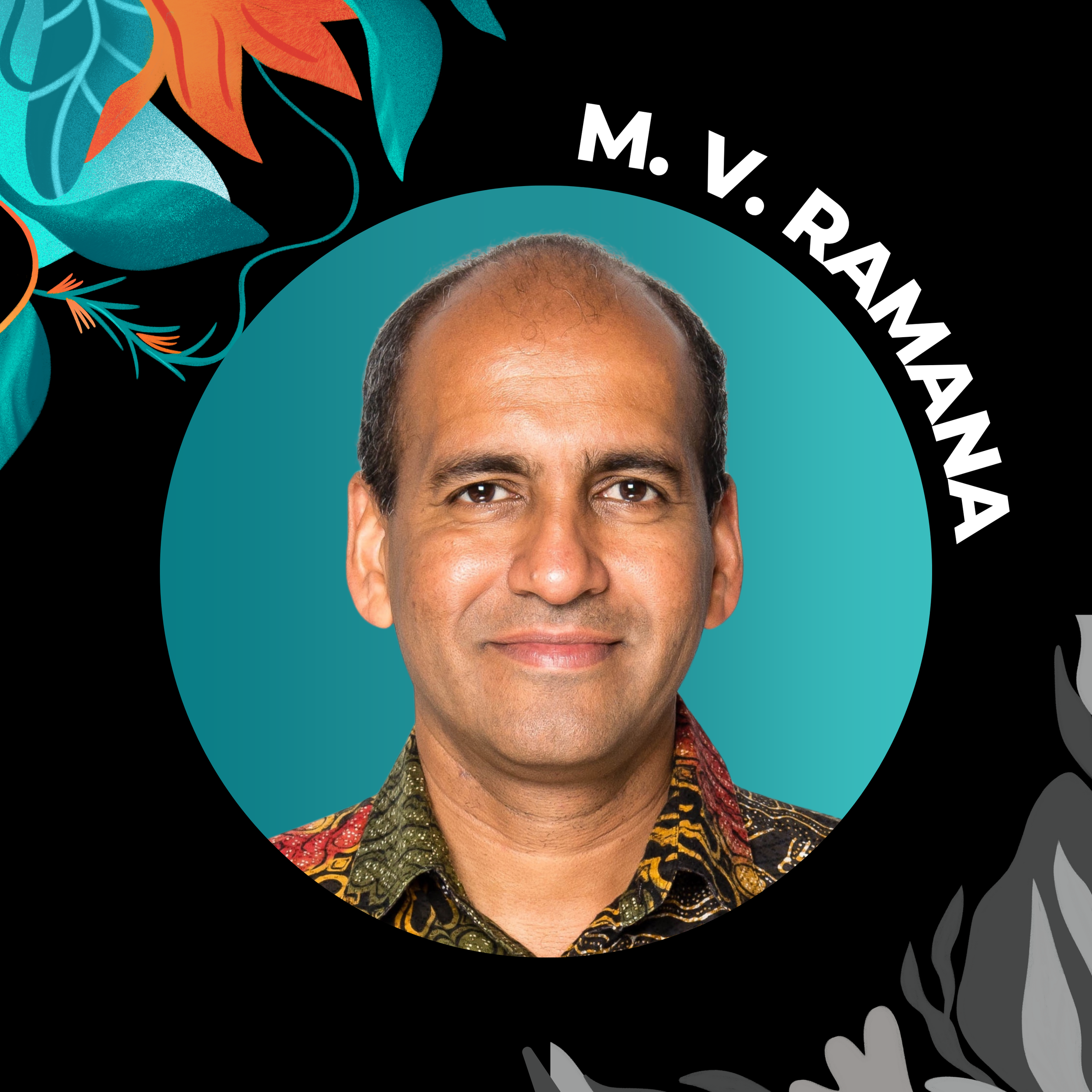
Dr. Peter A Victor is Professor Emeritus at York University Canada. He's the author of the 2023 book, Escape from Overshoot: Economics for a Planet in Peril and several other books on ecological economics. He received his PhD in economics from University of British Columbia in 1971. Today he continues to lead research on the simulation of macro economies and the ecological footprint. Peter has worked for over 50 years in Canada and abroad on economy and environment as an academic consultant and public servant. Positions held include assistant deputy minister in the Ontario Ministry of the Environment, dean of the Faculty of Environmental Studies at York University and renewable energy advisor to the Kenya Ministry of Energy and Regional Development. His work on ecological economics, notably on environmentally extended input/output analysis, ecological macroeconomics, and alternatives to economic growth is widely cited and has been recognized through the award of several prizes and election to the Royal Society of Canada. And now on to today's interview.
Nandita Bajaj (00:03:22):
Hello Peter and welcome to our podcast. It's wonderful to have you here.
Peter Victor (00:03:27):
Well, hello Nandita and Alan, it's a pleasure to be here. I'm looking forward to our conversation
Nandita Bajaj (00:03:32):
As are we. And it's appropriate that we have a guest who's written a book called Escape from Overshoot on the OVERSHOOT podcast. And Peter, as an ecological economist, you both deeply understand the nature of ecological overshoot and you've thought in a detailed and systematic way about what we need to do to escape from it, a lot of which we will get into today. And you are part of the ecological footprint initiative team at York University that tracks national footprint and biocapacity data, which is an impressive undertaking. And for me personally, it's a delight to talk to a fellow Canadian, especially from Toronto.
(00:04:15):
So lovely having you here. And Peter, we and our listeners are well versed in the litany of crises that are happening as a result of overshoot. And as such, we can focus much of our conversation today into the main part of your book, Escape from Overshoot, where you lay out the political and economic changes that we should implement if we hope to overcome overshoot rather than waiting for even greater disasters to force those changes. And before we get into that, we'd love to hear your take on mainstream economics. As an ecological economist, you've spent your entire career swimming upstream against the currents of mainstream growth-obsessed economic thinking that is largely blind to ecological overshoot. What do you think sustains this blindness and how does ecological economics offer a corrective to that?
Peter Victor (00:05:16):
Well, that's a very good place to start. We use the term sometimes of a pre-analytic vision. In other words, before you can do analysis and economists love to do analysis, you conjure up in your mind some idea of the topic that you're trying to understand. So with mainstream economics, the pre-analytic vision of an economy is that it's a sort of freestanding institutions involving markets and buying and selling and investment, but without any obvious connection to the environment within which it is contained. Because when you start to think about it, to produce anything that's material, you have to get the raw materials from somewhere. Well, that's outside of the economy. And the waste products that are inevitably produced have to go somewhere. And again, that's assumed to be outside of the economy. Sometimes they don't even ask where it goes, it just goes away. Well, ecological economics starts from a different pre-analytic view of what an economy is.
(00:06:14):
And that view is that it's embedded in the biosphere, embedded in planet Earth. The language changes a bit, but it all means the same thing. And so we understand from the outset that we're dealing with a system that's larger than just what's conventionally called the economy, but includes the larger container within which it all takes place. And so that leads you to ask different questions, to gather different data, and inevitably reach different conclusions. So that's the primary answer, that mainstream economics has a view of the economy as somehow detachable and separable and separate from the environment. Now, how can that view continue to be popular among economists? Well, of course it's what's taught to economic students. They're taught that there's this interaction between firms and consumers and workers and government without linking it to the broader context within which that is all taking place and it just gets passed on and passed on. Here's the key point. If your view of the economy is that it is somehow independent of the environment, then you've no real reason to question the durability, sustainability of growth, because the constraints that ecologically economics sees there, and which I think lots of people see there, are not seen by economists who just don't see the economy embedded in the biosphere.
Nandita Bajaj (00:07:35):
Yeah, thank you for that. And of course, from what we know about mainstream economics is that economic growth is completely, almost entirely intertwined with growth in materials, growth in production, which relies on growth in population size. We always need more consumers and taxpayers, et cetera to keep the economy going. And in Canada with the upcoming election, you can see that both parties, even though they are vastly different in terms of issues of equity and justice, they're both committed to this unquestioned notion of growth. On the one hand, one is stoking these nativist fears that we need more pronatalist policies to produce more children of a certain kind. The other one, the liberal party is committed to increasing population through immigration. In fact, Mark Carney, the prime minister and the liberal candidate, has recently brought in the co-founder of this lobbying group that advocates for increasing the Canadian population to a hundred million by 2100, the Century initiative. So we've welcomed your notion in the book that population reduction is something that should be welcomed as part of this escape from overshoot, should be planned for and encouraged through measures such as accessibility to education, increased availability of contraception, et cetera. I wonder if there's something you could add to that.
Peter Victor (00:09:11):
Well, I think there are a number of considerations that come to mind. There's a difference between growth in GDP and growth in GDP per capita. Japan has, if you had a bad rap for quite a few years now because its growth in GDP has been very, very much reduceable. It was up until about 1990, but because of their populations begun to decline because of the low fertility rate and that they don't actively encourage immigration, GDP per capita has actually done much better because they're dividing a smaller GDP than might otherwise have been, but by an even smaller population. So that's an important distinction to make because even those people who think GDP is a very good indicator of wellbeing and progress and success, it's really GDP per capita that makes the difference in the lives of the people that you're talking about. So that would be one point. The second is that you've already mentioned the ecological footprint. Well, if you look at the increase in the ecological footprint of nations over the last two or three decades, it's mostly due to the increase in numbers of people, much more so than the increase in the ecological footprint per person. And so again, it underlines the role that population plays in a relation to the pressure that humanity as a whole puts on planet Earth. So population remains a very, very important question.
Alan Ware (00:10:33):
And that exponential growth that economists seem to assume can just keep going on infinitely, even though if it's 2% then it's doubling every 35 years. And since material growth is chained to that at almost 100% and energy at about 99%, that reaches absurd conclusions very quickly. So as you note in the book that the market doesn't contain within itself information about the ideal scale of the overall economy, so it just keeps subsuming more inputs and creating more pollution outputs. But as you know, there is a place for markets, and global techno-industrial capitalism has definitely been turbo-boosting ecological overshoot by increasing extraction of resources and pollution and widening social inequalities in the process. But you do talk about in the book a place for markets in a world that can be more just and sustainable, and you describe a two by two framework based on the economic concepts of rivalry and exclusion. So could you give us all a bit of a primer on those concepts for when markets may work better or do not work well?
Peter Victor (00:11:42):
Yes, I'll try my best. Well, with two qualities, exclusion and rivalry, we can combine them in four different ways. So let me just define these terms. Exclusion means the ability to prevent somebody else accessing something. And rivalry means if one person consumes it, there's less for somebody else. Just as an example, if one person consumes something, then if it's a rival product such as a piece of bread, then there's that much less for somebody else. If I own the bread, I can exclude you from eating it. And so that also requires our legal framework for exclusion. It's technically impossible for both of us to consume the same piece of bread. So what would be an example of non-exclusion? If I walk down my street, and I'm looking out my window now at the street, at night and the streetlights are on, I have no way of even if I wish to exclude my neighbor from benefiting from the light as well. There's no technology for it and there's also no legal right to do it.
(00:12:40):
So exclusion both involves technology and the institutions to make it happen. So we can think of examples where some things are rival in consumption such as a piece of bread, one person consumes it, the other person can't; and they're nonrival in consumption such as street lighting, one person consumes it, the other person consume it. And then there's exclusion, which is the ability to exclude somebody from using something whether it's rival or nonrival. So we have four cases. The market works best when the things that are being bought and sold and produced for the market involve exclusion and involve rivalry. Now why is that if you can't exclude somebody from consuming something that you've got, well, you can't sell it to them either because you can't exclude them. That's what the price does in a market. If you don't pay for something, you don't get it. So the ability to exclude is essential for a market to work.
(00:13:33):
If that item is rival, then that's not a bad thing because that's essential to the nature of the thing. If it's bread, having a market in bread is as good a system for determining how much gets produced and how much and who gets to consume as any other institution that we've really come up with. So to try to make this answer a little briefer, if things are both subject to exclusion and rivalry, that's when the market system is at its best. But now take something that is non-exclusion and nonrival. You can't have a market. A market requires exclusion because exclusion is necessary for ownership and transfer of ownership through a market process. That has long been referred to when you have nonrivalry and non-exclusion as, in economic terms, a public good. And the usual examples of public goods are, I've used street lighting several times, but defense, military defense, is something that we all affected in much the same, not identically because it defends property as well as person, a lot of environmental effects are non-exclusionary.
(00:14:39):
If a loud plane flies over my house, it flies over my neighbors, we all suffer from the noise and so on. Markets can't cope if exclusion is not possible. But sometimes we have things that are a nonrival and people can still be excluded. Now this is one of the interesting cases because why would we want to exclude somebody from consuming something that doesn't deprive anybody else of consuming it? And yet we do that all the time. So you can think of an uncongested road where if another car drives on that road, no one's being excluded, but you reach a point through crowding where what wasn't rival becomes rival because it slows down the traffic. So this is why, if you have a toll road from an economic point of view, you would allow people to use it free until it reaches a certain level of crowding and then the price would go up.
(00:15:27):
I'm not sure that's ever been implemented in anyway, but that's the economic thinking that would go into that. I just want to add one further comment in terms of using that framework to understand what's happening in the economy today. Because markets require exclusion, there's this ongoing pressure for businesses of various kinds to profit from making something that's nonrival excludable. We've all seen this perhaps, well not everybody's this old, but if you've seen what happened to the worldwide web, which came up on the scene and was wonderful, you could access it. There was no fee to pay at least once you paid maybe to get the service, but using it and getting the benefit of it, you couldn't be excluded. Knowledge is another one. Knowledge is not rival. If you know something, and I know it, there's no less for either of us, but there's this constant pressure in our economic system to make nonrival things excluded.
(00:16:19):
And that's how you make profit. And that's not a good thing because there's no reason, there's no rationale when you step back from the thought and say, why are we depriving people? Why do we deprive people from knowledge? Because they haven't paid an entry fee to a library or something like that. So this framework gives us a scheme for analyzing both what works well. You asked about the market. Well, if things are excludable and rival, then you tick off market. I would do anyway. You don't want markets that have been monopolized though that also doesn't work bad. You want competitive markets, but if something is nonrival and nonexcludable, you definitely need a different institutional framework. That's why we pay taxes and we share the costs of things like, well, I mentioned defense and fire brigades and police. Very difficult to have exclusion there. And then you really need to think about, well, what institutional framework would work best for the other two? Do we want things that are nonrival to be taken over by the market? No, because why exclude people from things that are nonrival? So it's quite useful for all sorts of things.
Alan Ware (00:17:18):
Right, we had Joshua Farley talking about knowledge being a commons that is nonrivalous and should be low exclusion, but the universities and intellectual property laws have increasingly tried to ring fence a lot of knowledge and keep it from the public good. And it's interesting with the private goods with such rivalry, high exclusion, where the market is creating an auction based on how much money you have. So there are ways to increase people's ability to win that auction through unions, minimum wage laws, something to improve your ability to engage in the rivalrous market activity to buy your bread and your healthcare and everything else. And you could also redistribute income through taxing policies, right? So in some ways to make it fair, even though there is a market for those goods like bread and apples, that makes sense the ability to buy those goods can still be very unequal and unjust.
Peter Victor (00:18:15):
Yes, I'm glad you've emphasized that, Alan, because that's absolutely right. The market is what we would say in economics efficient because when people trade, the assumption is that they both think they're getting some benefit from the trade. Otherwise they don't have to trade. But it's not fair because your ability to trade depends upon your wealth and your income. And unless you have a view that it's all very fairly distributed, then the outcome of the market is not just. And so that's exactly why you need the kind of government programs you've mentioned to try to make the distribution of income and wealth more equitable, I think. Well, you're in the States, I gather you're failing miserably and we're not failing quite as badly as you. But so none of these issues which we try to sort of focus in on, clarify are stand alone issues. They link to other things which need to be brought in.
Alan Ware (00:19:02):
And it reminds me, and I'm not sure where this would fall on the rivalry and exclusion, but the concept of asymmetry of information between buyers and sellers, especially in regulating chemicals and food and all of the ways that we rely on expertise, typically government expertise to keep our air, food, soil, water safe that we know very little about - forever chemicals and plastics. But 3M and DuPont certainly knew a lot about it and they'd been testing it and now we find out decades later how much they knew and tobacco knew plenty about tobacco and how would that fit within this framework of the market?
Peter Victor (00:19:41):
Okay, so what I said, I tried to say, was that for the market to work well, you need exclusion and rivalry. What you've now opened up is a discussion in what else do you need. That can't be sufficient. We've already mentioned the problem of income distribution. If it's not equitable, then the outcome wouldn't be equitable, even if the market has done what it does best, mediate all these trades. Asymmetry of information is also an impediment to a well-functioning market. It's usually the suppliers of products, those who produce it and sell it have more information about the product than the buyer. And what makes it even worse than that is that the companies often invest a lot of money into advertising, which typically misinforms people about the product by exaggerating the benefits and minimizing any costs or damages and so on. So that's another problem. And of course, from a policy point of view, people can differ on the extent to which you can rely on participants in the market to make the best of things or whether you need more government intervention, more government regulation to control for some of these impediments to a well-functioning market.
Nandita Bajaj (00:20:48):
The other aspect of this kind of growth-biased economy is while a lot of progressives might agree that we need to be more ecological minded, many on the liberal left and the center left still hold out hope that we can achieve ecological, sustainable green growth. We can still keep growing, but put a green tint on it. And we've asked many people on this podcast some form of this question as it's a very persistent one, but still an important one, and we still think it's an important conversation to have. What do you think the green growth proponents are getting wrong?
Peter Victor (00:21:26):
Well, it's well time for this discussion to have some clarity on what we mean by growth because it's at the heart of this green growth discussion and debate. When economic growth is usually referred to it's growth in what we call gross domestic product, which is a monetary value of the goods and services produced in an economy. That's a rough definition that's close enough for our purposes. Whereas the growth that is of greater concern to people like myself and environmentalists in general is the growth in the material and energy requirements of an economy and the waste that are produced. Now, as Alan said earlier on in this discussion, there's been a close relationship between those two things. The GDP goes up, then you generally find materials and energy use and waste materials going up as well. But that's where the issue of green growth comes in because green growthers believe you can separate these, that you can still have an increase in the value of the products available to people, but at the same time also reducing the material and energy requirements and waste generated.
(00:22:29):
So that's room for a valid debate. And I think it's also opens the door to saying, well, what can we expect in the future? Even if those attributes have been correlated closely in the past, that's happened because we've not really made a determined effort, so the argument goes, to separate them, but through better regulation and with technology driving in one direction rather than another, we have a lot of interest now in what's been called the circular economy, the idea that we can just make much better use of the materials that we bring into the economy, not the energy. Energy is tougher. The materials you can reuse, they do get degraded with use, but if the more we reuse them, recycle them, the economy can still appear to grow in money terms or will grow in money terms, but not in physical terms. So I looked into this for some time in different ways.
(00:23:17):
The issue that's usually at the center of this argument concerns climate change and the emission of greenhouse gases, and it can get a bit complicated, but what we talk about then we can talk about it under the heading of decoupling. Can we decouple rises in GDP from increases in greenhouse gas emissions? And the discussion usually starts with what's called relatively decoupling. It's pretty clear, and there's a lot of historical evidence for this, that we've had some decoupling in terms of relative carbon intensity. In other words, the emissions per dollar of GDP has been going down for a long time in many countries, partly because we've had this shift from manufactured goods to services. And services don't require so much materials, but relative decoupling can keep going. As let us say it's going down at 1% a year, but if the economy is growing at 2% a year, total emissions still rise.
(00:24:11):
So relative decoupling is not going to solve climate problem. So then we think of absolute decoupling and we say, okay, well we want total emissions to go down, and if GDP is rising, then depending on how fast it's rising, we can work out how fast the emissions per dollar have to decline to make total emissions go down. There's way fewer examples of that happening. I notice in the Canadian government loves to talk about the decline in greenhouse gas emissions from 2005 to where we are now, and it has declined in total, but they picked one of the very highest years when the emissions were very high. But if you go back to 1994 when Canada, like so many other governments signed the UN charter on climate change, that's 1994, well, our emissions today here in 2025, 2024 is the latest data, are greater than they were in 1994.
(00:25:03):
So we've had lots of relative decoupling, but we've had no absolute decoupling. But even that's not enough, even by focusing on absolute decoupling, it's not enough because it's not the flows of the greenhouse gases. We have to decouple from GDP. At least it's not just the flows. It's the stock of accumulated greenhouse gases in the atmosphere that we have to decouple because that's what causes the problem. So you can be slowing the emissions of greenhouse gas reducing them year after year, but if you don't do it fast enough, the accumulation gets so great that we exceed the 1.5 degree increase or two degree increase, and we failed to decouple what really matters, which is the stock of greenhouse gases from economic activity and economic growth. And so I did some calculations about what might be required to stay within 1.5 degree global warming, and the rate at which we'd have to get to net zero and the path to get to net zero, because if you think of getting to net zero in 2050, even staying constant until then and then technological breakthrough and it cuts it off, well, you've accumulated too much in the atmosphere. So I found it's roughly we need to reduce emissions per dollar of GDP by 10% a year for 30 years in a row.
(00:26:17):
It varies with the assumptions, but 10% is actually on the lower side. And then you look at the historical data and you say, okay, which countries have done that for one year? Well, Canada has never done it. The US has never done it for one year. Now we've got to do for 30 years in a row. So I say to the green growhers, are you still upbeat? You still think it can be done because we've been talking about the technologies that are going to be getting us out of these kinds of problems for as long as I've been involved in this area of work, which you pointed out was even more than 50 years ago, and there have been technological breakthroughs. Who can deny that? We're talking over Zoom now. It's a technological breakthrough. It's not solving the problems that we're faced with. So that's kind of my reaction to the green growth.
(00:26:57):
However, I will say this, I see green growth as a short term path that we need to follow. We're not going to, I don't believe for various reasons, suddenly say no more economic growth, no more growth in GDP, but we can slow down that growth until we're not growing, let's say in 10 years, 15 years. And during that period, we want as much green growth as we can get. This is not an anti-technology rant. We need technology and we need kinds of technologies that really address the environmental problems we're facing, the problem of overshoot, and not just relying on what technology, largely driven by profit- seeking decision makers, produces. It's not done the job in the past. I don't see it doing it in the future.
Nandita Bajaj (00:27:39):
Yeah, and that argument too, right about the green growth, whether or not we need it in the short or the long term, relies on maintaining a business as usual economic and population structure. There's nothing built into the argument that says, yes, we need green growth for the short term, while we look at other measures of confronting ecological overshoot. I think the idea is that we don't really want to change, so let's tinker a little bit here and there to kind of make it sound ecological when it's really not.
Peter Victor (00:28:12):
That's true. I just want to say something else, which again I mentioned in the book. It intrigues me that there are so many adjectives now put in the front of the word growth. Green growth is one, oh, we'll make it environmentally sound. Inclusive growth, well, that tells us that not everyone's included in the benefit. Anti-poverty growth, that will deal with that problem. So I've got about eight or nine of these, and I'm sure others can think of more. What this says to me is that growth is not performing well on a whole range of dimensions. And when you put that package together, at some point you say, I don't think growth is the answer. And yet unfortunately, it is too often offered up as the answer. If only we were richer, we could solve these problems or they would get solved automatically. Some people say, we don't have to bother with redistribution as long as we grow the economy and everybody gets richer, why do we care if some people are a thousand or a million times nowadays richer than other people in the same society? Well, that's not at all satisfactory to me. So it's all part of back in a way to your very first question to me about why does mainstream economics keep promoting growth? Well, it happens because it's seen as an answer to a whole range of issues which are being in fact aggravated by growth as much as being solved by growth. So yeah, I think the agenda for change is ripe. It's strong, it's powerful. It just hasn't been grabbed with both hands sufficiently.
Alan Ware (00:29:35):
Right? As you've mentioned, a lot of mainstream economists, I think William Nordhaus and others will assume our descendants will be so much richer, therefore we should not take the pain now that it would mean to decarbonize or do whatever because they will be able to treat this problem with such a smaller percentage of their massive incomes that they'll enjoy in the future. So that kind of shortsightedness of economics in general can be very damaging.
Peter Victor (00:30:04):
Yeah. He also said as just a couple of other very eminent economists that because the contribution in the US of agriculture to GDP was about 3%, even if agriculture was wiped out, it would have a very small, barely noticeable effect on life in the US. And you kind of read that and you think, and then after you wrote that down, do you go off and have a good meal? So yeah, it's very disconcerting to say the least.
Nandita Bajaj (00:30:32):
And even this idea of growth is being challenged from so many different avenues. We recently had Olivier De Schutter who is UN Special Rapporteur on Extreme Poverty and Human Rights, and he recently wrote a book called The Poverty of Growth. And he challenges this notion that economic growth has this trickle down effect which eventually leads to reduction or eradication of poverty. And he's found absolutely no evidence that it does. It just keeps making the richer wealthier. And similarly, we had Jean-Baptiste Fressoz who's a historian of energy and science, and he talked about how there has been this notion that we've moved from one source of energy to another transitioning from energy sources, but really this whole notion that there's an energy transition is a myth. It's a delusion because we've actually never transitioned from one source to another. It's always been a symbiotic addition. And the fundamental raw materials have always increased as all of the other material growth has increased. So even the words like you're saying, inclusive growth or just growth has moved into the transition narrative, just transition, an equitable transition, but the notion of transition or growth is not even being questioned. People just kind of add words to this unquestioned truth that it in and of itself is a good that must be protected.
Peter Victor (00:32:08):
Yes, I think that's true. I do want to mention though one particular writer who is quite widely read, that's Vaclav Smil who writes extremely well about the energy transition. He's written several books on that along the lines of you nicely summarized, but also material use and material dependency and the time it takes for significant transitions to actually happen if they ever happen. And he's not the only one doing that, but it's not the main message. And this goes back to this beginning question and that is why do we still cling to the pursuit of growth? And the addition of all those adjectives is just further clinging. It's just, well, we can still grow, but we do have to attend to these things while we do that. But as I think Alan mentioned, there's this dismantling of environmental regulations, for example, going on and taking off limits to where you can mine in the US allowing mining in national parts, that sort of thing. Because when the push comes to shove, when it's growth itself, that is threatened, then the other things, sorry, we have to attend to growth. We know we need the growth. And this is poison. This is what is driving overshoot,
Alan Ware (00:33:14):
Right. And mainstream economics in general, as we've talked about, the attention to scale of the human enterprise, there's no question it must keep growing. So we kind of complexify the human enterprise and we simplify nature, we depopulate it, we extinct species in order to complexify this human global society. How has mainstream economics have you seen it, whether it's traditionally valued or not valued nonhuman life, and how would economic thinking do you think have to change if it were to embrace a more ecocentric perspective?
Peter Victor (00:33:51):
The first thing that economists try to do when you ask them how should we value this, whatever this happens to be, their inclination is to put a dollar value on whatever it is. And they do that by getting an answer to actually several questions. They don't give the same answer, but the most common question is, what are people willing to pay for something? So when you use that terminology to talk about protecting the environment, the question is what are you willing to pay to protect that tree or that forest or that species? Depending on which question you ask, you of course get a different answer. Then they add up the willingness to pay and they compare that with what's it going to cost to do that? And if the willingness to pay in aggregate is greater than the cost, then that's a good thing. It passes the tests of benefit-cost analysis, but it could have asked a different question, not what are you willing to pay for cleaner air, but how much compensation would you require to carry on living with dirty air?
(00:34:48):
That gives you a different answer because willingness to pay is always limited by a person's ability to pay, but the compensation they require can be infinite. Well, you know what economists do when they get an answer to a question where they've asked, what are you willing to accept for accepting some environmental damage? If the answer is there's no amount of money I will accept, they rule that out. No, that can't be a real answer, so it doesn't count, doesn't go into the calculation. Nonetheless, you generally get much bigger numbers out of a willingness to accept value for damage to nature or protection of nature than you get out of a willingness to pay, because willingness to pay is bound by income. But then other answers, other ways of coming at it is people will say, well, what benefit are we getting from some natural thing like a running river?
(00:35:35):
And we say, well, what would it cost us to engineer an equivalent solution? And that tells us the value of the river. Oh, I guess the third answer, what really bothers me though is the studies which take these kinds of estimates estimated in different ways, some willingness to pay, some willingness to accept, some engineering costs, they add them all up, all in dollars, and they say, look, that's the total value of this, whatever it is. Well, I think once you've reached that, you should recognize you've actually not said anything very useful. It's just gobbledygook. It's become very popular. It's very common. It's usually under the head of 'valuation of ecosystem goods and services'. Even that's very troubling because for something to count as an ecosystem good or service in that sort of calculation, it's a service to humans. So it's an instrumental view of nature that the rest of nature is assumed to exist solely for the benefit of humans. Nature is an object. We're the only subjects. That's just to me an unacceptable ethical view of nature. We live with other sentient beings and we share nature.
Alan Ware (00:36:35):
Yeah, I remember when I first heard about that, how much would you be willing to pay to save the redwoods or the Grand Canyon or whatever, and you add up all the things you'd have to pay to save and you get to these ridiculously small dollar, you know I only make this much a year, so I can only pay $5 for the Grand Canyon.
Peter Victor (00:36:52):
Yeah, and the other thing is if you ask that question of one thing, you can get quite a large number, but if you ask it for something else, you can also get that large number. It's really what you're saying. You add them together, you don't have that much money. They find ways in formulating the questions to avoid that from happening, but they nonetheless add these things up in the end to get a total.
Alan Ware (00:37:11):
Yeah, that's the silliness of the trying to find that one metric, the dollar metric versus some more ecocentric perspective that would have some sacred, like a lot of indigenous valuing of nature would be a totally different deeper cultural geographic relationship to the river.
Peter Victor (00:37:29):
My view on this is, you've probably heard the term dashboard. A dashboard is just putting together various measurements that can inform decision-making without trying to add them all up into one. So that's one way of improving things. But also if you're going to have a dashboard, it ought to be one that includes measurements that various kinds of people, various groups of people respond to and look for. And you're quite right. You're not going to do that and also end up with a common metric, a single metric. But that's not the purpose. The purpose of the data and the measurement is to inform decision-making, which should not sort of suddenly be imposed on a set of data, but should be arrived at through discussion among the people, mostly affected by whatever it is you're talking about. So there are ways of making our decisions in a more sensible, better informed and just manner than placing so much emphasis as still happens on the work of economists who will give you a dollar value. And then you don't have to think, you just pick the thing with the biggest dollar value away you go.
Alan Ware (00:38:34):
Right, with multiple perspectives you might have someone who treats that river as sacred, and in the process of that conversation could open some eyes to people who might be very utilitarian in most of their perspective. And it did remind me too, of valuing nature how in the US in the late sixties, early seventies, we passed in the US a lot of acts to protect nature with the Clean Water Act, the Clean Air Act, the Endangered Species Act, which is very strong laws and provisions to protect species that are endangered. And of course, it's been fought almost continuously ever since then that logging, damming, construction projects. And it's primarily been from the right of center that we've had that pushback. And what's kind of concerning now is we have center-left liberals like Ezra Klein in the United States of the New York Times, and the abundance agenda proponents who are proposing that a lot of those environmental laws from the late sixties, early seventies are overly restrictive, that they're holding up worthy projects.
(00:39:36):
We can't build anything in the US anymore. Everything's taking way too long. I've heard them talk about it with his co-author, Derek Thompson, of often ecological destruction that those laws were meant to address in the late sixties or seventies that was solved. And we're using these old-fashioned laws that shouldn't be used for, I don't know, newfangled problems. So we don't have enough housing or we have new problems, we need new solutions. Those laws are archaic. And it's a scary element that we've been watching to see that from the left of center, which holds a lot of potential to devalue nature in a way that the left-liberal side has not seen in quite a while. Do you have any ideas on that?
Peter Victor (00:40:18):
I've not read their main works. I've read about their position, so I'd like people to understand that. But to me it sounds very similar to what I've been hearing for a very long time, and that is that if we just have more growth, the various problems would go away. So let's get rid of the things that seem to be preventing growth, even though they might've been introduced to directly confront the problems that they say will be solved with more growth, which I find quite a bizarre position. So I don't really give it any credence. I find it all too familiar, but some maybe changes to the language. I would say this though, that you can think of abundance in a couple of different ways. Economists assume that people's wants are unlimited, that you can have satiation, let's say, of ice cream on a hot day.
(00:41:05):
You might like one or two, but you don't want three or four or five, but not satiation across the full range of products. So people are assumed to always want more. If that's your mindset, either personally or how you think people in general operate, then I think abundance will always be out of reach because it doesn't matter how much stuff you've got, you've always got more wants that you need to satisfy. So that's not the route to abundance. The route to abundance is to moderate your wants, is to work with the idea of sufficiency - enough. Trying to find happiness through consumption is not sufficient. We all need some level of material wellbeing for a good life. And of course, many people are still deprived of that in our world, even in our own countries. But when you get beyond that, and I've mentioned advertising because it's one of the things I really dislike so much in our culture is this continual encouragement to buy more.
(00:41:57):
Whatever your problem is, buy more. If you're lonely, buy this product. If you've got a pain, buy that product. If you don't feel well buy this, and so on. So if we can contain our wants, we can experience abundance. And the abundance that we should really be shooting for is not abundance as defined by material possessions, but as abundance of time spent with friends and neighbors, abundance of joy, abundance of hope, abundance of wellbeing. I don't dislike the idea of abundance, but I think it's a huge mistake to think that economic growth is the path to get you there.
Nandita Bajaj (00:42:33):
Yeah, we're on the same page with you. In fact, our tagline for our organization is called Shrink Toward Abundance, which is pointing to the kind of abundance you're talking about is shrinking away from obsession with the other kind of material growth toward an ecologically abundant Earth. So we are in agreement with you in terms of simplicity and moderation, which are clearly not features of our current economic system, of which capitalism is the most prevalent and pervasive system that we find ourselves in. And you note in your book that capitalism is an ever-changing system, and there are a lot of changes you've noted in recent decades. How do you envision capitalism changing for better or most likely worse in the coming years based on present trends that you're seeing?
Peter Victor (00:43:28):
Oh, well, present trends are I think disastrous. I hate to say that because I'm generally an optimistic person in my own life and my outlook and why keep working in this area if you don't have some hope that there's a brighter future out there if we're only smart enough to know what it looks like and how to move towards it. But if you ask me about trends, the trends are not in our favor.
(00:43:49):
So in my more analytical work where I do computer simulations of national economies in particular Canada, where I live, one of the scenarios that I start with is, well, what would happen if things continue on the path that we've been on and most people in the country, I think that's true to say, wish to stay on, which is a couple of percent a year growth in GDP and some tinkering around the edges and so on.
(00:44:16):
Just taking greenhouse gases alone, it's not going to get us where we want to be, especially if other countries are doing the same thing. So I look at alternatives to that and over a 50 year horizon. And for what it's worth, it's not that difficult to compose a set of changes to what we do, things like maybe shorter work hours so that even if the economy doesn't grow so fast, the work is spread among more people, so you don't have mass unemployment because you've been relying on growth to keep people employed, that sort of thing. Price on carbon, I know it's not in favor in Canada right now, but it has its place. It's a way of inducing people to be responsible for emitting their CO2 into the atmosphere. Income redistribution, as we've discussed a little bit in our conversation, needs to play a role to raise people out of poverty.
(00:45:05):
'Trickle down' doesn't work. Redistribution can work, and we've relied on that for a lot. So there's about 10 or 11 of these measures that when you put them all together, you get a stable GDP in the scenario that I use in the book, but a significant and absolute reduction in material and energy use and in Canada's ecological footprint. So this is what keeps me hopeful that at least in my own work and my own thinking about these things, there are better futures out there than striving to keep going. One of the phrases that has disturbed me somewhat, especially after Covid, was 'we've got to get back on track'. And I keep thinking, but we were on the wrong track. We've got to get onto a better track, a different track. Can we talk about that please, not just get back on track? So that's one of the reasons that I thought I wrote the book and continue to do the work.
Nandita Bajaj (00:45:54):
That's very helpful. We were also talking to Vanessa Andreotti, her book is called Hospicing Modernity, and that we're going to need to slowly adapt to a system that's dying and allow some space for something new to emerge. And we don't know if we will do that well enough. And there are pathways on how we go down that different path toward hospicing the current system, but while we're doing that, we do need to think about alternatives to that. We don't want to just throw our hands up in the air and just say, well, we're going down, so let's just let it all happen. And part of what you're offering is just a different way of operating our agendas so that we can be a little more equitable and humane toward that downward descent.
Peter Victor (00:46:46):
Can I just comment on that because it raises a troubling thought in my mind. When I create an alternative scenario with a package of changes, the combined result can look quite attractive, but if you ask me, is it likely that we will make those changes altogether consistently, smoothly, I would say that's not very likely. What's more likely to happen is it'll make a change here and a change there and none over there. And eventually maybe we'll have the cumulative effect we're looking for, but the road will be much rougher if you don't do things together. We've talked a few times in our conversation about income redistribution. If you put that aside for a while, for example, you could hurt a lot of people by slowing growth. So this is the real dilemma. It's not that we don't know what to do, but we don't know how to do it in a sort of a phased in way that gives us a fairly smooth transition to a better future. And I'm going, now that we've had this little chat, I'm going to go away and see if I can, I know I can do it in my computer model. I can phase things in at different points in time, which is different from phasing them in all slowly, smoothly over time. I can see what the result is.
Alan Ware (00:47:57):
Yeah. You've talked about in the book about the computer models that you've done, the low grow stock flow consistent models that you've developed with Tim Jackson, and you do mention in there that it works or that we can transition quite smoothly, but it demands all these things to work together. You mention a strong policy framework, systemic equity, greater equality, because inequality will undermine the stability of the whole political economic system and ecological intent, which seems like a real doozy to a lot of societies that are obsessed with growth. So is that kind of what you're talking about, what you mentioned in the book that you need all those factors.
Peter Victor (00:48:39):
If you're talking about the 14 principles that I included in there, I think some of those things were in those principles, but I also have a set of policy changes that would also get us in the right direction. I put that out there because I think we can point to examples where we've seen society pull together. Interestingly enough, it's happening right now in Canada in a way I never saw coming. And that is the aggression that we're perceiving from the US in referring to us as the 51st state, insulting our prime minister by calling him a governor, is having a remarkable effect on Canadians sense of ourselves that we now have, well, not a hundred percent, but we have a common enemy, a common antagonist, let me use a softer word, that is making us think, okay, what have we got to do to deal with this?
(00:49:28):
Now, one of the things I've been doing is I've been collecting a lot of the songs that people are writing to express the Canadian response to this, and a number of them, I've got about 35 on my computer, a common theme to them is what Canada has done during wartime that most Americans have no idea about - the fact that Canada, for example, joined in World War I and World War II right at the beginning. The US didn't join in the beginning in either of them. In fact in World War I it was a year before it ended and so on. World War II was only when Pearl Harbor happened. So Canada has a very powerful story that it can tell about itself, about being there when needed. So this is a parallel with what I would like to see when it comes to escaping from overshoot is the same commonly understood account of our predicament, a shared account, a common sense of purpose.
(00:50:21):
And then I think we would work together more effectively at all levels in society, probably starting at the community level, as we saw in Covid. In Covid, it was at the community level that people got to know their neighbors, helped each other, all sorts of things like that. It was really in that regard, healthy. So this is the sort of way I see maybe change happening. The alternative is crisis after crisis. I heard the mayor of Jasper, which is a town in western Canada, a half of which was burnt in a wildfire last year. It's a beautiful, beautiful town. He's changed his view on climate change. He wasn't very persuaded by it beforehand. He was saying, now it's clearly a problem and we as a society have to deal with it. So if we don't come at it in a smart way, a well informed way, we're going to come at change in response to crisis after crisis. And who knows how that will play out? That could be a disaster in so many respects, or it could be something we will rise to the occasion for and deal with.
Alan Ware (00:51:22):
And that sense of common purpose that you mentioned can be improved through greater equality. There's a lot of good research from people like Wilkinson and Pickett who wrote the Spirit Level and the Inner Level about countries with greater income equality. It creates better outcomes for not just poor people, but everyone, lower crime, mental health, trust, cooperation, inequality breeding stress and status anxiety and all kinds of social dysfunction. And I fear that creating that sense of common purpose will require a much greater commitment to greater equality, and a lot of countries are going the other way.
Peter Victor (00:52:00):
Well, I would just add to that an obstacle to what the direction in which you're saying we need to go in and I would agree, is that if you're rich enough, you can think that you yourself are not threatened. You can protect yourself. And we all know the stories of these massive expenditures by very wealthy people buying islands or building bomb shelters, all that sort of thing, or they just don't feel threatened for whatever reason. And yet they've got a disproportionate influence on decision making. And that's been magnified so much in the US with all of these billionaires getting cabinet positions and being very close to the government, almost forming the government now. So this is really troubling because if they're not going to play the game, if they're not going to identify with the rest of the society in which they live, you just can't begin to think of the damage that will be done.
Alan Ware (00:52:47):
Yeah, I mean, it's just a radical kind of sovereignty that these guys talk about a lot, basically wanting to rule themselves and the whole seasteading movement getting beyond the 200 mile boundary of the ocean and having your own yacht, a massive yacht that it's its own nation, its own country. So yeah, they gain their billions off of the whole global market. They extract value from the people and nature, but then they want to be separate in how they're ruled and governed. That's terrifying.
Peter Victor (00:53:19):
Well, that's the other extreme to community building, which is the solution is essential to the solution. And that's why I was pointing to the Canadian example right now is there's community building going on. There's this sense of community that we're feeling. It's remarkable. But the danger for that line is that what sort of external pressure on the US would make the US develop instead of this terrible division you've got in the US, but they develop a sort of common sense of purpose. And my concern there is how the US would respond to an external threat. It's a very militaristic society and turns to the military as needed. That's where a troubling scenario Indeed.
Nandita Bajaj (00:53:59):
Yeah. And another offshoot of so many of these tech billionaires now having so much control within the administration, especially in the US, you're also seeing the influence of Silicon Valley and development of AI and a AGI as kind of the next technological promises that are going to help us get out of whatever existential threat they think we're under, because ecological threat obviously is not considered an existential threat to them. And you've talked a bit about whether and how technology contributes to the escape from overshoot. It depends on who owns it and what they seek to obtain from that ownership. What do you see in current trends that might indicate how technological developments might help or hinder an escape from overshoot?
Peter Victor (00:54:52):
It's one of these examples where the potential for the technology to do good is immense, and the potential to do harm is equally immense. And you can point to examples of good. I think this discussion, I hope will be cited as one such example, but you can also point to many bad examples. One of the books that really had a big impact on me, and I think, I guess I did quote it in the book called Surveillance Capitalism, where the author explains how the big companies like Google and Meta started out doing one thing, but realizing that if they were going to be financially viable, their real opportunity was to harvest the data that they were gathering by providing the original services that they did and push that and then sell the data, sell the data to politicians, to advertisers and so on. And that's how they've become so wealthy.
(00:55:49):
Well, that of course is a huge invasion in our privacy, which is almost impossible to defend yourself against unless you just say, I'm not going to use any of those technology or systems. So I also have been around long enough to sort of remember the introduction of television in Britain, and I didn't realize it at the time I was a kid, but on reflection, realized how much control was exercised and still is to a large extent over what you will see on your television set or what you'll hear on the radio. That seems to be virtually completely absent from what you have access to on your computer over the internet. So the task that society, if I can use that term, faces is how do we get the best out of technology and how do we reduce as far as we can, the downside, and I think government regulation has to be a key part of that. It's not the only solution, but when your government is controlled by the very people who benefit from the technology, well, that's what sci-fi used to be written about. But now it's real life and I don't have the answer.
Nandita Bajaj (00:56:52):
I remember one of the things we also talked about, one of our previous guests who studied this, Jean-Baptiste Fressoz, was how so many of these technological developments are intentionally released into the world long before government regulations have any chance to regulate. And people get addicted. People just start demanding it. And so a lot of the regulations that then come are after the fact to try and moderate the use rather than ban the use of technologies that are extremely harmful, like the data harvesting that you're talking about, and like AI and the potential that has for immense devastation. And many of these tech titans also seem to have a distrust of the people in a democracy to make the right choices. They kind of just seem more aligned as we are seeing with more authoritarian impulses. And we see that even in philanthropy, like a lot of the really, really rich billionaires who have decided to give away some of their money to good causes, they became rich off of a very inequitable system, a very destructive system.
(00:58:13):
So part of their impulse is to want to maintain that system. And so they fund the kinds of things that keep the status quo, but with some kind of a humane tint. And so yeah, even the philanthropy we are seeing is very much taking the tone of authoritarianism is like, well, this is where the money's going to go and these are the causes we care about. And the common purpose argument that you are making, talking to community members to ascertain what are their needs is not happening in technology development or in philanthropy discussions. It's still very, very top down authoritarian in nature.
Peter Victor (00:58:54):
Well, if we can come back to the field of ecological economics for a moment, which is where we started, it's helped generate a number of movements that are trying to make change at the grassroots level. One of these that you may have covered in other podcasts is the Wellbeing Economy Alliance was very helpful and was thriving for a while, and in fact included several governments that committed to wellbeing rather than economic growth as their primary objective. I think it's on the wane a little bit now, unfortunately, but it just shows you that starting very small, you can actually impact governments as they were doing. In my book I discovered a number of other variations like this. Now, I think they're all inspired, I have to say whether some of them would admit this perhaps, is they're all inspired by the idea of a steady state economy, that somehow we've got to bring the economy in balance with what nature can support over the long term.
(00:59:48):
But there are many routes to that, and I don't think it matters that there are many. In fact, that's very good because it is a strength because different things, different aspects appeal to different people. But if they're all pointing in that direction, we're talking about overshoot here, of bringing us some sort of an escape from overshoot. It's all well and good. We shouldn't be looking for leadership from the richest, most powerful people who benefit the most from not changing the system. They're best understood as obstacles. So let's not lose sleep over the fact that they're not where we're going to find allies. We have to look elsewhere. And there are lots of other people, about the other 8 billion of us who live on the planet.
Alan Ware (01:00:25):
That reminds me of when we were talking with Vanessa Andreotti about Hospicing Modernity, that it's also like a birth and there's this new world waiting to be born, but we can't suffocate it with too many expectations or kind of as she would call it, more of a modernist sense of wanting to control. We have this utopian plan or vision and you have to do X, Y, and Z, and we've got it all laid out that it's going to be much messier than that and experimental and all of these elements you're talking about with, Buen Vivir is a more indigenous kind of knowledge system wellbeing - that let a thousand flowers bloom makes sense.
Peter Victor (01:01:05):
A distinction that didn't come up in this discussion, but I want to make it, is between growth and development. Within the ecological economics framework, we use the physical measure of growth. It's quantitative, but development is qualitative and that we can reduce our physical requirements from planet Earth, but we can continue to develop and enjoy all the benefits of qualitative change. Many of the things that I think we need to escape from overshoot, you can find elements of them already. The environmental legislation which came in the late sixties, early seventies, in most places, that's still in place and has been strengthened. For example, after that phase in Ontario, we introduced the environmental Bill of Rights, deliberately designed to give people more rights to participate in the protection of the environment. And that has survived very significant change in government within the province, but it's still there and still functioning quite well.
(01:01:59):
The same thing about limits. Any response to overshoot ultimately is going to result in humans limiting the extent to which we extract from nature. Well, we haven't done that on a grand scale yet, but for example, in Toronto, we have a green belt surrounding the city, which is protected legally. And when the premier of the province some years ago said he would protect it when he was campaigning and then started approving selling off parts of it to developer friends, there was such an outcry among the population. He said, I made a mistake. I'm sorry. I take that back. And you find this in forestry, in fishing and mining even, limits. The society places limits on what we allow those who engage in those activities to do. So I always find it useful to point to these examples. I'm not going to go into any further, but there are lots of them because they are building blocks and because they're out there. It helps people who are sort of new to the idea of overshoot to recognize that elements of this has been recognized in the past and we have done something.
(01:03:00):
We're not starting from scratch, and we can build on that and how should we do that? So to me, the pain is going to be greater if we do nothing. If we try to grow our way out of the problems, then you're talking about real pain. The excitement of working in communities to improve wellbeing, not just for yourself, but those around you, and of course you benefit from that indirectly - way more fulfilling than trying to cope in an individualistic way to problems that you cannot solve at that level. Yeah. Anybody listening, still listening to this podcast, don't give up. There's lots to do and lots that's been done and it is very exciting to be alive at this time on planet Earth.
Nandita Bajaj (01:03:41):
Yeah, really well said. Well, Peter, this has been a fantastic interview. Thank you so much for meeting with us today, guiding our thinking today, but also the decades long career that you've had laying the foundation for this kind of thinking for all of us. We really appreciate it and we're really grateful to have had you join today. Thank you very much.
Alan Ware (01:04:04):
Thank you so much.
(01:04:05):
Well, thank you for the opportunity. I enjoyed it very much.
(01:04:08):
That's all for this edition of OVERSHOOT. Visit population balance.org to learn more. To share feedback or guest recommendations, write to us using the contact form on our site or by emailing us at podcast@population balance.org. If you enjoyed this podcast, please rate us on your favorite podcast platform and share it widely. We couldn't do this work without the support of listeners like you and hope that you'll consider a one-time or recurring donation.
Nandita Bajaj (01:04:36):
Until next time, I'm Nandita Bajaj thanking you for your interest in our work and for helping to advance our vision of shrinking toward abundance.