
Epicurean Simplicity
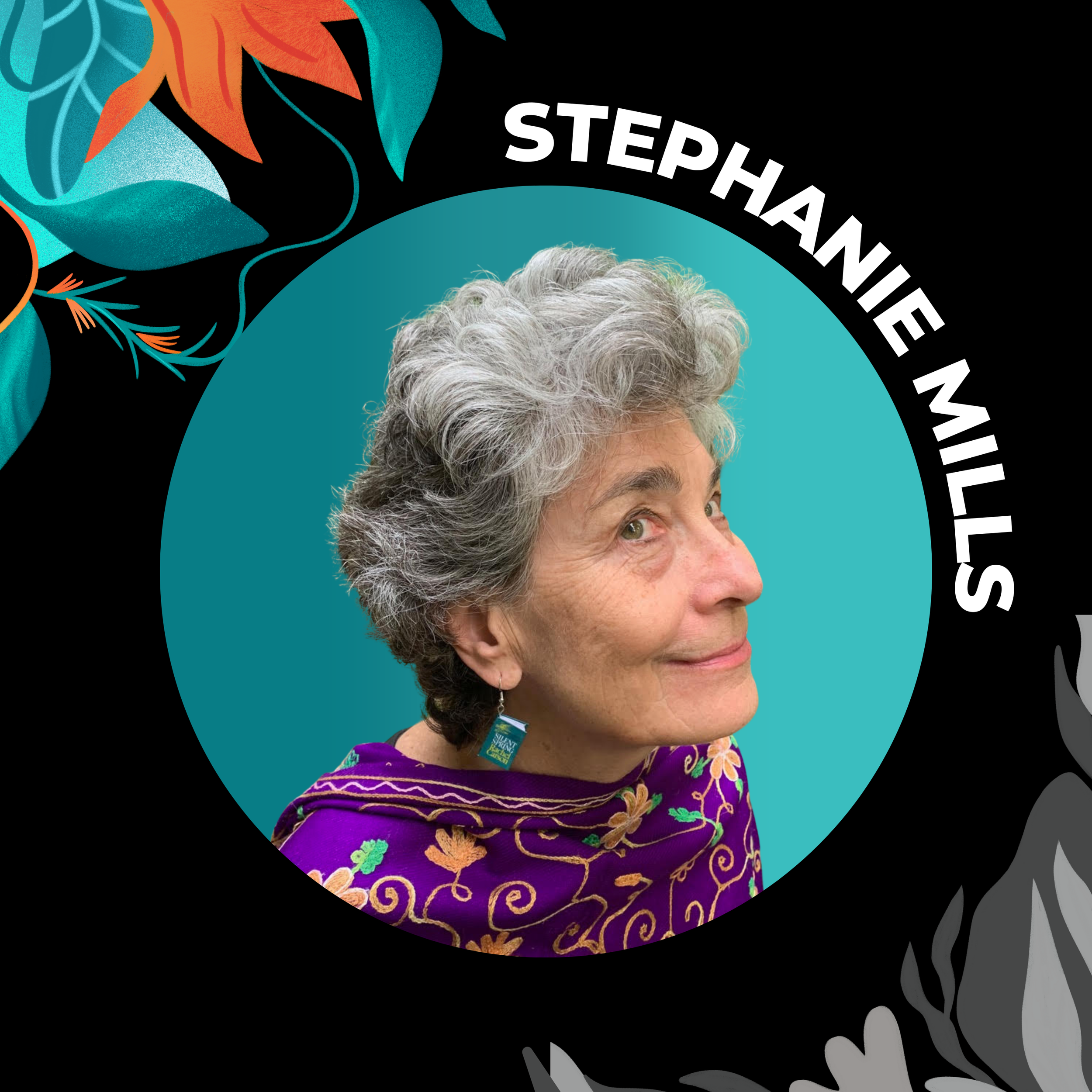



The future is bioregional. Writer Stephanie Mills reflects on decades of questioning growth and cultivating a rooted relationship with the living world. She advocates for an epicurean simplicity - choosing the simple pleasures of community, place, and nature. Highlights include:
How a 1969 college commencement vow not to have children, shaped by fears of overpopulation and ecological collapse, reshaped Stephanie’s life overnight and set her on a path of lifelong ecological reflection and action;
How the conversation around overpopulation has shifted over time and why today’s birth-rate panic and pronatalist politics are a retrograde distraction from the deeper failures of growth-based economics;
How exposure to bioregionalist ideas and people and a deep desire to reconnect with land led Stephanie from urban San Francisco to rural Michigan in the 1980s;
Why our sense of awe and meaning arose within wild and biodiverse habitat and what we lose when nature is reduced to resources that feed the technosphere;
Why bioregional living will become a necessity as global industrial civilization continues to unravel;
Why ecological restoration and bioregionalism are fundamentally community endeavors, grounded in cooperation, mutual aid, and shared stewardship;
How learning the natural history, watershed, and foodshed of one’s place help us become more bioregional in thought and action;
How 'epicurean simplicity' provides a materially simple but inwardly rich approach to living, helping us distinguish needs from wants and avoiding the pain caused by a life of 'getting and spending'.
MENTIONED IN THIS EPISODE:
-
Stephanie Mills (00:00):
This planet is wild and that wildness will out by and by. It'll either be through plate tectonics or microbes or us coming to our senses and making kin, not babies, and reclaiming our endowment of creaturehood. We definitely are going to have to learn how to live within the natural terrains, our bioregions of necessity. So people who are kind of aware of it now, it behooves us to try to see a way out of this anthropogenic, technological, denatured surround and usher that change with compassion and encouragement.
Alan Ware (00:52):
That was author and bioregionalist, Stephanie Mills. In this episode of OVERSHOOT, we'll talk with Stephanie about her decades-long advocacy confronting overshoot and how she's built a materially simple and inwardly rich life that respects ecological limits.
Nandita Bajaj (01:16):
Welcome to OVERSHOOT, where we tackle today's interlocking social and ecological crises, driven by humanity's excessive population and consumption. On this podcast, we explore needed narrative, behavioral, and system shifts for recreating human life in balance with all life on Earth. I'm Nandita Bajaj, co-host of the podcast and executive director of Population Balance.
Alan Ware (01:41):
I'm Alan Ware, co-host of the podcast and researcher with Population Balance. With expert guests covering a range of topics, we examine the forces underlying overshoot - the patriarchal pronatalism that fuels overpopulation, the growth-obsessed economic systems that drive consumerism and social injustice, and the dominant worldview of human supremacy that subjugates animals in nature. Our vision of shrinking toward abundance inspires us to seek pathways of transformation that go beyond technological fixes toward a new humanity that honors our interconnectedness with all of life. And now on to today's guest.
(02:19):
A longtime bioregionalist, Mills, was launched into prominence with her 1969 Mills College commencement address, The Future is A Cruel Hoax. In the years to follow, she spoke locally, nationally, and internationally at colleges and universities, conferences, congresses, and one cathedral. In the San Francisco Bay Area, she was editor of several environmental publications. She subsequently wrote and published scores of essays, editorials, and book reviews, participated in numerous conferences and did some teaching.
(02:51):
In 1984, following a life-changing encounter at the first North American Bioregional Congress, Mills moved to Northwest lower Michigan where she still lives. There, she began writing her seven books, which included In Service of the Wild, Turning Away From Technology, as well as two memoirs, a biography, and an essay collection. And now on to today's interview.
Nandita Bajaj (03:15):
Hi, and welcome to OVERSHOOT Stephanie. We've been great admirers of you and your work for a long time and are thrilled to finally be talking with you today. Thank you for joining us today.
Stephanie Mills (03:29):
Thank you so much. It's been wonderful to learn about your work and your questions have really stimulated my thought, and I'm grateful for that.
Nandita Bajaj (03:41):
Well, thank you. And Stephanie, you've lived decades since your young adulthood with the knowledge and deep concern of human overpopulation and its implications on the larger living world. And you've shaped your own life path around those realities, choosing voluntary simplicity, rethinking what a good life means, and including your decision to not have a child. Your prolific and powerful writing combines not just the truth of limits, but the beauty, meaning, and freedom that can come from embracing those limits. And we'll be unpacking all of that with you, but we can start this conversation with your famous college commencement speech titled, The Future is a Cruel Hoax, which you gave in 1969. And you said that, quote, "The most humane thing for me to do is to have no children at all. " What were the life experiences that led you to making that speech and what was the effect of that speech on your life?
Stephanie Mills (04:47):
Well, I am an only child and I have an appetite for solitude. And my mother was a feminist after her own fashion, so I really felt like I had the right to decide what I did with my body. And it was a time of ferment in colleges and across the land. And the ecology movement was just starting to gain attention. And I came across an essay by Paul Ehrlich titled The Population Bomb, and that just galvanized me, and it made perfect sense. And let me say, Ehrlich has lived a long and considered and prolific life, and his views have evolved ever since then. But the mention of his name can be a little bit of a toxic item. That said, I think the underlying logic that the exponential increase in human numbers is hard on the planet stands up. And it was obvious to me a liberal arts student.
(06:04):
So those were the things that contributed to my making that speech. And then the effect was to kind of draw me instantly into public life as a speaker and conference goer and activist and agitator. So that was my graduate school without walls. And I did a lot of public speaking and a lot of traveling subsequently and learned a lot and I was given a vocation. And I should note that although the vow to not have children was kind of the news hook in the talk, I was really trying to address wider ecological degradation, but yeah, my classmates applauded and then it was front page news and went on wire services around the world and it was a sensation.
Nandita Bajaj (07:07):
And rightly so. And in another essay, you've talked about how the decision to bear a child, especially in an interconnected world, is not merely a personal matter, nor does it pertain only to one moment in time. And I wonder, now that it's been over 50 years since you made that decision, how have your thoughts around that evolved in terms of the rights of the children to be born into a life that is ecologically and materially secure for them?
Stephanie Mills (07:43):
Well, what comes to mind is Donna Haraway's wonderful work, which is aware of overpopulation and extinction. And her slogan is, "Make kin, not babies." And she advocates making alliances with species, other species that need help, and to contend with our own reproductive excess. So I think that at this moment, having a child, it is the gravest decision I can imagine in the US or anywhere. And I would hope that people could be as conscious as possible about it. However, policies in the US now are making reproductive choice increasingly difficult. So things haven't gotten any simpler in the last 50 plus years. I spent a lot of time being characterized as a Malthusian and the implication being that concerns about redistributing wealth and access to the means were being negated by concern with overpopulation. And there was some validity to that. I mean, in the earlier years of the population crusade, and again, it wasn't monolithic, but there were clearly some vested interests involved in trying to limit reproduction in the developing world.
(09:23):
The tilt was on the part of some in that direction. I think it's become more usefully complex and nuanced. However, I think the polarities still exist in the discourse about Malthus versus cornucopia. So communicating these possibilities and concerns in as many media as can be is really crucial work.
Alan Ware (09:52):
Yeah. And if anything, now we're seeing an increasing panic about declining birth rates in many countries and the accompanying rise in a lot of the promotion of various pronatalist policies that are intended to increase birth rates. Even though since you gave that speech in 1969, the world population is more than doubled, consumption is more than tripled. What are your thoughts on that trend?
Stephanie Mills (10:18):
Totally retrograde. And I was thinking today about Gerda Lerner's The Creation of Patriarchy, a really important book. So pronatalism is culturally created, but it's been around for millennia, so there's that and sort of other very human reasons for having children, especially when there's no social safety net or no strong community. But I think this current pronatalist birth dearth panic is also, whether deliberately or not, like misdirection. It's taking the attention off the kind of existential flaws of growth economics and sort of privatization and foisting on the individual social responsibilities. It is part of this kind of resurgent misogyny to just send women back to the delivery room and as producers of offspring and that being the primary mission. It's about cannon fodder and wage slaves and surplus labor so that the threat of poverty goads people into accepting a lot of things that they might not otherwise.
Nandita Bajaj (11:44):
Yeah. And I'm so glad that you brought in the work of Gerda Lerner and the rise of patriarchy and how old pronatalism actually is because a lot of people in the reproductive rights work are somewhat surprised by this rise in pronatalism, some even commenting saying, "Oh, it's some kind of a new movement that's just been born in the last few years because Elon Musk started talking about it", not realizing that pronatalism has been around for thousands of years and in its subtle and coercive ways. And we do a lot of work exposing population denial, especially among liberal progressive circles that don't want to hear the word overpopulation because they think it's about telling people what to do when governments and politicians and religious leaders have been literally telling people what to do about their reproduction for thousands of years. So yeah, it's disheartening that in your own decades of work, things really haven't shifted that broadly in favor of ecocentric worldview.
(13:06):
Yeah. And speaking about your work within environmentalism, you have been involved as writer and editor in many of the environmental movements, including first publications like Earth Times and Co-Evolution Quarterly and Orion among others. You've also written various articles and a book in the late 1980s, Whatever Happened to Ecology, about your growing disillusionment with the lack of attention to ecology within the broader environmental movement in the '70s and the '80s. Can you speak to what your main criticisms of environmentalism were then and where do you think it's gone in the ensuing decades?
Stephanie Mills (13:54):
First, I want to say that, of course, the environmental movement was not then and certainly isn't now monolithic. And one organization I worked with was Friends of the Earth. And I got to work with David Brower, who was a great conservationist and edit a publication titled Not Man Apart, which was taking a line from a poem by Robinson Jeffers, whose poetry was really in a non-anthropocentric spirit, we might say. What was happening that I could see was that environmentalism was trying to sort of regulate and fine tune globalized industrial capitalism and make it work better, which it doesn't. So it was and had to be political. I mean, in order to try to mount any kind of holding action against these engines of extraction and destruction, you look around for the means at hand. And for some, it was legislation and for some it was protest and for some it was propaganda or literature.
(15:16):
So I want to just say that I understand that people in the movement were kind of seeing constraints and trying to operate within them honorably. I was taken by the idea that, and I think it's true that an ecological awareness partakes of an I-thou relationship with the living world. It's sort of not subject-object, it's participatory. And that environmentalism was kind of accepting the whole globalized industrial capitalist system and its arbitrary geopolitical components and economic components and just trying to get it to work better, which in the end does not seem to have availed anywhere near as much as we like. And the juggernaut we faced and face is immense and very powerful. So whether it's a default or an insight, going more towards decentralization and lifestyle change and acceptance of limits was where my attention flowed. I've lived a long time since that moment of asking whatever happened to ecology and reluctantly accept the nature of politics and compromise. As the Earth First folks said, no compromise in defense of Mother Earth. I mean, it exacts a lot of activists to try to find where to draw the line and when to yield, what to accept and whatnot.
Nandita Bajaj (17:09):
Definitely. And so many environmentalists today, so many young people learning about environmentalism today are growing up with that anthropocentric view that nature is something out there. It's not alive. It's not a living system of which we are apart, but very much, as Eileen Christ calls it, a human colony that we can manage. You've also talked a bit about technological fundamentalism and carbon fundamentalism really within that environmental shift over the last few decades with climate change becoming the most prominent thing we talk about, even though there are a myriad of other ecological crises we've been experiencing for much longer than climate change. Wonder if you could add a bit more to that.
Stephanie Mills (18:01):
Well, I want to sort of revert to Darwin and Paul Shepard in the sense that people are still kicking against Darwin for locating us as a species among species. And Paul Shepard, a great human ecologist called ecology the subversive science. So it just subverts anthropocentrism, and there are historical and economic forces ranged against that awareness. And thinking about some of the young people who are captivated, I guess, or captive of the technosphere, I mean, as you noted, the population has doubled in the last less than 50 years. Biodiversity has been drastically reduced. So the experience that a 20 or 30-year-old has today is of, unless they happen to be traditional indigenous, they are in an anthropogenic world and radically dependent on it is the other thing. So trying to sort of see a way out of this anthropogenic technological denature surround and into something that allows a more affective and reciprocal connection with the living world, it's a crucial endeavor. It's why certain forms of nature education are so critical so that people can have an experience of connection and interdependence and love of nature.
(19:52):
But the other part of this is that we're just so reluctant to accept limits to growth. So all the sort of ecomodernism, again, I don't know what all the motives of all the people involved in it are. I think there's just a tremendous amount of technological hubris and inflation, but it's also just the perennial dream of being able to have the cake and eat it too. It's just not have to feel consequences. gol' darn it.
Alan Ware (20:27):
Right. You made a huge change in your life beginning in, was it 1984 when you moved to the Northwest part of the Lower Peninsula of Michigan from San Francisco, Bay Area. And you've written that you had a life-changing encounter at the first North American Bioregional Congress. And what was it about being exposed to bioregionalism after all those years living in an urban environment that appealed to you then and now?
Stephanie Mills (20:57):
Well, many things. I think of a real, a vivid experience. I was living in San Francisco. I was working for Co-Evolution Quarterly. I was commuting across the Bay and enjoying that work and my colleagues. And we had a party one night and some of our far flung contributors who lived in the country showed up and they were rosy and ready and we were pale. And the contrast was something I noted. So I was like, oh, country life. The implication of some of what I've been saying is back to the land and self-reliance. So there was that. Then I became involved with the bioregional movement in the San Francisco Bay Area through acquaintance with the late Peter Berg, who was one of the great articulators and organizers of it, and Freeman House, a salmon restorationist. And they were taking the argument deeper and onto a cultural level.
(22:07):
And that not only involved rhetoric and manifestos, but also celebration and art and food and skill, skillful means. So it was more whole and more radical in the best sense of the word. So I managed to get to that first North American Bioregional Congress and fell in love on the spot with a guy from northwest Lower Michigan. That is exactly why I'm here. That was brief, but I came to a place, so it was in the mid '80s, but there were still back-to-the- land counter culturalists here who were walking the talk of connection with nature, simple living, local self-reliance, kind of homegrown ceremony and spirituality, and a great deal of effective cooperation. So that's the long and short of why I am here and why I continue to believe that bioregionalism is a very valuable body of thought and action. It's moving fast now. I mean, people are kind of reinterpreting it in ways that'll be useful, but if the devolution of this civilization continues because it does seem to be fracturing, the question of where are we going to devolve to becomes important and to our bioregions, to natural territories that kind of make a tangible sense and can be comprehended and worked with regeneratively.
Alan Ware (24:00):
Right. Yeah. We've had several guests on the program pointing to the collapse process of modern industrial civilization. And it is an ongoing process that we're seeing happen now in different parts of the world and will take decades or centuries to take place, but we'll all become bioregional by necessity over time. A lot of these centralized digital tech processes that we're using for this podcast and for a lot of modern life are very fragile. They're not resilient, they're not robust. And you've written about that. You've also written a lot about the joy and meaning and connection to nature that bioregionalism can help develop more deeply. And I do like at one point you mentioned in this, ideally a bioregion would have some wilderness space. And you had talked about the vernacular definition of wilderness is where humans are on the menu. Yeah, when you can have large predators roaming around, and there aren't many places where you can do that, but ideally every bioregion probably in the world would support some kind of large predator, right? So it would need to be able to roam and we'd have to give nature plenty of space in each bioregion.
Stephanie Mills (25:14):
It's a fact that when the top carnivores can be restored to landscapes, there are cascades of benefits. They help restore balance. So it's our job and the job of your organization and others like it to voluntarily contract our numbers so we can regain balance. As Ehrlich would say, nature bats last, but I'm glad you raised the question of wilderness - another hotly contested idea and reality. But these reservoirs of biodiversity and the quality of wildness are so essential to preserve and are they ever on the block now in the US. So it's a mighty time because if it's completely anthropogenic world, it's a solipsism. If all the references are human, we're denatured. The geologian Thomas Berry said that if human consciousness had evolved on the moon, it would be as barren as the moon. So our very being arose from wilderness and biodiverse conditions. Gary Snyder, the poet, talks about categories of land or kinds of land - good, wild, and sacred.
(26:49):
And the idea is that good land is amenable to human habitation and can sustain it. Wild is the edge that sort of allows for a mixing and hybrid vigor and back and forth. And sacred land is kind of the ultimate wild place that human beings might only make a pilgrimage to once in a lifetime for an initiation or something of that moment. And that human beings, until modernity had that kind of an understanding and a sense of awe in the face of nature and peril. Get back to Jefferson. He talks about the evolutionary force of the mountain lion's tooth on the leg bone of the deer and our experience of being somewhere in the food chain helped develop our intelligence and our senses and our temperaments. And if we're just co-evolving with silicon chips that are programmed for profit, I don't want to live like that. I don't.
Nandita Bajaj (28:04):
Yeah. What you're saying about how our consciousness has evolved as being part of this food chain and part of the larger living world, the wrong turn that we have taken in terms of anthropocentrism, it seems so much to be driven by fear - fear of our own mortality, fear of other species, fear of nature. As much as we talk about nature within an ecomodernist framework, it's still done through the lens of, well, nature is beneath us. It's below us. We can manage it. As long as we can control it, we don't have to fear it. But as soon as it's something unknown and it's the wild, it's the darkness and it's other species who are so much more powerful and majestic than we are, there is this sense of smallness and insecurity drives us to become controlling. And so I wonder to what degree this fear of nature has made us into these insecure controllers, dominators of nature.
Stephanie Mills (29:17):
Entirely, I think. And you raised the question of mortality and there's nothing more natural than dying at the end of your life. But I was thinking, I've been reading work by Jaime D'Angullo who was an anthropologist and ethnolinguist and man of letters in California in the first half of the 20th century. He was what they called a salvage linguist, or he's doing salvage linguistics and gathering tongues and stories from the California natives. And it was all from a time when animals were people and there were peer interactions with bears and deer and loons and badgers and quail, and they were persons in this worldview and way of being in the world. And there was hazard and there was surprise and there was respect and reducing nature to a store of resources and also reducing our apprehension of it to DNA and quantities has really cost us wisdom and sense.
(30:36):
And part of wisdom is, I guess, knowing that one is mortal and that ultimately control just does not succeed over the long term. This planet is wild and that wildness will out buy and buy. It'll either be through plate tectonics or microbes or us coming to our senses and making kin, not babies, and reclaiming our endowment of creaturehood.
Nandita Bajaj (31:11):
And you've done that in the way you're leading your life today. You've written that quote, "Sometime somewhere you've got to make your stand, declare a tie to the ground you're standing on and to the larger community of the land." And you've lived that commitment for decades on your land in northwest lower Michigan. Could you give us a sense of your home and the land that you're stewarding and its history and how the land and your relationship to it have changed over the decades?
Stephanie Mills (31:45):
Well, first let me say how I've done it is imperfectly and incompletely and not to my satisfaction. This land was old growth deciduous forest. It's a peninsula on a peninsula in Lake Michigan. And my particular piece of it was very likely logged in the mid 19th century, and that wood went to fuel lake boats and smelters. So there were attempts to farm it and not very promising, but subsistence farming went on here for a couple of generations. And now my land is a pine plantation. Well, I live at the sort of lower end of somewhat of a ritzy county in Michigan. It's been a resort place since the forests recovered. But as I say, I'm at the lower end, but an awful lot of people are moving to this area. So my little patch of a regenerating kind of scrappy scotch pine forest, it's going to be like Central Park in the sense that the land's being sold off in smaller and smaller parcels and the usual sort of excessively large dwellings are going up on it.
(33:12):
So it dismays me, and yet I'm a perpetrator. I mean, it's kind of what my then spouse and I did was to get a chunk of land and put a house on it back off the road. I wrote a book about ecological restoration, In service of the wild, and my aspiration was to restore my land. And I found out, as with so many of these aspirations, that being a lone individual is not sufficient to these tasks. And so it gets back to needing a committed and coherent community. So I haven't done much except just not subdivide my land. And it will figure out what to do with itself if it's allowed to.
Alan Ware (33:56):
And you've talked about the community that you have there is quite decentralized or that the community of like-minded people who are similarly bioregional, right? You have the co-op and probably get together and have face-to-face meetings and do things with people who are like-minded, but you are surrounded by the mainstream growth-oriented culture. What are you seeing as the promises and some of the greater challenges of bioregionalism from your experience there?
Stephanie Mills (34:24):
Well, what's promising and in my very immediate vicinity is that my neighbors and I know one another and are very attuned to natural history around us and also engage in mutual aid. Those undergird bioregionalism and something that has been developing the whole time that I've lived here is watershed awareness because we're in the Great Lakes and people are very oriented to the lakes. I mean, often for recreation and scenery and all of that, but the sense that water quality connects with what's going on in the land is developing here and the distinctive quality of this region because of the presence of the lakes makes it kind of more conducive to bioregional awareness. And actually there's a tremendous amount of activity going on in river care and watershed restoration, those kinds of things where it's tending the landscape and the food shed. So the whole kind of buy local movement is very entrenched here for the better.
(35:51):
There's a foodie culture and not to dismiss that because it is the ground of our being, how we eat, at least as humans. And so the kind of awareness of what the land around can provide is growing. So I think all of those kinds of activities, they're economic activities and kind of spiritual activities both are in the mix - of neighborliness, mutual aid, outdoor appreciation, love of the lakes. This is propitious country for bioregionalism in a lot of ways. It might have to go by other names. We might have to not insist on calling it that, but just identify the ways in which this supports the health of the land and water that we love and depend on.
Alan Ware (36:49):
Right. And as you mentioned, watershed is a classic way of joining together a bioregion. It affects all of us. It's essential for life. And I have begun learning more about the natural history and the flora and fauna of my area the last few years, and that's been quite a journey. How do you recommend people become more bioregional in their outlook, either individually or in communities?
Stephanie Mills (37:14):
I do think learning about the natural history is crucial and the land use history, to just get a sense of the magnitude and dramatic nature of the changes that have taken place and to kind of have a search image of abundance and diversity that has flourished in one's bioregion in may again, plus it's fun. It's fun to develop knowledge. So birding and foraging and hiking and plant identification and gardening with natives, all of those things are not trivial. That's a way to begin and mapping can be very, very powerful. Peter Berg devised a great mapping workshop that I've done over and over and over again to involve people in drawing maps that don't have reference to geopolitical features, but have to do with the terrain and the life it supports. As we said earlier, I think we're going to be devolving to our bioregions of nececessity.
(38:30):
So people who are kind of aware of it now, it behooves us to try to usher that change with compassion and encouragement. And so to welcome people to their bioregions, we are going to be practicing mutual aid and geography is going to be very real for us as our access to the resources of the whole wide world diminishes. We definitely are going to have to learn how to live within the natural terrains. And again, people who have this knowledge and understanding can help anticipate that and advocate for bioregional awareness. And I mean, I do that sometimes at township meetings. I'm not a regular attendee by any means, and you just have to be willing to sound like a crackpot sometimes and hope that you've planted a seed. Next time somebody says something like that, it's not totally off the wall.
Nandita Bajaj (39:38):
Yeah, definitely. We built a whole career out of being crackpots.
Stephanie Mills (39:45):
Lonely are the brave.
Nandita Bajaj (39:47):
We are fortunate to have supporters, our donors and foundations who trust in this work enough to allow us to continue to do it. So there's a community of people who are hungry for this message and who are happy that there are little outlets for them to plug into like yours and ours. And you may have noticed that our tagline for our organization is shrink toward abundance and your work that you explored in your philosophical book, Epicurean Simplicity, is very much in resonance with our own vision. I wonder if you could speak to specifically what you mean by epicurean simplicity, and how do you think more of us might find the joys of it in the way that you've chosen to live with voluntary simplicity?
Stephanie Mills (40:44):
I want to revert a little bit to the crackpot issue and say that countercultures are reservoirs of diversity and sources of alternatives. When things start to dissolve and fall apart, coherent counterculture, which in some ways bioregionalism is, can be available. It's like these bodies of ideas are like natural refugia. During the ice age, everything for much of the Northern hemisphere was scoured clean, but there were these little coves of vegetation here and there in the Appalachians that persisted and could recolonize the barren ground. And so that's a metaphor for countercultural work for me - that developing these, not necessarily utopian ideas, has merit because they can be available sources of alternative ideas and practices and ethics when the need arises. So as to epicurean simplicity, the idea of voluntary simplicity is integral to ecological activism for a long, long time, has been. So I'd been aware of it.
(42:05):
And it just seems obvious that consumerism's really destructive, so you want to reduce your consumption to the greatest extent possible and voluntarily. Mandatory simplicity, mandatory poverty is not anything to countenance. And so in some ways, my voluntary simplicity is a little bit of a privilege because I enjoy a lot of choices and I do enjoy my simplicity to the extent that I can maintain it. I wanted to kind of counter eco-puritanism in this writing because I can tip into that, sort of being self-righteous about your recycling or whatever. So I wanted to write about the joys of simplicity and the ability to just savor simple things. And I chanced on Epicurus too. I mean, that's an adjective that we think means kind of greedy and sensualist, but actually he was an ancient philosopher that said, "Your senses are giving you reliable information and excess will give you pain and it's good to avoid pain." So I had the opportunity to learn a little bit about Epicurus and to read Lucretius' great poem on the nature of things.
(43:38):
There's a whole kind of metaphysical dimension to all of this that conduces to existentialism basically. It's a be here now philosophy, epicureanism. Another thing about it is the tremendous value placed on friendship in epicurean philosophy, again, because it's a here and now materially simple, inwardly rich approach to living. And my good fortune is that much of what surrounds me is more than human nature. And so it's a rich environment and I've been able to cultivate my appreciation and my sensory engagement with it all. So I don't feel a need for a lot of shopping or streaming or doodads and gewgaws. I love to cook and eat good food. I love a great conversation. I love to walk with friends in my neighborhood and to see the comings and goings of the critters. And the mission was try to reaffirm the treasure that our five senses, our ecologically evolved five senses, bestow or import, fill us with, if we can just wake up, pay attention, be grateful.
(45:04):
And it's a practice and there are many other names for it, but we're talking on a laptop and I've got wires all over the place and whatnot. I've been able to sequester myself from a lot of blandishments to consume. But again, it's privileged to an extent. I'm not as susceptible to peer pressure and as available to advertising and I'm not as constrained by my occupation or now that I'm mostly retired. So it's simple, but not easy, this way of life. And it could be way simpler.
Alan Ware (45:42):
You mentioned not having a child helped you live the voluntary simplicity, not feeling you had to buy the child this and that, and now the pressures to bring certain technologies into your life because of the children.
Stephanie Mills (45:56):
Oh, yes. I mean, and boy, what a nightmare that is, I'd say from afar, but baby cams and handing very young children screens to occupy them. And one of the most instructive experiences of my life was visiting the Pitt Rivers Museum in Oxford. I don't know if it's still set up the way it was, but had comparative anthropological exhibits. And one of them was child carriers. And there were half a dozen ways that indigenous people had crafted to take care of their young children from cradleboards to ... One was kind of a little bit of a yolk that attached to a pole. So you would put the baby kind of through a hole in it and the baby could at least travel in a circle, leaving you free to pound grain or weave whatever it was you were weaving. Anyway, it's by way of saying that the apparatus that seems to be involved in navigating this world with young children is tremendous. And again, of necessity, it's like you don't want your little baby flying out the window of your car if you collide. I mean, each of us individually and in community has to kind of negotiate these choices and try to support one another as best we can and not be puritanical or censorious because that doesn't get us very far. I know I've tried. I'm trying to amend my approaches continually.
Nandita Bajaj (47:47):
I love the simplicity of epicurean simplicity, the idea that our five senses give us just enough information to guide our actions and behaviors and the hundreds of thousands of years it's taken for us to evolve paying attention to those senses and how just being so out of touch from our surroundings and even from kind of having an internal sense of what brings us joy, what brings us meaning, happiness, yet we keep getting pulled into the false promises of modernity. We are no longer matched with the behaviors and adaptations that we've evolved to survive.
Stephanie Mills (48:41):
At one point we were integral in our ecosystems and hope we may become so again. That said, I love the, I don't know who said it, but ecology, it's more complex than we think and more complex than we can think. It's by way of saying that part of the value of having a relationship to wild nature or free nature is to be mystified and to have wonder and to have an endless series of questions arising. I mean, somebody might be willing to offer an answer and it might be good, but ultimately, why is that paw print there? Why did that leaf turn brown and curl when it did? It's incredibly rich to just be curious and attentive and to be willing to sit with not knowing.
Nandita Bajaj (49:48):
Yeah. Before we wrap this very powerful conversation up, we wonder if you would be willing to read a passage that captures some of your own philosophy.
Stephanie Mills (50:02):
I thought you'd never ask. I love reading from my work every other time and then every other time I think, "Oh gosh, this needs a rewrite." Okay. Well, here we go.
(50:18):
"By paying attention to the small things, the wholesomeness of the daily bread, the source and state of the water, the seamliness of one shelter and the wellbeing of all the human and more than human lives around us, we may be led to practice simplicity and harmlessness in tangible ways to be the change one wishes in the world as Gandhi taught. This is not to premise a life on renunciation, abstinence, and deprivation, but to enjoy, as did Epicurus and his followers, the freedom in simplicity. The champions of a progress are wont to say that one can't turn back the clock. However, once I left San Francisco, I managed to stop my personal clock. Consequently, my life seems to have become something of a museum of bygone mentalities, practices, and pleasures, and I am beginning to feel like a curator.
(51:23):
After spending the first half of my adult life and trying to do my bit for the macrocosm, devoting my talents and energies towards speaking a word for nature, I find myself now addressing the microcosm of my own home and the life within. An activist life can yield prodigies of service and no time for self-knowledge. Just for now, I want to sit in the garden to savor my life and my solitude, to do my work, and to be a good friend. I do wish to cultivate my serenity. Whether one lives known or unknown, roaming through life hostile or anxious won't benefit the commonality. It doesn't follow, however, that serenity alone will suffice to save this world. One afternoon as I was sweeping my house, it occurred to me that having a philosophy really can be a help. As I rhythmically swept the sand and ash and hair and lent and leaf-legged wood bug carcasses into neat little accumulations for the dust pan, it also occurred to me that my willingness to be behind the times has been both a cause and an effect of philosophy.
(52:40):
A keystone of mine is that life forms and life places have moral standing on par with that of any human being. Therefore, the others are entitled to my respect and all the deference and consideration I can offer as I go about satisfying my vital needs. This is a basic tentative deep ecology, a philosophy first articulated by the Norwegian philosopher, Arne Ness. The deep questioning fundamental to deep ecology helps one to distinguish between needs and wants and to minimize those that entail getting and spending. Did the world really cry out for a self-cleaning kitty litter tray or for any of the thousands of labor- saving, landfill-clogging geegaws being hawked in ever more ubiquitous commercial media from advertisements on bathroom walls to sales pitches and voice mail systems. Having a sweeping philosophy, being able to spend an hour tidying with a broom, a technology that hasn't changed much in several thousand years, and doing so in a handmade home, which I can see no reason to leave until the day I go feet first, feel like such blessings and enjoying the least things - a chill glass of water, a moment of play with the cat, the sight of sunlight caught in the frost spangling the locust twigs - is a form of prayer.
Nandita Bajaj (54:22):
Amazing. That was so beautiful.
Alan Ware (54:25):
Yeah, beautiful.
Nandita Bajaj (54:25):
Oh, thank you so much.
(54:28):
Thank you so much for being an incredible example of a really devoted activist, a philosopher, writer, a speaker, and just living a life of meaning and integrity. We really, truly value your work and your life, and it has been such an honor to speak with you today, Stephanie.
Alan Ware (54:50):
Yes. Thank you, Stephanie.
Stephanie Mills (54:52):
Thank you. The pleasure is mine, and I'm very grateful.
Alan Ware (54:56):
That's all for this edition of OVERSHOOT. Visit populationbalance.org to learn more. To share feedback or guest recommendations, write to us using the contact form on our site or by emailing us at podcast@populationbalance.org. If you enjoyed this podcast, please rate us on your favorite podcast platform and share it widely. We couldn't do this work without the support of listeners like you and hope that you will consider a one-time or a recurring donation.
Nandita Bajaj (55:24):
Until next time, I'm Nandita Bajaj thanking you for your interest in our work and for helping to advance our vision of shrinking toward abundance.