
Progress: Humanity’s Worst Idea
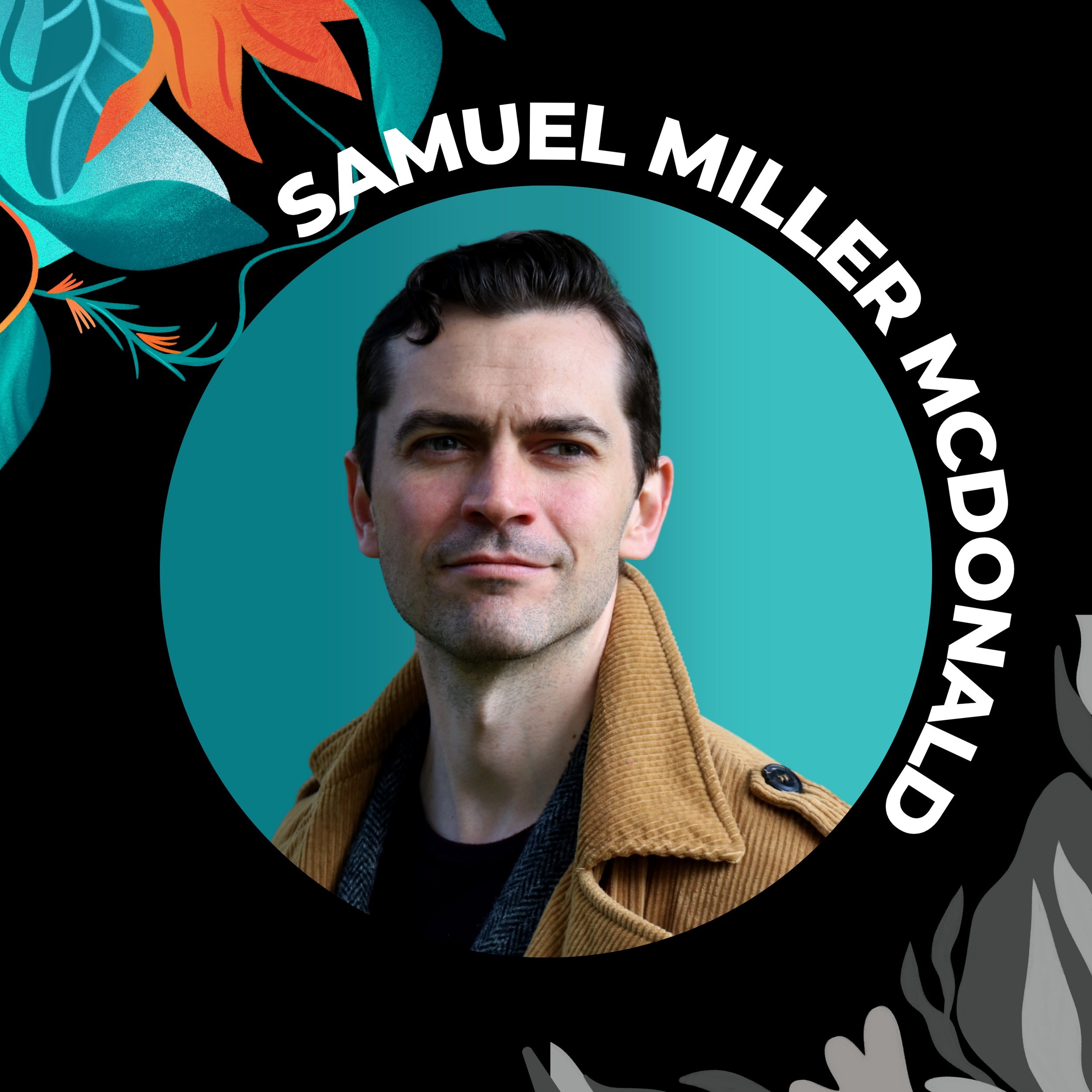



For 5,000 years civilizations have told themselves stories of progress. Today, the progress myth has become humanity's most dangerous illusion. Samuel Miller McDonald, geographer and author of Progress: A History of Humanity’s Worst Idea, illuminates the destructive lineage of progress, why these myths endure, how they enable socially and ecologically parasitic societies, and what values might guide us beyond them. Highlights include:
How narratives of progress have persisted from Mesopotamia to today, and how those narratives have persisted even as the means of material subsistence and political economy have changed enormously over time;
How the progress narratives of today are primarily divided into four camps: techno-liberal, Silicon Valley's android kingdom, the social justice vanguard, and right-wing grifters and political opportunists;
How the ecological, energy exchange relationships of mutualism, commensalism, and parasitism offer a framework for understanding human societies' concrete and abstract energy capture historically and in the present;
Why long-lived societies tend to be mutualistic or commensalistic with animistic, biophilic worldviews and egalitarian practices, while parasitic societies collapse due to the ecological and social destruction they cause;
How parasitism has evolved across three broad ages of mythical, secular, and today's economistic, fossil-fueled, and globalized capitalist network;
Why neoliberalism, the latest economistic project, is so resilient - and how it prioritizes economic growth over political rights, co-opts reformist movements and exploits the human cooperative impulse while entrenching corporate power at the expense of democracy;
Why elite fantasies of transhumanism and off-planet escape are dangerous and delusional extensions of parasitic growthism;
What more mutualistic and commensalistic alternative paths forward might look like, from agroecological local systems and rewilding to indigenous land rights, fossil fuel bans, rejecting AI, and class struggle - all guided by values of biophilia, fairness, and restraint.
MENTIONED IN THIS EPISODE:
-
Samuel Miller McDonald (00:00:00):
For instance, this history in the West, you see these several movements come up like say the suffragettes or before that the abolitionists or then through the 20th century labor movement and then civil rights movement. And it's hard not to see that as progress. One figure in the civil rights movement who did a good job of challenging that narrative was Malcolm X. And he had this famous quote where he says, if you stick a knife in my back nine inches and pull it out six inches, that's not progress. Progress would mean pulling the knife out and healing the wound, but people don't even acknowledge the knife is still there. I think what that really captures is that these kinds of victories only look like progress if you start the timeline at the worst possible moment. But if you push the timeline a bit further back than that and you find people who are perhaps living in peace and equanimity, then this whole kind of arc of progress, arc of history, falls apart.
Alan Ware (00:01:00):
That was writer and geographer, Samuel Miller McDonald. In this episode of OVERSHOOT, we'll speak with Samuel about his new book Progress: A History of Humanity's Worst Idea. We'll explore how the dangerous millennia-old myth of progress has fueled enormous inequality, exploitation, and ecological destruction.
Nandita Bajaj (00:01:29):
Welcome to OVERSHOOT where we tackle today's interlocking social and ecological crises driven by humanity's excessive population and consumption. On this podcast, we explore needed narrative, behavioral, and system shifts for recreating human life in balance with all life on Earth. I'm Nandita Bajaj, co-host of the podcast and executive director of Population Balance.
Alan Ware (00:01:53):
I'm Alan Ware, co-host of the podcast and researcher with Population Balance. With expert guests covering a range of topics we examine the forces underlying overshoot - the patriarchal pronatalism that fuels overpopulation, the growth-obsessed economic systems that drive consumerism and social injustice, and the dominant worldview of human supremacy that subjugates animals and nature. Our vision of shrinking toward abundance inspires us to seek pathways of transformation that go beyond technological fixes toward a new humanity that honors our interconnectedness with all of life. And now on to today's guest.
(00:02:30):
Samuel Miller McDonald is the author of Progress: A History of Humanity's Worst Idea and a geographer focusing on human ecology, theory, and history. He holds a doctorate from the University of Oxford and degrees from Yale University and College of the Atlantic. He has written essays and analysis for the Guardian, Nation, the New Republic, Current Affairs, and elsewhere, and has contributed interviews to BBC Ideas, Vice News Tonight and various radio and podcast programs. And now on to today's interview.
Nandita Bajaj (00:03:05):
Hi, and welcome back to OVERSHOOT, Samuel. We are thrilled to have you back on the podcast.
Samuel Miller McDonald (00:03:11):
Thank you so much for having me. I'm thrilled to be here.
Nandita Bajaj (00:03:14):
Yes, as are we. And last time we discussed various essays you've written and we received an incredible response from listeners. So we're especially excited to now delve deeply into your just published book Progress: A History of Humanity's Worst Idea. And paraphrasing from the description of the book from the publisher's website, "The modern story of progress is a very dangerous fiction. It shapes our sense of what progress means and justifies what we will do to achieve it no matter the cost. We continue to subscribe to a set of myths about dominion, growth, extraction, and expansion that have fueled our success but now threaten our and all species existence on a planet in crisis". It's an admirably well-researched book with 70 pages worth of references. For both Alan and I it was exhilarating and humbling to be exposed to such breadth and depth of perspective. Congrats on writing such a great book.
Samuel Miller McDonald (00:04:20):
Thank you very much. I appreciate that.
Nandita Bajaj (00:04:23):
And it's clear from the title that it is a critique of the dominant progress narrative that the world is getting better and better and better. And before we delve into the historical and current day narratives around the concept of progress, could you start by sharing a brief overview of the book so our listeners have a sense generally of what it's aiming to accomplish and what its basic argument is?
Samuel Miller McDonald (00:04:49):
Absolutely. And first, just to clarify that it was just published in the UK and unfortunately still have a couple of months until it's published in the US for your North American listeners, US and Canada, I believe in December. So yeah, the book, it's really kind of two stories running parallel. One of those stories is the history of the idea of progress, or not so much a singular idea, but a narrative formula. You've had this sort of progressive narrative take many different forms through all of the different cultures that it's passed through, but it always kind of adheres to this one formula. And it originates in one place in Mesopotamia at one time, which is the early dynastic period. So this is between four and 5,000 years ago. The book traces the development of this narrative formula over time and how it's kind of changing as it evolves through this western record.
(00:05:45):
So once we move from, for instance, myth of Gilgamesh, the Enūma Eliš, Code of Hammurabi, these are all in Mesopotamia, we look at, for instance, Zoroastrianism in Persia. We look at Judaism. We move to ancient Athenian, classical Greek sources. We jump to the Pax Romana. We look at medieval Christendom and medieval Islam through to the Enlightenment period, colonial America's narratives like manifest destiny through the industrial period - Darwinism, Marxism, those kinds of ideas. And then to the ideological battles of the 20th century which moves us to the great acceleration where progress narratives sort of coalesce all the way to the present, looking at the kind of eccentric myths coming out of Silicon Valley and then going beyond and looking at what we might expect for the future beyond these progress narratives.
(00:06:40):
So running alongside that is another story that's more materialist. It's more kind of focused on the physical structures of this certain kind of society that first inaugurates the progress narrative formula.
(00:06:56):
It's a very particular kind of political economy we'll talk more about later. I think it starts as a kind of market empire, the first states that arise in Mesopotamia and become based on the need to grow, the need to grow profits through trade, grow territory through expansion and conquest and grow populations. And they justify this, they kind of get everybody on board with this through these progress narrative formulas. And so through the book we're also looking at these different periods in which those kinds of societies evolve along with these narratives. And the book culminates arguing that it's this form of political economy that we really have to abandon and dismantle in order to maintain a habitable Earth and a humanity that's worthy of surviving that Earth.
Nandita Bajaj (00:07:50):
Yeah, thank you so much for providing that. And when I said it was humbling, it was exactly this that I was referring to was just the historical coverage of the different narratives that you've provided. But you mentioned the progress narrative formula. There is this kind of binary positioning with this dark and wild beginning of humanity and the more superior, more refined present, and there's some kind of a idealized version of the future that is far better than our more kind of savage past. And before we go into the more historical perspectives that you just laid out, could you give us an overview in terms of the how does belief in progress show up in today's society? What are some of the metrics or evidence that are used by its proponents to support the progress narrative?
Samuel Miller McDonald (00:08:47):
Yeah. Well, so as you kind of alluded to earlier, I think there is just a baseline background belief that you're of indoctrinated in it from very early. You get it reinforced over and over again through all sorts of media and not just nonfictional media and not just news, but I think a lot of our fiction as well is kind of wrapped up in this bigger metanarrative. And that I think is idiosyncratic. There's not going to be one way that everybody experiences this narrative. I think it all is inflected differently depending on who you are, what your biases are, where you're coming from and all of that. I was thinking about how to divide up the most ardent progress proponents and the people who have this kind of vested interest in promoting it as a form of propaganda or political rhetoric. And I think there's three or four major sort of camps that we could divide them up into right now.
(00:09:44):
And one I would call the techno-neoliberal. This is made up of people from a sort of complex of institutions like research institutes and think tanks and international organizations, corporations in the orbit of federal governments. And I think the narrative that they rely on is really ideologically rooted in a kind of messy amalgamation of Keynesian social democracy and more kind of Hayekian neoliberalism. I think what they believe in this progress framework is that this practice of corporations, international institutions, governments, and the mega-rich all working together in this kind of, you might say Davos network, that they'll all continue to collaborate and inch by inch they'll bring the world closer to a high-tech utopia. All the big global problems are solved through this network of elites and a permanent order sets in, maybe a kind of extended end of history narrative. And we will all enjoy liberal democracy together with our products and treats.
(00:10:46):
We've seen this represented in literature recently in Ministry for the Future by Kim Stanley Robinson, which I think is a very effective proponent of that kind of techno-liberal vision. But we see it more malignantly perhaps come out of many different iterations among pundits - Ezra Klein, Derek Thompson, Noah Smith. Among politicians I think Pete Buttigieg is a good spokesperson for that, maybe Macron in Europe. And the book has several chapters that trace the lineage of this particular kind of techno-liberal ideology. So for instance, we're also looking at these data visualization websites. So Our World in Data is probably the most famous and most abundantly cited. Many of these are funded by Bill Gates and basically a kind of factory of statistics that you can lie with if you want to be promoting a certain kind of progress agenda. And so those as well receive a bit of critique in the book.
(00:11:44):
There are some books I just want to mention as well that focus on those exclusively. One that I would recommend is Glass Half Empty. It's Rodrigo Aguilera and that kind of more comprehensively dismantles some of these data visualization and Steven Pinker or Max Roser or those kind of guys. Silicon Valley I think used to be a big part of this general tendency of the kind of techno-liberal, but I think they've recently, probably since around 2016 and rise of Trump and Trumpism, I think they've broken off into something more authoritarian, more mythical, more eccentric, and we could call this one 'android kingdom' narrative, perhaps probably the most fanciful of all of these. I dedicate maybe a chapter and a half to these Silicon Valley narratives toward the end of the book. So one of these is the AI domination narrative - basically that robots and human robot hybrids will take over the world, subjugate or replace human beings and make all the decisions.
(00:12:45):
Google founder Larry Page really wants this to happen. Another kind of more prosaic version of that, but maybe more likely is aligned with Curtis Yarvin, just a blogger who's been adopted by the Silicon Valley far right. His idea I think is mainly that he wants to see the world's mega-cities secede, become city states, become run like corporations by these Silicon Valley oligarchs and autocrats and maybe not a huge divergence from what already exists, although they imagine tech that allows the government to hack your mind directly, monitor your thoughts, send out automated drones if they don't like what you're thinking. And a big supporter of Yarvin, Peter Thiel, is another one of these guys in that kind of circle who is promoting that sort of progress narrative. And I think he and these others have an interesting relationship with Christianity. They'll incorporate this sort of Christian messianism and iconography into this high tech dystopia.
(00:13:47):
And my book also, it goes into how Christianity has kind of evolved in these very different ways, has been adapted to different kinds of extractivism or growthism or these really kind of mythical narratives of progress. Christianity is always kind of lurking there as a specter we might say. There's another group that I think is more benign and well-meaning that is really tapped into the kind of major progress narratives of today, that's maybe like a social justice vanguard. This is well-meaning people who are I think a adjacent often to that techno-liberal camp, but they're more earnestly interested in actually achieving justice and recourse for marginalized people. I think they're not trying to primarily maintain or expand systems of repression and extraction and hierarchy as I think the other two definitely are. But they do I think promote narratives of progress in social justice that I think are often unhelpful to their own causes.
(00:14:46):
And I think there's a kind of analysis that results in them either assuming the permanence of past victories or assuming future victories that I think can be placating and can make their movements more docile than they need to be to achieve their goals. For instance, this history in the West, in Europe, in the anglophone world, you see these several movements come up like say the suffragettes that help deliver women's right to vote or before that the abolitionists who helped to abolish legal slavery or then through the 20th century you have a labor movement that gets a lot of victories around wages and working conditions and then civil rights movement in the later 20th century that further gets more rights for minorities, for women. And it's hard not to see that as progress, as a kind of improving course of history. But the book tries to challenge that narrative a bit.
(00:15:49):
One figure in the civil rights movement, who did I think a good job of challenging that narrative was Malcolm X. And he had this famous quote where he says, if you stick a knife in my back nine inches and pull it out six inches, that's not progress. Progress would mean pulling the knife out and healing the wound, but people don't even acknowledge the knife is still there. And I think what that really captures is the fact that these kinds of victories only look like progress if you start the timeline at the worst possible moment where people are getting kidnapped from Africa and brought in into this network of slave plantations and are suffering horrific conditions. But if you push the timeline a bit further back than that and you find people who are perhaps living in peace and equanimity, then this whole kind of arc of progress arc of history falls apart.
(00:16:44):
That's a whole different history that they were living before they were thrust into this kind of western lineage. So that narrative of progress begins to make a lot less sense. As Malcolm X says, it's not progress to give somebody what they're already owed. That was another quote of his. And I think the same is true not just of slavery, abolition, and the civil rights movement and the book does point out that slavery hasn't been physically abolished, it still exists in a great volume out throughout the world. There's more people enslaved today than there have ever been. But I think you also see this narrative with women's rights for instance. And again, it's the same kind of problem. You can look at many different times and places through history where women are already liberated. They already enjoy great authority within their communities, great status and prestige and have full places, full autonomy within their communities.
(00:17:42):
And progress only makes sense when you limit your scope of historical reckoning to this little period where women are suddenly being systematically oppressed and controlled. I think one of the other big problems is just also the assumption of permanence in this and today, unfortunately, we're seeing all of these instances of Roe v Wade being rolled back. There's a decision that enabled legalized gay marriage is on the table to be rolled back. Civil rights have undergone a long process of deterioration. And as I bring up in the book, this kind of impermanence of positive change isn't a feature of the present moment, it's a feature of history as well. And there have been many instances of slavery being abolished and then being resumed. Akkadian empire in Persia is one example. The Mauryan empire in India is another example where you have these kind of enlightened leaders coming in and saying, slavery is bad, we're going to tone it down.
(00:18:39):
And then that lasts for maybe a couple of centuries and then it just goes back, resumes to this state of enslavement and oppression. And then I think the fourth group that I would say in this is just the big constellation of right-wing grifters and political opportunists. So the Trump administration is full of these guys and Trump has, like every other US president to be fair, leaned really heavily on progress narratives explicitly. He and his administration, people in it, have talked about the promised land, the golden age, manifest destiny, how Trump is making America great, it's going to be even greater. I think a lot of the openly fascist pundits tap into this narrative as well. They might start with a little sort of apocalyptic prologue, the immigrants are destroying America or whatever, but then they quickly pivot to saying, Trump is fixing all of this. We're on a great path toward ever more greatness and just stay the course and we're going to have a golden age.
(00:19:38):
I recently went back and looked at the inaugural addresses of all the last presidents since Reagan and every single one of them used one of these progress cliches in that inauguration speech. So yeah, I think those are kind of the main iterations that we see in this. And speaking about what metrics or evidence proponents use, I think it's all over the board. So you get the techno-liberal is very proud of all of the graphs that they roll out to promote their narrative. And I think they are probably more rigorous in some of their research, but can also make them more insidious because they're incorporating things that are really not rigorous or fall apart under pretty brief scrutiny, but they're folding that into legitimate research and evidence. I think the Silicon Valley eccentrics and the right-wing grifters and political opportunities, which there's a lot of overlap between those now. I think Elon Musk is right in the center of that Venn diagram. I mean for them it's kind of like a project of destroying the value of evidence. It's epistemological warfare. I think that's all AI is as well. I think the entire AI bubble is just a nuke to try to destroy people's faith in facts and evidence. And so I think they're openly hostile to that.
Nandita Bajaj (00:21:00):
Yeah, that's a great way of distributing the four areas where these narratives show up in present times and really want to highlight what you said about Our World in Data, for example. So many people and time-addled journalists turn to them to get their information. And like you said, they can be honest in terms of the sources that they're using, but it's the interpretation and the very gentle insidious manipulation of data that makes it quite dangerous in these kind of chipper metrics that they are using to tell us the world is getting better. And then I also just really appreciate it, and this is where I think our team finds the most frustration with this growthism progress narrative is within the social justice vanguard group where they seemingly are well-intentioned folks. They do care about justice, but the victories that they count as victories are not real in a sense.
(00:22:02):
So if we're only looking in the last few decades or centuries in terms of victory, then we're missing out the much broader, much more egalitarian past that we have had. I mean, I'm totally guilty of using the word progress when I speak about women's rights and challenging all of the rolling back of rights that's happening. But that comes from this assumption that patriarchy is just a natural order and it's always been there. And it really wasn't until learning more about the origins of inequality that you start to understand. But the question about time span is how many of us really have the knowledge of deep time history? Most of us are only really learning about the last hundred or 200 years of even our country's history.
Samuel Miller McDonald (00:22:53):
Yeah, absolutely.
Alan Ware (00:22:53):
And I like how at the beginning you mentioned it's kind of a dual narrative, the narrative of the idea of progress and then the narrative of the material biophysical structure, of how material progress has happened. And in the book you use the field of ecology and its identification of three key energy exchange relationships among organisms and ecosystem of mutualism, commensalism, and parasitism. And a key theme of the book is the application of those models to human societies. Could you start briefly by explaining each of those relationships both in non-human ecosystems and then describe some of those human analogs in broad terms, and then we'll get into the details of mutualism, commensalism, and parasitism as we go through the discussion.
Samuel Miller McDonald (00:23:47):
Sure. In an ecological system, a mutualistic relationship is one where you have two organisms interact to benefit one another. So one of the examples I use in the book is of the Hadza people who interact with the honey catcher, which is a type of bird. So the bird scouts out beehives and then uses a specific call to alert the people about it. The people respond with their own call that the birds recognize, and then the people get some fire going, bring smoking brands with them, and the birds lead them to the beehive. People use the smoke, tranquilize the bees, take the honey, and then the birds go in and eat the larvae which they otherwise wouldn't be able to access. In a commensalistic relationship, one organism extracts or benefits from another without doing any particular harm or benefit to that other organism. So a familiar example of this is trees.
(00:24:36):
Trees serve as homes and food sources for many species like fungi, insects, birds, mammals that the tree themselves doesn't necessarily benefit from, but they're also not harmed by these species. In some cases, obviously they do benefit or are harmed. So it's not all trees all the time, but in general that's a kind of commensalistic relationship. A parasitic relationship is probably more familiar, more ubiquitous. This is where an organism extracts from another to the detriment of that original organism. Many examples of this - intestinal worms, vampire bats, ticks, mosquitoes, cuckoo birds or fungi that take over the nervous system of hosts. So we can apply these three relations to human systems by placing human systems, so like economies, societies, corporations on a spectrum from mutualistic to parasitic, with commensalism somewhere between those. So a society that's mutualistic or commensalistic will extract from an ecological system without doing particular harm or maybe even benefiting it while a parasitic society will extract to the point that it's detrimental or even fatal to that ecological system. So a common feature of this that I talk about in the book is that when you have a society that's more parasitic in its relation with ecological systems, it's likely more parasitic in the relations between classes within that society as well.
Nandita Bajaj (00:26:00):
Yeah. And one of the things you get into the book is also the concept of human supremacy is this notion that animals are not capable of expressing the kinds of altruistic kinship abilities that we have. And you've described very beautifully given that many animals do similar things to those that humans do, and for similar reasons, there's good reason to believe that if they have similar brain structures that have evolved in the same ways that many of them have the same capacity for affection, for curiosity, excitement, exhilaration, et cetera. And part of this parasitic mentality is based on this idea of human supremacy, right? That everything else out there that exists is just resources for us to extract from, to exploit, et cetera. I wonder if you could speak to some of the beliefs and practices that defined more mutualistic and commensalistic cultures that represented 99% of human history before the dominance of this progress narrative takes hold. And then maybe we can go into the second part is how did their ways of capturing energy, what you refer to in the book as both concrete and abstract energy capture, contribute to greater social and ecological balance?
Samuel Miller McDonald (00:27:27):
So just a quick note in case those terms come up again. The term concrete energy capture, I used to refer to the process of an organism extracting energy from the environment or another organism, or when a human system, say a corporation extracts energy from the environment, energy being shorthanded in this case to refer to forms of biomass or mass or energy. Abstract energy capture is the process whereby an individual benefits from the labor attention or care expended by another. So it's perhaps more an extraction of time as well as physical energy. These are terms I'm introducing in the book, but they're building upon work done by the British archeologist, Ian Morris. So just for some more interesting look into energy capture at a societal level, I'd recommend his book, Foragers, Farmers, and Fossil Fuels. So an argument I make in the book is that human beings for most of our history, like you say, have tended to build societies that are mutualistic or commensalistic or at least those are the ones that manage to survive long enough to have been recorded, known about, and persist into the present.
(00:28:33):
And this is where you have extraction that occurs in a way that's not particularly detrimental or fatal either to the environment in which these groups inhabit, nor is it fatal or detrimental to the groups or classes that make up these societies. So as I say, if they're more reciprocal in their relationship to their environments, they'll probably be more reciprocal in their relationships with each other. That's not a reciprocity that's always perfectly even. And I don't think this kind of society, commensalistic, mutualistic is just a synonym for indigenous. I think there have been a lot of indigenous societies that have not been mutualistic or commensalistic, and there probably have been many examples of parasitic societies throughout human prehistory, even before that sort of 5,000 year mark that I'm using to show the emergence of this particular lineage of parasitic societies. But that those prehistoric examples just didn't last long enough to leave any trace because they gobbled up all the resources and then perished or antagonized too many neighbors and were eradicated.
(00:29:38):
But when we look at these really successful long-lasting societies that persist for thousands of years, they tend to be mutualistic or commensalistic. They tend to have several things in common. So one of those is animism. That's a spirituality that's based on the worship of other life and ecological features, so rivers, mountains. This kind of spirituality, I think helps to encode and maintain a really biocentric and biophilic ethic in society, this kind of love for other life and humility in a relationship to other life, which I think is necessary for maintaining long-term ecological success. I think in these cases we're talking about human beings that are a species of primate that's very successful predators, very successful cultivators. They can quickly denude areas, overhunt them, overgather, and I think this kind of ethic is essential to restrain that success. And then another trait is egalitarianism, an ethic for fairness and equality.
(00:30:42):
Again, not perfect equality, but a kind of attachment to moving toward more fairness and equality. So these groups tend to value sharing resources. For instance, this kind of greater mutualism in abstract energy capture where there's mutual reliance on each other. I think they also tend to value individual talent, individual autonomy, so they're not rigidly collectivist in the way I think they're sometimes presented. But if one person tries to hoard too many resources, try to exert his or her will too strongly over everyone else, tries to take other people's natural born right to autonomy, then these groups tend to react harshly to that and end up either banishing those individuals or executing them to protect that kind of egalitarianism and fairness. So I think obviously there are many other aspects to commensalistic and mutualistic societies that are important. I think a lot of those aspects are locally rooted. They're going to be dependent on the kind of ecological system that they inhabit and the kinds of neighbors they have, the size of the group, the sort of trade that occurs between them and other groups and the kind of mode of production that they're engaging in, whether it's more horticultural or humans moving grazers around, or hunting, gathering, other kinds of foraging. But I think those two value systems are really central to those kinds of long-lived commensalistic and mutualistic societies.
Alan Ware (00:32:14):
And that egalitarianism that we've seen with even our primate cousins with the cucumber test where one gets a cucumber and one gets a banana, and eventually they'll just refuse the cucumber kind of on principle that it's not fair that the other one's getting something sweet. So there are plenty of theorists that talk about us having a pretty strong inbuilt egalitarian impulse that during most of our evolution, our societies had ways of checking, as you mentioned, all the way up to exile, someone who is trying to dominate too severely the society. And you organize the book chronologically into the three main eras of the mythical age, the secular age, and the economistic age. And you look at parasitism in all of those different ages. Could you take us through an overview of the history of parasitism in those stages, how the progress myths emerged several thousand years ago in the mythical age and how that's evolved into this more networked globalized parasitism of the past several hundred years?
Samuel Miller McDonald (00:33:18):
Yeah, I'll give a broad overview here. The book has more kind of interesting details and textures to this history. So the mythical age of progress narratives takes us from about 3000 BCE to around 1500 CE. So it's by far the biggest spread of time, and this is where we see a lot of these familiar cliches emerge. So the 'promised land', for instance, which was developed in the Book of Genesis. The book goes through myths in Mesopotamia that I mentioned at the beginning, Zoroastrianism, Judaism. It also looks at some of the more secular myths among classical Athens. But then it makes the case that the Pax Romana, for instance, was both secular but also really embedded in the polytheism of Rome. It was then co-opted by Constantine who brings Christianity to Europe. He reunifies the empire with this, and Christianity then becomes this hegemonic progress vehicle.
(00:34:15):
Norse pagans also have a spot in this period. They have kind of their own progress narrative that compels them toward raiding and colonizing, but they and their paganism eventually succumbed to Christianity, really for the same reasons Constantine did. It was just a very effective consolidating force. So toward the end of the mythic age, we see the rise of Islamic empires. These spread across Africa and into Southern Europe. And Islam itself emerges as a progress narrative built upon the older Abrahamic myths of Christianity and Judaism during the Islamic golden age. We have a lot of Islamic scholars like Khaldun, who maintain a really strict adherence to Islam, but at the same time, they're contributing to these what we think of today as very secular disciplines - geology, geography, law, medicine, chemistry. And they're foreshadowing a lot of the really liberal or proto-liberal ideas that come out of the European enlightenment as well. But the whole time they're rooted in Islamic myths and narratives.
(00:35:20):
The secular age comes about, I'm sort of dating it to the enlightenment era because in that period, what you see is a lot of really similar ideas elucidated in the Islamic golden age. But a really big difference is that the European scholars are breaking with Christianity and even turn hostile toward Abrahamism in developing these secular ideas. It's in this secularization that we see the rise of capitalism. It becomes a kind of global accounting system for moving wealth and resources around. And I make the case that there's a material reason for this, which is that when you have these overland empires that expand in a kind of contiguous way, they tend to use mythic narratives. They find that that's more effective or more natural. But when you have maritime empires which start to spread around the globe at this time, they're setting up colonies far away from their home culture.
(00:36:11):
And so you need colonists who are more cosmopolitan. They're confronting a greater diversity of beliefs, and so it makes sense to integrate these more secular narratives. And the mythic narrative simply becomes less tenable. The kind of contiguous imperial expansion can maintain a provincialism and these more mythic narratives that the far-flung maritime colonies just can't. It ceases to be very plausible, I think. And then it also may just be a contingency of history, nothing that's predetermined, but you do kind of see this interesting pattern that even as Euro-American colonists begin settling North America, even though they started as this maritime transatlantic colony, when they start going overland in a contiguous way, they start to adopt much more mythic narratives. So manifest destiny, for instance, or Christian missionism, you get all these kind of kooky Christian sects emerging at this time like Mormonism. And so this isn't necessarily a teleological periodization, it's not necessarily moving from mythic to secular.
(00:37:15):
There's still a lot of mythic narratives occurring within this more secularized period and happening side by side. So even while we have manifest destiny sending settlers across the western United States in the mid 19th century, we also see the rise of modern science and scientism during the same period. And we're getting progress narratives from highly scientistic thinkers and theorists like Charles Darwin, Herbert Spencer, and Karl Marx. So you have this secular scientistic kind of narrative sitting alongside this really mythic Christian much older kind of narrative as well. The economistic age emerges in the early 20th century. This is coinciding with a rise in petroleum as well. This is where we first have the concept of a global economy really come into study and come into policy. And this is when progress narratives start to primarily take this step toward ideologies - toward these really cohesive programs of combining value systems and economic theories and economic models and beliefs.
(00:38:21):
And so these take the shape of ideologies that are really familiar today. So economic liberalism, for instance, fascism, Marxian ideologies like socialism, communism, and then Keynesian social democracy. These ideologies are primarily economistic in the sense that they're concerned with how to shape the economy and how to distribute the spoils of economic activity. So progress at this time becomes fully entwined with the idea of economic growth. The two concepts become almost inseparable. So if the secular age saw the first instance of interconnected global trade and communication, the economistic age expanded on that. So with this injection of petroleum, fossil fuels underpin most forms of production. Instant communication becomes possible across vast distances and extraction and transportation rapidly speed up. And so this sort of creates this illusion of the possibility of permanent growth. It's this combination of growth and progress, which led to this big meta-ideology of growth becoming dominant across the political spectrum in the economistic period. And that's a period we're still in unfortunately.
Nandita Bajaj (00:39:30):
Yeah, and I think part of that progress narrative is it often gets reduced to, well, this is just part of human nature or Herbert Spencer's “survival of the fittest.” This is kind of just who we are and it's just what we do. And as energy, more and more energy becomes available, we just exploit it more. And it really undermines again the point about the capacity for commensalism and mutualism that our own species has had for much of our history. But at the same time, with 5,000 years of propagandizing human progress narratives, kind of like the ideology of human supremacy, the ideology of pronatalism, of patriarchy, of scientific racism, a lot of people, us included, have embraced and embodied those. And as you also make clear in the book, the difference between progressives, conservatives, and liberals is not really all that pronounced when it comes to parasitism. We're all abiding by that quality. So I'm not fully sure if I totally understand to what degree it is true for our species as it is for other species that we will abide by the maximum power principle and just exploit all the available resources until they're totally denuded and we have to move versus the capacity for commensalism and mutualism, even amid access to so much concrete and abstract energy. Is there a reconciliation there with our species to be able to do both?
Samuel Miller McDonald (00:41:10):
I saw an interesting paper a while back that talked about how some of the earliest examples of Homo sapiens right at the beginning of that evolution were surplus- generating in their activities. So I don't think that necessarily means they're over- hunting or over-gathering, but they are expressing this ability to generate more than they need. And I think certainly that's an ability that has been present through all of this history of this species. But I think you also have many examples of many societies that very demonstrably are able to regulate that surplus-generating ability and maintain these viable systems of extraction over long periods of time with cultural engineering. And I think the tricky part is the ability of those kinds of societies and cultures to maintain that not only among themselves, but among their neighbors, among everybody, and not allowing the kind of the society that's willing to simply over extract and enrich themselves, overpopulate themselves, and then go on and annihilate these other cultures.
(00:42:24):
I think that's the tricky part. And I think the book is also a bit ambivalent about this question about whether this is a kind of destiny of the species that it's simply encoded in our DNA to go and overconsume to go and over-reproduce and just swamp other life and do so kind of unthinkingly. I'd lean toward saying that that's not a natural thing. That was a very kind of unnatural anomaly that occurs under these very specific historic and material conditions in this one place, in this one time. And today it's not so much a fight with human nature that we need to be having as it is a fight with these particular humans who want to maintain this kind of system of over - extraction and over-excretion of waste and so forth and just don't see any value other than that and being able to do that.
(00:43:20):
And I think that is a very particular group of people. It's also they've built a very effective system of incentives and disincentives that make it hard to swap them out and have a better outcome. And it's true also that those individuals are still human beings who have human instincts and human natures. And I do think that a big part of this is not just designing the right mode of production or whatever. It's also trying to balance these different human natures and these different instincts and being able to build systems that promote some while eliminating others from the public sphere. And at this point, that seems like a really abstracted solution to something that's very much just a physical problem of greenhouse gas emissions and denuding of landscapes. But I think that is something that all of these cultures that were able to figure out a good balance between their extraction and reproduction and the health of the places they inhabited, all I think did this very difficult psychological and social system building, which I think is absent today. And we just have this one really pathological kind of obsession that rules everything, every institution and government.
Alan Ware (00:44:38):
Right. So you had been talking about networked parasitism and the fossil fuels that help power that and that it became an economistic age that gauged success mainly by economic growth became a sort of a God of sorts. And after World War II, you talk about the kind of social democratic compromise in a lot of the western industrialized countries between capital and labor that lasted for about 30 years, and then with the era of stagnation and inflation or stagflation and the controls on capital being environmental and labor, and there was a pushback from capital leading to neoliberalism. And why is that proven so resilient? You do mention we're still firmly in the clutches of neoliberalism, even in the face of the global financial crisis, COVID, it just keeps on marching on. Where do you think we are with that and what in its history has given it such power?
Samuel Miller McDonald (00:45:37):
I think that's a great question. The book dedicates a pretty long chapter to neoliberalism, and then subsequent chapters also kind of come back to it, attempt to unravel its impacts and lineage. And so much space is given over to it because it is this really resilient, as you say, really dominant ideological position basically of every government, corporation, institution in the world right now. And not just neoliberalism, but this kind of growthism is that I think is the central tenet of neoliberalism. So I would dissect that in two parts. One is the material impacts as a form of statecraft and economic engineering of neoliberalism, and then the other being the cultural or ideological impacts as a narrative formation or social engineering project. So the neoliberals, they've always used anti-government libertarian rhetoric, but in power they've always expanded the role and the reach of government.
(00:46:30):
So the way I describe it in the book is where Keynesianism sought to turn the government toward the protection of the public against corporate parasitism, neoliberalism took control of the government to empower corporate parasitism against the public. I distinguish in the book between political liberalism and economic liberalism. Political liberalism entails free speech and expression, civil liberties, representation, and economic liberalism instead emphasizes the sanctity of entitlements like property ownership, economic growth via profit and rent seeking, and the primacy of commerce in society. So these two things, political and economic liberalism, they're mutually exclusive. Unrestrained economic liberalism leads to inequalities, and these make political liberalism impossible to sustain because you have a small oligarchic elite, super-wealthy elite who comes in and abolishes the civil liberties and civil rights. Meanwhile, maintaining political liberalism requires putting restraints on economic liberalism. So Keynesian social democracy, I think represented the constraint of economic liberalism in favor of political liberalism. Neoliberalism was the reverse. It was trying to unleash economic liberalism while restraining political liberalism. This had a really profound effect on the country and the world.
(00:47:47):
So suddenly you have millions of hectares of intact wilderness closed off the people and opened to corporate extraction. Suddenly millions of people are kicked off their land and captured in corporate employment. Countries, many times former colonies or recent independent former colonies, were captured by international debt agreements and kept in poverty by these big debtors through institutions like the International Monetary Fund and World Bank - institutions totally captured by these neoliberal ideologues in the seventies. And then suddenly this kind of modest equalization of wealth in Europe and the anglosphere starts to evaporate and reverse. You get recessions, you get economic collapses, this new kind of epidemic of despair. And I think in this process puts in all of these structures for maintaining itself, like eroding the labor movement, eroding all of the kind of opportunities to create social bonds, social solidarity, trying to eliminate public space, congregation space, trying to dismantle nationalized industries and resources and building in this really robust and effective ideological kind of quasi-religious belief system.
(00:49:02):
So on the cultural side, I argue in the book that the main role of progress narratives is to make these kinds of really perverse policies and outcomes palatable to people who might otherwise be hostile to them, and that holds true of neoliberalism and the neoliberal progress narratives. So the point of that was to create this divine explanation and justification for why all these examples of theft or subjugation or competition, really legitimized grifting, were actually good. We see that in some of the media in the eighties, we get the little 'greed is good' monologue from Michael Douglas for instance. And I think that really did represent a mantra of the period and still does, obviously, and they're drawing on the rhetoric of gilded age liberalism even. So Herbert Spencer's laissez-faire economics saying, just get the government out of the way and the genius of individuals and the market will move the race and the nation forward to a state of perfection.
(00:50:00):
But as I mentioned, they weren't actually reducing government interference. They were instigating this sort of coup to take over the government to protect the interests of the wealthy and corporate bureaucracies and put in these very strong structures of reproduction and reinforcement and putting forward this idea that by privatizing everything, the market will sort everything out, do everything more efficiently and cheaper by removing regulations. For instance, what banks allowed to do with regard to investing or putting together toxic packages, debt packages, what industrial manufacturers are allowed to do with regard to poisoning land, water, air, or what businesses in all industries are allowed to do with regard to compensating workers fairly or employing people safely. By removing these regulations, the prize would be this endless growth, endless frontier. And all the wealth generated by this growth would eventually reach everyone, including those initially harmed by this relaxing of finance laws or labor laws or environmental regulations.
(00:51:00):
I think one of the questions running through the book is do the people who promote these progress narratives really believe their own story or are they just kind of putting it out into the public to try to trick people? I think today when we look at the premises set by neoliberals, some of them may be really believed it, and some of them may be still do, but it has clearly been proven false. All the privatization has made services much worse, less reliable, more expensive. Infrastructure is crumbling in every single place where it was left to the market to maintain. All the wealth produced from this growth has remained in elite markets for the most part and far away for most people to benefit from it, and instead has been used to invest in this technology that further controls people's behavior, dumbs them down, keeps them further from self-sufficiency, exercising their own agency.
(00:51:51):
And even with this abundance of evidence, it still maintains this kind of hegemonic position. And I think part of this is the nature of this simplicity of neoliberalism as an ideology. It just has these very simple tenets that are able to get into people's minds and it becomes much easier to run an institution when you just have this one very clear, simple goal - increase the endowment, increase the budget, increase the profits. You go into a university and you'll find administrators who really believe that their only role is to grow endowments. It's not to produce or disseminate knowledge, not to educate a new generation of students, but to get higher returns on their investment, which is why we see so many universities turning to real estate investments, for instance. I think every head of state of every country believes in this one thing - growth - and they can just go out on TV and say growth over and over again, and that's all they got to do.
(00:52:48):
They just become the spokesperson for that. And then every CEO and every corporation has shorn down their minds to achieve this one thing. So obviously at this point, I think the belief that the economy should grow, that human populations should grow, the material footprint of human civilization should grow - I think that's clearly psychotic. And I think this entire neoliberal framework for interpreting the world and trying to render the world in its image is literally, it's fully divorced from reality. And not just the abstracted reality produced by scientific knowledge, for instance, but even the lived first-hand reality of people experienced day to day. And I think a lot of people who live in the world understand this. People who don't serve as spokespeople for this ideology I think can see that and are open to challenges to this. And I think that's why we see a lot of eccentric behavior in political coalitions in the US for instance, where you have this really kind of confused and chaotic mix of ideas and these kind of new movements that are challenging orthodoxies but not really creating their own coherent programs or not really putting alternative values into practice in a way that's producing something good.
(00:53:59):
And so I think this kind of dominant growthist neoliberalism, unfortunately is still very much in control of all of these institutions, and these challenges to it I think tend to just get absorbed and adapted, and then redeployed. You bring up the 2008 financial crisis and then the crisis that came with COVID as well. I think in each of those cases it was this process of kind of adapting a crisis to strengthen itself. So in the first 2008-9 recession, Obama's administration just came in and injected taxpayer cash into these banks, didn't do any kind of reform, didn't do any kind of punitive response, essentially just put money in to maintain that structure and system. And I think you had some good brief responses from resurgent left after that, Occupy Wall Street and then some of these Corbin, Sanders responses in the English-speaking world.
(00:55:00):
I think those also kind of got absorbed and co-opted by this structure. With COVID you had in 2020 these massive on-the-ground protests and riots and things that looked like it might be another kind of resurgence of this reaction against this neoliberal growth kind of order. But again, I think it just got redirected into these existing structures of maintaining an authoritarian state, maintaining a market dominated by a few monopolies, duopolies, a few major corporate bureaucracies and nothing really putting a dent in that. And I dunno, at the moment, I don't see any kind of response to any of these crises that has done anything to really dislodge that.
Nandita Bajaj (00:55:45):
And of course the most pathological version of this market fundamentalism, when you combine it with technological fundamentalism, and then you talked earlier about religious or even Christian fundamentalism is really having a moment right now at Silicon Valley. And this obsession with population growth is really coming out strong from there. And specifically in recent years, these tech billionaires have promoted a vision of progress in which capitalism and technology either enhance human life through digital means or human-machine integration or if that fails, then plan an escape from a ruined Earth. So continue on with this parasitic mode and bring it to other planets. And you have a great quote in your book where you say "Artificial intelligence stimulates the salivary glands of a parasitic class intent on draining organic neuronal activity from any opportunity to extract and consolidate wealth. Space and brains remain frontiers primarily within the imaginations of hollow minds". In your book, you do talk about the likelihood of their visions succeeding, even partially or not, and what would the implications be if they did?
Samuel Miller McDonald (00:57:05):
As I mentioned, I think this kind of shearing down of everything to believe in only one thing, infinite growth, I think that is clearly a psychotic thing, irrational even malevolent, but it's very mainstream and I think because it's so mainstream, it takes the form of this kind of mass psychosis and I think it's easier to join a cult if it's huge and normal. And if everyone's drinking the Kool-Aid, it's easier to drink it oneself even when you know it's going to kill you. But I think these Silicon Valley myths, the stuff I was calling the android kingdom, I think that's not mainstream really yet. It might be going in that direction, but I think at the moment it's kind of the delusions of eccentrics. Unfortunately, they control billions of dollars. They shape US policy, they shape the direction of tech investment. I think the only reason AI exists at all as an industry is because several of these insane billionaires got together and decided to blow this financial bubble in the hopes that they could create an industry out of thin air that would further their goal of transferring wealth from everyone else to them, stealing creative work, violating copyright law, getting a bunch of people hooked on these machines that invent misinformation.
(00:58:14):
And that's I think just kind of the grubby sort of gangland side of Silicon Valley AI dystopia. But I think there are these interesting more fantastical narratives around the human-machine hybrids, space colonization. So I have this extended part in the book that is looking at as a kind of case study of this Elon Musk and Jeff Bezos. So these two guys start their space companies within two years of each other, Bezos first, and I think there's an interesting psychology behind why they're investing so much in this aerospace tech. I think one of the conclusions is that these guys are just really emotionally and cognitively stunted. Even as they talk about justifying them, they're calling back to their adolescence and how inspired they were by movies and books they were reading, the sci-fi they were reading at that time. And I think what we see them doing is something that we would just see really pedantic, neurotic teen boys doing if they had billions of dollars. Musk surrounds himself with teens.
(00:59:13):
They made up his government slash program, and I think that's partly because that's the age he feels. So part of this section of the book examines also whether space colonization is actually viable from a technical scientific standpoint, argues that they're just definitively not viable. The tech necessary to sustain human bodies doesn't exist. It probably won't ever exist outside of the ideal conditions of the planet Earth. Given all the resources required for this development to happen, given that those resources are running out very quickly and given that climate change induced disasters are making supply chains much less reliable, given that all the labor that needs to go into this development is based on agricultural systems that are at best going to become increasingly unreliable and lower yield into the future, there just isn't a runway for this tech to be developed. We don't have those decades that you need to do that to develop that technology.
(01:00:10):
I think it's a similar story with this kind of singularity, the idea that these supercomputers will become as intelligent as the collective of all humanity. But AI, it's already hitting plateaus. It's already hitting resource constraints. I mean, they have to steal tap water to cool the data centers. There's limited land, there's limited energy. The data centers are already tapping into the renewable energy. The renewable energy transition in Ireland has been completely stalled by new data centers sucking up all the energy. They're talking about building new coal power plants to power them, new nuclear plants to power them. Those all have hard resource limits, and I think there are also social limits. I think a lot of people will use these products and pay for these products. We'll just kind of roll over and let their minds be melted. But I think a lot of people won't.
(01:01:01):
I think there will be social pushback that takes the form of either movements that affect policy, incorporate regulation, or just destroying these data centers. If something is stealing your water, you should go destroy it because you need water to live. So I think there will hopefully hit all of these kinds of limits to the ability of these data centers to be expanded at all. Either way, I think the chips that make these computers function will simply never have the capability of organic neurons. It's simply impossible. There's no way to translate these kinds of engineered silicon ships into what brains are capable of doing. Even the most small and primitive, simplistic kind of neurological systems. I think it's just a kind of juvenile delusion that is driving a lot of this, that these are billionaires, they're kind of bored. They want the world to resemble a sci-fi drama.
(01:01:57):
And I also make the case that a lot of this stuff is illusory and they know that it's illusory. It's a kind of big circus performance. So when Elon Musk posts videos of his rockets flying up, and then he tweets them out and he says, not CGI, this is real. It's meant to give this kind of hallucination of progress when every other realm of society is declining. Life expectancy is going down, biodiversity is going down. We're looking at a very bleak climate, unstable future. These kinds of projects - rockets, AI - are just meant to create an illusion that something is getting better, that something is getting more sophisticated and improving. Of course, they all have negative impacts. The rockets have harmful impacts on public health, on environments, and AI has negative effects on pretty much everything, including those as well, health and environments and culture and information. I think the best that we can hope for is that these are just bubbles that are going to burst soon and we can all stop talking about AI.
Alan Ware (01:03:05):
Yeah, it's interesting is the facts, like you said, are belying some of the progress narrative and the look over here at the rocket, look over here at AI, we're still progressing, but more and more people are feeling definitely a decay and dissolution. But it is interesting, unlike say previous elites that I know of, and especially with this tech elite, they have their bunkers, they have their islands. There is part of them that very much knows things are going down and they're preparing for that often with millions and billions of dollars in preparation. So they know there's a great potential for social upheaval, potential revolution that people are being immiserated over time, and as we were talking about earlier, people do have in the commensalist societies a strong inborn egalitarian bias that we have to have kind of stomped out of us through domination or through I think extreme insecurity where we accept being dominated in return for bodily security and a minimal survival standard. When you talk about this a bit in the book, why haven't more people revolted and staged revolutions against parasitic civilizations?
Samuel Miller McDonald (01:04:16):
I think this is one of the most important questions and one of the most important things the book tries to get at because I think there is a kind of assumption among a lot of people on the left, or in these kind of radical or rebellious subcultures, I think there's an assumption that this natural desire for fairness and freedom will triumph, and if we just say the right words, we will inspire the masses to come together and overthrow our oppressors. And it's just about unlocking this puzzle and then the floodgates will open and we'll clear away all of these oligarchs and autocrats. A chapter in the book addresses this question directly at some length. A second chapter then takes some of those lessons to consider how we might overcome these challenges. There've been billions of people ensnared in these systems of extreme oppression, humiliation, degradation, and this has occurred over 5,000 years at least. With so many people caught up in these systems of oppression, you would think there would be millions of revolts over time instead of the maybe thousands, maybe tens of thousands that we see.
(01:05:26):
When we do see records of these kinds of revolts most of the time they're not actually trying to upend the systems that are oppressing them. They're trying to replace particularly incompetent regimes, a dynasty that's kind of gotten out of hand or they're just trying to get their agreed-upon wage rations. And I think one of the answers to this is that human beings, in addition to being egalitarian, I think are very cooperative and I think rulers have been very effective at harnessing that natural desire to be cooperative and avoid conflict. They harness that through a lot of different things - through having collective public works projects, getting people out working in irrigation or so in the fields or building huge monuments. They harness it through warfare and extremely collectivist endeavor. They get people attacking a maligned enemy, promise them fortune on the battlefield. And from the spoils of a conquered foe they can build their own kind of improved position and then they'll work together and they'll turn their rage away from rulers and toward this enemy.
(01:06:30):
I think progress is the narrative that makes these projects really plausible and romantic, whether it is building the kind of sacred pyramid for the divine ruler or preparing a field of crops that will deliver prosperity or the promise of a better life through conquest on the frontier. The promised land, the original promised land in the Old Testament was a frontier of conquest of Canaan. And I think there are other tools as well. One is providing pleasures, entertainments, distractions, sufficient to placate people, whether that was alcohol which was at least systematically developed along with these kinds of societies, probably an essential element in building these first civilizations, whether that was public entertainment or the other satisfactions of family life and domestic life. The other tool of course, extreme violence against those who show a tendency to not conform or accept that subjugation. If the progress narratives and the treats didn't work, then the blade and the cage would step in and have to do.
(01:07:35):
When it comes to that kind of harmonious cooperativeness, I don't know if there's a clear solution to that. I mean, I don't think that's an intrinsically bad thing about humans. I think that can be a very positive trait. I think trying to find these places where that gets hijacked and intervening at that point, which is what this book is trying to do, show that one of those ways of hijacking that cooperativeness is progress myths and intervening by helping people be more skeptical of those kinds of myths. But I think it is just something that it's case by case and every kind of intervention, every kind of revolt or revolution, I think strategy has to be hyper-local. It has to be very granular on both temporal and spatial levels, happening in the kind of most specific time and place possible. So I don't think there's really one kind of universal, clear solution to this problem of a dearth of revolts and revolutions, and I think every time and place needs its own toolkit to try to inspire those kinds of actions.
Nandita Bajaj (01:08:37):
Yeah, that's a very helpful response and you spend quite a bit of time in the book towards the end on pathways forward. What do you think might be some guiding principles that might move us toward a non-parasitic human ecology and political economy and what might achieving that look like?
Samuel Miller McDonald (01:08:59):
Yeah, so the book has something like five chapters toward the end that goes into several interventions that I think can start to move us in that direction. So these are things like incentivizing networks of smaller scale agrarianism, agroecologies, and putting structures in place that not only incentivize that but make that possible through funding and through kind of extended education. Even something like a UBI can help give people the resources to move in the direction of these kind of agroecological networks and systems. I talk about urban and rural rewilding projects. So rewilding typically you kind of think of a big conservation space in a very remote location, set it aside and do strategic inputs of native species. I think that's great, but I think it's also important that we start to try to integrate wild habitat in urban spaces and in kind of these rural more agrarian spaces as well.
(01:09:59):
A corollary to that is a kind of land back policies where you're restoring ownership or habitation of land to traditional communities that are capable of shepherding it back to higher biodiversity. I think rejecting harmful tech like AI at every possible level - the legal, the interpersonal, the national. Fossil fuel bans are necessary, the keep it in the ground style policy is just necessary. We're not going to renewable build our way out of that. A new wind turbine doesn't eliminate an old fossil fuel plant. You have to actually put bans in place that stop the extraction and use of fossil fuels. Of course, class war in some form is necessary as well. Simply removing by force those who have hoarded all of the world's wealth and then redistributing that and being able to do that in a way that's very fast, before these kind of climate timelines get crossed if they haven't been crossed already and in a way that's internationally connected, so that it's not just you have a class war in one place and then the ally of that country comes in and kills all of the communists or whatever.
(01:11:08):
It's something that has to happen in a kind of more global way. And there's a lot in the book. I have an endnote in the book that has something like 16 sources. Many of them are articles that I've written about what to do, what do we do now? What are the ways of pushing things in a better direction? I think each institution captured by this sort of growthist mindset and this progress illusion has to be dealt with in a different way. I brought up universities a couple of times - how researchers in those institutions, how they kind of recapture the institution and push it more in line with its original mission. That's going to be very different from how people in the government do something similar or how people in corporate bureaucracies try to intervene, or even just how in one's own mind you try to dislodge this mindset and this kind of obsession with growthism, those are all require very different kinds of approaches. And the book tries to balance different levels of intervention as well.
(01:12:08):
So something that happens at a federal level, at a state government subnational level, at a municipal level, individual level, all of these kinds of interventions are going to require very different acts and commitments and they're going to be very different levels of likely and possible for individuals to engage in. I think ultimately the book recognizes that there isn't one policy. There isn't one practice or one ideology that's going to solve all of the problems. And as I say, strategy has to be developed at the most granular level possible and that wherever that strategy happens, it has to be guided by these particular values of biophilia, biodiversity, egalitarianism, fairness, autonomy of individuals, and being able to restrain ourselves and figure out a harmonious way to live in the world.
Nandita Bajaj (01:13:01):
That's a powerful message. And of course, as you say, there's a lot more in the book that we encourage the listeners to go and check out, but I like the different points of intervention that you offer and starting with dislodging these ideologies within our own minds and to what degree are we bound by that thinking. To what degree is our language manifesting that thinking and then to try and bring this kind of thinking that transcends the pathology of parasitism to our workplaces in whatever way possible. And one thing that we haven't said yet is just how much we appreciate your writing style. You are a really amazing writer. Your writing is beautiful, it's accessible, and it's a joy to read. And given that comment, I wonder if there's a passage from the book that you can read to just give our listeners a sense of your writing. There's one right at the end that is a very powerful one that wraps up this vision that you've laid out for how can we move toward a different possibility.
Samuel Miller McDonald (01:14:06):
Thank you very much. I appreciate that. So yeah, this is coming close to the end. It's the last chapter that's kind of a little more contemplative, thinking through finding meaning beyond progress, without progress, without this kind of future focus or this assumption of future paradise or whatever and is kind of asking these questions about whether we can actually get to where we need to be.
(01:14:30):
"If humanity is but a pestilence that consumes like a vast unthinking swarm, then what makes us exceptional? What makes us any better than bacteria? What makes us particularly deserving of life? It is our agency and only our agency that marks us out as a sometimes exceptional species, for better or worse. Unless we use that agency, individual and to whatever extent possible collective, to master our own destructive impulses, then we will do what many other parasites have done - destroy our host to our own demise. I can't give you hope, wouldn't delude you with it if I could, but I can just about guarantee that there will come a time when there is too little energy, both living carbon and fossilized carbon to run the engine of this vast parasitic global network. There will be no more space to expand into and no more resources to extract. When that day comes, this network will fracture, and when it does, there's no reason to believe it won't resemble in some ways the collapses of regional empires of the past. Though chaos will claim many lives, so too vistas of possibility will open, possibilities as to how societies are ordered and governed, how people relate to one another, how they fill their time and how they relate to the rest of life on Earth, diminished as it may be. But this will only be true if it begins soon. It won't be true in a world too hot to inhabit. Nothing will reside there".
Nandita Bajaj (01:15:52):
Thank you, Samuel. That was very powerful, great quote to end this really wide-ranging and informative and instructive conversation. And we think it's one of the most important books of our time, challenging one of the most pervasive and insidious narratives. And we hope that you get an excellent reception, the kind of reception it deserves. Thank you so much for joining us today.
Alan Ware (01:16:21):
Thanks Samuel.
Samuel Miller McDonald (01:16:22):
Oh, thank you so much for that and for having me. It's very much a delight to speak with you both.
Alan Ware (01:16:26):
That's all for this edition of OVERSHOOT. Visit populationbalance.org to learn more. To share feedback or guest recommendations, write to us using the contact form on our site or by emailing us at podcast@populationbalance.org. If you enjoyed this podcast, please rate us on your favorite podcast platform and share it widely. We couldn't do this work without the support of listeners like you and hope that you'll consider a one-time or a recurring donation.
Nandita Bajaj (01:16:55):
Until next time, I'm Nandita Bajaj, thanking you for your interest and our work and for helping to advance our vision of shrinking toward abundance.