
The Fertility Industry’s Dirty Secrets
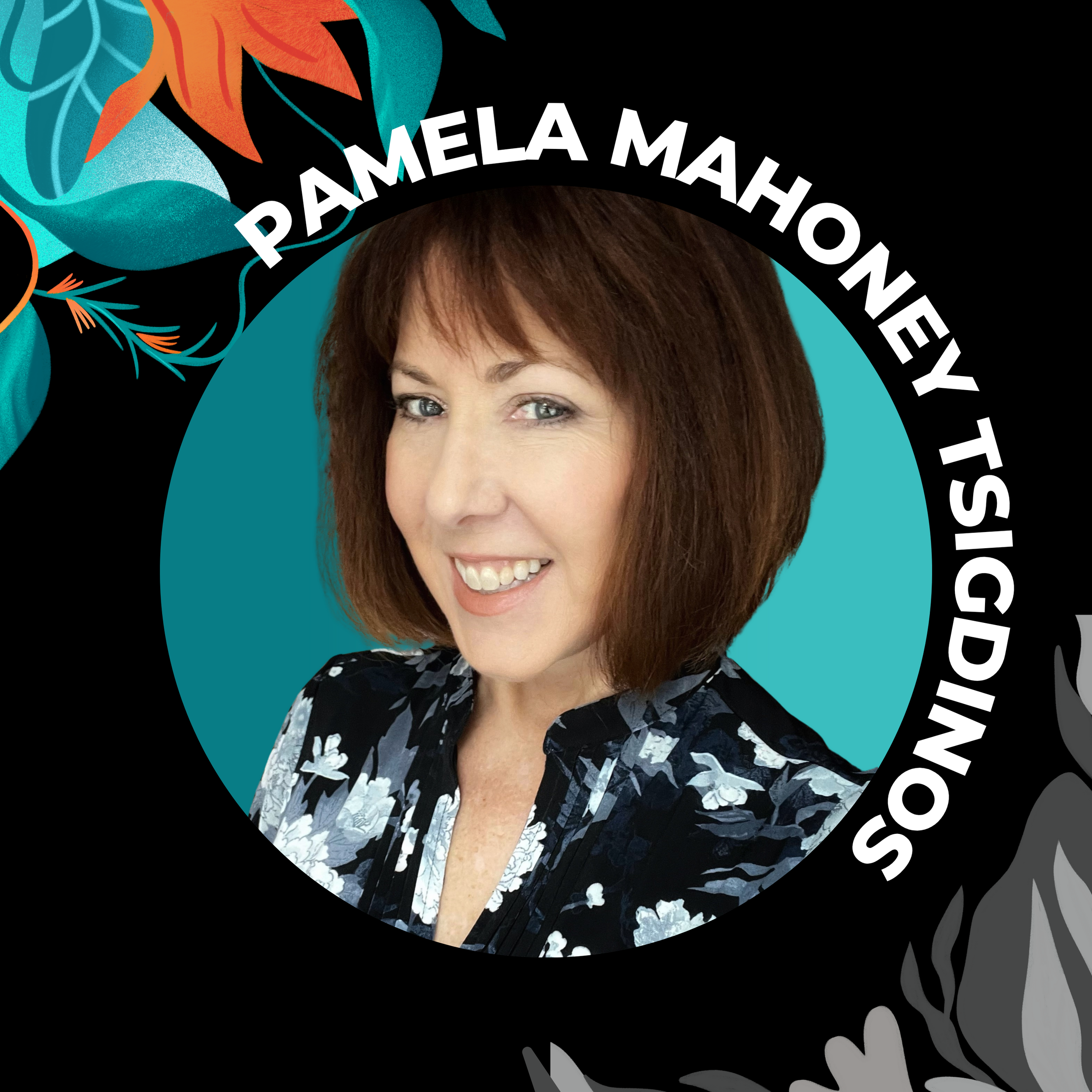



In vitro fertilization (IVF) is often seen as a triumph of reproductive freedom, but its origins are deeply entangled with patriarchy, pronatalism, and eugenics. Pamela Mahoney Tsigdinos, IVF survivor and author of Silent Sorority and Finally Heard, discusses how under-regulation and cultural obsession with motherhood allows the multi-billion dollar fertility industry to obscure the truth about its low success rates and the trauma it causes. Highlights include:
What the IVF process entails and how time-consuming, expensive, and emotionally and physically wrenching it is;
How John Rock, pioneer of the birth control pill, was motivated by a religiously pronatalist desire to help specifically Catholic women conceive, and how IVF pioneer, Patrick Steptoe, performed experimental gynecological procedures on hundreds of women without their consent;
How the multi-billion dollar fertility industry both benefits from and exacerbates pronatalism and exploits the hope of vulnerable patients, who are often treated as commodities, through aggressive marketing, unproven add-on services, and cherry-picked success rates;
How Pamela found deep emotional connection with online communities around the world - the 'silent sorority' of IVF survivors;
How pronatalist culture magnifies the emotional pain for IVF patients, surrounding them with pronatalist expectations and deeply rooted stereotypes, especially against women without children;
Why feminist empowerment rhetoric can backfire if it uncritically promotes fertility services without acknowledging the exploitative practices and emotional toll experienced by the many female patients in the fertility industry;
How individuals struggling with infertility can make better informed decisions about their available options.
MENTIONED IN THIS EPISODE:
Book: Silent Sorority: A Barren Woman Gets Busy, Angry, Lost and Found by Pamela Mahoney Tsigdinos
Book: Finally Heard: A Silent Sorority Finds Its Voice by Pamela Mahoney Tsigdinos
Book: The Genius Factory: The Curious History of the Nobel Prize Sperm Bank by David Plotz
Article: An IVF Survivor Unravels ‘Fertility’ Industry Narratives by Pamela Mahoney Tsigdinos
Article: The Wild World of IVF, Explained by Pamela Mahoney Tsigdinos
Episode: Japan’s Baby-Making Propaganda with Isabel Fassbender
-
Pamela Mahoney Tsigdinos (00:00:00):
The fertility industry is set up very much to be a for-profit, high-throughput discipline that self regulates. We have nobody paying attention to whether or not they're following any consumer protection clauses, informed consent, or ultimately delivering on what they claim they can do for you. And, in fact, the vast majority of IVF cycles fail. It is a very medicalized, clinical kind of procedure that treats the organs, not the person. I want you to know that during the 10 years that we pursued fertility medicine, not once was there ever a call to ask how we were doing.
Alan Ware (00:00:49):
That was freelance journalist and researcher Pamela Mahoney Tsigdinos. In this episode, Pamela exposes the entrenched ideologies of pronatalism and neoliberalism within the highly unregulated multi-billion dollar fertility industry and how the industry preys on people's vulnerabilities, leaving many physically and emotionally traumatized.
Nandita Bajaj (00:01:19):
Welcome to OVERSHOOT where we tackle today's interlocking social and ecological crises driven by humanity's excessive population and consumption. On this podcast, we explore needed narrative, behavioral, and system shifts for recreating human life in balance with all life on Earth. I'm Nandita Bajaj, co-host of the podcast and executive director of Population Balance.
Alan Ware (00:01:43):
I'm Alan Ware, co-host of the podcast and researcher with Population Balance. With expert guests covering a range of topics, we examine the forces underlying overshoot - the patriarchal pronatalism that fuels overpopulation, the growth-obsessed economic systems that drive consumerism and social injustice, and the dominant worldview of human supremacy that subjugates animals and nature. Our vision of shrinking toward abundance inspires us to seek pathways of transformation that go beyond technological fixes toward a new humanity that honors our interconnectedness with all of life. And now on to today's guest.
(00:02:23):
Pamela Mahoney Tsigdinos is a freelance journalist and independent researcher focused on public policy. She is best known for her work as a truth teller about the painful realities of unexplained infertility and the trauma caused by pronatalism and bad actors in fertility medicine. She's also the award-winning author of Silent Sorority, the first infertility memoir not authored by a mother, and Finally Heard, which examines the psychological, social and cultural consequences that generation IVF face in a pronatal society. She led the grassroots initiative Reprotech Truths in 2018 to counter the saccharine pro-IVF narrative, orchestrated by the for-profit, self-regulated fertility industry to mark the 40th anniversary of Louise Joy Brown's birth. Pamela's work and writing have appeared in the New York Times, the Globe and Mail, Slate, Boston Globe, Newsweek, Fortune, San Francisco Chronicle, Wired, and other publications. And now on to today's interview.
Nandita Bajaj (00:03:29):
Hi Pamela, and welcome to OVERSHOOT. We are so thrilled to have you here.
Pamela Mahoney Tsigdinos (00:03:34):
I'm delighted to be with you today. Thank you.
Nandita Bajaj (00:03:37):
And Pamela we're truly grateful for the decades long work that you've done to explain and expose the predatory nature of the fertility industry and the largely hidden traumas that it leaves in its wake with its false promises. As you know from our work, we challenge the ideologies of pronatalism, growth economics, and technological fundamentalism - and the fertility industry combines the pathologies of all of these. You've written extensively about not only your personal experiences, but also the complex interrelationship of the psychological, social and cultural effects of assisted reproductive technologies and the people who use them. So we are thrilled to have you here and hope that your insights will help people make more informed decisions.
Pamela Mahoney Tsigdinos (00:04:29):
That's my goal too. So I'm really delighted for the work that you're both doing.
Nandita Bajaj (00:04:34):
Thank you so much. So we can start with a bit of a historical perspective. You were growing up around the time that the medical and technological interventions for infertility were being explored. And the first test tube baby was born in 1978 through a procedure known as in vitro fertilization, also known as IVF. And you've done a deep dive into the history of this medical technology. Could you start by giving an overview of the procedural aspects of the IVF process?
Pamela Mahoney Tsigdinos (00:05:07):
Yeah, I was very much in my formative years when IVF first arrived on the scene. In 1978, I was a 15-year-old girl living in the Detroit suburbs. And just by strange coincidence, I had just experienced my first period. So this notion of conception and motherhood and how babies are made kind of all collided, if you will, with the headlines. And when this news came in July of 1978 with Louise Joy Brown's birth through, as they described her a test tube baby, my first reaction was kind of a bit of a recoil. I really was a little put off by the fact that humans could somehow be generated out of a laboratory. It really did not appeal to me. And a lot of people who've never undergone any kind of reproductive workup, and this is men as well as women, don't really have a good understanding of just how many very complicated steps are involved in trying to achieve conception.
(00:06:12):
And I wrote a piece in 2018 for Marie Claire magazine and it was appropriately called the Wild World of IVF. And in it I explained that this procedure was originally invented to help women who had a very specific fallopian tube disease. And a fallopian tube is the means through which an egg leaves the ovary and travels down into the uterus. And as we know in a good month, one egg gets released, but for some women there were blockages and obstructions. So for a lot of folks dealing with infertility, that seemed like fairly low hanging fruit. If you could figure out how to work around that blockage, then maybe there was an opportunity to allow for birth to occur. So at this point, you could look at IVF as a specific workaround to create an embryo where a sperm and egg are fertilized outside the human body. Now, should an embryo form and they don't always, it's later transferred back into a woman's womb with the hope that it will implant and a pregnancy will occur.
(00:07:26):
So that's the really basic understanding of how IVF was created. But it's also really worth noting, and this kind of turned my stomach, that implantation really started out in the livestock industry trying to figure out how to breed cattle and other animals in a much more efficient way. But I also think it's critical for people because I learned an immense amount in my early days just doing research to try to even understand if it was something I could imagine myself doing that implantation, the act of an embryo growing in a woman's womb is actually today in 2025, still a mystery. There is not a really good understanding about what leads to the creation of conception and life either inside the lab or outside the lab. Now the lab can control for certain things. So during a natural cycle or an IVF clinic, it's important to understand that whether in the lab or at home, perfectly- timed conception or bringing a sperm and egg together at the peak of fertility, and this is again going back to people who are not visiting fertility clinics, only 20 to 30% of any month will conception occur, and that's optimizing for everything - healthy man, healthy woman, optimal ovarian release of the egg. Only 20 to 30% of pregnancies in any given month will happen at peak fertility. Now if you start from there, then the question becomes, well, what are the labs doing that are going to boost that percentage? And the truth of the matter is not a lot.
Nandita Bajaj (00:09:11):
Thank you for that background. And it's interesting earlier when you said that it makes your stomach turn even to think about the creation of a human baby outside of the womb. And yet when you look around IVF has become so pervasive and so prevalent in our culture that it's just seen as an automatic next thing if you haven't been able to become successfully pregnant within the first year of trying. And then I think it's really helpful to see what the success and failure rates are because when you look at the magazine ads and the brochures and the photographs of the fertility clinic, the sense that you get is come on over and we'll fix this inadequacy that you have and we'll present you with a baby. There's pictures of babies everywhere, so you wouldn't know that the success rates are actually that low.
Pamela Mahoney Tsigdinos (00:10:08):
Yeah, and I want to really dive into this because when IVF was first created as a procedure that was only conducted, by the way in research hospitals, it was very much considered experimental. And in the earliest days, the IVF success rate - and that was basically choosing the best possible candidate, a woman who had demonstrated that she had fallopian tube blockage, a healthy man in a research hospital - the IVF success rate in 1978 through the eighties was about 9%. So today we're looking at women using their own eggs, and this again, is going to be driven by when those eggs are harvested. Women under 35 with best case scenario will face a 33% success rate. There's only a 26% rate for women ages 35 to 37. It drops to around 17% for women 38 to 40, and it drops to 8% for women at 41, and 1% for women over 44.
(00:11:27):
So this is a remarkably invasive procedure that's sold as kind of a sure thing, but those numbers are not well advertised. So there was a great deal of research and work that was done trying to understand how do you actually bring together an understanding of conception, embryo development, and hopefully leading to a transfer of an embryo that successfully grows into a pregnancy. There was a great deal of work chronicled by two really excellent investigative reporters with a real style for telling a good story. And I want to recommend your audience two books. The first one is The Birth of the Pill, and this was written by Jonathan Eig, who was a Wall Street Journal reporter. He looked at what was it that drove the pharmaceutical and medical world to even look into IVF for humans? And what you will find is his understanding of the two scientists, Steptoe and Edwards was that they were actually looking at trying to solve for a different problem.
(00:12:40):
One of them was a very devout Catholic who was trying to figure out how to get more Catholic women pregnant. And so his entire approach was how to unlock the secrets of conception to create more Catholic folks in the parishes. Now, there's a second book that I would really encourage you to take a look at, and that's called The Genius Factory, and it's written by David Plotz - this really interesting and somewhat terrifying story about how sperm banks were formed based on the lens of eugenics, that they were trying to find the best and brightest men and how to catalog and preserve their sperm so that they could ultimately make it available to, if you will, high value women to create a super race of very smart people. So I would encourage people to read The Genius Factory, which came out a few years back along with The Birth of the Pill, and it will really help inform a lot about how the IVF industry was formed.
Nandita Bajaj (00:13:49):
This historical perspective is so helpful. I actually didn't even know that the reasoning behind the development of the technology, I really did think it was a medical intervention to help individuals and couples who were experiencing infertility and that it then got co-opted by for-profit businesses in the industry for more nefarious purposes that had to do with religiosity and economy, et cetera. But the fact that at the very onset it had that motivation is extremely disturbing but also not surprising in a way.
Pamela Mahoney Tsigdinos (00:14:30):
Yeah. Well, what's really important is that people understand some of the motivations that go into this procedure, the development of the clinics, the development of the industry. And I also want to share one other backstory, which a friend of mine who also underwent IVF and was not successful in achieving pregnancy learned about her own curiosity, trying to understand how did this industry happen, how well regulated are the clinics and the doctors? But she also learned that that very first test tube baby back in July of 1978, there was a dark backstory that did not get into the newspapers. And I want to tell it to you. It is that in 1978, these two ambitious doctors, again back to Steptoe and Edwards, they had worked together for years to try to figure out how to extract eggs from women's ovaries and keep them viable in a culture, in a Petri dish, if you will, so that they could later introduce sperm to attempt to create viable embryos, but they didn't know how to access eggs, ovarian tissue, and how to find women to experiment on.
(00:15:46):
Now, this is the really horrible and tragic part of this story, that when they announced the birth of Louise Joy Brown, they intentionally left out of the story that there were 300 or more infertile women that had been experimented on, most of whom had no idea this was taking place. In fact, there's a particular story about a woman who had her ovarian tissue taken from her. It put her into immediate menopause and she had no informed consent. And to this day, she lives in New Zealand, she is still trying to get recognition for her story because without her ovarian tissue, a lot of this technology never would've been developed. Miriam Zoll is the woman who wrote a defining piece called Questioning the Cult of Reprotech. She wrote "more ominous, during all of the cameras flashing, looking at Steptoe And Edwards, were the almost 300 women at Oldham General Hospital in the UK whose experimental IVF procedures had failed prior to the Louise Joy Brown success or the hundreds more in other countries who were experimented on without their permission. It's not clear if the invisibility of these women's experiences and the omission of the historical context of IVF failure was a calculated move by the British medical team or the Daily Mail, which was the newspaper that had bought the rights to the story to release to the public. Nonetheless, the exclusion of these important details immediately conjured a public illusion that IVF was routinely successful and reliable. By not telling the whole story the doctors and media ushered in an era of misinformation about the risks and limitations of the procedure, a practice the global reproductive technology industry still employs today. And that's Miriam Zoll's research.
Nandita Bajaj (00:18:05):
That's extremely powerful. Thank you for sharing those passages and the history. And I think it's the era of misinformation that you talk about when you combine it with the water of pronatalism that we're all swimming in, where there is just this compulsion that is placed on people, especially women, that they need to, that they must bear children in order to be complete. And one aspect of pronatalism, of course, is people and women who are unable to reproduce due to infertility are made to feel immense shame and inadequacy. And instead of allowing people to really actually pierce through these forces that come in and further deepen that sense of inadequacy, they actually feed off of that inadequacy to tell you that they have a magical solution that can fix them and they can be complete again with the product of a baby. But also it is so disappointing when I look at the larger sexual and reproductive health and rights movement, there is still that underlying notion of pronatalism. The fertility industry is very good at using the language of reproductive justice and enabling the women who desperately want to have children to have those children without telling them the truth about the trauma and all of the problems that are involved with this. But there has not been a real feminist critique of the industry. Many of the progressives have actually bought into the industry's promises under the cover of social justice or reproductive justice.
Pamela Mahoney Tsigdinos (00:19:51):
Yeah, I would agree with you a hundred percent. And I think one of the most personally disappointing aspects of watching not only what I went through, but many, many other women and men who I've come to know over the last 20 years and trying to find a path to find an opportunity to tell our stories because we realized we were so underrepresented, and in fact the vast majority of IVF cycles fail. They don't succeed, but that's never really easily accessible anywhere on the internet and research as you learned. I thought, gee, what a great place to start. Why not go to universities? And I attempted to go to various disciplines and see if I could get them interested in learning more about how so much of this technology was done in a harmful, if you will, abusive way toward women to help them to hold the industry to a higher standard, to have independent oversight so that people were not taken advantage of.
(00:20:59):
And I was universally disappointed. I've been a part of community groups, academic groups, and when I bring up these issues, especially now that there's a lot of extra attention being focused on IVF clinics, given some of the personhood amendments that are being put forward in various states across the US, I found that people were remarkably, I'm going to use the word because that's the only one that comes to me - hostile - to hearing about the fact that women are not always helped through these procedures. And I tried to understand the psychology because I thought, look, it's too late for me, but I want to help you - if you're a young woman in university, I want to help your daughters, your sisters, your cousins, your friends - basically go into this with a better understanding of what they're signing up for. And what I discovered is that there seems to be this almost gatekeeper-like role that they do not want to turn off the opportunity that they or someone they know may one day need access to this procedure.
(00:22:09):
And I understand that, but why not conduct these procedures in the most careful evidence-based, holistic, looking at the individual emotionally as well as physically to ensure they're getting the best care possible. That seems like a pretty low lift. But what I've discovered is by acknowledging that abuses have taken place, by acknowledging the harms that have come to women and men who've been involved in these procedures, it automatically puts this industry in a negative light and it asks the question, how do we let it go on like this for so long? And it's been over 45 years.
Alan Ware (00:22:54):
Yeah. In your 2009 book Silent Sorority, you really delve deeply into the emotional pain that you felt the grief of involuntary childlessness after multiple IVF attempts that you had. Could you share an overview of your personal experience with IVF and what were the procedures involved? What were you experiencing emotionally throughout that process?
Pamela Mahoney Tsigdinos (00:23:16):
Yeah, I'll separate it out a little bit. And as I've talked in the past, what always shocks me whenever I have these discussions is academically, I can go there and I could talk to you all day long about the theory and the history and the regulatory needs. I do find when I talk about my own story, I start to become a little verklempt. So I will start with the procedure and then I'll talk a little bit about what it felt like. So the thing that I don't think people really understand is the amount of intense scheduling that has to occur, but I want to start with the most shocking aspect of it. When we first sat down with one of three infertility clinics that we visited over a decade, we were stunned that the first question wasn't, well, do you understand or have you had necessary workups to understand is it a female impediment? Is it a male impediment? One third of infertility is caused by male factor, either malformed sperm, no sperm. There are a number of other things that have to do with the motility and shape of sperm that can prevent successful conception. One third is female, so it could be fallopian tubes, it could be ovarian issues, some combination. And then the last third is unexplained, where you've got a man and a woman who appear to be otherwise healthy, but there's something about their combined biology that does not allow for conception and pregnancy to occur. So that wasn't the first question they asked us. The first question they asked us was, could we provide our bank account information because it was going to be really expensive and they didn't want to waste time talking to a potential client who couldn't afford the procedure. So we're in there in a very exploratory way trying to understand, is this for us? What are the possibilities that it may or may not work?
(00:25:13):
The reality was they were looking to qualify a decent payoff, and if we didn't look like we'd be a good payoff, they'd be interested in talking to the next couple coming in the room. So that was our introduction to IVF. But once we actually got through and found a research hospital that we trusted - because we figured a research hospital might at least be doing a better job of cataloging what's working and what's not - what we discovered was we sat in a room full of probably 75 other couples there, and they walked us through what the protocols would be. And there are different ways. You have to shut the woman's entire menstrual cycle down because you've got to be able to figure out how to then slot that individual into the overall fertility clinic calendar. And once you shut that woman's cycle down using an off-label drug called Lupin for me at the time. I know they've developed other medications that will turn a woman's cycle off, but when I went in, I was given a drug that was developed for male prostate cancer that would turn off my hormone system, so I would not produce estrogen or progesterone. So this wasn't even agreed upon by the FDA. It was an off-label use, but they were all using it because they'd done that from the beginning. We had to shut my cycle down. And then in this room, this auditorium, a nurse walked out on stage, all of us were instructed to bring an orange to the class and they gave us a needle and asked us to inject water into the orange to determine what the thickness of skin might feel like so that when we're injecting ourselves, we know just how hard to push the needle in.
(00:27:11):
So here's this room full of otherwise educated, terrified people who are trying to figure out, well, how to get this injection into an orange. And then they told us, now we're going to figure out, now that we've got your money, now that we've explained to you what the procedure's going to look like, we're going to send you off to the pharmacy. And I'll never forget, my husband was the nicest man on the planet. I couldn't bear walking into this pharmacy. He had to buy 30 different syringes, a whole bunch of vials of hormones, a sharps container, and a lot of other paraphernalia, I'll just leave it there, that are required to set you up for one cycle of IVF. As he was reaching across the counter, the woman who was cashing him out was kind of stunned. She rang it all up and she looked at my husband and said, that'll be $4,000.
(00:28:07):
And my husband knew it was going to be a lot of money, but he didn't know it was going to be $4,000. And the pharmacist, who was the designated pharmacist for the research hospital, said to the newly employed cashier, oh, don't worry about that. All of our clients have bills that are in that range. It's at least four to $5,000 for the medications needed for one IVF cycle. So we had to take those home. And this is what happens. You are required to inject yourself twice a day, in the morning and in the night, and there's a ton of bruising, there's a lot of swelling. And the whole goal here is to supercharge your ovaries to create as many eggs as possible. Now in a woman's natural cycle, she creates one, maybe two. In an IVF cycle they want 20, 30 eggs, and your ability to produce that many is directly tied to your ovarian reserve as well as your age.
(00:29:06):
So you spend two weeks shooting yourself up with all of these medications, which by the way make you a little nutty. Hormones aren't exactly fun to inject. And in the midst of this, during your work and life schedule, you have to then show up at the clinic routinely to what is called an ultrasound exam. Essentially you have to strip down in front of a room full of strangers, hop on a table, and a technician will show up with an ultrasound wand that is called the dildo cam in the IVF world. So a woman has to have a camera inserted up her vaginal canal to look at the number of eggs that are growing in her ovaries, and they're measuring them all. So as they're calling out the numbers from your ovaries, it sounds like a football score, 20 by 50 by 30, moving on to the next one.
(00:30:01):
And they're measuring all the eggs. And the hope is that you can get a sufficient number that they can then schedule for what's referred to in a really remarkably dystopian way, an egg harvest. So you, the night before you are scheduled and you're working along with a whole bunch of other couples that they've got to slot in one right after another, you are told that you have to give yourself this granddaddy of a hormone shot. And if you don't do it within a very defined window, you could blow the whole cycle. So now you've invested two and a half weeks, you're sitting at home with this monster needle. My husband had to inject it into my abdomen, and then we had two hours to get to the fertility clinic because now the clock is ticking and they got to get those eggs out, all 15 or 20 of 'em.
(00:30:54):
So I get to the actual room, turns out it was the 4th of July and they were short on staff and they had an emergency and my anesthesiologist had to be called into a different surgery. So they had to call home to get another guy to show up. I'm freaking out because I now know I have 15 minutes before these eggs are going to explode and they've got to get this needle in me so that they can get the surgery done. It's awful. They have to punch these huge holes into your ovarian tissue to suck them out and then try to vacuum out as many of them as they can. You're unconscious. You're rolled into the post-op and you've got to sit there wondering how many eggs were actually received. But it doesn't get any better from there, because now you've got to go home feeling awful.
(00:31:46):
Your entire abdomen feels like you've just been pummeled by Mike Tyson, and you've got to wait at least five days. Meanwhile, I forgot about my poor husband who, while I was sitting there waiting for my ovarian tissue to be shredded, had to go into a little room and masturbate to get his sperm so that they could bring the sperm in for the actual fertilization. So I tell all you this because this is not a pleasant experience. I would not wish this on my worst enemy. We go home, we're waiting for a phone call. Three days later, all we get is, This is the clinic calling. We want to tell you that we harvested eight eggs, seven of them successfully fertilized, and we'll call you back in a couple days to tell you when the embryo transfer will occur, assuming they get to the right stage. So now we're sitting at home waiting. Get the call, drive across town, they insert three embryos into my vaginal canal after giving me a sedative because I need to be as still as possible. And now we have to wait two full weeks to find out if one of those three embryos managed to successfully grab, and by that I mean attached to my uterine wall and become the beginning of a pregnancy.
Alan Ware (00:33:12):
Yeah, this whole industry sounds like it has a lot of objectifying quantitative measurement. They weren't very concerned about your subjective experience from the get go, right? You were treated as a number - initially as money, and then it was all kind of lab results and more quantitative metrics.
Pamela Mahoney Tsigdinos (00:33:31):
I told a story I believe earlier about a woman who was sitting on a plane across the aisle from me, and she was studying for medical school, and the flight attendant stopped by and said to her, wow, that's a pretty big medical book. And she said, yeah, I'm finishing up. I have to declare my specialty pretty soon. And the flight attendant said, well, what branch of medicine are you looking at? And she said, well, it's either going to be cosmetic surgery or fertility medicine. Those are where I can make the most money. And I looked across the aisle and I thought, you're the woman that women are trusting with their healthcare. So this is not every physician out there. I don't want to impugn the entire industry. There are good people who work there, but it is set up very much to be a for-profit, very much high-throughput.
(00:34:19):
How do you get the best possible candidates to pump up your success figures? How do you get the most turn through your waiting room? And it's not a very care-oriented discipline. And I want to tell one other quick story. So I mentioned before we started our conversation that I'm an asthmatic, so I'm constantly seeing pulmonologists - love them to death. They're the best people on the planet, so are the nurse practitioners. Every single time I've had an issue with my lungs, there's a call immediately following up with me asking how I'm doing, making sure everything's right. I got the call this morning, Hey, we gave you a new medication yesterday. How are you feeling? I want you to know that during the 10 years that we pursued fertility medicine, not once was there ever a call to ask how we were doing.
Alan Ware (00:35:14):
And given the level of profitability, you would think they could definitely afford to have some therapists and have some people on staff to attend to the subjective experience of the clients?
Pamela Mahoney Tsigdinos (00:35:26):
It's expensive to have therapists on staff. They will give you a list of names that you can follow up with on your own, but their goal is not to provide you that high touch. It is a very medicalized, clinical kind of procedure that treats the organs, not the person.
Nandita Bajaj (00:35:48):
And I think you were just starting to go there when you were speaking about your subjective experience with all of the clinical nature of this. You just said that you tried this procedure for 10 years before finally giving up on it. What did it feel like every time there was a failed procedure, a failed cycle?
Pamela Mahoney Tsigdinos (00:36:08):
It's a really interesting, and I think, I guess misunderstood is probably the word I'm looking for, human experience. And the reason that I say that is very few people jump right to IVF. You would have to be someone who's quite old, who knows that you've got a specific condition and that your time is very short. Most people approach reproductive medicine trying to understand what's prohibiting pregnancy. So you'll see a gynecologist, you'll get some tests done, they might refer you to a fertility clinic, they may run some more tests. They may determine that something called an intrauterine insemination, which also came out of the livestock and cattle industry might be the easier way to go, which is basically you just wash some sperm. When you know a woman's ovulating, you bring her in and you inject the sperm into her. That is the low, junior varsity if you will, low technology way to address some fertility challenges.
(00:37:07):
So you sort of slowly graduate as you're moving through the whole experience to understand how far you need to go and what level of interventional tests or specific add-ons might be required. We needed something called ICSI, which is an intracytoplasmic sperm injection to ensure that the sperm penetrated the outer edge of the egg, because some sperm don't swim as well as others. So you want to make sure they can actually penetrate the edge of the egg. So we didn't do all of this every day for 10 years. It was go to a few different specialists. We would check in with our OB-GYN. We had a few surgeries. I had a surgery, my husband had a surgery trying to eliminate some of the low hanging fruit. So it was really over years that we would step away, come back and decide whether or not this was something we really felt was right for us.
(00:38:05):
But I kind of had one of these, I don't know how to call it other than a pajama fit. One night I realized, oh my gosh, I'm 37 years old. If this is ever going to work for us, now is the time to do it. So we really spent a fair amount of time aggressively pursuing what was available and went through a number of cycles with two or three different clinics. And the experience after all of that, and how hard we worked toward it was doubly hard because there is no exit ramp, right? Nobody says, we're done with you. As long as you have money in the bank, they're happy to see you as often as you want to come by. So you have to sort of make a personal determination. How much more emotional trauma can you undergo? How much more money do you want to throw away at something that may not really result in what you'd hoped for?
(00:39:00):
And then ultimately, how much other loss is taking place in your life because you're not living your life. You're essentially in this, as I describe it, this crazy loop. It's like being stuck in a cul-de-sac that you can't get out of and you're trying different driveways, but you're realizing, Hey, I'm still lost. I'm not getting anywhere. I'm running in place. So we had to make a very difficult determination that maybe being parents wasn't what was right for us. Now, I will tell you that nobody explained to me at any point in any of this that the emotional reconciliation would be harder than the physical experience of undergoing these painful procedures. I spent about five years actively grieving - from my 40 to 45th birthday - everything that had gone on. And it was only about that time that I started writing Silent Sorority. I thought, I cannot be the only human on this planet who is going through this remarkably weird experience where you're in one direction, you're doing everything the right way, you pass all the tests, but flunk all the final exams, and there's got to be something more to it.
(00:40:13):
So that is my long answer to, we ended up finally accepting that we could be happy in a very different way of life, and we could be a family of two and be unapologetically proud of it and be good people, be good friends, be good aunts and uncles and sisters and brothers and daughters and sons. And I think the pronatalist backdrop that really was informing so much of the weirdness we were living through, mommy and me clubs became all the rage when I was in the middle of shooting hormones into my abdomen. So every time I went to a grocery store, all I saw were women in form-fitting clothes, stroking their bellies and going to their mommy and me class with their infants. So it was like people were indirectly torturing me by making their momminess the central defining identifier of their world, which then forced me to ask myself, well, what does that say about me if I don't fit into your club? It's a very strange dynamic.
Nandita Bajaj (00:41:25):
Absolutely. And you said it took a lot of time for you to process these emotions and the grief, and then you accidentally or intentionally came around to realizing that a different world was possible, a world that was not even made available to you as a possibility while you were going through all these treatments. It feels to me like there's just this inherent sense of failure and shame involved in the process given the really low success rates that most of the women undergoing the procedure would be going through.
Pamela Mahoney Tsigdinos (00:42:01):
Yeah, and society is really culpable here. And I say this with all intellectual honesty. I have done everything I can to step back and be objective. And I've gotten to know women who are academics, who've been through IVF themselves, who've actually done research on the messages that are contained in books, movies, TV series, all about, if you will, the malformation of character of women who are not mothers. They're usually villains. They're usually, psychotically, not all there. There is something that is fundamentally flawed in our society. When you ask people what they think about a childless woman, they either feel sorry for that individual, they feel sort of superior to that individual, or they just don't know what to make of you. You're just some sort of misfit that doesn't quite fit into their calculus of the world. So as a person who's coming out of that really awful physical, emotional, financial harm, you now have to sort of stand up and be sort of exhibit A of, okay, I'm going to put my life back together.
(00:43:15):
But it would be a little easier if I had maybe some people who could express just a nanosecond or two of empathy or curiosity or wonder about how hard it is to come through all of that and then show up at a neighborhood event where everyone is doing nothing but talking about their children, the schools, the parenting, the bake sale, the ski club, and it's like, can someone ask me about my life? Because it's really interesting, but you clearly don't have any interest. One of the things, if I'm feeling particularly feisty, if I'm at an event with people I've never met before, I guarantee you one of the first questions they ask is, are you a parent or a grandparent? When I say, no, I don't have any children, I sometimes will say we weren't able to. It depends on whether or not I feel comfortable disclosing that. But when they say to me, why didn't you have children? I always turn to them and say, why did you have children? I mean, they think it's perfectly okay to ask me. And they say, well, they just happened, or whatever. But I sort of get 'em on their back heel because most people don't ask them that question.
Nandita Bajaj (00:44:28):
Exactly. And also as we discuss so much on this podcast, but also on the Beyond Pronatalism podcast on which you were also a guest, people face both subtle and more overt social pressures to have children, and the economy and all of the different industries participate in institutionalizing those pressures. How does the fertility industry in particular reinforce these societal expectations to make people, especially women, feel incomplete or inadequate as they did with you if they face fertility problems - and often they will use aggressive marketing and advertising to make IBF look like the natural decision.
Pamela Mahoney Tsigdinos (00:45:11):
Yeah, it's really rather pernicious, if you will. I mean, whether you live in a city or a rural area with highways, I would actually challenge your audience to count the number of billboards and advertising or on TV and other places because it is such a profitable industry that there is this subtle message and the billboards don't show the egg harvesting experience. They show a cuddly little baby on a cute blanket, and it's always the implied result that they will get you the baby you're looking for. So I do find that the industry has been particularly guilty of making men and women look and feel inadequate when they're not successful at conceiving and delivering a child. They really would do the world a service if there was a little introspection, maybe a little looking in the mirror about what their role is in creating difficulty for their clientele and for future clientele by not being more upfront about the fact that across civilization - and this is another mind- blowing statistic, regardless of we're living in 2025 or 1900 or go back as far as you want - it's pretty well understood that about 10% of humanity will have difficulty conceiving a child in the best of circumstances.
(00:46:45):
So if we're already planning to be discriminatory or prejudicial against 10% of the population before we get to whether someone chooses or not to have children, that says something about us. I remember as a child, before IVF came online, that when you met an older couple, you never asked them if they had children. I remember my parents saying, it's none of our business because we don't know. We don't know if they couldn't have children, if they chose not to have children, but it's none of our business. And so you're better off not putting someone in an awkward situation with the presumption that there was some huge epiphany, because if they did have difficulty conceiving or wanted children, why do you want to bring up something that is going to be painful for them to have to discuss in an open forum? If I could give you a few more statistics, because you asked about advertising.
(00:47:46):
I've worked with a couple of researchers, some in the UK and some here in the US a few years ago who wanted to understand why is it that so many individuals going to fertility clinics are so surprised when they're not successful? So they wanted to understand how those clinics were marketing and advertising themselves. And one in particular from the University of Manchester did an entire analysis of UK fertility clinics and found that 67 of them advertised their success rates. However, what he discovered was that they cherry- pick their success rates. So as I mentioned earlier, you'll remember that not every embryo, once it's left the Petri dish, successfully implants. Some of them do, but a high number of them actually end up miscarrying somewhere in the early part of the pregnancy. However, fertility clinics count that as a pregnancy because the embryo actually attached. So that was a pregnancy that ended in a miscarriage.
(00:48:52):
So they will advertise that as a success. So this gets back into this whole question of if you don't have very strict standards and rules and definitions, then how are people to figure out what they're hearing? Here in the US another group actually researched and found that 11% of the fertility clinic websites adhered to any standards that were dictated by the Society for Assisted Reproductive Technology. Only 11% were in conformance. The rest of them put up whatever information they wanted and did not provide supplemental data to support any of the things that they had claimed. So this is where we are. We have an industry that self regulates. We have nobody paying attention to whether or not they're following any consumer protection clauses, informed consent, or ultimately delivering on what they claim they can do for you.
Nandita Bajaj (00:49:56):
Wow. That's a staggering number. And I know we're going to get into the regulatory part in just a moment, but I wanted to also say we interviewed another feminist from Japan who studies pronatalism there, and she wrote a book called Active Pursuit of Pregnancy: Neoliberalism, Post-Feminism, and the Politics of Reproduction in Contemporary Japan. And she talked to us about how in Japan, the government has actually joined forces with the fertility industry to create an even more powerful kind of marketing alliance for these artificial reproductive technologies. And they are framing it as free choice. They're kind of framing it in this empowerment language for women, and they're starting to infiltrate schools and colleges to start educating young women about their cycle and when are they the most fertile, and this is something they must want. And all of the really old patriarchal messages have now entered this more feminist language of empowerment. It's like, what is my fertility score? Young women are taking quizzes to compete with one another to see how early are they getting pregnant and how successful are they. And you are seeing this panic among a lot of these governments and the market and the technology offers the perfect solution to the quote problem of declining fertility. We are seeing the unraveling of that future right in front of us when Donald Trump calls himself the fertilization president, as kind of the face of the industry.
Pamela Mahoney Tsigdinos (00:51:46):
Yeah. I really want to make clear here that it is really problematic when you have politicians and others who are in the business of making policy, getting too cozy with the industry. And I use an example, do you want Boeing and some of the other aircraft developers to be buds with the FAA? I think we need a little distance and friction between government regulators and manufacturers, or in this case medical practitioners, and those who are determining whether they're actually standing up for doing no harm and ensuring that they're providing the best care. So what really struck me about what's happening today is that there is this, I guess, strange bedfellow of people who are representing the feminists who talk about female empowerment, working very closely with clinics that are selling egg freezing and various other services who are aligning themselves with politicians who are very pro-family, where their entire reason for putting an agenda or a campaign together is to address only the needs of people with children. And as we know, the society is much more multidimensional. If we start putting special policies in place that only advantage a certain number of people or shut other people out, I just think we need to have a much more realistic conversation about all of these issues and where they lead both at the personal, at the social, and at the greater broader society. This is complicated material.
Nandita Bajaj (00:53:34):
A hundred percent. Yeah, I couldn't agree more. And you started talking about the egg freezing add-ons. As we know, the global fertility market was valued at 34.7 billion dollars in 2023 and is projected to grow to 62.8 billion dollars in just 10 years. And the industry just keeps manufacturing demand for its own services through what you've written about as the IVF add-on racket and other technologies, as you spoke about like egg freezing. Can you speak to some of these technologies and the legitimacy of the claims the industry makes for them?
Pamela Mahoney Tsigdinos (00:54:14):
Yeah. This is a really difficult topic because nobody wants to stop the advancement of science, and there is a real need to find better overall procedures. And this speaks to just about every biological condition. We want to make sure that we're providing the best cancer care, the best asthma care, ensuring that women's healthcare is the best it can be. But I really want to emphasize that we can't disproportionately start throwing new procedures into the marketplace that have not been evidence-based, that have not been adequately assessed for safety and efficacy. And right now, the fertility industry sees an opportunity to one up their competition by coming up with new ways to create different genetic testing, to create different ways of transferring embryos that have not been adequately studied. And as a result, they're charging people for add-ons that they cannot demonstrate are actually going to be in the service of the people they're selling them to.
Nandita Bajaj (00:55:26):
And even at a point where you said the industry where it's at right now, the success rate is even not that high. So the fact that they're bringing in more add-ons, it doesn't seem to be actually furthering its own goals in becoming more evidence-based. It's a racket.
Pamela Mahoney Tsigdinos (00:55:45):
If I could, I'd like to talk for just a minute about how we got here, and that is the early days. There was an opportunity back in the late eighties to actually put some guardrails in place, and I want to give kudos to, at the time, it was congressman, he's now a senator, Ron Wyden. He made an effort to curtail consumer exploitation in the fertility industry, and he had made a name for himself early on going after the cosmetic surgery and weight loss diet industry. So he knew that when you get vulnerable people in a tough circumstance, you can pretty much sell them anything. So using those models, if you will, he wanted a better understanding of how the fertility industry accounted for its statistics, how it sold and took care of its patients. And what they discovered was back in 1988, a hundred sixty nine clinics existed, but only half of them had ever successfully delivered a child.
(00:56:50):
So they decided they wanted some proposals to call for a federal agency required by law to establish a registry of clinics and success rates. And taking it a step further, they wanted guidelines to cover the number of laboratory technicians that a clinic could employ. Many doctors supported congressional efforts to regulate the technology. Some truly went on the record and said, this industry cannot police itself. Many of them said clinics could claim pregnancies that didn't exist. There's no way for anyone to know. One, I think very clear sighted doctor said he began seeing, and this was a research physician, he began seeing too much business, was intruding into treatment. All of a sudden, his direct quote, people became commodities. They became consumers instead of patients. So there were years of efforts in the nineties to try to do something to provide a better understanding of what was being sold and how there was a Senate committee on Labor and human resources.
(00:57:59):
The FTC took a look at this, but the industry figured out that if they were going to have to be regulated, the best way for them to set the standard was to insert themselves and be the ones who would be responsible to report out. So it really comes down to the industry, saw the writing on the wall and said, we don't want to be told how to run our businesses. Let's just do the best we can and let people think we're doing a good job regulating our clinics and our laboratories. But as we've all seen in recent years, there have been a number of catastrophic shutdowns with labs that lost power. Embryos were destroyed, the wrong embryos were transferred into the wrong individuals. There have been a number of malpractice cases. The difficulty as a consumer patient is that we can't get our hands on that information because without really allowing for true transparency, most clinics will only agree to settle if a non-disclosure is signed. So there have been far more mistakes and malpractice examples of clinics not doing a good job of cleaning their labs, of ensuring that their technicians are properly licensed. But we don't know about them because these lawsuits are under seal.
Alan Ware (00:59:30):
Well, that's a good example of well, they're trying to self-regulate, regulate themselves, and we've had different guests on talking about deregulation and when the regulators get captured, like in the American West where the environmental regulators are captured by cattle and mining and lumber, or recently we talked about nuclear energy and how the nuclear regulatory commission gets captured by the nuclear industry, but at least there was a recognition at some point that they needed to be regulated. And it sounds like from the get go, this industry was able to voluntarily self-regulate to never have effective government regulation. And now of course, what's happening with a lot of the Trump administration is they're definitely leaning more towards deregulation and allowing different industries to self-regulate. So it probably doesn't look good for consumer rights in the next few years, does it?
Pamela Mahoney Tsigdinos (01:00:22):
No. And this is again, where whether your listeners are people who are themselves thinking about pursuing any fertility interventions or have friends and family who are looking at it, I would really strongly encourage them to think about safeguards for themselves, do their homework, use Google Scholar, look up articles that have been written by reputable journals about what's being offered. This is one of those situations where you cannot be too sure of yourself and protecting your own rights because I just don't see where today in this political climate patient consumers are going to have much in the way of help. I will tell you, a few years back when Miriam Zoll was doing her research, she discovered because there are also agencies that will sell eggs from younger women. So those are considered available to older clientele. There are a number of, as you know, sperm banks and other things.
(01:01:22):
So this sort of umbrella of fertility services is growing. And she learned that it actually took more paperwork and more licensing to open a food truck than it did a fertility services clinic, depending on what they were selling. And again, this is recruiting young women to do exactly what I described earlier, inject a lot of hormones, subject themselves to all of these awful egg harvest. And young women create a whole lot more eggs than older women do. And these women have no protections because the contracts are for the couple that's buying the eggs not to ensure the safety of the woman who's providing the eggs. Boy, I'll tell you, if the people who are so strongly prenatal truly understood the harm that they could be doing to women and to couples, both physically as well as emotionally, I think they'd have a different line of thought. I think that there is not enough scrutiny being applied to what appears to be motherhood and apple pie, but looking deeper at what these policies are doing, not only to children, but to women and the society. And yeah, it's a tough time to be a human these days.
Nandita Bajaj (01:02:40):
Definitely, as I've written about too, abortion bans, they don't come out of nowhere. They are just an outgrowth of pronatalism is when women stop voluntarily having the children for the state or for the economy, then these bans are put into place to compel them, to course them into having children. So I think it's not so much a bug in the prenatal movement. It's a feature of the prenatal movement to not care very much about the health and wellbeing of the people involved in producing the children. The interest is so much in the quantity, and as you said earlier, the commodification of bodies and of children to have a greater supply of whatever it is that they're trying to strengthen, whether it is religion or the economy or the military. I mean, more and more politicians are just overtly using that language. They're not even being subtle about it. So I agree with you that it's definitely a very dystopian time to be witnessing all of these things. Just as we have seen some progress in reproductive and human rights. We are just as quickly seeing the regression of those.
Pamela Mahoney Tsigdinos (01:03:54):
Yeah. I appreciate the work that you both do to bring these ideas forward, sort of ask questions and turn some of these things on their head so that people will take another look. But we are coming up on the 50th anniversary of IVF in 2028, and my hope is that there will be enough people who are willing to help others understand that some of these services have been life-changing, but we cannot ignore the people who were harmed and abused along the way.
Alan Ware (01:04:28):
And how did the connections that you did make as you were going online before you wrote Silent Sorority, you were finding other fellow IVF survivors, how did that solidarity, that connection, help you through the emotional survival of this?
Pamela Mahoney Tsigdinos (01:04:45):
It's really fascinating. I've talked to a number of psychologists and therapists who have turned their attention to trauma that comes from IVF and also from life-changing experiences like cancer. And in fact, there was one woman who had actually had cancer and then had IVF, and she said she got more support from her cancer diagnosis than her infertility and IVF diagnosis. But what I want to say is the very act, there's a concept called Winship. The very act of being able to speak to someone who has lived through what you've lived through is a very validating kind of healing aspect of being willing to seek others out who've been in your situation. I had the good fortune when I started writing blogs were very early on the scene. Nobody was paying a lot of attention to 'em. They were not search engine optimized. So a number of women from New Zealand, South Africa, uk, you name it, I had some readers from as far away as Slovenia and Luxembourg and clearly Canada, but people who truly were willing to share.
(01:06:02):
But because we were doing it in writing, it gave us a little bit of room to be able to process what we were experiencing and then being able to add comments that were not being tweeted or shared broadly across the internet. So there communities today that are private, I know social media has many, many harms and not a lot of goodness associated with them. But the one thing I will say about having a gated community on the internet is you can find people easily around topics of shared concern. And so for those who are looking for that twin chip who are looking for the validation, who are looking to, I guess release some trauma and grief that they are feeling, there is no better way than walking with someone who's been through it.
Nandita Bajaj (01:06:55):
Yes. So well said.
Alan Ware (01:06:58):
And this expectation that you've been through with IVF and other women to keep fighting for a child because the technology exists, reminds me of how a lot of terminally ill patients are expected to keep fighting, keep fighting the cancer, keep fighting these terminal illnesses because we have the technology and it might extend your life for a few months or a few years, even though the quality of that life may be severely compromised. So given all the negative experiences that you've experienced, the grief and the trauma of the silent sorority, the IVF survivors, what would be some general advice you'd give to someone experiencing infertility and considering their options?
Pamela Mahoney Tsigdinos (01:07:40):
Yeah, this is a really, really important question because one of the things that has come out of my research and my discussions with people around the world is the understanding that they lost themselves in the process of pursuing a path that didn't result the way they had hoped. And there was a need to reacquaint themselves with who they were before the infertility diagnosis came out. And I would strongly encourage people not to fall prey to the ethos, never give up. To me. That is one of the most damning things you can say to somebody who's in a circumstance where not giving up is more harmful than giving up. And I didn't give up on my dream. I created a new dream. And so I think understanding how much of yourself is worth sacrificing in pursuit of something that may not occur is a really healthy way to approach going into any kind of fertility treatment.
(01:08:53):
Really understand where your boundaries are before you're into the vulnerable and extremely emotional and charged environment that is the fertility procedure. I think once you have made a pact with yourself and if possible with your partner about how far you feel you're willing to go and how much you need to prioritize not only your own self, but your relationship with your partner and your other friends and family. We, for all intents and purposes, disappeared for a good portion of my thirties because it was too painful to be around people who didn't understand what we were going through. And I look at those years as lost years. I'm certainly doing everything I can today to make up for it, but I really would like people to understand that there is loss on many levels, and one of 'em is losing relationships, losing who you could have been if you had stepped away a little sooner.
Alan Ware (01:09:55):
Yeah, I suppose having that overwhelming one desire when life is usually made up of balance to desires of career and friends and family, and it's a juggling of different desires, but I could see how if you get fixated on that one big desire that then kind of structures your whole life, like all the procedural elements of it, that so much else can be atrophying at the same time.
Pamela Mahoney Tsigdinos (01:10:22):
I use the analogy of Humpty Dumpty. I was laying on the ground in a million pieces for quite a while before I figured nobody was coming along to put me back together again. It had to be me. So I better get busy if the idea is to sort for a very narrow, best normal, that we're ultimately not acknowledging all of the potential that we have. Flaws and all, sometimes having to take it slow and realizing where your limitations are makes you enjoy the life and the people around you more because you're not so obsessed with trying to become or be somebody that you're not.
Nandita Bajaj (01:11:05):
Beautiful words. Pamela, this was such an incredible interview, very enlightening. Thank you so much for joining us today. It was really wonderful.
Alan Ware (01:11:16):
Thank you.
Pamela Mahoney Tsigdinos (01:11:17):
It's my pleasure, and I really appreciate all the work that you both do. Thank you.
Alan Ware (01:11:21):
That's all for this edition of OVERSHOOT. Visit population balance.org to learn more. To share feedback or guest recommendations, write to us using the contact form on our site or by emailing us at podcast@populationbalance.org. If you enjoyed this podcast, please rate us on your favorite podcast platform and share it widely. We couldn't do this work without the support of listeners like you and hope that you'll consider a one-time or a recurring donation.
Nandita Bajaj (01:11:49):
Until next time, I'm Nandita Bajaj thanking you for your interest in our work and for helping to advance our vision of shrinking toward abundance.