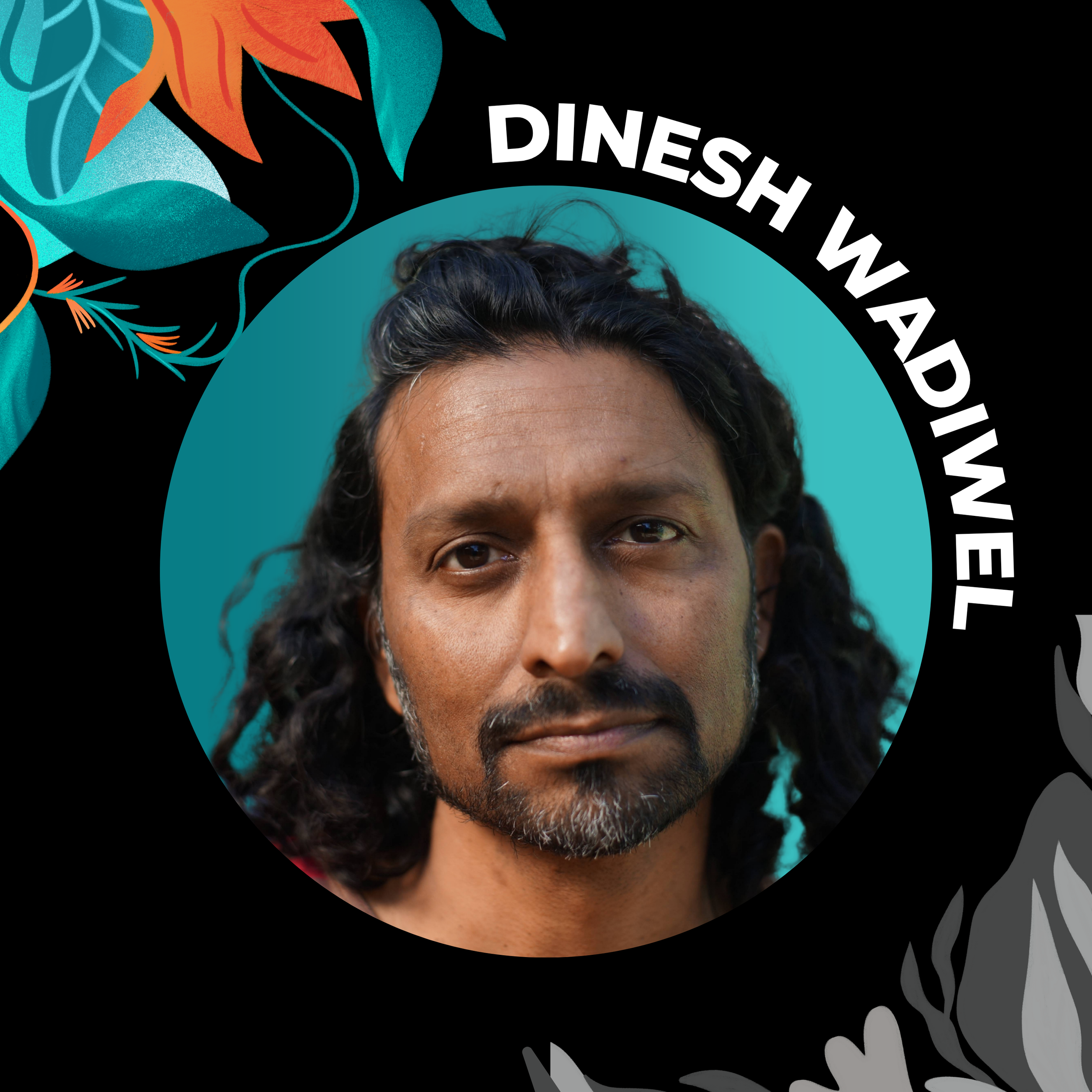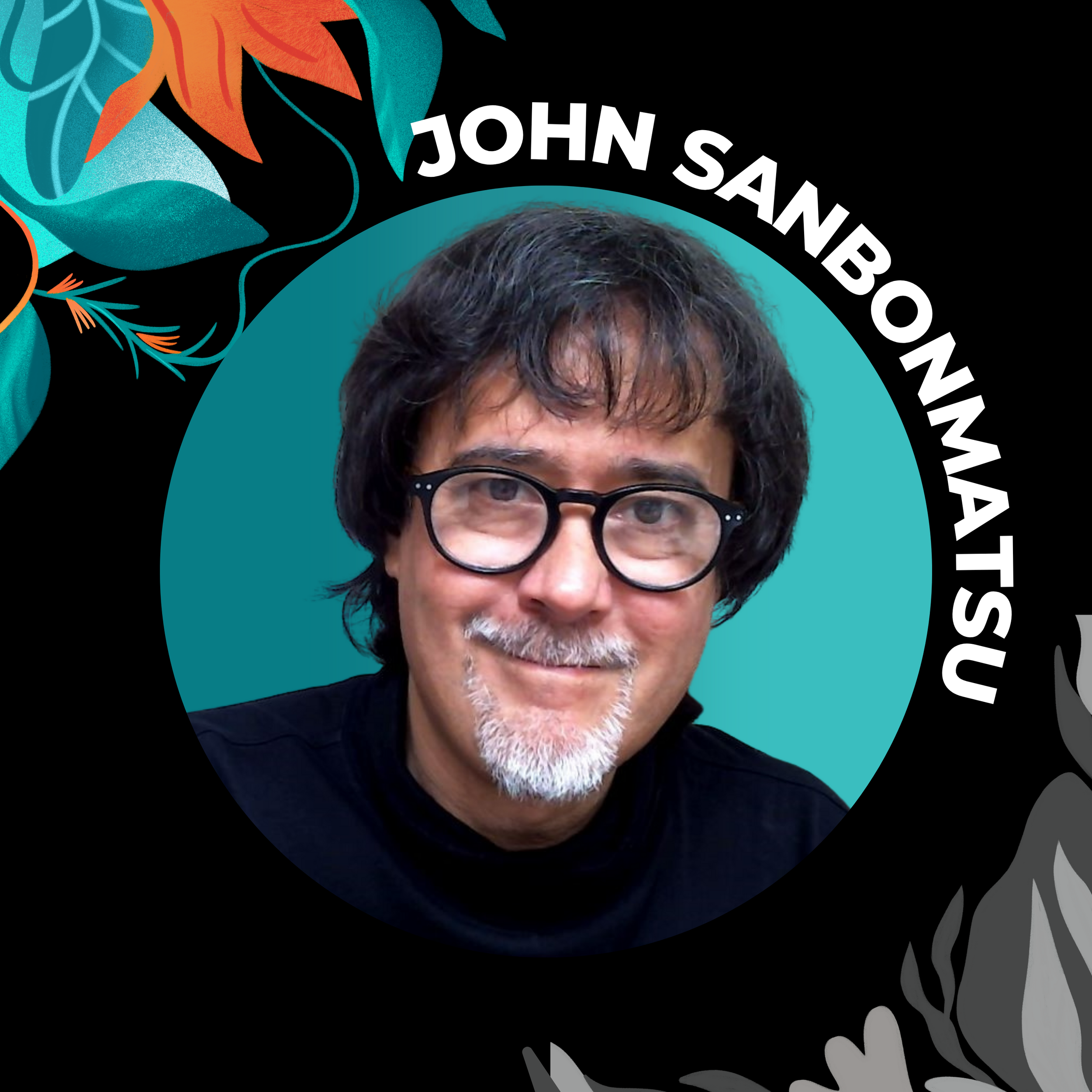

The Hoax of Lab-Grown Meat
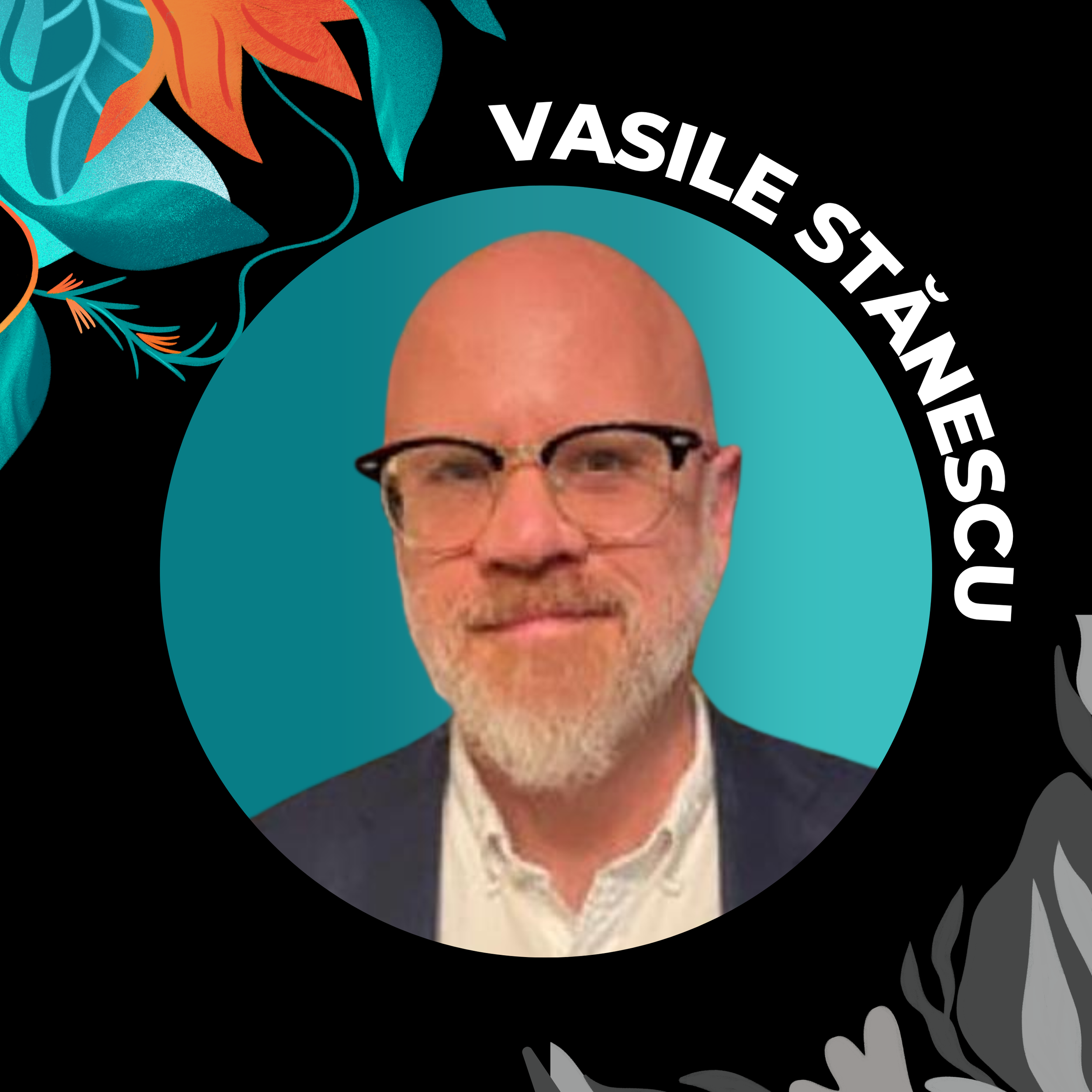



The uncritical adoption of ‘humane’, ‘cage-free’, ‘free-range’, and lab-grown meat by animal advocates, funded by effective altruism philanthropy and the animal agriculture industry, not only reproduces the myth that meat is normal, natural, and necessary, it represents an ultimate defeat for animals. Vasile Stănescu, animal liberation scholar exposes the ‘humane’ hoax and explains why the failure of many animal advocates to frame veganism as a social justice movement in solidarity with other social justice movements is sustaining and reproducing systems of oppression and exploitation of humans, animals, and nature. Highlights include:
How parents and society teach us to repress the childhood trauma that's triggered when we learn about the animal suffering and death from eating animal products;
Why the so-called ‘humane’, 'cage free', and 'free range' agriculture practices are a hoax funded by the animal agriculture industry that are even more harmful for the animals — both wild and domesticated — and the planet than the conventional factory farming systems they claim to replace;
Moral philosopher Peter Singer’s complicity in perpetuating these ‘humane’ myths, and the growing shift from liberation to welfarism within the animal advocacy movement through Singer-supported effective altruism philanthropy;
The relevance of Jevon’s paradox to animal advocacy and how new categories such as ‘cage-free’ or ’free-range’ do not replace the old system, but rather expand it, and why animal advocates must reject market-based or technology-based ‘solutions’ as they sustain and reproduce the current system of speciesism and growthism;
How the slaughterhouse and its dis-assembly line of animals' bodies became the template for the manufacturing assembly line of modern capitalism;
How western governments historically promoted 'cheap meat' to keep the laboring classes content with their low wages and help them continue feeling superior to the 'effeminate' and 'weak' rice and corn eaters of colonized Asia and South America;
How vegetarian and vegan eating are pathologized in a way that diets with animal products are not — even though large consumption of animal products is in no way 'natural' in much of the world or through the majority of human history;
Why lab-grown meat — still in its experimental phase — is not vegan, as its growth medium relies on the blood of unborn cows, not environmentally beneficial, as it requires huge amounts of energy, and is exorbitantly expensive; meanwhile, in collaborating with the animal agriculture industry for its creation, proponents of lab-grown meat are throwing animals — and animal advocacy — under the bus;
Why some animal rights activists turn to effective altruists and the money they offer to placate their despair and seek short-term ‘faux wins’ - while not appreciating that successful social justice movements have always taken time and persistence;
Why veganism should be framed not as a consumerist diet lifestyle option but as a social justice movement in solidarity with other social justice movements.
MENTIONED IN THIS EPISODE:
Article: How Industrial Slaughter Became the Blueprint for Modern Capitalism by Vasile Stănescu
Article: Letter from Birmingham Jail by Martin Luther King, Jr.
Episode: The Omnivore’s Deception with John Sanbonmatsu on the OVERSHOOT podcast
Book: This Changes Everything: Capitalism vs. The Climate by Naomi Klein
-
Vasile Stănescu (00:00:00):
My problem with the effective altruist movement is that it is not effective and in fact is not supported by the vast majority of serious scholarship and peer-reviewed data. And if the majority of the data says that humane meat cannot work, trying to use something that uses more land when we are out of land is not realistic. The cage-free eggs have not worked. There are more chickens and battery cages now than ever before. If there is definitely scholarly debate on the efficacy of lab-grown meat ever occurring, then that is not a question of realism versus idealism. That is a question of what would actually be effective. So we are always in an allied position when it comes to animals and no animal is actually arguing for lab-grown meat. No animal is actually arguing for any of these incrementalist options. Every animal's arguing to be free and we should take our marching orders from the animals and fight for that.
Alan Ware (00:00:58):
That was scholar and animal liberation advocate, Vasile Stănescu. In this episode of OVERSHOOT, we explore his critique of animal agriculture and its humane-washed alternatives, including lab-grown meat, as well as his leadership in building an animal solidarity movement committed to ending animal exploitation within our lifetime.
Nandita Bajaj (00:01:28):
Welcome to OVERSHOOT, where we tackle today's interlocking social and ecological crises driven by humanity's excessive population and consumption. On this podcast, we explored needed narrative behavioral and system shifts for recreating human life in balance with all life on Earth. I'm Nandita Bajaj, co-host of the podcast and executive director of Population Balance.
Alan Ware (00:01:54):
I'm Alan Ware, co-host of the podcast and researcher with Population Balance. With expert guests covering a range of topics, we examine the forces underlying overshoot: the patriarchal pronatalism that fuels overpopulation, the growth- obsessed economic systems that drive consumerism and social injustice and the dominant worldview of human supremacy that subjugates animals and nature. Our vision of shrinking toward abundance inspires us to seek pathways of transformation that go beyond technological fixes toward a new humanity that honors our interconnectedness with all of life. And now onto today's guest. Vasile Stănescu is an associate professor in the Department of Communication at Mercer University. He holds a PhD from Stanford University with a focus on critical animal studies and environmental rhetoric. He has conducted research on locavorism, humane meat, lab-grown meat, the ethics of invasive species removal, and industry-funded greenwashing. His research has been cited in The Guardian, Vox, The New York Times, and Bloomberg News.
(00:03:04):
Vasile is the co-founder of the North American Association for Critical Animal Studies and previously served as co-senior editor of the Critical Animal Studies Book Series. His work has received support from the Woods Institute for the Environment, the Andrew Mellon Foundation, the Culture and Animals Foundation, and the Climate Social Science Network at Brown University, where he is a research scholar. More information about his research and podcast is available at windforanimals.org and now on to today's interview.
Nandita Bajaj (00:03:40):
Hi and welcome to the OVERSHOOT Podcast, Vasile. We're delighted to have you here.
Vasile Stănescu (00:03:45):
Thank you for having me.
Nandita Bajaj (00:03:46):
And Vasile, I was first introduced to your work through your critique of lab-grown meat and the uncritical support of this so-called clean meat movement from the animal rights community. And as we've been digging deeper into your work, we have been impressed by your fierce advocacy for animal liberation, which include wide-ranging and powerful critiques of animal welfarist approaches and also your passionate call for veganism as a social justice movement in solidarity with other social justice movements. So Vasile, we can start with a bit about how you came to this movement. What was your journey to veganism and how did that evolve into your passionate devotion to advancing animal rights?
Vasile Stănescu (00:04:37):
Well, I first went vegetarian at the age of nine. I checked out Animal Liberation from my public library and at the ripe old age of nine was convinced by these arguments and gave up meat then and have never eaten meat since. So these are not actually very difficult arguments to understand. And later in college I went vegan and there I was convinced by Carol Adams, the sexual politics of meat, where she emphasized the harm that was done particularly to female animals, so female cows and female chickens and the sort of reproductive justice. And then I met my future spouse and partner at the same time and we were both vegetarian and we wanted to go vegan and we went vegan together and we've now been vegan together for 25 years. So this is what I do. I wake up early in the morning, I work late at night. I am, as they say, all in on trying to achieve animal liberation.
Nandita Bajaj (00:05:34):
Yes. I knew that something had happened at the age of nine where you kind of woke up to vegetarianism, but I did not know that you signed out a book from the library at the age of nine. That's radical.
Vasile Stănescu (00:05:47):
Yes. And I thought it was very unique, but it turns out not to be. So there was a study that came out from Harvard and what they found is actually a large number of very young children go vegetarian around the age of nine when they first realized that chicken is chicken. And you can actually see a lot of videos about this. It's almost a meme of children about that age who are being very upset about what is happening to animals and realizing that they're eating animals, crying, yelling. And somehow we're supposed to find this as endearing but also somehow irrelevant. And what happens is that these children's parents, the people they care and trust the most in the world, lie to them. They tell them that they have to eat meat or that it doesn't hurt the animals and at a very young age they learn to push it down.
(00:06:35):
And so when we're doing our own vegan advocacy, what I run into all the time with my students, because I teach classes about this, is what we're dealing with is not true ignorance, but actually childhood trauma that's been repressed and pushed down because like me at the age of nine, many people realized something was wrong, but unlike me, they didn't just stay vegan and vegetarian.
Nandita Bajaj (00:06:58):
Right. I find it so interesting the arguments often from the other side is to not push vegan values on children. And I think that argument is completely missing the hundreds of years of propaganda that's gone into pushing a certain diet on all of us.
Vasile Stănescu (00:07:20):
That's right. That makes no sense because for people who have children and raised children, you're going to do one of two things. You're either going to raise them to eat meat or not. Either way, it's a decision. So we shouldn't pretend that one is a decision and the other isn't. It's just that one is invisible, unmarked, and one is marked, but they're both equally decisions. And what is it that a good parent should do? They should teach their child what they believe to be right and wrong. Well, I can't imagine how any vegan could possibly do anything different and is also a consistent moral position versus an inconsistent one. Your taste isn't worth some other animal suffering and people are animals so you don't hit animals, you don't hit people because they're animals. You have to worry about other people because they're animals, their interests also matter.
(00:08:07):
So other parenting seems a bit of contradiction, a bit of hypocrisy, and one of the great gifts that we have is that we can actually have a consistent moral position. Richard Twine is another scholar and I deeply respect and he has written this chapter about slaughterhouse shame - that we have this secret that we keep from children and the secret is the slaughterhouse. And when the kids get older, that's what marks them as adults. They now know the secret and maybe as men that they know the secret and then don't care. Well, as vegans we don't have to have a secret. We can have a consistent moral position.
Nandita Bajaj (00:08:45):
Yes. Really well said. And then also you wrote in 2016 an essay titled An Open Letter to Peter Singer whose book you said you read when you were nine, Animal Liberation and your essay was titled An Open Letter to Peter Singer: A Critical Engagement with Peter Singer's Support of 'Compassionate' and Humane Meat. You argue that Singer is not only factually incorrect, but that he's also carrying water for the animal agriculture industry, which is increasingly creating all kinds of new marketing terms to make consuming animal products more palatable to the general public. Can you outline your main arguments on this point?
Vasile Stănescu (00:09:30):
Sure. So yes, Peter Singer was actually in reality my childhood hero and not all children have a moral philosopher as their childhood hero, but I did. He's why I went vegetarian and at the age of nine, I was like, okay, I'm going to try to stop this and there wasn't a whole lot I could do. So not everyone has a moral through line that kind of guides their life, but I do. Since nine there's been one direction. There's been questions of how, there's never been a question of why. And so since then, as I've gotten older, as I've learned more, I've written two open letters to Peter Singer, which I've also sent to him to say, Okay, well, this is where you led me in the right way and this is the areas where now I think you need to grow. And so in terms of humane meat, cage free, free range, the arguments are threefold.
(00:10:20):
The first most basic one is one of land and you can literally hear it in the name. Free range literally means more space. Well, as all of you know and all the listeners know, we don't have that space. So as horrible as CAFOs, concentrated animal feeding operations as concentrated would suggest are the one thing about them is that they make lots of kilograms of meat in a very small space. So the only way to increase the welfare of that animals is to take up more space, but we don't have that space. Over 80% of all of the land for agriculture is used just for animal agriculture already. When I started this work, it was 50 billion land animals that raised and killed each year. Now it's 90 billion, we're head to 120 billion, so we're literally running out of space and all the space has a massive environmental effect.
(00:11:10):
So if we move to cage-free, free range, pasture-raised animals, the environmental effect is worse, not better, worse. There was a study that came out that estimated that doing grass-fed, free-range cattle, which many people believe would be better for the environment than even factory farm cattle in reality would be 50% worse in terms of climate change, 50%. So you can't move from a system which is either the two or perhaps the one, number one cause of climate change right now to a system that actually increases your greenhouse gas emissions. That is environmentally irresponsible, it is inherently unsustainable and it can never scale. And so if we care about climate justice, we have to be opposed to humane meat. Relatedly, these environmental arguments are themselves animal welfare arguments. For reasons I will never understand some people want to have two buckets, a bucket of environmental justice and a bucket of animal rights or animal welfare.
(00:12:14):
And I see people argue for both buckets on both sides, both environmentalists who claim, okay, well, we're not going to worry about animal liberation and incredibly people who claim to worry about animal liberation but not claim to worry about the environment. But there are not two buckets. That is not the world. There is only the world. There is only one bucket. And so you can't have increasing climate change and pretend it's not going to have massive welfare environmental impacts on animals. And when we are going through the six great extinction right now, species are going extinct constantly and farmed animals will also have massive welfare concerns as it gets hotter, as there's less feed, everything that's happening. So it is not the case that animal welfare actually leads to less suffering for the animals. It leads to more suffering in a different way. Let me give you one concrete example.
(00:13:07):
Part of the problem of this taking up of more space is that all of the animals who are wild animals have to be killed. So imagine a chicken plucking in the pasture. Well, who wants to eat that chicken? Birds of prey, coyotes, the neighborhood dog. And so what you see is people like Joe Salatin, the owner of so-called Polyface Farm, the featured personality in Food Inc. write in his memoir that he kills all of these animals, that he kills endangered birds of prey, that he kills hawks, that he kills the neighborhood dog to keep his chickens safe and he emits the irony of people who care about animals and mind him killing these other animals because it is the only way he says to be able to raise these chickens and pasture. The US government does it. They do mass trapping and killing of wild animals all the time to be able to protect these so-called humane animals.
(00:14:07):
So here's the point. When you see an image of a chicken out in the pasture, that image may look like there's causing less suffering. And my point is to see all the suffering that that frame, that image leaves out. The breeding of the chicken, the way the chicken's own body hurts them every single day because they've been bred to get fatter and fatter and their own body can't hold it. So why they look happy, their own body is hurting them and the more days they live may just be more days of suffering, the climate that's being hurt, the wild animals who are all being killed to produce what is in reality a fake image.
Alan Ware (00:14:47):
And as we've talked about with writer, Christopher Ketcham in the American West, the Department of Agriculture and the Department of the Interior, as you were suggesting, are helping clear wildland of prairie dogs, coyotes, wolves for the sake of primarily cattle and the more land that the pasture-raised so-called humane takes up, the worse that will become. And you've written extensively about how governments and universities in particular are enabling the animal agricultural industry to engage in this humane washing. Could you give us some of your recent research on that?
Vasile Stănescu (00:15:22):
Absolutely. So there's the report Livestock's Long Shadow came out and as many of you know, caused actual real concern about the environmental effects from animal agriculture. The report said urgent action is required. So there was media reporting. This was part of what caused the move towards meat-free Mondays. There was an across the board, including governmental action to say, "Okay, we're actually going to get serious about this for environmental reasons and we're actually going to decrease the amount of meat that we're consuming." As you might imagine, the meat industry was not happy with these results. So they, in essence, responded to this growing environmental concern not by making any decreases in emissions, but by funding greenwashing on a mass scale. They have realized like the fossil fuel industry before them, like the tobacco industry before them, like the pharmaceutical industry before them, they can take a page from the playbook of these industries and fund academics in order to shift the conversation and to try to produce the type of research that is favorable to their industry.
(00:16:30):
In the 1950s, the world's second largest funder of health research in the entire world, first was the US government, number two was the tobacco industry because what they figured out is the way to shape the scientific conversation is not to censor science, is not to fund science less, but to always fund it more. So if you wanted to research something that could cause lung cancer as long as it wasn't tobacco, they were happy to fund it to try to drown out the industry. Well, that is what animal agriculture is doing now on a mass scale and they are funding whatever feed additive, whatever composting technique, whatever small scale change, as long as you claim that they can just keep growing the number of animals that they produce and kill each and every year and somehow that can be sustainable. They're happy to give you money to drown out the simple truth that you cannot go from 50 billion to 90 billion to 120 billion with any real chance of sustainability.
Alan Ware (00:17:33):
Right. And you've discussed Jevon's paradox in the context of how they keep adding greenwashed products to the animal industry to make them palatable to consumers, making people feel as if it's a substitution instead of just a constant addition of greater and greater animal suffering and animal product consumption. Could you go into some of that Jevon's paradox as it applies to this?
Vasile Stănescu (00:17:59):
Jevon's paradox is the single most important idea that I would like for your listeners to take from this podcast. So William Stanley Jevons was an English economist in the 1800s studying coal and what he discovered is that as the emissions and the efficiencies from coal got better, which should mean that it would be less waste, it produced more waste because people just used more coal. Let me give you the best example of Jevon's paradox before we get into the animal part, which you may not know, which is that today we use more wood than ever before. So we use more wood today than we did in the 1900s. We used more wood today than we did in the 1800s. The percentage of power that comes from wood has fallen massively is now 6%. And of course in the 1800s it was like 98%, but the total amount of wood has gone up.
(00:18:52):
All we've ever done in energy is just use more never less. That is Jevon's paradox. That is what is also true for animal agriculture. So each of these mistakes are in essence the same mistake. What so many advocates for humane meat, for local meat, for cage-free, for lab-based meat to think or imagine is that there is a fixed number of animals, say 200. So if you now have 10 animals that are raised in your backyard or you have 10 animals that are grazing on the pasture, or you have a certain amount of meat that is produced via lab-grow meat, this will trade off with the existing market and help those animals, but that is not in reality how meat consumption actually works. What we have is not a fixed pie, like with energy. What we have is a doubling - 50 billion, 90 billion, 120 billion. So all that happens in reality when you have your backyard chicken is you haven't traded off with the chicken in the factory farm that just keeps growing.
(00:19:56):
You've just found out more space for the industry to be able to raise one more chicken as it runs out of space, now your backyard is used. Let me give you the best example of this. What we hear over and over again is that cage-free eggs have been a success and the reason they say is something like 43% of all eggs in the United States are now labeled cage free, which is true. What they leave out is that the industry has grown by more than 43%. What they leave out is that there are more chickens in battery cages today than there was before the very first cage-free campaign ever began. So the same thing we see with wood consumption and energy consumption where it's just ever more, so there is no change is the same thing we see with animal consumption. If we just keep eating more animals, then what happens is just the industry keeps growing.
Nandita Bajaj (00:20:48):
Yes, so true. And I think on that point too with the FAO's Livestock's Long Shadow Report, there was so much pressure from the industry that even the UN buckled, right? There were a lot of former FAO officials who said that they received such intense backlash from the major meat-producing countries that their own senior leadership was forced to water down their scientific findings, which said that as you were saying, the animal agriculture industry was responsible for 18% of greenhouse gas emissions, and then they changed it subsequently to 14%. And then a few years later, it was 11%. Meanwhile, other independent sources who are not tied to the industry are finding it may be as large as 28% greenhouse gas emissions. So to me, what's interesting, and we wrote a whole paper on confronting the United Nations pro-growth agenda is the United Nations is not free from all of these pressures and this industry capture.
(00:21:55):
And then you've also written this great article for Current Affairs, how industrial slaughter became the blueprint for modern capitalism. What was learned in the slaughterhouse about how both animals and humans could become commodified for capitalist profit and how does that relate to the position you've taken that quote, "We cannot challenge speciesism without confronting capitalism. We cannot confront capitalism without confronting speciesism."
Vasile Stănescu (00:22:29):
Yes. And it's a perfect segue from exactly what we were talking about. So the article comes from a historical insight that I came across I didn't discover, but I was struck by, which is that Henry Ford actually developed the assembly line by studying the disassembly line of the Chicago slaughterhouse. And this is in essence an open secret. He talks about it in his own autobiography and likewise, the Chicago slaughterhouse talks about it as like a point of pride. Hey, look what we accomplished. So there is no scholarly debate that this is actually what occurred. And what stands out about this, the Chicago Slaughterhouse disassembly line of taking apart, say the cattle or the pig piece by piece part by part. They had a few problems that they had to work through and the primary problem was resistance, resistance by the animals fighting for their life and resistance by the workers.
(00:23:26):
If you remember The Jungle, one of the most exploitive industries there who were now having to do this kind of repetitive labor and so they figured out these techniques to subdue resistance, first the resistance of the animal and then because humans are animals, how they could apply these techniques to the resistance of the workers in the slaughterhouse. So while they realized if we objectify an animal into just parts, just a leg, just an arm, we can do the same thing to a human. And if we make a human just an arm, cut, cut, cut, cut, then their resistance goes down while the resistance from the animal being slaughtered goes down. And so this is the disassembly line of moving these animals on a conveyor belt with workers who did one single action over and over again that they could standardize have increased productivity, decrease resistance by individualization, individual animals, not a pack or herd, individual workers, not a union or a group individual actions cut, cut, cut and literally divide it into their component parts.
(00:24:29):
The animal, just a leg, the human, just an arm. When this becomes the template for the assembly line, which then just shifts these same insights that you can build a car like you can take apart a cow and that you can turn the workers into just parts that again are individualized, regulated and controlled to prevent the resistance that might occur against unions in producing all the stuff we have. So we have a term, the way that we refer to the type of capitalism that we have now is post-Fordist capitalism, capitalism after Henry Ford, capitalism after the assembly line, but this term is in fact incorrect. It suggests Henry Ford invented that which he merely borrowed. The type of capitalism that we currently have more correctly should be referred to as post-slaughterhouse capitalism or just more simply because we're not really post anything, slaughterhouse capitalism. And what this term does is help to remind people that all these things that we think are of a failure of capitalism - the way that people are controlled, regulated, alone, isolated, the violence, the death - these aren't failures. Those were in the original system that was made to produce death at ever greater rates forever greater profit.
Alan Ware (00:25:47):
Yeah. And it did remind me of Frederick Taylor in scientific management in the early 20th century, which was doing time motion studies of workers measuring the optimal size of a shovel for shoveling different substances, whether it was sand or wood chips or whatever and really reducing every action to its most economical efficient profit-inducing type of motion.
Vasile Stănescu (00:26:13):
Yes, that's exactly correct. So-called Taylorism. They're originally doing experiments to see which kind of light would make the workers more productive and what they discovered was it didn't change what the light was. Them watching the workers made them more productive. So if we can just watch all the time, then we can increase productivity. The article suggests what we see in say Amazon warehouses today, where every single movement is so intensely focused on and regulated where you can't take a pee break, this isn't a new phenomenon. It's a distillation and a distillation that comes not from the clean image of the Ford assembly line, but the blood-soaked floor of the Chicago slaughterhouse.
Alan Ware (00:26:54):
And I've been slowly making my way through Sven Beckert's Capitalism, A Global History, which is 1200 pages. I'm not very far, but you do see how commodifying people and nature is the capitalist force and they just keep expanding through whether it's slavery, indentured servants, wage slaves, enclosure of rural lands, definitely kicking off indigenous people and then putting enslaved people on the land was the most profitable and Europe does that to the greatest effect. But yeah, it's just kind of a relentless. It takes different shapes, different forms depending on what obstacles it has in the way culturally, socially, but it keeps finding ways in of exploitation of people and nature.
Vasile Stănescu (00:27:40):
And again, tying in to specifically this relentless pro-growth mindset - always trying to produce more, never accepting that there are fundamental limits.
Alan Ware (00:27:52):
And you also write in the article about how eating large amounts of meat is not natural or traditional, but it was marketed by industry and pushed by governments. How did that modern obsession with eating lots of meat come about and how was it supported by the state?
Vasile Stănescu (00:28:10):
Yes, that's one of the most fascinating parts. So if necessity is the mother of invention, what is the necessity that the factory farm was invented to solve? And at least part of this answer is actually people being upset because of their low wages. So when colonialism was occurring, there was a myth of the effeminate rice and corn eater. So this focused on Mesoamerica and India, there was a researcher, J. Leonard Corning, who wrote an 1884 monograph entitled Brain Exhaustion, famous researcher at the time who claimed that if you didn't eat enough of the meat or the right kind of meat, if you ate too much rice or corn because of nutritional reasons, then you wouldn't have the vitality that was necessary to be strong and masculine and rational. And so in the 1800s, in the 19th century, this became an intellectually respected way to repeat the racist tropes, the colonial tropes in a way that seemed less objectionable.
(00:29:13):
The people in India weren't being dominated by Britain because they weren't quote unquote racially strong enough, but because of their diet. The people in Mesoamerica weren't being dominated. The indigenous populations you were just talking about weren't being dominated racially but because of their diet. They didn't eat enough meat, they ate too much rice and corn. And so they argued if we could just change their diet, then we could actually help all of these peoples of the world. When you read Gandhi's autobiography, he actually talks about this. He actually eats meat briefly as an anti-colonial struggle because he's actually convinced by this argument and it's later when he becomes part of the anti-colonial struggle in England that he reverts back to his original vegetarianism. So this is how widespread this idea is. I've literally seen writing books from the 1800, How to Learn How to Write and it will teach like R, R is for rice.
(00:30:06):
Eating rice makes you weak. So this is the prevalence of the effeminate rice and corn eater. And so what happens in the United States is workers start to try to unionize because their wages aren't good enough. But the way they articulate it is that they don't have enough money to buy meat and they're particularly concerned by the Asian immigration that's currently happening and they say, Hey, we have to eat rice like these effeminate rice eaters. We can't bring home the bacon. We can't have a chicken in every pot, Herbert Hoover's actual campaign slogan of chicken in every pot. So we don't have the money for meat. That's why we need higher wages to differentiate us from these immigrants. And the solution to this problem in part is the development of ever cheaper meat. It's changed recently, but until recently for over 30 years in the United States, meat was negatively correlated with inflation.
(00:31:09):
So every single year, while everything else got more expensive, meat got cheaper. I mean, they recently had to rise their prices, but for a very long time you could buy a hamburger at McDonald's for a dollar. You can't buy anything for a dollar. And as terrible as the workers are treated, there still has to make a profit. There's condiments, there's a bun. How is it possible that you can buy a hamburger for a dollar? Well, one of the reasons is you just figure out how to treat the animals worse and worse. And the other reason is the state subsidize it more and more. The United States may not have a lot of socialism, but we have always had socialism starting this 19th century in terms of meat consumption. So here's the basic argument. The exploitation of the animal is always ratcheted up in part so that we can exploit the human worker more.
(00:31:57):
The human worker feels richer because they can keep buying evermore meat as they do as these numbers just keep going up and so they feel richer even as in reality their actual wages stay the same or decline. If you think of the old adage of Rome, bread and circuses, but what we have is meat, ever cheaper meat and maybe televisions, ever bigger televisions. So you don't get this kind of class consciousness, this kind of, Hey, things are unacceptable because at least I can still buy meat. In fact, I can buy even more meat than before.
Alan Ware (00:32:31):
So you've also written about a trend in the media of pathologizing veganism and vegetarianism as some kind of disorder. Could you speak to some of what you've written about that trend and how the media describes that?
Vasile Stănescu (00:32:45):
Yes, that's right. And so this was an article that actually co-authored with my brother, James Stănescu. So a bit uniquely I am privileged by having a brother who also works for animals, also a professor, and we get to work together on a lot of our scholarship. And so this article investigates what is referred to as orthorexia. Now, in reality, orthorexia is not a actual clinical diagnosis of any kind. It was originally coined in a yoga studies journal, which was in no way peer-reviewed. So even though it is not scientifically valid at all, it has somehow caught on with a larger media with regular reporting of orthorexia, which of course sounds like anorexia, which is a actual real diagnosis. So orthorexia claims to pathologize people who want to eat too healthy. And the main claim is that you can't have fellowship of the table, that you'll be too lonely if you are orthorexic, if you are too worried about the righteousness of your eating.
(00:33:49):
However, what you discover is that it is only applied seemingly to vegetarians or vegans and other highly restrictive diets, like the paleo diet for whatever reason, get a pass even though it would seem to have all the same problems that orthorexia suggests like worrying about certain foods, having to control your eating, not being able to eat with other people, but those diets that have meat are all fine and orthorexia, this righteous, healthy, if it excludes meat for whatever reason, is not fine. And so it is this way to try to pathologize veganism. And the deeper point is this sort of argument that seems to operate that like, Hey, you know the reason you don't want to go vegan or vegetarian is because you will break fellowship of the table and that you will be alone and isolated. And so it takes this sort of real problem that we as a movement has to confront and flips it, something which is clearly purely social, something obviously we could change and then tries to make it natural and universal.
(00:34:53):
And this actually goes back to the sort of realistic argument that we're talking about like animal realism or something that is recent. My grandmother ate meat, but she ate 80% less meat than we eat today. The factory farm system wasn't created till the 1920s, still doesn't exist in most of the world. So something which is recent and artificial and manmade has been naturalized as somehow intrinsically human nature. But if it was actually human nature, we wouldn't see huge difference in the amount of meat that people eat between time and place. If it was human nature, you wouldn't have 40% of people in India be vegetarian, you wouldn't have 12% be vegetarian in Canada. So what is occurring is clearly not human nature, but history, environment, social. And if it is in fact social, then we can change it. The way to try to stop this is to A, pretend it's natural and B, to shame people if they violate it.
(00:35:49):
As Carol Adams says, before we show up, they're not meat eaters, they're just eating. And no matter how polite we are and no matter how self-effacing we are, the anger that is visited upon us is that as soon as we show up, we shift them from people eating to people making a choice. So I talk to my students about chocolate and I tell them that virtually all chocolate is harvested by enslaved black children in Africa. So this is clearly a moral abomination. I mean slavery, colonialism, children, and I never have any pushback. However, my students were all scandalized. They asked me for links to videos to watch, documentaries. They talked to me about it later and then I talked to them about animals or moral abomination and the reaction could not be more different. So what we're dealing with is not actual true ignorance.
(00:36:44):
That is what they have about the production of chocolate. They knew nothing about it and they are scandalized to find out the information and they want to do something about it now. But if there's this anger pushback about animals, it is because at some level they know enough not to know. The term we use for that is disavow and knowing not knowing. It's true they may not have ever seen a picture of a battery cage, but they had to know enough not to look. I mean, the videos are everywhere. They had to know enough not to think. They had to learn to stop themselves from thinking, from asking the questions, How can I get a hamburger for a dollar? Why are these animals? Why can't I see them? Where is this all coming from? And that is learned behavior in our society starting very, very young and the anger we get is that rising up. Now here is the encouraging thing. In my classes, often it is the students who are the angriest that go vegan because it means they're actually confronting it. When we run into that angry meat eater, that does not mean that person will not go vegan. It often means they're on the cusp.
Nandita Bajaj (00:37:43):
Yeah, very interesting. And I think this normalizing of meat eating also ties nicely to the growth that's happened over the last few years in the acceptance for lab-grown meat within the animal rights community and one of the most notable figures within the so-called clean meat movement is Bruce Friedrich of the Good Food Institute. He worked for decades for PETA. And I think the premise of a lot of people who are proponents of lab-grown meat is that, well, it's natural and it's normal and humans have always done it. So why not we just change the mode of production and make it easy for them to still consume as Bruce Friedrich calls it humanity's favorite food. It's drawn immense praise from Peter Singer, from Ezra Klein of the New York Times and the likes and received significant financial backing from the effective altruism community.
(00:38:43):
And so in 2019, there was a debate at the Conscious Eating Conference on cell-based meat in which you and our former guest, John Sanbonmatsu debated Bruce Friedrich of GFI and Leah Garces, former CEO and president of Mercy for Animals. And in that debate, you made excellent arguments against cell-based meat. Can you lay out the main arguments that proponents like Bruce and Leah make and how do you refute their claims?
Vasile Stănescu (00:39:13):
Sure, absolutely. So my first concern about lab-grown meat, cell-based meat, cultured meat, whichever term we want to use is the growth medium. So the usual claim that you hear is they take a single cell from an animal, which they suggest will be treated very, very well and that we can just reproduce the cell forever and so that we can clone the cell to produce meat without any animals actually being harmed. But sort of like we're talking earlier that frame, that image and certain things are left out. What interests me is what is left out of this faux image of the way that "clean meat" actually operates. So the first problem is the growth medium. So traditionally what is used for the growth medium is something called fetal bovine serum FBS. What is fetal bovine serum? It is the blood of unborn cows taken as close to gestation as possible.
(00:40:08):
So the factory farms running through and the cows are coming through and it's a byproduct of the industry. Sometimes these cows are pregnant and so they'll kill the cows and then they'll take the fetus out and then they will do a cardiac puncture and take the blood out of the heart of the fetus as close to term as possible because they want to get as much of the blood, the fetal bovine serum, serum meaning blood in this case, as they can. And so the closer to term it is, the more that they can get out. And this then is used as the growth medium and is the growth medium for the research. So as they're doing the research to develop it, they're paying for fetal bovine serum. No type of anesthesia is used for the mother or the fetus in the harvesting of it. It is grossly and not vegan.
(00:40:51):
It's grossly harmful. It is the single most profitable thing that the industry sells even as a byproduct. There's nothing that it sells for the cost of fetal bovine serum. So just for the research, same product never even comes to market. Just to develop it has caused mass amount of FBS. It is hard to get clear numbers, but there's estimates in the millions. Not the thousands, the millions of these fetuses who have suffered and sometimes are conscious out of the womb as they puncture the heart and take out the blood. Now what proponents of lab-grown meat will say in response is yes, and we are going to get rid of FBS later. And that is certainly true separate from any kind of animal welfare concerns, it's necessary because of the cost. FPS is so expensive. If the product was ever to come to market and be profitable, they couldn't still use FBS the way that they do now.
(00:41:45):
So that is certainly the case. But first, they've caused a mass amount of suffering for something we don't even know will ever get to market. As a vegan I boycott things that are tested on animals, even if no animal products still exist. So my shampoo, even if it is now completely vegan, if it was tested on animals, I will not use it. By definition, FBS has been in essence animal testing on a mass scale and is intrinsically non-vegan even if later they use a different growth medium. But more importantly, we have no idea what this other growth mania will be and no guarantee that it also won't be derived from animals. There are peer-reviewed articles out right now talking about using horse blood, talking about using ocular fluid. I mean, clearly they're willing to use an animal byproduct as a growth medium already causing a massive amount of suffering.
(00:42:35):
It's unclear to me why they wouldn't choose to still use an animal byproduct later. Can you imagine activism where people are eating what is labeled as clean meat that they believe was made from a single cell and trying to explain to them, No, no, no. They uses ocular fluid, the fluid of the eyes of the animals as the growth medium. And this owned by this other company uses sheep blood and none of this is even vaguely vegan. So that's the frame. One frame problem is the growth medium and I can't get clear answers. I was just recently at the Reducetarian Conference, which is very pro cell-based meat and I tried to ask questions about what is your current growth medium? Do you still use FBS? How much is being used? And no one will answer my question. Bruce has been on this media tour of podcasts and the question I would ask him is the same question.
(00:43:28):
How much FBS is still being used? Have we stopped? When will we stop? How many animals will be killed? And I would like answers, I don't know their industry secrets, their trade secrets. If it is a trolley problem like utilitarianism and on one side we have the 90 billion farmed animals and on the other side we have this growth medium. Well, give me the numbers. What is the actual utilitarian calculus? Is it two million? Is it 10 million? The second problem is the environmental one, like we talked about with humane meat. So there are a litany of studies on cell-based meat, which of course has not actually come to market yet. So these are in a sense all projections. And of course, depending on the assumptions you make, you can get wildly different results because you're not measuring something that actually exists. You are imagining what the lifecycle analysis would be.
(00:44:18):
And so if you say, well, they will actually produce it this way versus they will actually produce it that way, you can get wildly different results. So these all should have a degree of asterisk because we don't know what it will be like because it has not come fully to market. But many of them suggest that the energy would be more than is necessary even for a factory farm. So yes, they use less space, less land massively so. But think of what they're doing. They're cloning cells and then they have to make meat, which means muscle. And so they have basically these elaborate machines that have to work the meat to make it be muscle. So all of this uses massive amounts of energy. So if the problem with humane meat is that it uses too much land, the problem with lab-grown meat is that it uses too much energy.
(00:45:05):
Either way, they're both increasing the greenhouse gas emissions. And what they will say in response is, Don't worry, we will just use renewable energy to solve all of the energy problems." So in the Good Food Institute's funded studies, they have some of their own scientists, PhDs, they produce their own peer-reviewed studies. Their assumption is a hundred percent renewable energy in order to produce the product, but we don't have a sort of massive renewable energy that just isn't being used sitting around. I mean, the AI centers are tearing through every inch of energy there is and their solution, why you shouldn't worry about the AI centers is we will just use renewable energy even as our own electric bills keep ratcheting up. I mean, that goes back to what we were talking about why we use more wood than ever before. There just isn't that energy.
(00:46:07):
So you can't massively increase the energy input and then hand wave it away by the claim that it'll just always be using completely renewable energy. That is not serious or valid or responsible scholarship. And so if we say no, we will actually use the same sorts of energies that we use now. Fossil fuels will provide the energy for lab-grown meat. Then you get a situation where lab-grown meat might be significantly worse for the environment, significantly worse for climate change. It is not sustainable and it is another sort of fantasy of how we're going to keep growing through technological innovation which causes the problem in just a new hidden way. So what is left out of the frame of that lab-grown meat is all of that energy that has to be wasted, all of those climate change effects that are outside of it. And the third one that I would say is let's imagine that I'm wrong and there is some sort of idealized lab-grown meat that would actually treat animals well and be sustainable.
(00:47:03):
Let's imagine that as possible. How do we get to that in the real world? So the stated goal of Tyson that is funding research in the lab-grown meat, the stated goal of Cargill that is funding lab-grown meat, is they say a both and strategy. So this is Jevon's paradox on steroids. This is Jevon's paradox by intent. And so what they say is we tend to think of the meat industry as holistic as one group, but of course like everything, there's different actors. So the processors, so that's Tyson and Cargill are different than the ranchers who are raising it. So the ranchers are opposed to lab-grown meat because it'll trade off and the processors are happy because they don't care where the product comes from, they just want more. And so when the ranchers are mad at Tyson for funding lab-grown meat, this is what they say.
(00:47:50):
They say, no, we're just going to keep growing the pie. We're going to go from the 50 billion to the 90 billion to the 120 billion. Don't worry. We're not going to trade off with one animal. We're going to keep growing factory farms and we're going to add in lab-grown meat because we're running out of room and this is a way for us to get more meat with less space to harm the planet a different way, to harm animals a different way. And they have publicly stated in print in the BBC that one of their goals is a blended product, blending not plant-based protein, blending factory farm meat with lab-grown meat. What we are doing as vegans is funding the most perfect way for the industry to grow. The industry has had these sort of stretchers for meat throughout different products they can add in to try to sell more meat and that's never been exactly progressive or good for animals.
(00:48:44):
But the problem is it didn't taste quite right. You couldn't label it 100% meat. Consumers felt they were tricked. There was a huge backlash against the meat at Taco Bell, for example, a few years back when it turned out that it only contained a very small amount of actual meat and was mainly these fillers, but we as vegans are now funding the invention of the perfect filler, something that can be produced and blended with animals raised in factory farms. The future that I imagine is a future where the elite consumer buys 100% real grass-fed beef and then we go down the scale 50-50 would maybe be the middle class, 50% real meat, 50% lab-grown meat. The very poor people, they get 100% fake meat, but everyone eats meat and ever more meat. Here's the thing you should think about. Polyester did not trade off with cotton.
(00:49:32):
When polyester was invented, it helped to decrease the cost and it led to ever greater fashion and today there's more cotton raised and produced than there was than polyester with ever invented. That is the Jevon's paradox. That is the problem of ever extreme growth. That is the reason that your work matters and the podcast matters. That is the reality of these limits. So if you were opposed to cotton, polyester didn't get you there. It was increased polyester and increased cotton with a both and strategy and the number one fabric today is a blended product of cotton and polyester and rich consumers brag that they have 100% real cotton and poor consumers have 100% polyester, but nothing traded off. I see no reason since it's the stated industry goal that wouldn't happen in terms of lab-grown meat. So even if there is some idealized strategy, how do we get there when the people who are going to own the technology are Tyson or Cargill?
(00:50:33):
Who is the one being optimistic, naive or foolish? The one that thinks that Cargill and Tyson are going to own a technology and run it in a way that is helpful to animals or the environment or the ones of us that doubt that. In my mind, they're the ones being overwhelmingly naive that we can try Tyson one more time at the Reducetarian Summit. I went to the panels on lab-grown meat and specifically some of their representatives said our goal is to get bought by Cargill and the person moderating it who was herself vegan was so struck, she gave them multiple outs. I'm not sure, is that really what you mean? But that is how startups work. You make a product and you get bought. And so if the stated goal of Cargill is to buy the technology and the stated goal of at least some of the producers of the technology is to be bought by Cargill, I think one plus one tends to equal two. The answer is not, is there some idealized version of this product, but will Cargill ever do it?
Nandita Bajaj (00:51:38):
Yeah, those are really wonderful arguments and I found it interesting talking about our conversation about Ford, Henry Ford, and what he based his assembly line on the slaughterhouse, I think it was Paul Shapiro, who's another proponent of clean meat where he says, Henry Ford did more for horses than animal rights activists ever did. Technology has enabled us to align our ethics with our behaviors. So what we're seeing here is a valorization of modernity, of capitalism, of technological fundamentalism, of growthism, of market forces at the expense of values, integrity, individual and behavior change, which as you talk about, radical liberation can take a really long time and it's the long game.
Vasile Stănescu (00:52:31):
Here's what I would say, which is there's two different issues. One issue is lab-grown meat itself and one issue is the way that some proponents of lab-grown meat such as Bruce talk about it. So in theory, we could agree to disagree and we could have debates, but in addition, and in a way this is a separate issue, what we see is some proponents such as Bruce, such as Paul, who in addition to arguing for lab-grown meat argue against vegans and vegan activism and is that second part that I find so unnecessary and distressing. What we see are claims that meat is people's favorite food, that eating meat is human nature, that eating meat is inherently natural. What we've just talked about the number one problem holding the movement back is this idea that something that is recent and social and constructed is now naturalized.
(00:53:24):
Well, that is what these proponents of clean meat are doing and there is no reason why they can't fight for clean meat or use this effective altruist funding and in fact say the opposite. Say vegans are doing a great job. We need more vegans. It'd be great if people ate less meat. We can win in terms of veganism. And also I'm going to fight for clean meat that would be equally intellectually consistent. There is no reason for this additional bit that's added in and not just added in but then reproduced. So Bruce has a full page interview in the New York Times. Yes, he talks about clean meat and he talks about the pointlessness of vegan advocacy. He talks about the requirements of capitalism and how capitalism is going to work out great. He publicly praises factory farms. The owners of factory farms says they're good people that they want to achieve good ends.
(00:54:15):
So simultaneously he is saying vegans and animal rights activists are not achieving, are not doing what needs to happen, are criticizing them and praising the leaders of factory farms. I am unsure how you win with that type of rhetoric or articulation. And I would say, and this is true, when we were at the debate, there were a host of people who came to watch, many of whom were vegans or animal rights activists and I visited with them before the debate and I just talked to them and I said, Well, what do you know about lab-grown meat? They said, Nothing, almost nothing. And I asked them, Do you know about FBS? Do you know about the growth medium? And they didn't. And I said, Well, how do you feel about it? And they said, We're for it. And I said, Why are you for it?
(00:54:58):
And overwhelmingly, not just one time, overwhelmingly time and time again, what they said is, We trust Bruce. And in the debate you can hear me say, Why is this the first time that you are hearing about FBS? It is one thing to go to animal rights activists and say, Hey, here's a trolley problem. We're about to use a lot of money to cause a lot of extra animal suffering, but we think because of utilitarian calculus, long-term it is going to be better and here are reasons. And it's quite another not to even mention all the suffering that is happening and then to ask vegans to give you money that's going to be used for something like FBS. Bruce has a kind of responsibility and he should use it wisely and he should use it honestly, he should use it humbly and it's perfectly fine with me to agree to disagree, but let us all tell the truth.
Nandita Bajaj (00:55:51):
Yes, totally agree. And we're really grateful for people like you and John for the different ways in which you are keeping the debate alive. I want to bring this up, this great article, Invasion of the Movement Snatchers, which talks about how these industry forces and the market forces, they use the divide and conquer approach. You identify who the radicals are, you silence them, but if you can't silence them, you capture the idealists and the realists and then you start to buy them off by having them basically sell their values and their principles with money and then you convince them that all the radicals who are fighting for liberation are extremists and that what they are doing are actually win-win solutions that make everyone and everything around them better. And I just think what you're saying here relates so much to what we're seeing largely happening to the animal rights movement where slowly it's being captured by utilitarian and welfarist principles by the billionaire money that's going into the movement.
(00:57:05):
You look at today's animal rights conferences and they are filled with financiers and venture capitalists who are touting the benefits of market forces and capitalism and how technology can help us align our ethics to our lives from the perspective of utilitarian ethics.
Vasile Stănescu (00:57:24):
If you read Naomi Klein's book, This Changes Everything, which of course is not an animal book in any way. So she charts exactly what you're talking about in terms of what happened to the larger climate movement and cites it as the reason why it is felt. I remember when British petroleum rebranded itself as beyond petroleum and literally this actually happened with solar panels on some of their gas pumps so that you could have solar powered gas and that sort of double think of having a solar powered gas pump is exactly the problem. And so her argument is that this kind of reformism, this kind of welfarism that the environmental movement, the climate justice movement believed would work, the sort of realism we're going to work with industry is what saved the industry and prevented any kind of real changes and has prevented the changes that we need.
(00:58:22):
And so my argument is simply this, let's not make the same mistake. Let's learn from the climate justice movement. Let's learn from their attempts to work with industry and how that worked out and let's make a different course. And you hit on just the right rhetoric. All the time I hear the rhetoric that humane meat or cage-free eggs or lab-grown meat is quote unquote realistic, but it is not. Trying to use something that uses more land when we are out of land is not realistic. It is in fact utopian, i.e. impossible, does not exist, cannot exist. Lab-grown meat uses arguably more energy than our current factory farm system. That is utopian, that is not realistic. So they are in fact arguing for options that are impossible. Well, our arguments could actually exist. So this myth that somehow they are realistic and we are utopian or naive is exactly backwards.
(00:59:19):
My problem with the effective altruist movement is that it is not effective and that what they're arguing for is not effective and in fact is not supported by the vast majority of serious scholarship and peer review data. They are the ones who seem to have predetermined ideological positions, which they fight for despite the mountains of evidence on the other side. And when I say, look, let's just look at the evidence, let's just engage in the conversation. They should be the ones who believe in that the most. And if the majority of the data says that humane meat cannot work, if the majority of the peer-reviewed data says that cage-free eggs have not worked, that there are more chickens and battery cages now than ever before. If there is definitely scholarly debate on the efficacy of lab-grown meat ever occurring, then that is not a question of realism versus idealism.
(01:00:10):
That is a question of what would actually be effective. I do have to say this. I don't think that these people, I don't know all of them, but I don't think that they are crassly, intentionally selling out their values for a paycheck. That may happen, but I don't think that is what is mainly occurring. What is occurring is people feel defeated, they feel burnt out, they give up, they give up internally. There's a kind of egoism like I wasn't able to achieve it myself. And so I think of these as kind of like the politics of despair. I can't achieve what I thought I could achieve. So what could work? I have some sympathy for these people and what I want to do in a way is to bring them back to their earlier self and say, no social justice does take time. What I read all the time, every year without fail, Martin Luther King Junior's Letter from Birmingham Jail, because he is writing in theory to people who agree with him.
(01:01:07):
He's writing to the white moderates and those are the people he says that are harming them the most because they're stopping what is necessary and they frame what he is doing is radical and he suggests you have it exactly wrong. So we are always in an allied position when it comes to animals, and no animal is actually arguing for lab-grown meat. No animal is actually arguing for any of these incrementalist options, every animal is arguing to be free and we should take our marching orders from the animals and fight for that. And winning is actually possible. That is the shift that has to happen in our mindset. And the effective altruists want to be able to chart things very precisely, but that is not how social movements work. If you want to think in terms of analogy with evolution, social movements in terms of social justice happens like with punctuated equilibria.
(01:01:59):
Things build and build and build and then the change happens like that. And so that building, building, building of true actual change, since they can't precisely measure it in the spreadsheet day to day somehow doesn't count. And so what they substitute in my view are faux wins that trade off with actual wins. 43% of eggs are now labeled cage free, even though more chickens are in battery cages than ever before. That is a faux win. So I'm fond of saying, I'm tired of all the winning, which in fact is not winning. And they refuse to believe and support what an actual win would look like because real change. Look, I'm a professor of communication. I teach classes on persuasion and social movements. Real change builds and builds and builds and then it is obvious. And the second before it is obvious, it seems impossible. People smoked the most before the rates of smoking went down.
(01:02:51):
And so yes, social change happens a little bit all at once, but that doesn't mean it's not going to happen. It doesn't mean that it isn't what we should be fighting for more than anything else. That is the argument that I'm trying to get out. Real winning is possible, it's achievable, and it should be our focus and working with the industry, like with the environmental movement, like with the climate justice movement is actually what is delaying the change.
Alan Ware (01:03:17):
Right. On your website, winforanimals.org, you state on the homepage that "veganism is not a diet. Veganism is not a lifestyle. Veganism is and must be a social justice movement in solidarity with other social justice movements." What does that look like to you?
Vasile Stănescu (01:03:37):
Yes, that's right. That's the biggest takeaway that I want for this entire podcast. And one of the problems I have of everything that we've talked about is they are all in essence consumerist options. You buy one type of egg instead of another egg, you'd buy some kind of meat other than another meat. Well, that is not what I believe. That is not what I'm fighting for. That's not even what I mean when I say I'm vegan. What I mean is there's a certain basic issues of justice, of ethics that I believe in that shapes every facet of my life, including what I eat. But what I eat is simply part of this larger ethical opinion that I hold. I mean, we can think of other social justice movements that had a boycott aspect, but the point was never exactly the boycott aspect. The point was always the larger social justice movement that used everything at their disposal, including the boycott.
(01:04:26):
So I'm not trying to create a new product. I'm not trying to sell a new item. I am trying to change the way that we think about animals and the natural world. So veganism itself understood not as a diet, not as a consumerist option, but as a social justice movement articulated that way and then in solidarity with other social justice movements i.e. Not one bucket over here for animals, not one bucket over here for the environment, not one bucket over here for anti-colonialism, one bucket because that is actually reality. We have one world and one people and we're either going to win or lose together. So let's work together to actually make a change.
Nandita Bajaj (01:05:11):
Very well said. Well, Vasile, it's been an incredible pleasure talking to you today. You are a really wonderful and powerful orator, but what we also appreciate about what you bring today and to your life is you don't just make persuasive arguments for the sake of persuading others, but you make persuasive arguments because they align with your deepest values and that also influences how you teach about this in your work. So thank you so much for bringing so much critical thinking and so much of a big systems lens to these issues within animal rights. We loved having this conversation and we will continue to follow your excellent work.
Alan Ware (01:05:55):
Thank you, Vasile.
Vasile Stănescu (01:05:56):
Let me just end with a thank you as well to each of you and to your listeners. We have pretty good data on why people don't stay vegetarian or vegan and overwhelmingly it's exactly what we've talked about today. They feel alone, they feel isolated, they feel that what they're doing doesn't matter. And so I just want you to know that it matters, that each of you are doing the most important work in the world, but there is nothing that I care about more and that I am so appreciative to each and every one of you every day. You, you are what gives me hope. Thank you.
Alan Ware (01:06:26):
That's all for this edition of OVERSHOOT. Visit populationbalance.org to learn more. To share feedback or guest recommendations, write to us using the contact forum on our site or by emailing us at podcast@populationbalance.org. If you enjoyed this podcast, please rate us on your favorite podcast platform and share it widely. We couldn't do this work without the support of listeners like you and hope that you will consider a one-time or a recurring donation.
Nandita Bajaj (01:06:55):
Until next time, I'm Nandita Bajaj thanking you for your interest in our work and for helping to advance our vision of shrinking toward abundance.