
Combatting the Extinction Crisis
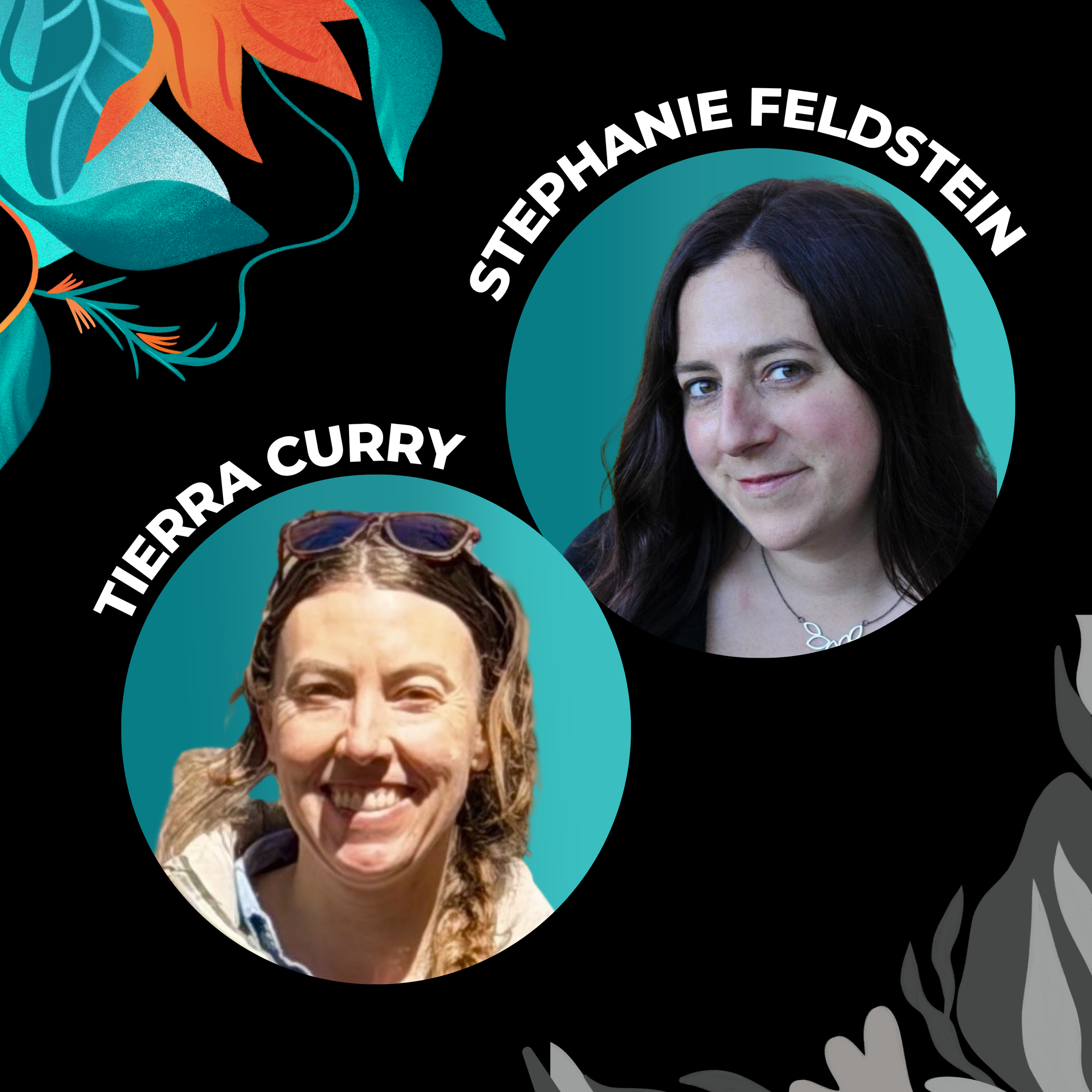



Biodiversity is collapsing under the pressures of human overpopulation, overconsumption, and animal agriculture. Tierra Curry and Stephanie Feldstein of the Center for Biological Diversity explain how science, law, and advocacy can protect wildlife and wild places. They also share strategies for combating extinction and staying motivated to act in an age of ecological crisis. Highlights include:
Why human population pressure, industrial animal agriculture, and growth economies are key issues that the Center addresses, even though they are often ignored or treated as taboo by most environmental organizations;
How rapid, human-driven extinctions are mutilating the tree of life, and why biodiversity is essential not just for wellbeing and thriving of all the species, but also for human survival;
How water and other ecosystems in the U.S. are threatened by lax regulation, industrial agriculture, and political attacks on protections like the Endangered Species Act, Clean Water Act, and Clean Air Act;
Why industrial agriculture's promotion of pasture grazing and regenerative agriculture is based on myths, and what the facts show about meat reduction as the most effective strategy to preserve habitats and wild animals;
How positive change requires both individual action, such as plant-based diets, and collective political action to protect ecosystems and biodiversity;
Why love of the natural world spurs both Stephanie and Tierra to action, despite immense ecological grief.
MENTIONED IN THIS EPISODE:
-
Tierra Curry (00:00:00):
We're on this living planet where there's about eight million species who interact and who have feedback loops, and they're all just going about their lives. All of the species want the same things that we want. They want space. They want freedom just to live their lives. And we don't tend to think of the wild like that, but it's true. Just like species aren't siloed, saving species can't be siloed either. So it's not going to be the scientific community that prevents these species from going extinct. It's going to be integrating, taking care of them and their habitat into all of the other aspects of life and how we live it on the planet.
Stephanie Feldstein (00:00:41):
And in the population and sustainability program, what we really look at is how do human systems impact wildlife and wild places? There's such a small number of us who are addressing population issues, and we are really one of the first environmental organizations to really take on the impact of industrial meat and dairy, production and consumption, and what a really outsized role that has in driving the extinction crisis.
Alan Ware (00:01:08):
That was Tierra Curry and Stephanie Feldstein from the Center for Biological Diversity. We'll talk with Stephanie and Tierra about their work in addressing the drivers of biodiversity loss and species extinction, including overpopulation, overconsumption, and the food we eat.
Nandita Bajaj (00:01:33):
Welcome to OVERSHOOT, where we tackle today's interlocking, social, and ecological crises, driven by humanity's excessive population and consumption. On this podcast, we explore needed narrative behavioral and system shifts for recreating human life in balance with all life on Earth. I'm Nandita Bajaj, co-host of the podcast and executive director of Population Balance.
Alan Ware (00:01:59):
I'm Alan Ware, co-host of the podcast and researcher with Population Balance. With expert guests covering a range of topics, we examine the forces underlying overshoot - the patriarchal pronatalism that fuels overpopulation, the growth-obsessed economic systems that drive consumerism and social injustice, and the dominant worldview of human supremacy that subjugates animals and nature. Our vision of shrinking toward abundance inspires us to seek pathways of transformation that go beyond technological fixes toward a new humanity that honors our interconnectedness with all of life. And now on to today's guests.
(00:02:39):
Tierra Curry is the endangered species co-director at the Center for Biological Diversity, where she campaigns nationally to celebrate and protect biodiversity and to defend the Endangered Species Act. Her work bridges science, policy, and humanities, and focuses on ending extinction by empowering people to defy despair and take collective action. Prior to joining the Center in 2007, she worked as an amphibian field biologist, environmental educator, and community organizer. She lives in rural Kentucky where she gardens for wildlife and marvels continually at the vast wonder of the rivers and mountains of Appalachia.
(00:03:20):
Stephanie Feldstein is the population and sustainability director at the Center for Biological Diversity, where she leads the center's work to highlight and address threats to endangered species and wild places from human population pressure, unsustainable food systems, and overconsumption. She holds a bachelor's degree from the University of Michigan and has more than 20 years of experience in organizing outreach and communications with a focus on animals and the environment. Stephanie is the author of The Animal Lover's Guide to Changing the World and more than a dozen books for children on wildlife, the extinction crisis, and how humans impact the planet. And now on to today's interview.
Nandita Bajaj (00:04:03):
Hi, Stephanie. Hello, Tierra. It is wonderful to have you both on the OVERSHOOT Podcast. Thank you both so much for joining us.
Tierra Curry (00:04:12):
It's so great to be here.
Nandita Bajaj (00:04:14):
And we love the work that you do at the Center for Biological Diversity. We had Kelley Dennings and Sarah Baillie on the podcast over four years ago to share the Center's exciting initiatives on destigmatizing sex, contraception, and reproductive decisions. And today it's wonderful to have the two of you to discuss the Center's broader work on the underlying drivers of so many of our current crises, but especially the biodiversity and species extinction crises. So in less than four decades, the Center for Biological Diversity has grown to become one of the premier organizations working on species conservation. Could you each give us an overview of the main areas of the center's activities and what each of your roles are?
Stephanie Feldstein (00:05:06):
This is Stephanie, and I'm happy to get us started. The Center for Biological Diversity works through a combination of using science, the law, organizing, policy advocacy and creative media to protect wildlife and wild places. Within that, a lot of our fights focus on protecting particular endangered species, fighting climate change, working to protect oceans and public lands, for example. And in the population and sustainability program, what we really look at is what are the underlying drivers of the extinction crisis? How do human systems impact wildlife and wild places? And so in our program, we started about 15 years ago diving into these issues. And shortly after that, we started talking about human population pressure. We started looking at the consumption side of things too, with a particular focus on food systems to recognize that there are two sides to that coin of population pressure. There's such a small number of us who are addressing population issues. And we are really one of the first environmental organizations to really take on the impact of industrial meat and dairy production and consumption, and what a really outsized role that has in driving the extinction crisis.
Nandita Bajaj (00:06:24):
Wonderful. Thank you, Stephanie. And Tierra?
Tierra Curry (00:06:27):
Yeah, it's Tierra Curry. I am a senior scientist. I'm a wildlife biologist and I co-direct our endangered species program. So we focus on gaining federal level protections for imperiled species that don't have other safeguards. And then we fight to protect their habitat to get them recovery plans. And so we work on species from snails and crayfish all the way up to polar bears and elephants. I prefer to focus on the slimy little underappreciated ones to the point that our director is like, Terry, you can't just talk about freshwater mussels all the time. You have to also talk about grizzly bears and wolves. But I feel so fortunate to do this work because the wild has always been so important to me. And I lead our extinction crisis campaign. We didn't want to call it the extinction crisis campaign, so we call it Saving Life on Earth because that's more positive.
(00:07:27):
So I can share all the depressing statistics and get people all upset about extinction, but then what? Then where do we go? And so Stephanie's program is really focused on solutions. And I can be like, okay, this terrible thing is happening. Here are things that you can do in your daily life and talk to other people about just because there are so many people on the planet now that our collective impact absolutely makes a difference. So we try to get people involved at the policy level, but also the individual level. And Stephanie's program does that too. So it's great for me to be able to be like, here's the information and here's an action that you can take that will help you build community and that will make you feel better, that will make you feel empowered to fight extinction.
Nandita Bajaj (00:08:11):
There's so much I'm appreciating from your description of, of course, the Center's work, but also how you are working together to both identify the issues, but then offer solutions all within the same organization. And what we truly admire about the organization and have for such a long time, you're one of the only organizations as far as we know in terms of conservation efforts and environmental efforts, that is looking at the third rail of population and the third rail of animal agriculture and really trying to bring that to the forefront of both policy, but also individual action as you do with your campaigns.
Alan Ware (00:08:53):
Yeah. So getting to the importance of biological diversity, I think it'd be good to have a primer from you, Tierra. So let's start with the basics. What is biological diversity and why is it so important?
Tierra Curry (00:09:07):
Yeah. So biological diversity, it's not just all of the different kinds of living things on the planet, it's the relationships between them. And so we're on this living planet where there's about eight million species who interact and who have feedback loops, and they're all just going about their lives. All of the species want the same things that we want. They want to reproduce, they want space, they want freedom just to live their lives. And we don't tend to think of the wild like that, but it's true. And so we are trying to create a safe space for them to lead their lives. And to me, that's so important because extinction is the ultimate injustice. That's how I came to do this work. I want to fight extinction because I think that other species just have the right to be here and carry out their lives.
(00:10:04):
And also they're so interesting. They do so many things for us in terms of ecosystem services and pollination and soil cycles and all the blah, blah, blah science to justify them, which is absolutely true. We would not survive without them, but they're all just so freaking cool too. And Stephanie's program sends out their own newsletter called PopX. And the last part of that is always a species profile. And I'm always keeping an eye on like, "Oh, what species are they going to highlight this week?"
Alan Ware (00:10:31):
And there's so many to highlight, right? Like you said, the fantastical abilities, the way that they see, they smell, they travel. And I think it's important too, as I think you've noted that the animal population size, I know that you can focus on endangered species, but that often means you have to wait till there are only a few of them. And that's a real shame that we can't protect the population size of the animals as the human population size has grown as we know we've seen such a destruction in animal populations. Where does that figure into the biodiversity equation?
Tierra Curry (00:11:08):
Alan, that is one of my favorite questions anyone has ever asked me. Nobody has asked me that before. And it's so exciting because I'm always railing about population decline because decline of wildlife populations precedes extinction. And we live in this era where even common wildlife species are declining - bats, frogs, butterflies, bees. There's just so many fewer of them than there used to be. And these quote unquote common species are imperiled now, but they're not endangered. And so when I started working on Monarch butterflies, someone asked me if they would qualify for protection under the Endangered Species Act. And my gut reaction was, no way. They're in 48 states. There's millions of them. But the reality is that their lifecycle, their migration, the mountains they go to in Mexico, everything that went right all of these tens of thousands of years for them, we're interfering with every single stage of their lifecycle now.
(00:12:10):
So even though they're spread across 48 states, we're messing up their habitat and poisoning them and changing the climate at every single stage along the way. So yeah, population decline is one of the biggest issues that people aren't aware of that is absolutely a part of the extinction crisis.
Stephanie Feldstein (00:12:29):
Just to add to that, even though legally we can't do much for them until they hit those endangered thresholds, I mean, at the Center, I think I could speak for all of us who work here, we love the wild. We find them so fascinating. And so when we work on things from that broader sort of systems view, like when we work on food issues, when we work on population, we are helping people connect with wildlife that they know and love, not just species they may have never heard of because they're very rare and not just kind of the big charismatic megafauna, but also the species that live in their neighborhoods. And we've seen that a lot, especially through our population work, as people notice the woods around them disappearing or the rivers getting polluted, that they see less of the animals that they grew up with and that they really adore. And so we really do try to connect to that love of the wild in general and not just to where it's becoming rare and threatened.
Alan Ware (00:13:23):
Yeah. And I like that you've saved 500 million acres of habitats. So those relationships that you talked about, Tierra, that are so critical and we tend to think of species as kind of these isolated, classified organisms. And for those of us who aren't wildlife biologists or scientists, often don't know or see those relationships, but protecting the habitat is protecting all those relationships, right?
Tierra Curry (00:13:48):
Absolutely. And just like species aren't siloed, saving species can't be siloed either. So it's not going to be the scientific community that prevents these species from going extinct. It's going to be integrating, taking care of them and their habitat into all of the other aspects of life and how we live it on the planet.
Nandita Bajaj (00:14:08):
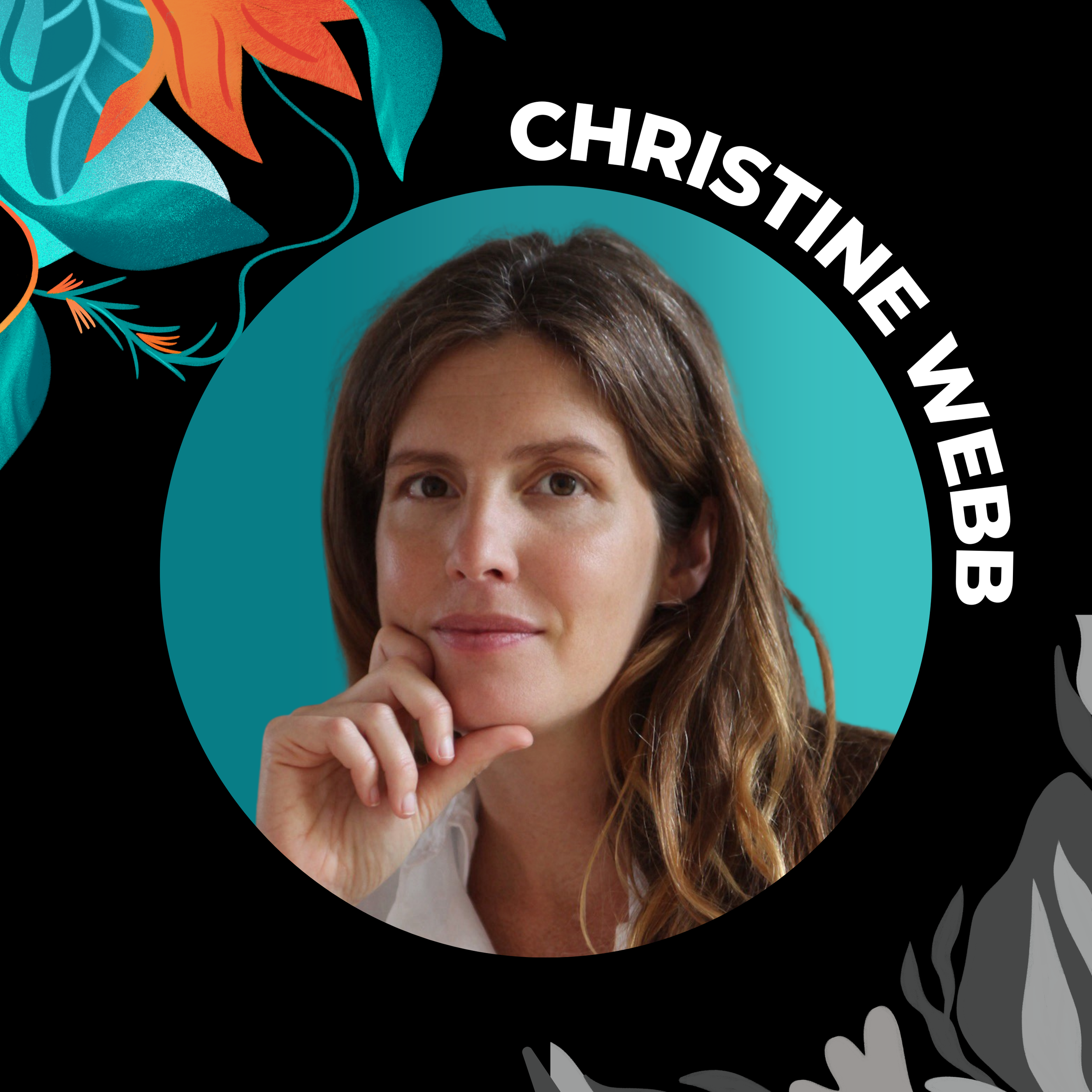
Yeah, I appreciate that point so much because biodiversity and ecosystem health and the interconnected web of life is at the center of all of our activities. It's not just an environmentalist's job or an ecologist's job. And then another thing I really appreciated recently, we had primatologist Christine Webb talking about the loss of biological diversity as you're talking about. And then also with anthropogenic change, so many of the species are also losing social and cultural diversity. So a lot of their cognitive activities and their behaviors are getting more and more simplified and they are basically being reduced to survivalistic instincts mainly rather than instincts, as you said, of being able to enjoy and thrive and experience life and evolve.
Tierra Curry (00:15:02):
Yeah. So we see that with primates, but even all the way down to hellbender salamanders. Hellbenders are these two foot long aquatic salamanders. The males establish a territory and defend it. They court the females. They have this elaborate courtship ritual and she chooses to stick around or not and then lays the eggs and then he'll guard them. But in polluted waters, the males are so stressed that they just eat the eggs and that's totally not what they want or what they put all the effort into creating this den and defending it and wooing this female hellbender too. They don't want to eat their eggs, but like in polluted water, that's the outcome because there's nothing else for them to eat. And so that compassion and just realizing that our actions are affecting relationships and communities of wild animals is kind of how I came into this work.
(00:15:56):
I wish that everybody had compassion for humanity. Let's just start there at this political moment, but also extending to the primates and dogs and cats and all the way down to salamanders and crayfish.
Nandita Bajaj (00:16:08):
We agree. And as we know, there is a long history on earth of mass extinctions, but the current one that we're in the midst of the six mass extinction is of course the only one that is anthropogenic. And we also know that the current extinction rate is estimated at anywhere from 1,000 to 10,000 times faster than the background extinction rate. And we know we humans are at the center of this period of rapid extinction. Can you speak to what the general state of biodiversity is today globally and also what are some of the main drivers of extinction?
Tierra Curry (00:16:48):
Yeah. So there's these two scientific papers that were so creatively named, they always pop into my head when I'm asked that question. One is called More Losers Than Winners. And they looked at population level of non-endangered species and found that most wildlife species around the globe are in decline. That hurts my heart. The other one is called Mutilating the Tree of Life, and it looked at extinction above the species level at the level of genera and found that we're wiping out whole genuses of species. And that's a Ceballos paper. He's a professor in Mexico, but it's mutilation of the tree of life that's so descriptive. I talked to him and he said his editors pushed back and he was like, no, that's what this is. And it absolutely is.
(00:17:37):
And so when I was a student, HIPPO was the acronym for extinction drivers. E.O. Wilson coined that and it stood for habitat loss, invasive species, pollution, and overpopulation. But now it's CHIPPO because of climate change, which doesn't work because what's a CHIPPO, right?
Stephanie Feldstein (00:17:58):
I think one thing I've been thinking about as we've been talking about this is that concern that we have for wildlife and that empathy and compassion for them, we have that when we're kids, right? It's almost universal among children. And I know Tierra has done a lot of work in this too, and I've done work in it. I've written a bunch of children's books to connect them to the extinction crisis and understanding the impact of humans on the planet. And I think it's so important that we continue to foster that, to help kids understand that what is happening to this world and these creatures that they care so much about, and also to empower them to continue on that path of caring and taking action to stop the extinction crisis. So I think it's just so important to tap into that and realize that we all start with this empathy in us, and it's a matter of staying connected to that.
Nandita Bajaj (00:18:53):
Yes. That has been such a core part of our inquiry on this podcast too, is this kind of human exceptionalist worldview that has really separated us from all of that that we evolved from. And there was a beautiful quote that I heard from you, Tierra, on a recent podcast. It says, every species is connected in deep time to millions of other species, and it also holds a line to the future of life on earth. And so every species is this point in time connected to the deep past and the far future. And when a species goes extinct, we are breaking that connection. And I think it really captures, whether it's the tree of life or the web of life that we're talking about, that we have all co-evolved and it hasn't stopped. These relationships are constantly regenerating and evolving. And so when you lose those species, it completely transforms whatever's left in the web, including who we are.
Tierra Curry (00:19:52):
Absolutely. To tie back to Stephanie and kids and how they get it, a couple years ago, this freshwater snail in Georgia went extinct. So North America has lost 71 species of freshwater snails to extinction. Freshwater mollusks are the most endangered group of animals in the country. And so this little snail, the beaver pond marstonia was declared extinct. And I put out a press release and reporters are like, "What?" But there's this kid's outlet called News-O-Matic. And these kids drew this snail and talked about their feelings and sent me emails and I saw the drawings and I bawled because it made me so happy that they sat with it, they sat with those feelings, they thought about the snail. And extinction isn't something that we need to shield children from because it's just part of the world now and they get it.
Alan Ware (00:20:45):
Yeah. And that could even help with the issue of shifting baselines where generations don't know what they've lost because it just happens gradually enough that they have no memory. But if that's brought to their attention, that can give them a chance to mourn that, experience that, feel that somebody's brought it to their attention.
Tierra Curry (00:21:04):
I love Zooming with kids because I can talk about one species, but they love all the species. So no matter what I talk about, they're always like, "What about the sharks? What about the killer whales?"
Stephanie Feldstein (00:21:17):
And I also think it's really hard to shield kids from it these days because they're experiencing it in real time in a way that previous generations didn't. I mean, young kids are experiencing the same kinds of storms and droughts and floods that we are experiencing as adults that the wild is experiencing. So helping them understand how that links to wildlife and extinctions and what they can do about it, I think is really empowering to help them understand how they can move through these big experiences that they're having.
Alan Ware (00:21:48):
And I thought it was interesting, Tierra, where you mentioned in one of your presentations that the amphibian disappearance in the '90s was kind of a mystery. And we were looking for sort of one cause and we realized it was multicausal - ozone, climate change, fungus, habitat loss. And that just reinforced to me how these relationships, as you've mentioned, are so complicated that it's very difficult to know what is causing extinction exactly. It's so many of our activities that are tied to this growthist kind of engine of human consumption and population that is bringing us to these tipping points that we often are not aware of, both with climate and ecosystem tipping points. You had mentioned that you're especially interested in freshwater environments and that those are some of the most endangered and your specialties, as you've mentioned, the mussels that you really care about. I read that you recently swam in over 100 rivers in your area, and I'm wondering what you learned from that experience and what are some of the biggest challenges facing freshwater species and ecosystems?
Tierra Curry (00:22:57):
Yeah. So freshwater species are at the leading edge of the extinction crisis, and that is such a big red flag for humanity because our bodies are made of water. We drink water. Our water comes from rivers where these species that have survived from millennia are dying now because we've polluted the water so much. So that is such an obvious connection to me. And I wanted to highlight the condition of rivers. And I mean, selfishly, I wanted to go see cool animals, so I just drove around. It was during pandemic shutdowns. And so every weekend I would just drive in a different direction from my house here in south central Kentucky and jump in every river that I passed. It was a lot of looking at maps and trying to find access points and then standing on the bank of flooding rivers, dry rivers, polluted rivers, rivers that were so gross, I couldn't see a stick if I dropped it and convincing myself to get in just to bear witness to what we've done to the waterways.
(00:24:03):
It was a lot of fun, honestly. It was gross at times, but it was such an effective campaign because people are like, "Wait, you did what? Why would you do that?" And then I can bring up, we need to take better care of the rivers. And then I can bring up the orange foot pimple back prairie mussel and the hellbender salamander and the big sandy crayfish and all of these cool species that don't have the privilege of jumping in the river and taking a shower at the end of the day, right? They're there.
Alan Ware (00:24:32):
Yeah. I live near the St. Croix River, which is one of the original National Wild and Scenic Rivers systems. And the upper St. Croix is known as being quite clean and has a lot of freshwater mussels, I guess, is part of their claim to fame.
Tierra Curry (00:24:47):
I went canoeing on the St. Croix a couple months ago and literally lost my mind. I saw more mussels on the St. Croix, which is clear and there's just stacks of shells everywhere. I was mind blown. That is such an amazing river.
Alan Ware (00:25:03):
Okay. I've got to learn to appreciate it more, but it's also threatened by farm field runoff and salt that we keep putting on our streets with the snow up here and the microplastics, the PFAS now. And as we learn with Ben Goldfarb, I had no idea. I hadn't known that our tires are spewing off microplastics constantly that are then going into ponds and lakes and everything else. There are so many assaults, it seems like, on our freshwater. And there are some encouraging facts about point source solution with water sewage treatment plants, but it's those non-point sources, the farm runoff, animal agriculture that are contributing to just deterioration. Is that the general picture?
Tierra Curry (00:25:50):
That and protection for water is under attack right now. We are at the most dangerous point in terms of water quality because of changes to the Clean Water Act, changes of what qualifies as water that needs to be protected and also loss of protection for wetlands because wetlands capture that stormwater, filter it before it gets into the rivers. And so literally if things continue on this trajectory, we're going to be back to the 70s when rivers were catching on fire if we can't change around the regulatory track that we're on right now to protect national treasures like the St. Croix.
Alan Ware (00:26:29):
There's almost too much to keep track of with Trump and the environmental laws that he's moving on are just horrendous and we don't hear much about it in the general media.
Stephanie Feldstein (00:26:39):
Well, it's hard to keep up with everything that's coming out of the administration. So it's just been a torrent. But yeah, I mean, as you mentioned, agricultural runoff, that's a huge source that was already underregulated, particularly from animal agriculture. And now it's gotten even worse because of what Tierra was talking about, that there's less and less that's being considered a waterways and more and more leeway being given to animal agriculture to continue polluting.
Nandita Bajaj (00:27:05):
That's one of the things you're looking at within your role at the Center. Could you talk a bit more about how the population and sustainability programs evolved over time and what are some of the approaches and activities that you're engaged in?
Stephanie Feldstein (00:27:21):
Yeah. I mean, to go back to where the program started from is the Center had been working for a long time to fight for endangered species and protect wild places, but like Tierra was talking about earlier, there was always this sense that it's like, it's always going to be this uphill battle if we don't address these underlying causes, if we don't address that endless growth that's going to continue putting species in wild places at risk. And so the Center decided to start talking about human population growth and what that meant for wildlife and the environment at the time, this was about 15 years ago. So when the environmental movement had been talking about population in the 70s, they had long moved on from that by then. And there weren't really very many people talking about it in environmental spaces anymore, but the Center decided this was critically important to our work and we wanted to take it on even though we knew that it was taboo, even though we knew that it was going to be challenging to navigate all of the different issues around working on population.
(00:28:16):
And then as I mentioned a couple years after that, there's always this false dichotomy of population versus consumption as if you can only address one of them. And so that's when we expanded the program to talk about those two things together and how they're interrelated with each other. And that's when we started working on food systems. And since then, our work has really grown to not just talking about population and food systems, but also talking broadly about, once you pull on one of those threads, you start to get all of these other pieces that are knotted together. So we realized we needed to talk about the economy more broadly and what are our overall consumption patterns? What's happening out there as we're looking at these endless growth economies and started tackling some of that. And as we talked about population issues and we're talking about the solutions of universal access to reproductive healthcare and reproductive freedom, gender equity and education, that we realize all of that is increasingly knotted up, not just with economic issues and with other justice issues, but also with the environment.
(00:29:22):
And one of the things that we've really seen evolve, not just in our own work, but in the movement as a whole is a lot more recognition that environmental issues can no longer stay siloed. On the food side, we do a lot of work across the food movement with workers, with animal activists, with health activists, because all of that is tied into the same system. And when we talk about our reproductive rights work, that is actually directly under attack right now, linked to the environment. We're seeing anti-abortion groups trying to use environmental laws to roll back access to medication abortion. And so now we're working very closely with other reproductive rights groups and advocates to fight back on that and to recognize that it's like that connection is utter nonsense. There's not a threat to our waterways and water quality from medication abortion. That's not the thing.
(00:30:16):
And fighting back against that, but at the same time recognizing there are connections between reproductive rights, access to contraception and gender equity on the other side of environmental crises. During climate related storms, we're seeing decreased access to reproductive healthcare and contraception. And so we're seeing all of these new ways to really work across movements. And so that's been an evolution both within our program and with our partners and the movements as a whole and how we are able to work on these issues.
Nandita Bajaj (00:30:47):
It's so fantastic, the different connections that you've just mentioned. And I think that also explains the silence, the absolute silence from a lot of these progressive organizations who say they care about social justice and ecological justice, especially conservation, in terms of the fertility decline alarmism. And that silence from the left has really allowed the right and the far right to own that narrative and really popularize this notion that we're running out of people. I don't know what could be more ridiculous than that notion that we're running out of people. I mean, this is the most number of people we've ever had.
Stephanie Feldstein (00:31:29):
Yeah. No, those are all really great points and reflect so much of what we're seeing right now, especially that shift towards population decline. Humans are going to go extinct. And it's like that's nonsense. And also the idea that everything's going to fall apart if human population declines is based on these metrics of a growth economy. And so much of it is that it's like, this is a problem that we can solve. If we know that fertility rates are dropping and that there are benefits both to people and nature of that happening, all of these things that we say are going to fall apart economically or in terms of social support, those are policy issues. Those are things that we can fix. I think a lot of times what we see with other organizations not wanting to touch these issues, there are a couple of factors.
(00:32:14):
And one of them is that there's this idea that supporters and activists only want to hear about what's going to impact them - that the only effective message is to say, how is this going to personally affect you? I think that doesn't give people enough credit for how much they care about other people and about the natural world. I think for a lot of us, I mean, for me, I very much recognize that the importance of creatures like hellbenders and freshwater mussels isn't because of what they do to rivers. They make the world a better place for me to be in. I mean, if that's the selfish angle, it's like their existence and the amazingness that they are separate from anything that they might be doing to make the environment more livable makes my life better. And I think we don't give people enough credit that they do care about other creatures.
(00:33:03):
The other thing that I feel so fortunate about at the Center is that we're not afraid to take on difficult issues that people don't want to talk about. I mean, we'd already talked about how population was taboo and we were like, "We're going to do it anyways. We're going to find ways to talk about it because it's necessary." When we started working on animal agriculture issues, people were like, "Oh, we thought population was bad. How can you talk about that?" And so many people, even from other environmental organizations going, "How did you do this? Our board would never let us talk about this. We can't touch the idea of meat reduction." And then now the same thing with the idea of capitalism and the economy, as other groups are just like, "Oh, that's too big. It's too ... People have feelings about it. We can't talk about it."
(00:33:44):
So we sometimes joke that I like to kind of ruin all the things that people love. I'm talking about hamburgers, and then we have our avocado campaign. And when you look at animal agriculture and you also look at fashion, things like wool become a problem, which for an audience that loves camping and hiking, that becomes its own sort of third rail. But these are all issues that we need to talk about and that people need to understand the connections for.
Nandita Bajaj (00:34:10):
Yeah. I mean, those are literally the three things we look at, pronatalism and population, human supremacy and animal rights and growthism and economies. And you're absolutely right in terms of not giving people enough credit because our work, ever since we expanded our mission to include so many of these broad spectrum analyses has drawn so many more people into our work. And from different sectors of interests, animal rights folks who don't always see the population connection, and similarly, people who are worried about overpopulation are in the same way, becoming more interested in animal issues and biodiversity issues. So I think how can it not be? I mean, we're also intertwined in all of these systems. How can we not be impacted by them?
Stephanie Feldstein (00:35:06):
I think you've probably had a similar experience to me that you go and give talks and so many people come up to you afterwards and they're like, "Oh my God, I've been worried about population and I've been worried about these issues and nobody's talking about them. How come no one's talking about them? How do I learn more?" And I think we can't afford for these issues to be taboo. I mean, it's suppressing so much conversation and concerns that people genuinely have and taking away that taboo gives us a way to talk about it in that positive forward-thinking way of what are the opportunities of population decline and also what are the positive things that got us to this point. I mean, we can't forget that it was that increase of empowerment and reproductive health and gender equity that helped get us to this point of lower birth rates. So I think that all of that needs to be part of the conversation and people want it to be, and it's just been so suppressed by this taboo.
Tierra Curry (00:35:59):
We have these endangered species condoms with cute little slogans like 'fumbling in the dark, think of the monarch.' And so I go to scientific conferences and I take these condoms and people come up to the table and they're like, "Oh, what are those?" Because the packaging is great. And then I see that they're condoms and they're faces. And then I get to say, it's a way to start a conversation about overconsumption and wildlife extinction. And people who haven't thought about it before you really see the wheels firing, but some people are just mortified at that point because these issues are still so taboo.
Alan Ware (00:36:34):
Yeah. Years ago, we would use those at presentations and fairs and things, and we got a lot of laughs. People would see the connection immediately. They're like, "Oh yeah, give me one." And Stephanie, as you've mentioned animal agriculture being one of the primary polluters of water, we've already talked about and air and taking of habitat in an enormous way. And you've run the Center's take extinction off your plate program. Could you share some of the rationale of that program, some of the activities that you're doing with that?
Stephanie Feldstein (00:37:07):
Yeah. Take extinction off your plate started off as we were kind of getting into animal agriculture issues to help people make that connection between meat and dairy and threats to endangered species and threats to wildlife as a whole. No matter what environmental metric you look at, animal agriculture is a leading, if not the leading cause of that threat. And so it's such a critical part of fighting the extinction crisis. There are a number of studies that point to animal agriculture as the greatest threat to biodiversity because it's the biggest land use and land use change factor. And once you destroy habitat, then wild animals don't have a place to live, they don't have a place to recover and they don't have a place to thrive. And so it's such a critical part of this conversation that we're having to protect wildlife. So we started out first helping people make the connection, using a lot of our kind of creative media to help people understand that connection.
(00:38:06):
And it was really a thing that a lot of people haven't heard of. I think those of us who work in this space, a lot of times it seems so obvious of how damaging industrial animal agriculture is. And to us, even things like the idea of factory farms are old news, but then there's so much polling that has shown that even the concept of factory farms, most people don't really know about them or they have a very vague concept, but they still put so much trust into meat and dairy companies that they're like, "No, no, they're doing the right thing." So there's still so much work to be done to help people really understand this problem. But then on top of that, we also work to help shift policy towards holding animal producers accountable for their environmental damage, as well as helping to support solutions, to promote more plant-rich diets, to help support smaller producers, to help support those who are using agri-ecological practices.
(00:39:02):
And again, a lot of this also starts to have that interaction with the other factors of the food system, right? Supporting better health, supporting better worker conditions. Because again, all of this, it's not just those environmental metrics that industrial animal agriculture is problematic for. It's one of the most dangerous jobs in the country to work in animal agriculture. It's also one of the places that exploits people, particularly immigrants, in really horrific ways. And so it's really crosscutting and a lot of the work that we do now is working to try to shift policy. We do quite a lot of work at the federal level, although right now that's a bit of a harder ask right now. We're continuing to watchdog and call out the issues at the federal level, but then we also support changes at the state and local level as well to help communities understand that there is a huge kind of grassroots and from the ground up movement that can transform our food system.
Alan Ware (00:39:58):
I thought you had written a blog a while ago about climate journalism and that only 1.2% was it of the articles identified reducing meat consumption as a climate strategy, which was amazingly low.
Stephanie Feldstein (00:40:13):
Yeah. We did an analysis of climate media. We looked at over 10,000 articles to see how climate journalists were reporting on agriculture as a climate issue. And particularly looking at animal agriculture, only 3% of those articles mentioned animal agriculture and only 1% of them mentioned dietary issues like meat and dairy specifically and the need to start shifting diets. And what was even more absurd is that in that analysis, we found that even when articles were about agriculture, they were more likely to mention energy than they were to mention animal agriculture and meat. So there's a huge gap even from that media perspective and what people are seeing out there in the news that's creating this disconnect and this lack of understanding of how big of an issue animal agriculture is.
Alan Ware (00:41:04):
And do you see much of the industry lobbying, having a direct effect on that conversation?
Stephanie Feldstein (00:41:10):
The industry does a great job of marketing themselves, that's for sure. There are definitely situations where we see news articles that could have been written by industry. And that's not to say, I mean, I think that a lot of journalists are trying to be neutral and to have an unbiased opinion, but a lot of times they don't know where to turn for information. And when there is somebody who's coming to them and saying, "Oh, well, here's our study or here's our information," they don't necessarily know what to do to refute that. So part of what we're working on now is developing better resources to help journalists understand what's really at stake here and what's behind the issue. And so I think there is an education level that has to happen there even among journalists to be able to overcome that.
Nandita Bajaj (00:41:57):
I think it speaks to also just the internalized bias among journalists of the same ideologies that all of us have grown up with of growthism, pronatalism, the population taboo and animal agriculture, that all of these things are natural and normal. And this is the trajectory that we should all be following and anything that gets in the way is problematic.
Stephanie Feldstein (00:42:22):
Yeah. And there's so much mythology that we see around these issues. There's this idea that meat consumption is so tied to people's cultures and identities and that we can't take that away from people. And absolutely what we eat is tied to who we are and our past, but that also dismisses the fact that there are so many rich cultural traditions and traditional food ways that really emphasize beans and peas and lentils and diverse vegetables and where meat plays a much smaller role, if any at all. And so many of those traditions have been kind of colonized into the background, right? And there's also this mythology around farmers and ranchers, which plays into it too, where people don't want to say things that they see as going against farmers and ranchers. But interestingly, even with that, you see that so much of it ignores that a lot of these farmers are trapped in this industrial system, right?
(00:43:22):
They're not doing well. They're stuck into these really unfair exploitative contracts and advocating for food system change would actually give them better opportunities and would create a better world for farmers and ranchers too. And we just don't see that in the narrative because people have these false ideals of what it is. And we see that a lot too on the pronatalism side as well, right? This idea that it's like, you can only be happy, you can only be a contributing member of society if you're a parent, which is dismissing all of the people out there who are amazing aunts and teachers and community leaders who really care for and support the next generation. So there are all these reflections in that between the issues where we see a lot of the same hangups.
Nandita Bajaj (00:44:08):
Totally. I'm so glad you brought that up and the role of colonialism in creating or manufacturing this demand for meat and how it's been exported to so many countries around the world. And speaking of mythology, one of the initiatives that you look at in terms of taking extinction off your plate is debunking myths around regenerative agriculture. And you've contributed to the Grazing Facts website, which is an excellent resource in distinguishing myths from facts concerning grazing and animal agriculture. I wonder if you could highlight some of the most commonly held myths and then also how do you refute those with facts? And then lastly, what are some of the sustainable and humane alternatives that you also propose?
Stephanie Feldstein (00:45:01):
Yeah, I mean, we could easily spend a whole hour talking about grazing and regenerative agriculture. It's such a big topic of conversation right now, and especially as we have a very beef forward administration right now, and regenerative has become a buzzword over the past few years in the industry where they're just labeling everything regenerative and acting like that means something, which it doesn't because regenerative has no standard or official meaning to it. The beef industry is very good at promoting these myths about the benefits of grazing. And they'll say things like, "Well, we need cattle out on the landscape because we need to have grazers in grasslands." And it's true, we do need grazers in grasslands, but we need native grazers, the ones who evolved with those grasslands. And there are a lot of differences between the way that cattle and animals like bison or elk or deer operate on the landscape.
(00:46:02):
They graze differently, they move around differently. Cattle tend to congregate around water, creating a lot of sedimentation and pollution around there, as opposed to having a wider range. The way that they interact with the plants themselves is very different. The native grazers do so in a way that promotes growth and plant diversity and cattle do not. It's important to take into consideration the life cycle, right? When you're talking about animals like bison and deer and elk being out on the landscape, they're there throughout their lives, which means also they die on the landscape and that plays a very important role for so many species who are scavengers and who take care of removing carcasses from the landscape. And of course, cattle are always removed for slaughter. So really at every stage, cattle are not bison and we don't need more cattle on the landscape. We need cattle off the landscape so that native grazers have a chance to come back and to help restore those lands.
(00:47:01):
Another really popular one is around carbon sequestration, claiming that cattle are a climate solution, that the way that they operate and graze and the way that their hooves work in the soil, that they can actually sequester carbon from the atmosphere. That's been debunked in so many different ways, but it keeps persisting. There's small limited examples where cattle can sequester some carbon in the soil, but the problem with it is, is that it doesn't counteract the climate impact of the cattle themselves. Cattle are one of the leading causes of methane emissions just because of their digestive systems, and that almost always counteracts the amount of carbon that they could sequester. The other problem with sequestering carbon in the soil is that it's limited. The soil can become saturated, so it can't take any more carbon. And then if you do anything else with that land, if you decide to plant it or it's disturbed in other ways, then that carbon gets released again into the atmosphere.
(00:48:01):
So it's not a solution at all. There's a study that looked at the impact of even smaller, what are called well-managed herds of cattle on grasslands and found that their presence there actually undoes the natural cooling effect of grasslands as natural carbon sinks. So it just doesn't add up to have claimed that cattle are a climate solution when they are the leading agricultural cause of climate change.
Nandita Bajaj (00:48:29):
And you had mentioned a little bit about agriecology already, and I wonder if you can talk a little about the alternative humane solutions to these really destructive practices.
Stephanie Feldstein (00:48:44):
Yeah. So there's a big difference between agriecology and regenerative. And I think that's important to point out because I see it all the time in articles and in other writings where people conflate the two and they're not the same. Regenerative has been co-opted as an industry term and it's very much focused on this concept of soil health, whereas agroecology, it's a long running well-studied practice. It's grounded in indigenous practices and traditional agriculture. It also importantly takes into effect a more holistic view of environmental impacts, not just the soil, but also air and water pollution impacts on biodiversity, all of that, as well as the social dimension, which is what is the impact on farmers and workers and local communities. So it really has that much broader view of what is the impact of agricultural practices. And it also brings in a lot more focus on having diversified farms.
(00:49:44):
So not just having a massive herd of cattle, but if you have cattle at all, you might also have other animals or they're a much smaller part of the operation and most of what you're doing is plant agriculture. It just has a much deeper view of the environmental impacts across a variety of metrics. I think the biggest thing that needs to be kept in mind as we talk about solutions, particularly around beef production, is that reduction has to be key. We can't keep producing and consuming the same amount of beef that we do in the US. There was a study that looked at what would happen if you converted the current US beef supply to an entirely grass-fed system, and this was just looking at the basic concept of grass-fed, not what would be needed for a so- called regenerative system, which requires even more land.
(00:50:32):
And they found that current pasture land could only support 27% of our current beef supply. So there's simply not enough land. It's easy for the industry to say, Well, let's just put more cows out on pasture, but it's like, what pasture? Where are you going to put them? There's just not the land out there to support our current beef supplies. So that reduction piece has to be a core part of a conversation as we're talking about where do we go from here with the sustainable food system?
Alan Ware (00:50:59):
And you've mentioned a few times how this administration is making it harder to take extinction off our plates. And as we're seeing right now in the US with the US Department of Health and Human Services, Robert F. Kennedy with this new dietary guidelines that have inverted the food pyramid and put meat and fats at the top and put, is it grains at the bottom?
Stephanie Feldstein (00:51:22):
Yeah. There's like a tiny, sad looking loaf of bread at the bottom and all of this meat and eggs and dairy at the top. I think there are like unintentionally spot on with that inverted pyramid because we inverted science. They inverted everything that we know about nutrition with that pyramid. And you just look at it and an inverted pyramid is so unbalanced. This thing is going to topple on itself because it doesn't make any sense. But yeah, the dietary guidelines was an interesting process this year because usually what happens is there's a long process with an expert committee of top nutrition scientists from around the country that do a deep dive into the latest science and then determine what is the best eating patterns that we can recommend, what should a healthy diet look like. That report, as soon as Kennedy came into office, he said, I can't read this, and he threw it out the window.
(00:52:16):
And then he secretly created his own scientific committee that was made up of a significant number of people who had ties to the beef and dairy industries. And then they created their own separate report, then highlighted things like red meat and dairy, especially like full fat milk and really downplayed the recommendations that came from the original scientific committee, which the original scientific report was actually great. They weren't allowed to look specifically at sustainability because there had been so many political fights about having sustainability as part of the dietary guidelines, but their recommendations were all about elevating beans, peas, and lentils to the top of the protein list and really emphasizing the importance of that in the diet while reducing the importance of things like red meat and looking for limits on processed meat. So they came at it with something that would have ultimately created more sustainable diets, but where we wound up with the current administration is with a set of unscientific guidelines that are also very confusing to people.
(00:53:27):
Not only is that wonky upside down pyramid confusing, but they kept the limit on saturated fats, but then recommended a whole bunch of foods that are very high in saturated fats. So people in the nutrition community are looking at these dietary guidelines saying," We don't know what to do with this. We don't know what you're expecting us to actually recommend to people." One thing that I'd like to add on the dietary guidelines though is that we don't need to wait another five years for the next dietary guidelines to be issued. The US dietary guidelines influence a huge number of federal programs, school meals, and nutrition assistance, but at the same time, there are a lot of things that people can do to actually follow more scientific guidelines. We released a model healthy and sustainable guidelines that are based on the original scientific report, and that helps give people who work in institutions and at the state and local level and in schools, an idea of how can they follow their own nutrition guidelines in a way that is more aligned with the science and with a healthy and sustainable diet. And there are a lot of ways that that can still happen despite that federal policy that's locked into the official guidelines.
Nandita Bajaj (00:54:44):
In addition to the dietary guidelines and judging from the Center's website, it looks like the Center's filing multiple lawsuits every month against the Trump administration as the administration has made no secret of its desire to encourage logging, mining, drilling, and virtually all forms of so-called development. And it's heartening to read that in Trump's first term, the Center won nine out of 10 cases. The Endangered Species Act plays a foundational role in the Senate's legal strategy to protect animals. What kind of legal fights are you having in the US with Trump's second administration regarding the ESA and other significant legal areas?
Tierra Curry (00:55:29):
This is Tierra. I'll jump in there. The food pyramid isn't the only thing that's upside down right now in terms of they're packaging the proposed changes to the Endangered Species Act and the Clean Water Act and the Clean Air Act as improvements. And with the Endangered Species Act, they want to change the regulations so that habitat is no longer protected. Right now, when a species gets protected, it's protected from harm, and harm has always included that species habitat, and they want habitat not to count anymore as harm. So if you cut down its tree, that's not going to harm it if it's not home. The kindergartners I zoom with could tell you that that doesn't work. And the Clean Water Act is the same thing. I was commenting on the new permitting scheme, and literally they said that no individual project would ever rise to the level of significant impact when weight against all the water in the United States.
(00:56:27):
And so therefore, a national permit is sufficient for whatever it is when the standard is all of the water in the US. And I was like, "Did AI write this? Did a tech bro write this? Who wrote this?" And so in my comments, I was like, "This is so nonsensical. I don't even know where to start." And there's more proposed changes to the Endangered Species Act as well that will make it harder for species to get protection that will exclude protection for species threatened by climate change and to get species off the list. So for the first time since 1981, no species was protected under the Endangered Species Act last year. The Fish and Wildlife Service lost 20% of their staff. They lost 500 scientists. The whole recovery unit was cut. The people who were writing the plans on how to get species off the list, but in the meantime, they're proposing the de-listing of all of these species using no criteria whatsoever except somebody's buddy somewhere wants them not to be protected anymore is the only criteria I'm finding.
(00:57:30):
And they want to make it so that there's just no funding. The Endangered Species Act funding level got to 2004 levels. So it's like going back in time. We are really at an unprecedented level of attack on the most fundamental environmental laws, the National Environmental Policy Act, just all of them. It's like whack-a-mole every single day they're setting things on fire. I think they're trying to exhaust us. And so luckily we're building bigger coalitions across issues and topics, and all of the fights for justice are so interrelated that even though they are trying to exhaust us by carrying a bit of water that is our specialty, we're contributing to this coalition and these movements that are going to make things better and that are just calling BS on all of the stuff that they're doing. And see, that's the thing is we have the solutions for all of these things.
(00:58:27):
We built this whole system. We can change the system. And that's why it's so important for people to get involved, not just at the personal level, but also the policy level, because where there is pushback is where we're going to be able to affect change.
Nandita Bajaj (00:58:44):
And Stephanie, you had mentioned earlier that a lot of the work that you're doing is offering solutions. Did you want to quickly go through some of the solutions that you propose?
Stephanie Feldstein (00:58:55):
Yeah, absolutely. And I will say that we always work at a combination of individual and collective solutions. I think individual action is so important and is that building block toward collective action. And of course, it makes a big difference in our own lives too when we're able to take control of what is our contribution to protecting nature and to changing the direction that things are going. So individual action is so important. We also work so hard to make sure that it's easier for everybody to take those actions, right? That's a core part of a lot of the policy work that we do, particularly around food issues, is that if healthy, sustainable food is not available and accessible, people can't make that choice. But when it comes to individual actions on the food side of things, so much of what we put on our plate makes a big difference.
(00:59:46):
Food is an interesting industry to work with in this because when you look at energy issues, we don't have that much control over where our energy comes from when we turn on the lights, when we record a podcast, right? It's very limited. It's so controlled rolled by utilities and we don't get to choose, well, this time I'm going to record this podcast off of solar if that's not available to us. But every time we sit down to eat, we get to make choices about what we're putting on our plate and where that food is coming from, and that does have an impact. So that's the very first step. The biggest difference that people can have is to eat less meat, dairy, and seafood. Even though as we mentioned, beef is sort of at the top of the list of agricultural impacts, there are also a lot of harms that come from intensive chicken production, that come from seafood production.
(01:00:37):
So really switching towards more plant-rich diets is one of the best things that you can do as an individual. Also, to talk broadly about that growth economy, even that stopping and thinking before you buy, which is something we are not trained to do in this country and thinking about what is it that you really need, what are the better options that might be out there can have such a big impact and really add up quickly. One of the other big areas that we're looking at on the consumption side is increasing the amount of reuse systems that are out there, right? Getting single use out of your life and switching more towards reuse. All of these things are not only actions that you can take in what you're doing yourself, but also thinking about your community, the places you go, what do they offer? If you're in school, what's offered at your cafeteria, if there are restaurants that you go to regularly, ask them to offer more plant-based options, ask them to move away from single use toward reusables.
(01:01:38):
You can use your own voice very effectively in your community to start making these changes on a bigger level. And then of course, when it comes to the population side of things, one of the biggest things you can do is to have that conversation with your partner, making sure that if and when you grow your family, that it is something that's intentional, that you are able to find the contraception and use the contraception that is best for you, and to help educate others on the need for access to contraception and gender equity. So many of those things can really help out. One other thing you can do is, as Tierra mentioned, we have our endangered species condoms, and we give those away for free. So if you want to volunteer and get a box of free endangered species condoms to give out in your community at community events to start these conversations with people, you can go to the website, it's endangeredspeciescondoms.com and sign up there to be a volunteer.
(01:02:35):
One other program that I'd love to mention is we have a fairly new sexual health emergency preparedness kit program. And this is addressing the issue that when there are emergencies, particularly when you look at climate related storms, it causes huge disruptions in access to reproductive healthcare, access to contraception. And when you look at emergency preparedness lists, they don't address that at all. They don't tell people, make sure that contraception is part of this, make sure that your other reproductive health needs are part of your emergency preparedness. And it leaves a lot of people without that when there are emergencies. So we put together and we distribute these sexual health emergency preparedness kits to help people think about what should be in those kits and to start getting people to understand that that should be part of their list. And so you can also find that on our website where you can find information on how to put together those kits, how to give them out in your area, and to start bringing that into the climate conversation.
Tierra Curry (01:03:37):
Yeah. And I'll jump in there. You can sign up on the policy side to get our action alerts. If you go to biologicaldiversity.org/action, you can get alerts on particular species like save them on our butterfly or on stop this pesticide or fight for the plastics treaty. The center has so many programs. Stephanie and I are just two of the directors. There's environmental health, public lands, urban wildlands, energy justice, oceans, so many other campaigns. And on our action alert page, you can click on the ones that are of interest to you.
Alan Ware (01:04:14):
Great. Here's a question for you both. Being aware of the ecological destruction that we're causing can fill all of us who are paying attention with anger, as I think we've had plenty of hearing about what the Trump administration's doing and a sadness of what we're losing. What keeps you dedicated to continuing in this important but difficult work?
Tierra Curry (01:04:36):
That sadness can truly be overwhelming. I remember just kind of having a meltdown as an undergrad at the grocery store. I'd been out of the country and I came back and there were like a hundred kinds of shampoo and plastic bottles. And I just sank to the floor and cried like, "What is this world and how do I even function?" And then there was a whole period of time where I wanted to be a blue-green algae because I could just photosynthesize and not hurt anything because like Stephanie was saying, every choice we make affects something. And I was paralyzed. I remember not going to the Earth Day event one year because I was in Alaska and it was snowy and I didn't want to bike and I didn't want to drive because I didn't want to use fossil fuel to get to the Earth Day event.
(01:05:17):
So I paralyzed myself. I traumatized myself. And then I realized I have to put myself out there. I have to participate. I have to find community. And that's my solution to despair is just do something, pick a group you're interested in, pick an issue you're interested in, pick a species you're interested in, do a deep dive. Find other people who care because action is the antidote to that despair. And don't get paralyzed because if you're sitting on the floor of the grocery store crying, wishing you were a blue green algae, you're not going to save the world. You have to move past that. I was at a Sandra Steingraber talk one time and I asked her about despair and she was like, "That's selfish. I don't have time for despair. I have work to do." That flipped that switch for me. So even if I feel that despair, I feel that fear, I feel that anger, I feel that overwhelm, I'm going to make myself get out of bed and do something and call a colleague or call a friend because that connection is the solution.
Alan Ware (01:06:15):
Right. Admirable. How about you, Stephanie?
Stephanie Feldstein (01:06:18):
I get this question so often, especially with a lot of the solutions type work that we do and recognizing that we're also working on these massive systems. The overwhelm is real. And a lot of times I'll get this question that it's like, "Oh, well, how do you stay hopeful?" And a lot of times that's hard, especially in the past year, it's been very, very hard. And there are times when my answer is, "I don't know that hope is the point." I think similar to what Tierra was saying about despair is that whether or not I'm hopeful doesn't matter, but what other choice do I have? I live in this world, I love this world. I love the nature around us and what other choice do I have but to do everything I can to try to protect it? That said, the specific dealing with those immediate feelings of grief, for me a lot of times is I go outside, I spend time in nature, find a little patch where I can stare at moss.
(01:07:13):
I live in the Pacific Northwest. There's tons of amazing mosses and mushrooms and little things like I don't even have to go far or look for some big wildlife species that I have to see and interact with. Just looking at this tiny bits of how nature is amazing on every level and just reminding yourself that this is what we're doing this for. This is worth protecting and this is worth keeping moving forward. And then the other thing that I'll add that I think we've touched on a lot is connecting with kids on this, right? Talking to kids and their excitement about the world. And again, they see what's happening, but they still have so much enthusiasm for the world and the future that is their future. And recognizing that there is a whole other generation coming up that still has so much hope and so much potential and there's so many ways to engage with them and make sure that there are more and more of us that are continuing to take action to protect this world.
Alan Ware (01:08:11):
Beautifully put.
Nandita Bajaj (01:08:12):
Yeah, truly. What a great way to end the conversation. Both of you were amazing. Thank you for what you brought to the conversation today. Thanks to your work at the Center and thanks to the Center for existing and taking so many bold steps to counteract all of the different mythologies and ideologies that are keeping us from finding that interconnected web of life that we've evolved from. We really appreciate your time today. Thank you both.
Alan Ware (01:08:44):
Thanks.
Tierra Curry (01:08:44):
Yeah, you too.
Stephanie Feldstein (01:08:45):
Yeah, it was a great conversation. Appreciate you all tackling these big issues on this podcast.
Alan Ware (01:08:50):
That's all for this edition of OVERSHOOT. Visit populationbalance.org to learn more. To share feedback or guest recommendations write to us using the contact forum on our site or by emailing us at podcast@populationbalance.org. If you enjoyed this podcast, please rate us on your favorite podcast platform and share it widely. We couldn't do this work without the support of listeners like you and hope that you will consider a one-time or a recurring donation.
Nandita Bajaj (01:09:20):
Until next time, I'm Nandita Bajaj, thanking you for your interest in our work and for helping to advance our vision of shrinking toward abundance.