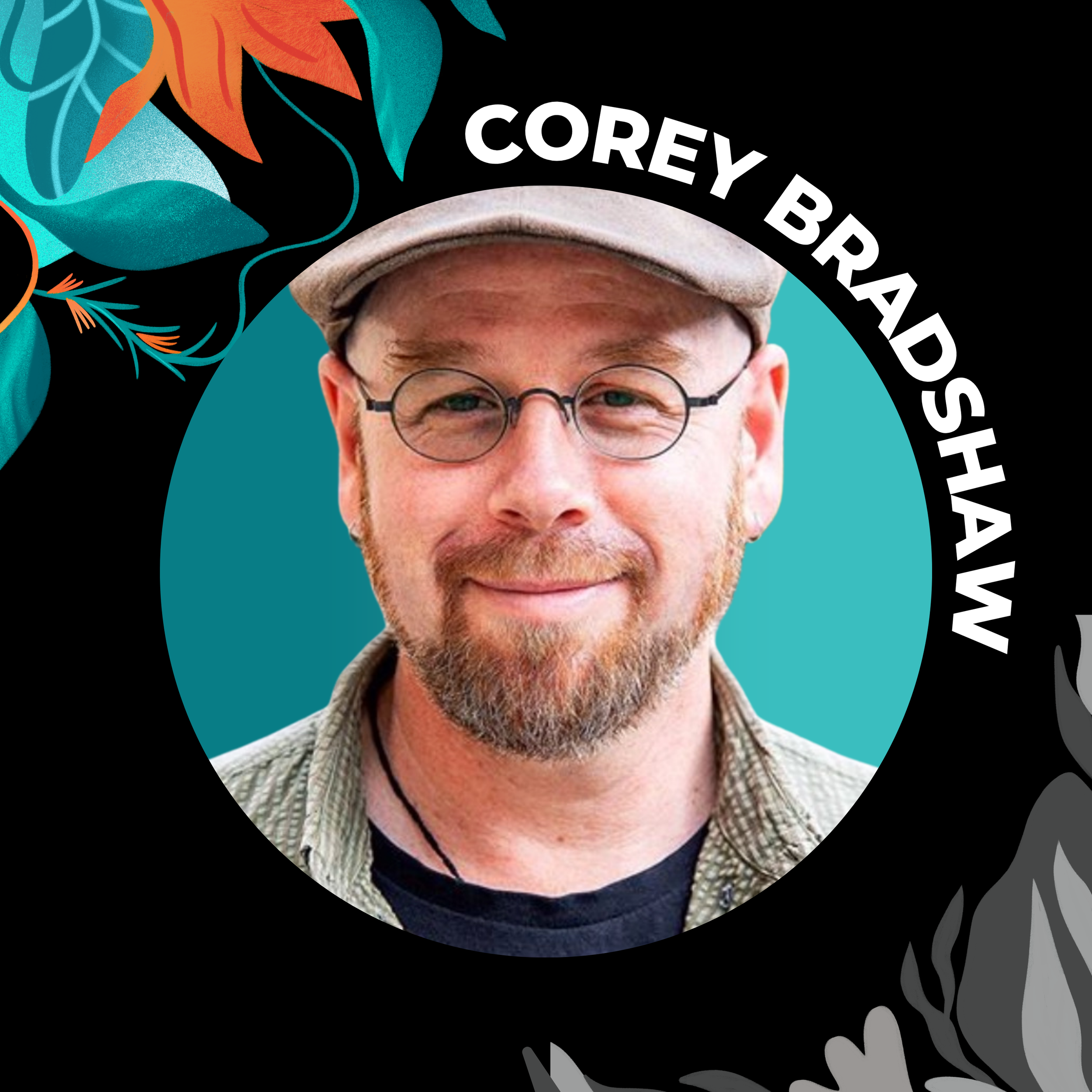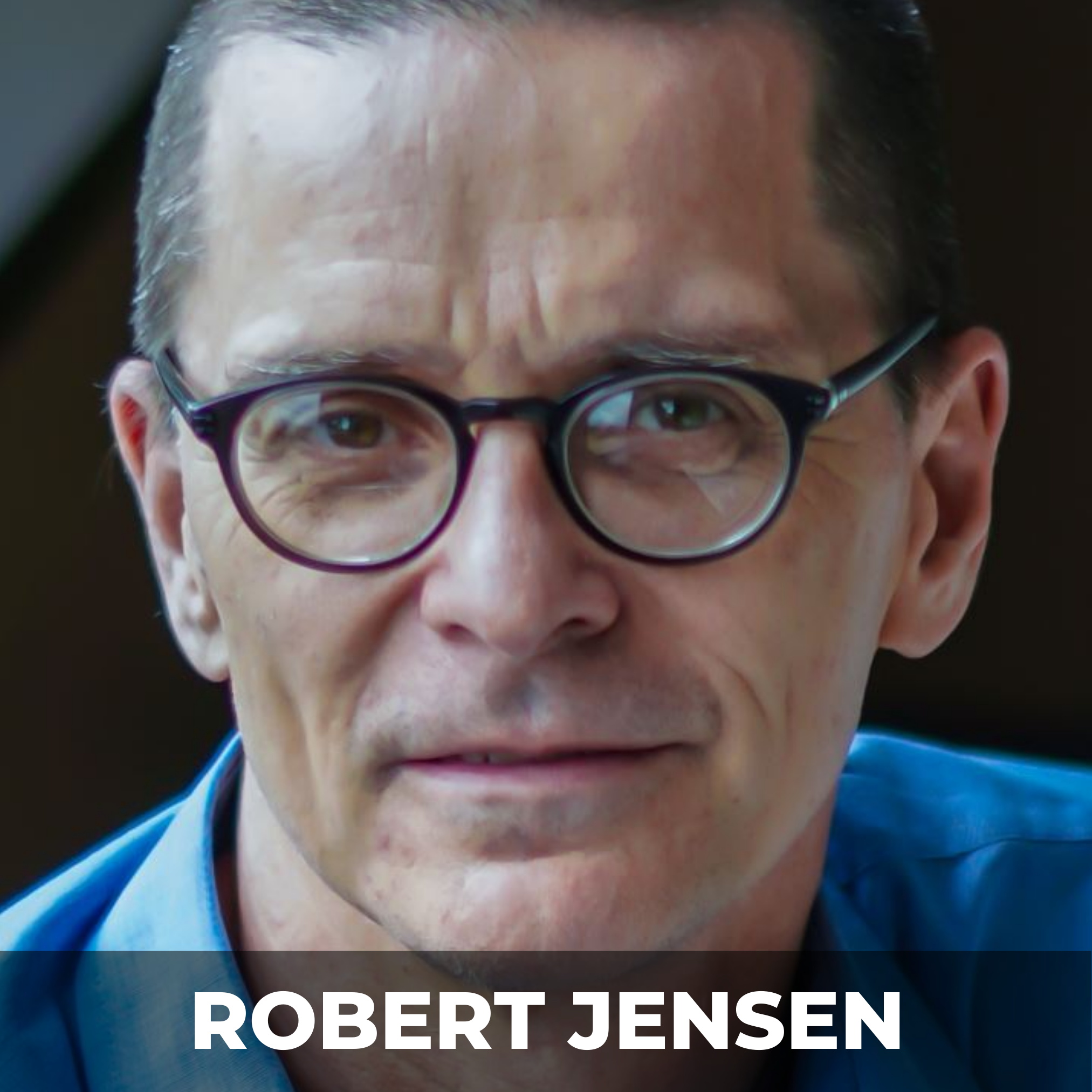

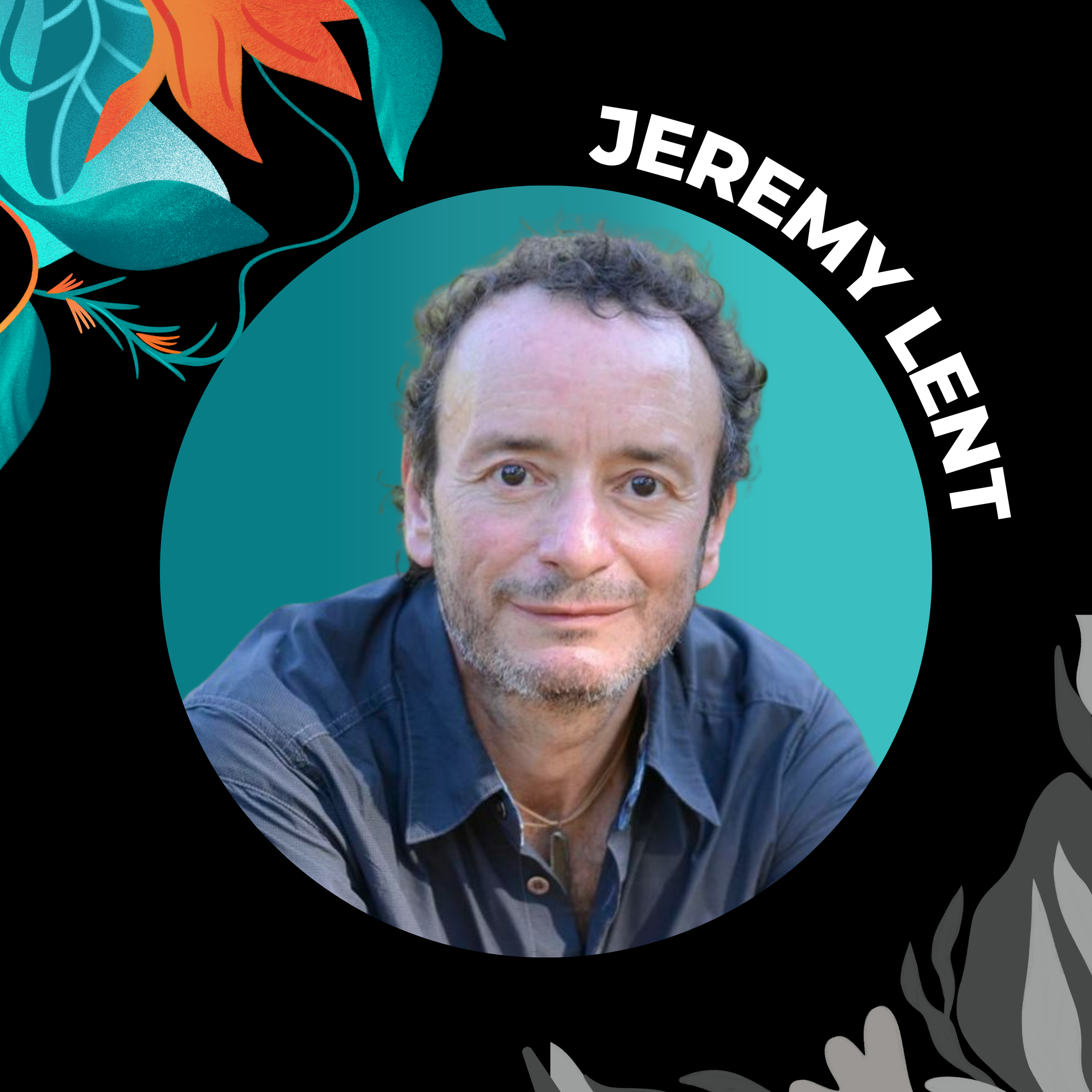



"There is no alternative" is the story that keeps us trapped in a world that is unraveling. Jeremy Lent, author of Ecocivilization, imagines what becomes possible when we move away from competition, separation, and domination and trust grassroots democracy to build lives rooted in the collaboration, diversity, and mutualism found throughout nature and human history. As disenchantment with the dominant story grows, Jeremy discusses the alternatives already taking root that might provide the foundations for a future ecological civilization. Highlights include:
How the worldview of separation from nature, beginning with sedentary agriculture and accelerating in the modern era, leads humanity to see nature as both a machine and as ripe for exploitation;
How British and northern European elites enclosed and seized the commons, using law and force to dispossess people of their land and push them into wage labor; how this model of enclosure was exported around the world through colonialism; and how enclosure continues today through everything from patented seeds, state and corporate digital surveillance, and AI's enclosure of humanity's knowledge commons;
How cultural hegemony, the cultural conditioning of peoples' mindsets, shapes what people believe is possible - convincing the majority that capitalism, economic growth, and existing systems serve everyone's interests and that we live in 'the best of all possible worlds';
Why an ecological civilization would require moving from the primacy of capital to the recognition that people and other species have a right to flourish, and drawing its principles from life itself - including mutualistic symbiosis, heterogeneity, and diversity;
How governance in ecocivilization should be grounded in subsidiarity and genuine participatory democracy, pushing decisions to the lowest feasible level and replacing today’s electoral oligarchy with lottery-selected citizen juries and assemblies that have real-world power;
How the mainstream panic over declining fertility rates reveals the continued cultural hegemony of the 'growth is good' story;
Why, as dominant systems unravel, the emerging alternatives become 'islands of coherence' that attract increasing numbers of people, especially the young, who become disenchanted with the hollow promises of the dominant culture;
Why the ultimate message of the book is the dethronement of TINA - There Is No Alternative - and why the unraveling of the dominant system creates an opportunity to reweave the social tapestry and build alternatives based on how human beings evolved to live, in cooperation with each other and the natural world.
MENTIONED IN THIS EPISODE:
-
Jeremy Lent (00:00:00):
I think it really starts off with the recognition that we see a civilization that is unraveling. It's terrifying, and maybe we're headed to collapse. And some people might argue maybe we're headed towards some techno- authoritarian fortress Earth. And a rather grim view of how change happens is that when people say, Well, we need to collapse first. The terrible reality is that a collapse would be so dire, such vast suffering that none of us should ever look forward to that. And it might be so extreme that we may never even be able to recover anything from that. So we have to find some way of working within that. And it's in that period of instability that things start to unravel and each new generation, when they're seeing all this mess that they're inheriting, stop taking for granted what their parents' generation have told them because they see it doesn't work anymore. And so we can offer something alternative, a different form of sense-making to the younger generations trying to make sense of what's going on around them. And that is really a lot of the examples I show in this book.
Alan Ware (00:01:07):
That was integrative thinker and author of Ecocivilization: Making a World That Works for All, Jeremy Lent. In this episode of the OVERSHOOT Podcast, we talk with Jeremy about his re-imagination of an ecological civilization that is grounded in proven design principles of ecosystems and in humankind's evolved inclination toward justice, mutuality, and dignity.
Nandita Bajaj (00:01:42):
Welcome to OVERSHOOT, where we tackle today's interlocking social and ecological crises driven by humanity's excessive population and consumption. On this podcast, we explore needed narrative behavioral and system shifts for recreating human life in balance with all life on Earth. I'm Nandita Bajaj, co-host of the podcast and executive director of Population Balance.
Alan Ware (00:02:06):
I'm Alan Ware, co-host of the podcast and researcher with Population Balance. With expert guests covering a range of topics, we examine the forces underlying overshoot, the patriarchal pronatalism that fuels overpopulation, the growth-obsessed economic systems that drive consumerism and social injustice, and the dominant worldview of human supremacy that subjugates animals and nature. Our vision of shrinking toward abundance inspires us to seek pathways of transformation that go beyond technological fixes toward a new humanity that honors our interconnectedness with all of life. And now on to today's guest.
(00:02:46):
Jeremy Lent is an author and speaker whose work investigates the underlying causes of our civilization's existential crisis and explores pathways toward a life-affirming future. He has authored the award-winning books, The Patterning Instinct and The Web of Meaning. He's the founder of the Deep Transformation Network and the nonprofit Liology Institute. And now today's interview.
Nandita Bajaj (00:03:11):
Hi, and welcome to the OVERSHOOT Podcast, Jeremy. It is lovely to have you back.
Jeremy Lent (00:03:15):
Great. I'm so glad to be here in this conversation. Thank you, Nandita.
Nandita Bajaj (00:03:19):
Yes, it's our pleasure. And it was a few years ago when we had a great conversation with you about the ideas in two of your books, The Web of Meaning and The Patterning Instinct. And now you're out with a similarly ambitious, well-researched book, Ecocivilization: Making a World That Works for All. And it's full of bold yet practical ideas for how we might move forward in a time of ecological and social crises. We look forward to talking about the ideas in this book. Thank you so much again, Jeremy, for joining us.
Jeremy Lent (00:03:53):
Well, yeah, thank you. I'm very much looking forward to sharing some of these ideas with you here, so great.
Nandita Bajaj (00:03:58):
And we can start with a little bit of background. Both of the books that we examined in the previous podcast with you examine the deeply embedded and unexamined cultural worldviews that have shaped our path toward deeper ecological overshoot and social inequalities. And the first section for this new book, Ecocivilization, revisits some of those themes. For listeners who are new to your work, what are the worldviews that you believe have been critical in contributing to our current ecological and social crises?
Jeremy Lent (00:04:33):
Yeah, thanks. So there's kind of two layers to that answer. The most blatant and obvious is the worldview, dominant worldview of modernism that really developed in early modern Europe around the sort of 17th century, at the time of the scientific revolution, that primarily predominantly sees nature as a machine. It's really like a worldview of separation. Nature's a machine, humans are separate from nature, humans are separate from each other. Even for each of us as humans, our mind is separate from our body. And basically along with Descartes idea of cogito ergo sum, we identify our mind, that human unique rational thinking as what is truly valuable, and basically the rest of nature is just a machine to be exploited and extracted from. And that worldview also led to the notion that essentially anyone who wasn't a white male European Christian was also somebody to be exploited and extracted from.
(00:05:35):
And that's the worldview that has become so dominant that it's almost like with a fish swimming in water that doesn't even realize that is even a worldview. It's just what the world seems to be around until we look more deeply at it. And that's, as you say, something I explore in a lot of detail in the patterning instinct in particular. But I would also add one layer below that, which I think is really important, and I know that many of the people who follow your podcast will be aware of. There's kind of a deeper layer, which is, so if you think of an archaeology dig, go quite a bit deeper and you go back maybe up to 10,000 years or so ago, which is a worldview, or an implicit form of worldview, that really arose with the first sedentism when we moved from nomadic hunter gatherers to settling and then along with agriculture created these agrarian civilizations, which is really a worldview of patriarchy and a worldview that puts wealth and possessions as a very high in the order of values, creates a sort of a wealth pump, and also has a certain form of separation from nature.
(00:06:47):
It was really when that level of separation began, which the more modernist worldview took to a whole different level. So it's important to look at those two because sometimes people say, Well, the real issues are not about capitalism. They're about far deeper. And the answer is yes, there are two different layers that we need to examine.
Alan Ware (00:07:07):
And you provide a fascinating discussion in this book of the enclosure movement in Britain from the 15 to 1700s and how that deprived the huge majority of ordinary people of access to their fields, their pastures, forest, other places that had been allowed for shared use and that they had used to support their everyday lives. And as you write, It is hard to overstate the magnitude of the enclosure movement. While there have been numerous cases in history of powerful elites taking land from those more vulnerable, the scale of this expropriation was unprecedented. Could you give us an overview of the enclosure movement in Britain and its profound impacts to the modern day?
Jeremy Lent (00:07:50):
Yeah, and this was something I really just discovered for myself as part of the research for this book. And after that, it's been like a five-year project, so I spent years really researching to try to understand what is this vision of what's possible. And it began to be really clear that you can't even think about that until you get a much deeper sense of how we came to where we are now. And what I discovered, I wrote a lot in a chapter in the book, I actually called The History They Didn't Teach You at School. And they certainly didn't teach it to me at school even though I was an English school kid. And of course they don't teach it pretty much anywhere else either. But basically what we then discover when we look at this real history is, as you say, there was this process, it actually kind of began, and I began this chapter with the Black Death, interestingly enough, in the 14th century, which actually wiped out about a third of the population of Europe.
(00:08:48):
And the weird thing is that that empowered the peasants. All of a sudden the landlords needed to figure out how do they get people to work on their lands, not enough people. So actually it shifted the balance of power in a very unusual way, and the landowners didn't like that. So they then basically, to put no sort of finer point on it, and they essentially used violence and their arms they had and power they had to enforce that by essentially taking over common land and saying, We own it now. And of course, many peasants didn't like that. There was this concept of the commons, which was basically a shared resource that through untold generations, hundreds and hundreds of years, it was accepted people self-organized and worked together to maintain that and it was there for everybody, but suddenly it got taken away from people. There was something like thousands, thousands literally of separate acts of parliament from about the 15th century all the way to the 19th century establishing these enclosures, essentially just looking at the violent takeover that landowners did, landlords did, nobility did, and saying, Okay, new law, this is allowable and people who don't like it, too bad for them. And it actually, at this point, in fact, Britain is one of the most unequal land ownership structures in the world.
(00:10:14):
So something like half of all of the land in Britain is owned by just 25,000 landowners, which is basically like one five hundredths or whatever of the population. I mean, it's incredibly unequal, and that's the result of all this. And really what's amazing is that words like pauper and then vagabond, these entered into the English lexicon as a part of the enclosure movement. It became illegal for people to be able to do paid work and not to accept that. So there was this process that is often called artificial scarcity, where communities had lived together and just done the work they needed to live off the land and in the evening have a beer together. Suddenly they're forced to have to work in order to just make enough to eat. And it even becomes illegal for them not to work if they're able to. So there was this absolute shift and things like prisons got invented in England to actually use them as a way to punish people because of this kind of new wave of poverty that got created.
Alan Ware (00:11:24):
Yeah, I thought it was interesting how much you say the wages declined. After the Black Death, they had increased a lot. The labor power becomes great. And then you mentioned wages declined by 70%.
Jeremy Lent (00:11:37):
70%, exactly. And along with that, average life expectancy went from about something like 43 or whatever years to the low 30s. I mean, there was basically this absolute wiping out of the wellbeing of most ordinary people in England. And the point is, by the way, this was not just England, this is also true in many parts of Northern Europe at the same time. But I think with England, it became so central thanks to colonialism. So they sort of exported this violent enclosure and the violent enforcement of artificial scarcity to the rest of the world. And that is what I think the very, very important concept is the wealth pump of that, which essentially is this notion that the whole system is designed to suck wealth from those resources of human and living blood and soul to all of nature and suck it up to this tiny elite. And that's a key theme that we see again and again throughout this history.
Alan Ware (00:12:42):
And how do you see enclosures continuing into the modern day? You've written a bit about that.
Jeremy Lent (00:12:48):
Well, this is what's so interesting. I mean, basically, so enclosures, it sounds like something very sort of historical, but it's actually something that has a lot of impact right now. So other forms of enclosure we see right now are, so big ag, for example, will basically try to patent seed technologies. And so they'll create their fossil fuel fertilizer and their poisonous pesticides, and then they'll come up with genetically enhanced seeds, which are the only ones strong enough to overcome all the poison that they put out so that everything else can be cleaned up. And then those are patented. And so a farmer isn't even allowed to just take the seeds that their crops produce and use them the next year. They could actually get sued for that and even go to jail for that. So that's a perfect example of enclosure taking place right now.
(00:13:42):
And now as we speak in the very current times with the rise of AI, we are now experiencing what may be actually the greatest enclosure ever to take place in all of human history where you have these AI engines essentially without asking for it and without permission, essentially accessing all human knowledge that has ever been recorded in every form and everything that's on the internet and then use it for the benefit of these for-profit corporations so that more and more everyone just goes to the AI engines and these tiny, tiny small group of elites essentially begin to take all that profit. So it's like that wealth pump has gone to the next level of effectiveness with AI. So enclosures is not something that is a purely historical idea. It's happening right now at an ever greater intensity than we've ever experienced before.
Alan Ware (00:14:41):
Right. We had Ulises Mejias on a sociologist to talk about data colonialism using the colonial model to talk about our data, but your Substack article likening it to enclosure and that it is like this all-encompassing enclosure of all the human history of information communication into one kind of homogenizing, omniscient kind of godlike answer machine is a whole other level of enclosure.
Jeremy Lent (00:15:09):
That's right. And the homogenizing is another key factor about that too, because really what we see going on now, there's a statistic I came across recently that it's now estimated that 70% of the new material going on the web is AI-generated in one form or another. So there's almost this way in which language itself, the very form of expression, just gets to be so commodified that it does something almost like a "bland-isement" of our own sense of reality. And then we begin to just expect, almost like our very expectations get to be standardized into just becoming a part of this kind of AI slop.
Nandita Bajaj (00:15:49):
Yes, totally. And speaking of these kind of homogenizing progress narratives, development, globalization, one language, one world, et cetera, you draw on the concept of cultural hegemony to help explain why people often accept the existing economic and social arrangements as natural, inevitable, or even desirable despite obvious destructive consequences. How does the idea of cultural hegemony shape both the way we think about the world and how does it limit our ability to recognize alternative possibilities and the truly nightmarish scenarios that could await us if we continue with business as usual?
Jeremy Lent (00:16:31):
Exactly. So this is another concept that was new to me when I started this research that came absolutely central to my understanding. And this concept of cultural hegemony, it was a phrase first coined by Antonio Gramsci, who is an Italian Marxist philosopher who was imprisoned by Mussolini. And he wrote these prison notebooks. He actually died in prison in the 30s in Mussolini's jail, but he got a lot of these really deep ideas out into the world. So cultural hegemony is a crucial concept, which is really this notion that when an elite warrior class takes over or just any kind of military role, rather than using military violence or threat of use of violent force in order to maintain control, they do much better by maintaining control of people through conditioning their mindsets rather than having sort of cops in every corner with guns or whatever.
(00:17:30):
Now this actually is something, even though Gramsci was mostly applying it to the modern age, it's something that, as I discovered when I researched these other books, like The Patterning Instinct, goes all the way to the beginnings of empire, like many thousands of years ago, right to this concept of what's called moralizing gods, that when you'd have the first empires, some emperor would discover, again, you couldn't really control a huge widespread population over thousands of miles through military force. But if you could give them the sense that the emperor is divine and there's a religion with priests and an enforcement which kind of maintains a sense of this is what a person's role is meant to be in this society, then you don't need to use force to control people because they actually start to control themselves. You condition them from childhood to say, This is my role and it's right.
(00:18:25):
There should be this hierarchy and those sort of semi-divine people should rule the roost and I should do my part. So this is cultural hegemony in its deepest form. What Gramsci was referring to more currently is we see that in its modern form in the role of people like thought leaders, like intellectuals, as well as accountants, lawyers, and of course media and journalists, the sort of professional classes who together give a sense of these are the norms. And so in the dominant era, cultural hegemony is the sense that we live in a capitalist system. And in fact, not only do we do that, but the cultural hegemons tell us this is the best system of all and look at all the good stuff that's happened from it. A great example of cultural hegemony today might be seen in something like Our World in Data, which is a great resource in many ways and many, many journalists turn to it.
(00:19:24):
It turns out it's actually funded by Bill Gates and other people who are proponents of neoliberalism. And that's supported by people like Steven Pinker is a perfect example of somebody who presumably sees himself as a humane public intellectual who's written a lot of stuff about how much of which I think is very rigorously researched and that I think is very valuable. So it's not just untrue or anything like that, but there's a slant that people like Steven Pinker put on the world, which looks at this kind of theory that we've just enjoyed all this progress. And in fact, rise in GDP correlates with rise in material prosperity, that correlates with rise in health, and that's why we see reduction of infant mortality and longevity. And for all these radicals talking about how we need to do things different, actually we live in the best time in all of history as a result of capitalism and growth.
(00:20:26):
That's sort of the gist of the cultural hegemons' message right now. And quite a big part of my book actually really looks at deconstructing that. And what we see is that a lot of those things simply are not true. I would point anyone who's really interested in looking at this further to the work of Jason Hickel, who's an anthropologist and also studied a lot of history and economics. And he, for example, has done a very incisive study that almost nobody knows about because it doesn't fit with what the cultural hegemons want, which shows that actually quite on the contrary, every time European colonial powers moved into an area of the majority world, the global south, actually if you look, well, the GDP, which really just measures the amount of the speed or rate at which what is happening in the rest of the world gets sucked into the monetary economy.
(00:21:24):
It's the only thing that GDP measures. While GDP might have gone up, actual health, actual longevity, actual ability of ordinary people to just buy a basket of the kind of goods they needed for nutrition and a normal life significantly went down, in some cases still lower even today than they were hundreds and hundreds of years ago before colonialism came up and began this expropriation. That's the kind of idea. This is where cultural hegemony is so profoundly powerful because any ordinary person, no matter where you look, it seems like the same message gets agreed on again and again and again. So it takes a lot of digging to undermine that.
Nandita Bajaj (00:22:07):
Definitely. Those are great examples. And we recently had geographer Samuel Miller McDonald who wrote this excellent book called Progress: A History of Humanity's Worst Idea. And he's done this really extensive research looking at the last 5,000 years of these narratives that have been, as you're saying, inculcated within society, the colonizer knows best kind of messages that we've all internalized. But then the many different aspects, we see that you've referenced Riane Eisler in your work. We've had her on to talk about the internalization of patriarchy and how the state used a very kind of nuclear heteronormative family model to reproduce the ideas of masculinity and femininity and power relations. And that becomes hegemonic as you're saying.
Jeremy Lent (00:23:00):
I think that's absolutely right. This is a key concept. I'm glad you raised it. This notion of internalized oppression. And there's actually another concept I came across in this research that was new to me. The concept of what's known as kyriarchy, which is actually a term coined by a feminist theorist. Her name's Elisabeth Fiorenza. And the notion of kyriarchy is almost like that you get conditioned to basically you receive oppression from the next level above. You get conditioned to then turn that into oppressing the next level below. So it's almost like you have a bad time with the boss at work, come home, you yell or do something horrible to your wife or your kids. They then go and kick the dog. And so this is how kyriarchy works. The negative energy keeps going down the ladder of power to those who are least powerful. And this is basically, for example, a key concept that the white slaveholders in America discovered around the 17th, 18th centuries that they were realizing there was a danger when new European white people would come into this area.
(00:24:07):
There was a danger that the white workers and the enslaved people and the indigenous people might actually all rise up together and say, Why should this nobility just own everything? So they basically created this concept of whiteness for the Europeans so they could get people who were basically scrabbling, hardly able to stay alive because they were also part of this ownership structure of the wealth pump. But then they got these ideas, Well, at least I'm white, so I'm superior to the people with darker skin color. And they used that to instill this structural racism, which is still very significant part of the United States today. And then in addition to that, I'd add one other concept, which really this ecocivilization book is trying to break out of, is another aspect that comes from cultural hegemony is the sense that there is no alternative. There's this really powerful quote that I bet some people have heard of from their social critic, Fredric Jameson, that says, For most people, it's easier to visualize the end of the world than it is the end of capitalism. Because when that's the case, you just have to figure, well, you've got to work within the system.
(00:25:19):
And that was really summarized best by Margaret Thatcher around back in 1980 or something when she literally said, There is no alternative. And that then became memorialized in the acronym TINA. And I start off, in fact, the very beginning of the book about TINA, about how TINA has had more effect on our world than any politician we know of. And the entire gist of the book is the dethronement of TINA, the dethronement of the sense that there is no alternative. I mean, the ultimate message of this book is actually there is an alternative. And if all those different movements that do exist, thousands, even millions of movements around the world actually realize that for the specific things they're working on, they're part of a much bigger system for change that is really recognizing there is an alternative. Maybe we can break out of some of this cultural hegemony.
Alan Ware (00:26:14):
Exactly. Yeah. Let's get into some of the ideas of the core principles for an ecological civilization that you describe in the book. Could you share some of what those are and provide some examples along the way?
Jeremy Lent (00:26:27):
Sure. That sounds great. I mean, first off, maybe I should just sort of say about what this term ecological civilization actually refers to. And it's a term just to share some of my own sort of personal journey on this. I came across when I was completing the last book that I wrote called The Web of Meaning, looking at the different kind of worldview of really true interrelationship and recognizing as opposed to a worldview of separation. And the logical way to go and you think of a different worldview is what would the world look like if it were actually organized according to that worldview of deep interconnection and interdependence? And then I came across this vision of an ecological civilization, which struck me as so powerful because there's sort of two concepts around it. One is the scope of it. We need to change our entire civilization, not just one aspect like economics or technology or agriculture, anything like that.
(00:27:23):
And the principles for how we change that can come from life itself. So this is a sort of way of beginning to answer your question. The foundational elements of an ecocivilization are really to look to what are the ways in which life itself got to be so rich and abundant, how ecosystems can be resilient for millions of years if humans don't come along and destroy them. And really what it turns out, what evolutionary biologists have really shown is that the concept of mutually beneficial symbiosis is fundamental in the evolution of this richness of life over the billions of years since it first began. And what that's about, and this is not to say that there's not such a thing as both competition and cooperation in ecosystems and in life. And in fact, any healthy ecosystem has a healthy balance between those two. But the breakthroughs in the levels of richness of life on Earth all came about through increases in cooperation where one species discovered that by actually working very deeply with another species, bringing their own particular evolved skills together, they were able to create something that was far greater than the separate parts.
(00:28:37):
And that's how you led from simple cellular life to nucleated cells and then multicellular life and then animals and all the different steps like that. So we can learn from that in terms of how that applies to human society, basically looking at these places for that. But then if you take all those things and you come to sort of core principles, there are some more specific principles that we get to, and I'll just mention a few of them. I mean, one is really moving, and this will be very consistent with what many people who listen to this podcast get, moving from human supremacy to moving to starting from the intrinsic value of all life. And so that is a foundational shift in how we begin. And along with that is we've already talked about how our current system of capitalism is essentially like the economic manifestation of this worldview of extraction and exploitation.
(00:29:33):
And really it's based on giving dominion to capital above anything else. So it moves to that, to giving really primacy to the dignity of all people, recognizing everyone's right to flourish. And from that, there's a few other sort of principles of heterogeneity and diversity, recognizing the power of life itself has through integration, like unity with differentiation rather than the homogenization we were touching on a bit earlier. Another core principle is referred to as subsidiarity, which is really pushing power down to the lowest level in the system in place of these hierarchical structures we've already been talking about. And from there you get things like designing for structural equity rather than structural inequality. And finally, our system is based on giving incentives to people to act as selfishly as possible. So the more aggressive you are, the more competitive you are, you earn more money, you get more status and power.
(00:30:34):
And this is where Riane Eisler's work is incredibly important. We can design for cooperation. As humans, we evolved to be more cooperative and it's possible to actually create core design principles for communities to interact together that actually rewards that inherent prosocial disposition we have.
Alan Ware (00:30:53):
Right. I appreciate how you do talk quite a bit about Eleanor Ostrom's work on the commons, and you have emphasized a lot the importance of how humans have managed commons successfully. And that through a lot of human history, when most of us were all indigenous to one extent or another, we weren't part of empires, but a lot of those practices reflected what you've called fractal flourishing, a flourishing at the small scale, leading up to a flourishing at the large scale and the subsidiarity allowing the small scale to happen, right?
Jeremy Lent (00:31:27):
Yeah. And perhaps I could just riff off that fractal flourishing concept because it is so important, which is really once you look at, again, learning from nature itself, the way ecosystems work is what's known as holarchies where basically you have little systems within bigger systems within bigger systems, all the way from cells to organisms to populations to an ecosystem, to all of Gaia. And what we discover is that in our dominant worldview, we're told everything's a zero-sum game. For me to win, somebody else has got to lose. Fractal flourishing shows that actually life's secret is the opposite and we can organize society around that, where we can actually organize where what is good for me as an individual is actually better for the community, which is better for a larger population, which ultimately can be better for all of Earth. So we can organize things where it's not a zero-sum game, it's actually a positive sum game in the way that each of us interact with the larger systems.
Nandita Bajaj (00:32:27):
And based on that, let's turn to the questions of how we go about creating an ecocivilization. We'll discuss specific models of social change and practical strategies a bit later, but first we'd like to step back and think more broadly. How should we think about the transition to an ecocivilization in terms of the key leverage points for changing the system and different time horizons from immediate actions to long-term cultural shifts that can help us in thinking about how to create a more ecological civilization?
Jeremy Lent (00:32:59):
Yeah, both really important questions. Maybe it's good to separate those out into first looking a little bit at the leverage points and then the time horizons is a whole other question which kind of arises when you look at the leverage points because one of the things when we look at what really could make a difference, then it's very commonsensical to then say, Well, this is great, but this is not going to happen next year or even 10 years from now, so how do we get there? And so maybe I should point out that the bulk of the book is actually dedicated to looking at what these leverage points, what these fundamental shifts are, applying these principles we just looked at in every aspect of civilization. So basically there's about something like 12 or so different chapters devoted to everything from economics to money issuance, agriculture, technology, urban design, governance, law, all different aspects.
(00:33:53):
And in each case, what we see is basically just how bad things actually are right now and the way that common system works. But what's inspirational is there are ways, and these are not my ideas by the way, these are just highlighting all the work that's already been done by experts in these fields of reorganizing each of these areas in ways that are truly transformative. So having said that, when I put all this together, I did do some evaluation myself and go, well, if I had some magic spell and only a few of them could actually happen, what would be the ones that in my view would be the cornerstones of it? I'll mention four and even within those four, the fourth one I'll come to it I think is actually even more fundamental than the others. So I do have a certain sense of layers of levers, if you will.
(00:34:41):
But some really core concepts came to me as one is actually we now live in a world dominated by the for-profit corporation, the shareholder corporations whose very job it is, is to extract and exploit as fast as possible. And the better they do it, the more shareholders expect them to do it even more. So their price of the stock itself is based on what's called the PE ratio or price to earnings ratio. How much can they be expected to extract and exploit more in the future? And you can almost feel helpless when you discover that 69 of the largest of the hundred largest economies of the world are actually these massive corporations. How do you change that without everything collapsing? And so one very powerful and relatively simple idea is to simply change the DNA of these corporations and actually require these charters to get renewed every few years, let's say every five years.
(00:35:34):
And the renewal of those charters is only based not just on whether they get their profits or not, but whether they actually meet bottom line requirements for what's called people and planet, like sometimes it's known as a triple bottom line. So in terms of pollution or how they treat their workers or how they treat people living in the plants where they have their industrial plants. In all these cases, these determinations could be made not by regulators who are just part of the revolving door to become the executive next year or whatever, which is what happens now, but actually ordinary people chosen just like we choose a jury by what's known as sortition to make these determinations. That's one key concept that is so available. Imagine a world where the stock analyst, rather than having their estimates of the stock price on how much profits the company will make, they're studying how much pollution they're causing, how much harm they're causing different constituencies because they're worried that the charter may not be renewed two years in the future.
(00:36:34):
So that's one big concept. Second one that I get very excited about is basically one that people will be familiar with here on this podcast is concept of the rights of nature, really re-envisioning how law is so that rather than nature being seen as just this kind of, again, like a resource, something to be factored in, only humans have ownership or rights, actually shifting around that. And there's been all kinds of really great work being done in those respects, of course, in some countries in South America that's actually written into the constitution and rivers have been given rights. And so that's really a powerful move. A third big concept is really shifting the balance of power around wealth. And this is a fundamental shift of realizing that almost all of the wealth, we were talking a little bit before about AI and the massive enclosures in that, but almost all of the wealth available to humans today is the result of what has been developed by our ancestors over decades, hundreds of years and millennia.
(00:37:40):
So going all the way back to basic things like writing and simple concepts like law to more modern things like the discovery of electricity to then the development of the internet, all these things actually are our common heritage. They don't just belong to one person, but then you get somebody like a Mark Zuckerberg comes along, does a little tweak to this incredible wealth, calls it Facebook, rakes in hundreds of billions of dollars while so many people don't even get enough food to eat. But we can re-envision this concept and call this the common wealth. And the idea of universal basic income, which has been tried and tested in many places around the world, can be applied in order to give this common wealth to all people around the world, not as a form of welfare payment, but as a form of what you can call their social dividend.
(00:38:30):
Just like a shareholder expects a dividend from the company they invest in. Each of us should be able to expect a dividend from this wealth that's there. So those are three really core concepts that underlying all of that is really re-envisioning democracy. And this was, again, another discovery I made when I did the research around this book is that actually what we think of as democracy, even when it's working, we all are aware like in the US for example, how democracy is barely even functioning and there's even a risk that maybe we're going to lose it entirely. But even when it's working well, maybe in some countries in Europe or in Canada or whatever that might be, electoral democracy is not true democracy. It can be really understood more like as an electoral oligarchy where every four or five years we get to choose between one oligarchic party and the other.
(00:39:21):
So the idea is to actually shift that to a true form of democracy along these principles of subsidiarity and respecting the dignity of all people. And there's a very exciting development in the last couple of decades of citizens assemblies, also known as deliberative democracy, that really involves simply bringing in maybe a hundred or so ordinary people chosen by lottery to deliberate together under guided facilitation on big difficult issues that even the politicians might be scared to deal with or can only deal with through conflict and adversarial politics. And it turns out that when they're given enough time, they can call in experts to cross-examine them themselves, just like in a jury. And when they know that their recommendations actually have an impact, these citizens assemblies come up with far better solutions and approaches than we see elsewhere. So this is a foundational issue, because as long as we live in electoral oligarchies where basically the wealthy and powerful have the control, you can take all these other good ideas and they will be subverted within a number of years by that power system. So we truly have to look at a world where that power itself has been pushed to the grassroots.
Alan Ware (00:40:41):
Right. As you say, governance is very critical because that determines so much of how resources are distributed. It can create a check on the economic inequalities that have created so much of an oligarchic element to our representative democracies at this time. And like you said, it can embody subsidiarity at the smallest level where people have greater power at the local level. And you give a great example in that of the Rojava in Syria, four and a half million people in Syria, not just Kurds, as you said, it is multi-ethnic, but at the very local neighborhood level, they have the neighborhood commune that decides things that can be handled at the neighborhood level or done at that level, one man, one woman. They have great gender equality. They seem to be a lot of cooperatives economically, you mentioned, and also they have higher salaries than the rest of Syria. So it seems like a quite successful example.
Jeremy Lent (00:41:42):
It is. In fact, I would say based on all the analysis I had done that this really can be understood as maybe the most democratic actual form of governance anywhere in the world in modern times. And the thing is that it shows that these ideas of true, almost like fractal democracy where it starts at the grassroots and goes up, according to what Eleanor Ostrom called, polycentric governance, like layer by layer, all the way up to the full region of four and a half million people. This proves this stuff works at scale. It's not something that people can authentically say, well, okay, it might work for a little community somewhere, but a whole complex sophisticated country couldn't work like this. And in today's world, actually it would work much better. And this is what Rojava has shown, just like you said.
Alan Ware (00:42:35):
Right. And it seems like in the global north, the richer countries often feel they have nothing to learn from the global south. They don't look to the global south. And yet as the global north has its own collapse process happening likely in the decades ahead, it seems like the global south has the models that are most relevant for a lot of us. And speaking of kind of global north, global south, I did want to ask you about balancing human needs with nature and how that looks different in global north, richer countries from poorer countries.
Jeremy Lent (00:43:09):
Yes. Well, that is absolutely right. And it might be good to really spend a moment to refer to the work of economist Kate Raworth on exactly this issue, because to your point about how this relationship between the north and the south, and I'm sure some people will be familiar with some of her work, she wrote this book to really reframe how we even think about economics called doughnut economics, which has a framework that is very valuable in answering exactly your question. And so what she does is rather than thinking of economics, the classic way, grow GDP and all about supply demand and all this stuff is just look at it in terms of this kind of framework of a doughnut where the outer ring of the doughnut relates specifically to the topic of your podcast like overshoot. It looks at what are the different dimensions that have been measured and categorized by folks at the Stockholm Resilience Institute of nine dimensions of the safe operating space for humanity around things like pollution, greenhouse gas, acidification of the oceans, et cetera.
(00:44:17):
And one element of economics is then to go from this overshoot that we have right now where you've blown through seven of those nine dimensions of safe operating space back within the outer ring. And equally important, the doughnut has an inner ring, which are the fundamentals that every human being needs for basic life, whether it's housing, just physical safety, access to clean water, education, health, all those obvious things. So it reframes what economics actually is about, is to live within that doughnut. And to your point, it turns out there's not a single country that is living within that doughnut, which reframes what development's about. Because then for the wealthy countries in the global north, many of them, with a big exception of the United States once again, but many of them have actually at least managed to have most people living within the inner part of the doughnut, that they have access to some degree of those basic material needs, but they've blown through massively the outer part, the outer ring.
(00:45:23):
And within the majority world, as a result of 500 years of this colonialism extraction, which continues every single day right now, this suction of wealth away from the majority world to the global north, most people within those areas are not even within that inner part of the doughnut, but many of these countries have not yet "developed enough" to blow outside the outer parts of the doughnut. So this kind of reframes what development actually is. To your point, it's not like the global south is meant to become more like the global north, but each has a different direction of development. The wealthier countries have to reduce their footprint in order to get back within those rings without then hurting the inner part of their doughnut for their people. The majority world need to increase the basic materials needed for their people to have a normal life, but without blowing away from that doughnut.
(00:46:18):
Turns out not one country actually lives within the doughnut. But interestingly, the one country that has come closest to it is Costa Rica where measures of health, for example, longevity, education access, wellbeing are far greater than, for example, in the United States, even though their GDP is something like one 10th of the level GDP per capita of the United States. So they become almost like the model for what countries can actually try to organize themselves to.
Nandita Bajaj (00:46:53):
Yes. And I think this is maybe where our paths diverge a little bit. We appreciate that many of the proponents of degrowth and doughnut economics are seemingly trying to challenge the growth narrative, but we've had our colleague, social ecological economist, Clive Spash, who's challenged some of this contraction and convergence view of a lot of degrowthers, which is that we have to get the richer nations, as you were saying, to stop consuming so much so that the poor nations can consume more. But I think also speaking of cultural hegemony, this view still very much maintains the assumption that everyone wants to converge to a consumption model that is still kind of being defined by more of a Western standard. And I think a lot of the degrowthers really have failed to critique the model of development that is being forced on a lot of the global south countries, basically.
(00:47:51):
As you've talked about, turning them into commodity producers for capitalist corporations eroding their traditional practices, their independence. And then of course you'll notice that we haven't had really any degrowthers on our podcast primarily because of their continued engagement in population denial. They're not willing, as we so appreciate you have, acknowledge the role of population. We see still papers coming out of very prominent degrowthers, including Jason Hickel saying we can live within planetary boundaries with a population of 10 billion. And you really have to wonder what level of kind of human supremacy are they embodying when we are seeing a complete denatured, defaunated world with so many species going extinct and such huge degrees of biodiversity loss, et cetera. So yeah, we've had some concerns. I think we appreciate a lot of the critique of some of the more hegemonic structures, but there are blind spots even among a lot of these more kind of ivory tower academics.
Jeremy Lent (00:49:03):
And I'm with you on that. And just want to emphasize a big part of what I'm offering in this ecocivilization book really comes back to one of those core principles of what I was talking about earlier, which is a sense of this notion of integration being nature's way, like unity with differentiation. And so a lot of what I look at in the book is different ideas that different groups have without myself actually saying, oh, I'm in this camp or I'm in that camp in this particular ideas. And so to me, a part of what the book once tries to do is really start conversations, but based on core principles. So those principles that I talked about earlier, to me, they're non-negotiable principles of say moving from anthropocentrism to centering life or the dignity of all people, things like that. Having said that, I really think there's a lot to honor in different interpretations of where we're going.
(00:50:02):
And when it comes to issues around population, this was something I explored in some detail and read lots of different papers, including some that you have been co-authored on, which I thought were of excellent quality. But what became clear to me just looking at a lot of different analyses is there seems to be more of a convergence that a sustainable level of population on this Earth. There's a sense that there's a certain level of material abundance or whatever that in many of these studies, they looked at what may be is an average say in a European country. So not this profligacy of what you see in the United States or something like that, but basic access to things like labor- saving devices, like washing machines or whatever. Not saying that every culture should want those. And again, this comes back to this notion of heterogeneity and different cultures find their own paths, but there's also a sense of not having the sense that those in the global north should say, Well, we have access to those, but other people shouldn't. So these are sort of complex ethics around that.
(00:51:08):
But the point is when you look at all of this, you get to numbers of around three billion human beings being sustainable, which actually then when you actually look at when we were at three billion, it was right around 1970 or whatever when this was known as the great acceleration began taking off steam. And that was right before we started to break through those safe boundaries we talked about. So there's some sort of common sense around that. But then what we find, and of course you have had so many experts on your program to look at that, that is not some number that could unrealistic number we can only get to through something like massive collapse or disasters happening. Of course, if there is massive collapse and disasters happening, that might be a byproduct of that, but it would not come through a pathway that I would ever endorse.
(00:52:00):
But the point is that we find that many countries in the world, as ones that have also enjoyed some more enlightened approaches to things like fertility, et cetera, have a fertility rate significantly below the 2.1 that's required for maintaining a population stably. And if countries were actually to simply endorse or move towards the kind of approaches to population that actually resonate with human dignity and giving empowerment to women, sometime early to mid next century, we'd actually find ourselves at that level of three billion. So there's a pathway to get there that is not like in the distant, distant future, but where we can begin to get there even as we speak right now and get to a sustainable place. To me, that is a message that is missing from most of the conversations on these issues that I think is crucial.
Nandita Bajaj (00:52:55):
Yes. Thank you so much. And I think this is really why we have so appreciated your approach, as you're saying, of bringing in a lot of different perspectives, taking the perspectives that resonate with you and integrating them with all of these others rather than necessarily endorsing certain views. And as you're saying, a lot of our work has actually tied population growth to patriarchy, to the rise of empires, to a lot of cultural hegemonic structures of progress and development that rely on population growth in order to grow religion, grow economy, grow empires. So if we don't understand the very basis of why patriarchy came into existence was because it was in need of population growth, then we really give a free pass to the 5,000 years of reproductive coercion that has allowed population to grow. And we are basically carrying water for a lot of these forces that still rely on women remaining disempowered.
Jeremy Lent (00:54:02):
I absolutely agree. I think that this is crucially important. And a lot of what I look at in the later parts of the book is really recognizing, and I really rely a lot on Riane Eisler's work and this notion of the difference between a dominator system, which is what patriarchy basically has been underpinning for thousands of years, and a partnership system. And a partnership system is one which does really encourage the dignity of all human beings. And to me, one of the crucial factors to recognize is since we are looking at most population growth happening, it's projected in Sub-Saharan Africa, and we discover that it's so much driven by patriarchy, so much driven by this absolute horrendous level of child brides, of young girls being basically just given to other families and used in order to just end up being a fertility machine to create more, of course they're expecting male sons, which is what they really want, part of the patriarchy for all these different growth pronatalist kind of approaches.
(00:55:11):
But simply educating girls and empowering women and giving them the opportunity to actually make their own decisions about their own fertility would fundamentally transform this situation in a place of cascading benefits. You start off with actually giving empowerments to the people with the least power, and as a result of that, we'll end up actually with a population we need in this world by next century.
Nandita Bajaj (00:55:39):
Totally. And we're starting to see that, right? The fertility rates are declining in so many places around the world and it largely is a result of greater reproductive autonomy, access to contraceptives, removal of a lot of these harmful narratives. And you can see who's panicking the most from fertility decline, right? It's those in power. So it's like the message is quite clear.
Jeremy Lent (00:56:03):
It's so fascinating. To me, one of the shockers is even in places like the New York Times, which you would think would be a little bit more liberal-minded, or I started to read the article, oh, it's about declining population. This is going to be a positive article.This is terrible. We've got to do something about this. And the Economist is fretting about the very fact that we actually are moving in the right direction, which is this whole big concept about shifting about leverage points in the system that Donella Meadows really had this great insight in when she studied about how do we actually do systems change. And she discovered that many people, whether it's corporations or policymakers, are actually looking at the right leverage points and they're working on them very, very hard, but they're working, and she says, in the wrong direction. So people are focused on the issue of growth, but rather than saying we need to reduce growth in GDP, they're saying, how do we increase it?
(00:57:00):
Or they are looking at the level of population rather than saying, how do we bring it in harmony? They're saying, how do we increase? So that's the mind shift that is needed so deeply.
Alan Ware (00:57:10):
And that gets to the cultural hegemony argument, right - that growth is still accepted so much as the operating logic that every mainstream and center left and even left, socialist left, organizations with media would see growth as necessary.
Jeremy Lent (00:57:27):
That is right. And that's why I emphasize really from the beginning of this book, this is not about sort of left versus right, but actually in a way I sort of see that as one of those old polarizing arguments that can be just left behind to the previous century really. I mean, the whole 20th century was about capitalism versus communism, which is better? Well, communism lost, capitalism won, whatever. But the point is that both of them equally saw nature as this resource to exploit as much as possible. The difference is should the pie get more equally distributed or should just a small elite get to scoop up most of it? And both of them refuse to recognize the dignity of individuals and communities within themselves. Either you just got to do the market forces or the state tells you what to do. And what this book is all about is actually looking how the world would look like if we actually trusted actual people at the grassroots to organize lives according to how we evolved as human beings in collaboration.
Alan Ware (00:58:30):
Yeah. And we've got limited time here. So if people want to learn about all of the excellent examples of an ecocivilization in areas like law, finance, food, industry, Jeremy has many great examples and many chapters of that, but we'd like to get to how to get there and kind of models of how societies transform the role that crisis plays or doesn't play, how we can work with that and where you think we might be headed, how can we transform towards an ecological civilization?
Jeremy Lent (00:59:03):
Yeah. And this is obviously a crucial question that I would hope anybody looking at all this work will ask at some point once we actually get to the point, okay, this is worth getting to this better future. How do we do it? And I think it really starts off with the recognition that we are right now in a very dire time in our world system. We see a civilization that is unraveling, it's terrifying, and maybe we're headed to collapse and some people might argue maybe we're headed towards some techno-authoritarian fortress Earth where just a small elite like the tech billionaires suck up the wealth and the oligarchs have the power. And of course we want to get to a very transformed system, but how is that even possible? And a rather grim view comes from this historian called Walter Scheidel, wrote the book called The Great Leveler, which basically looks what he calls the four horsemen of leveling - war, revolution, pandemics, and state failure - as the only times in history when you've actually seen societies get more egalitarian and really transform in deeper ways.
(01:00:11):
So that's a pretty scary view of how change happens because when people say, Well, we need to collapse first, the terrible reality is that a collapse would be so dire, such vast suffering that none of us should ever look forward to that. And it might be so extreme that we may never even be able to recover anything from that and then sentence untold generations in the future to more patriarchies and feudal types of societies or whatever. So we have to find some way of working within that. And I do think that the answer lies almost if you kind of close in on this period before some collapse actually happens, you get a period of great instability. And this is what system scientists understand in all complex systems. And it's in that period of instability that things start to unravel, but they haven't completely gone. You could imagine, say, like a rug that has a pattern you don't like, you're trying to change the pattern, but you can't even begin to pick at the rug because it's so tightly woven.
(01:01:11):
That's like how the system's been for really centuries now. But imagine that rug, almost like magic, begins to unravel as a result of its own internal contradictions the way we have right now. It opens up these degrees of freedom to do this reweave before the thing completely comes apart. And to me, that defines what our challenge is in the years and maybe decades ahead if we have that much time. None of us can actually know. And what that means basically is that each new generation, when they're seeing all this mess that they're inheriting, stop believing in that cultural hegemony. They stop taking for granted what their parents' generation have told them because they see it doesn't work anymore. And so then they look around for what are the alternative ways of sensemaking? Again, this is not an easy path because the scary part is that a lot of them turn to these authoritarian strong men and say, I got the answer. Yeah, follow me. Others are the enemies. Stay with me and we'll be violent and that's the only way we'll work. We are of course experiencing some of the horrible effects of that all around in the world right now.
(01:02:19):
What is important is to realize that we can offer something alternative, a different form of sensemaking to the younger generations trying to make sense of what's going on around them. And that is in really a lot of the examples I share in this book. There are groups right now all around the world that are literally pre-figuring this ecological civilization in places like Rojava like we just described, but there's all kinds of commons-based organizations, cooperatives, indigenous groups and networks, what have been called like islands of coherence in a sea of chaos. This is a famous quote from systems thinker Ilya Prigogine, who's actually studying how basically caterpillars went into this mush before they became a butterfly to come up with this concept.
(01:03:08):
But that's what I feel we need to focus on is realize there is an alternative, start to really lift up and support those groups all around the world in different parts of the world, different entities who are working on prefiguring and living into those alternatives and helping them come together.
Alan Ware (01:03:27):
Right. Yeah, you do write in the book about how the free market neoliberals after World War II were definitely on the outs after the state- sponsored growth of government in the US and World War II and Keynesianism. But they developed their ideas and then the crisis of the 1970s comes along and they have the money and they have the influence and then they influence Reagan and Thatcher. But as you mentioned, this is going to need a worldwide movement. I think the human equality part of it is hard enough, but that is still easier than the ecological part or the respect for nature. So to have both of those happen will require, as you've said, a huge worldwide mass movement that, as you've also said, there are these islands of coherence that are starting to network together. And I think as the system continues failing in different places, people will look to those islands and they'll be attractors to others.
Jeremy Lent (01:04:24):
I think that's what is important. I think what needs to happen is there are many people who've really got good-hearted people who simply have not become aware of some of these deeper issues and not become aware that like this message, there is an alternative. And I think what is crucially important is not necessarily then to see those who haven't become aware as either the enemy or the ones to even argue with to try to get them to become more aware, but more like a sense of an invitation allowing people to become curious, to realize, oh, there's a group of people who actually seem happier and what they're doing seems to work better. I wonder what that's about. And along with that is really putting out some of these core different frameworks to show that the alternative can both be lived on the ground in community and has a coherent alternative system that it can be part of.
(01:05:23):
So that's where really I get hope from around this, is that these alternatives are available and the more things come apart, the more attractive they become and the more people are looking to really understand at a deeper layer what is possible.
Nandita Bajaj (01:05:39):
Right. And as you wrap things up in the book as well, you talk about the importance of starting with ourselves as really shedding a lot of these hegemonic ideas that we have internalized and decolonizing our own minds. And I think through conversations like this, for sure, we are able to do that for ourselves, but also allowing individuals who are listeners to unpack and disentangle from the rug that you're talking about, start to help disentangle the rug together.
Jeremy Lent (01:06:13):
Exactly. I think this is crucial. And we were talking earlier about this notion of internal oppression and a lot of this decolonizing our own mind is a similar kind of process of each of us, I mean, almost everyone who will be watching this podcast probably grew up in one form or other in this dominant society. And you get layers upon layers of conditioning, deep conditioning, things like patriarchy, which is so embedded in so much behaviors. It takes a lot of unpacking. And in many of our cases, it's difficult sometimes to look inside and realize, oh, part of my patterns have been either patriarchal or oppressive, and especially this notion of unearned privilege. But the reality is that a small elites and wealthy elites in the global north enjoys its material luxuries as a result of both 500 years plus of colonialism and this global violence and extraction, as well as structural violence that takes place every day right now.
(01:07:16):
Every time we go and enjoy just a cheap cup of Starbucks coffee, it's because somebody is actually being oppressed and being forced to sell their work, their labor at ridiculously low prices, barely able to stay alive. And when we do discover that, sometimes it can be hard and people want to just reject that. But I think the really important concept is to realize that recognizing our unearned privilege that we've had doesn't make us instantly bad people or guilty. It actually helps to open our path as to something different. But there's a really very profound quote from Arundhati Roy around that. She says, The trouble is that once you see it, you can't unsee it. And once you've seen it, staying quiet about it is actually a political act. She says, There's no innocence. Either way, you're accountable. And this is, I think, a true thing that once we recognize this, I don't believe we should act out of guilt or saying, I want to be innocent rather than guilty or whatever, but there's a moral directive.
(01:08:17):
Once we get to recognize we are part of our sisters and brothers of eight billion other human beings, and as living creatures, we're part of the entire living Earth. When that identity really begins to be part of how we live infused into our consciousness, I should say, we want to do these things because it's what we actually are driven to do rather than a sense of guilt or moral conscience or whatever. And that's what I think is important. That's where the work does begin internally, but it never just stays internal. It's always both internal and external in close interactivity together. Like what Thich Nhat Hanh called profoundly, inter-being, that recognition that our very existence is part of this inter-being of all existence around us.
Nandita Bajaj (01:09:05):
Beautifully said, Jeremy. This is such a great way to end the conversation. A really wonderful conversation. Thank you so much for your time today and for being a really wonderful synthesizer of ideas, bringing in your own insights to this work, and for creating a very helpful vision for us to aspire to. We really appreciated our time with you today.
Alan Ware (01:09:30):
Thank you, Jeremy.
Jeremy Lent (01:09:32):
Yeah, thank you, Alan. Thank you, Nandita. I really appreciate the very important work you're doing in this whole project and podcast, and thank you for a great conversation today. Really enjoyed it.
Alan Ware (01:09:42):
That's all for this edition of OVERSHOOT. Visit populationbalance.org to learn more. To share feedback or guest recommendations write to us using the contact form on our site or by emailing us at podcast@populationbalance.org. If you enjoyed this podcast, please rate us on your favorite podcast platform and share it widely. We couldn't do this work without the support of listeners like you and hope that you will consider a one-time or recurring donation.
Nandita Bajaj (01:10:11):
Until next time, I'm Nandita Bajaj, thanking you for your interest in our work and for helping to advance our vision of shrinking toward abundance.