
The History and Future of Collapse
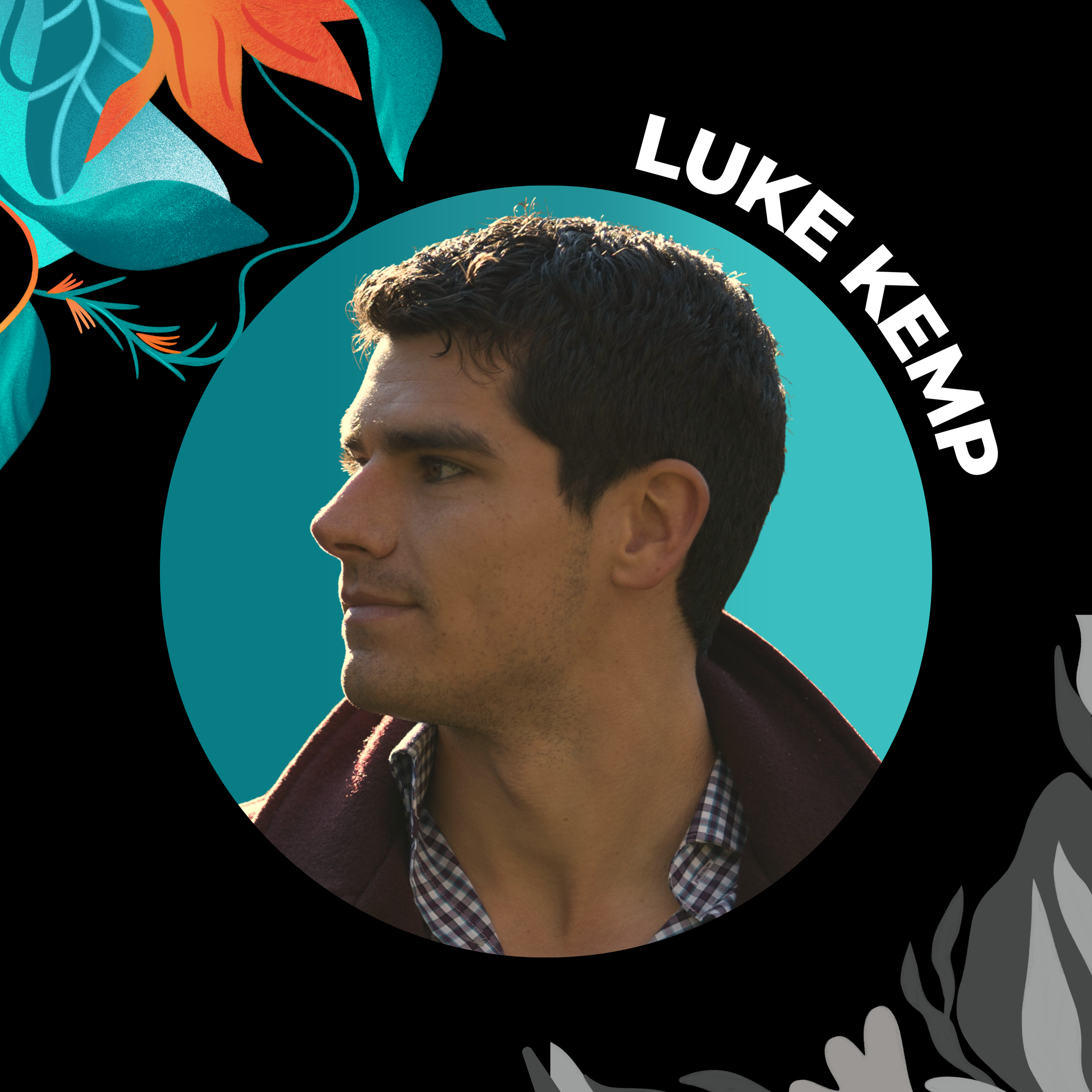



For most of our history, humans lived in relatively egalitarian societies that actively prevented the accumulation of power. Author of Goliath's Curse, Luke Kemp, examines how hierarchical states, 'Goliaths', came to dominate the world. We explore why Goliaths repeatedly collapse, the likely trajectories of today's global Goliath, and what it might take to radically democratize power before history repeats itself. Highlights include:
Why Luke rejects the term 'civilization' in favor of 'Goliath' to describe the large-scale societies that have emerged over the past several thousand years and were built on dominance hierarchies such as ruler and ruled, rich and poor, man and woman, and free and slave;
How archaeological and anthropological evidence suggests that for most of human history people lived in relatively egalitarian, democratic, and cooperative societies, challenging long-standing assumptions about humanity's supposedly violent and selfish nature;
How humans historically constrained would-be tyrants through ridicule, ostracism, exile, and if necessary group execution;
How the first Goliaths emerged thousand of years after intensified agriculture, using war and violence and growing their power through the 'Goliath fuel' of 'lootable resources, monopolizable weapons, and caged land';
How 'babies, bombs, bacteria, and barbarism' enabled Goliaths to expand across the globe, conquering and absorbing non-state people into today's global Goliath;
Why the 'darker angels of our nature' - status competition, the 'dark triad' of personality traits, and the authoritarian impulse - also provide fuel to the growth and persistence of Goliaths;
Why Goliaths function as engines of inequality that become increasingly vulnerable to shocks like popular rebellion, environmental stress, disease, and how this makes societal collapse a recurring feature of large-scale societies throughout history;
Why, if we continue with business as usual, the most likely long-term fate of today's global Goliath is collapse, and why in the short term we may be heading toward a 'Silicon Goliath' of increased digital surveillance and potential for autocratic repression;
How we might 'shackle' Goliath through a process of radical democratization in 4 different forms of power - political, economic, violence, and information.
MENTIONED IN THIS EPISODE:
-
Luke Kemp (00:00:00):
When you look at civilization and the way it's used, it's pretty clear it's become a term of propaganda. The Latin root of civilization is civilitas. It has connotations of moderation, virtue, wisdom, restraint. And yet when you look at all the very first civilizations, they tend to be marked by patriarchy, warfare, slavery, and most importantly, the change in social conditions away from equal social standing towards dominance hierarchies. And across all these, they tend to have some story about how in primordial times there was chaos until eventually rulers brought it to tame. I'd say it's actually still prevalent today. Most of us still have this belief that as soon as there is some kind of catastrophe, we will devolve into mass panic, disorder, and chaos, which just isn't supported by the evidence. People are actually pretty good when it comes to responding to natural disasters and that mass panic is largely a myth, but it's become a predominant myth because it supports the idea of having a Goliath so well. Good old-fashioned coercion.
Alan Ware (00:01:01):
That was Luke Kemp, researcher and author of Goliath's Curse, The History and Future of Societal Collapse. We'll talk with Luke about how states are founded on dominance hierarchies that ultimately lead to their collapse and why today's global Goliath may be steering us toward an even more catastrophic unraveling.
Nandita Bajaj (00:01:30):
Welcome to OVERSHOOT, where we tackle today's interlocking social and ecological crises driven by humanity's excessive population and consumption. On this podcast, we explore needed narrative behavioral and system shifts for recreating human life in balance with all life on Earth. I'm Nandita Bajaj, co-host of the podcast and executive director of Population Balance.
Alan Ware (00:01:56):
I'm Alan Ware, co-host of the podcast and researcher with Population Balance. With expert guests covering a range of topics, we examine the forces underlying overshoot - the patriarchal pronatalism that fuels overpopulation, the growth- obsessed economic systems that drive consumerism and social injustice and the dominant worldview of human supremacy that subjugates animals and nature. Our vision of shrinking toward abundance inspires us to seek pathways of transformation that go beyond technological fixes toward a new humanity that honors our interconnectedness with all of life. And now on today's guest.
(00:02:37):
Luke Kemp researches the end of the world. He is the author of the bestselling book, Goliath's Curse: The History and Future of Societal Collapse, and a research affiliate at the Center for the Study of Existential Risk at the University of Cambridge. He has advised and led foresight studies for multiple international organizations, including the World Health Organization and Convention on Biological Diversity. Luke's work has been covered by the BBC, The New York Times, and the New Yorker. And now on to today's interview.
Nandita Bajaj (00:03:09):
Hi, and welcome to the OVERSHOOT Podcast, Luke. It's wonderful to have you. Thank you so much for joining us.
Luke Kemp (00:03:15):
Nandita, thank you for having me.
Nandita Bajaj (00:03:16):
It's absolutely our pleasure. And your book, Goliath's Curse, The History and Future of Societal Collapse, examines how what we now call nation states, which dominate the entire globe, were formed, how they expanded and how these Goliath's thirst for power and domination carry the seeds of their own destruction. Your work very much strengthens the many conclusions we've come to through our own exploration with other podcast guests about the drivers of our ecological and social crises, which are the patriarchal roots of pronatalism, the growth-addicted economies, and the worldview of human supremacy. And not surprisingly, these key drivers become established around the same time as the rise of Goliaths, as you note in the book. So we are excited to explore your ideas on the curse of these Goliaths and also how we might shackle them as a way to move toward a more socially just and ecologically sustainable future.
(00:04:18):
And before we get into that discussion, could you share what some of the childhood and early professional experiences were that motivated you to study the history of inequality and power relations that forms the heart of the research in your book?
Luke Kemp (00:04:34):
I grew up in a working class family in rural Australia, a little place called Bega, a dairy farming town. And my mother was essentially a receptionist and my father was heavily involved with organized crime, the Hell's Angels. And the combination of that background from a lower income family and also just simply what the family life was like, I think always gave me a lens of looking at the world with more cognizance of power and violence and inequality than most people would have. On top of that, I always had this interest in pursuing and understanding and addressing the world's biggest problems. And I started with climate change. I was a lecturer in climate change, science and policy at the Australian National University, until I realized one day that there are many other grand challenges we face apart from climate change and if just one of those risks overcome us, then it doesn't really matter too much what we do on climate change.
(00:05:26):
For instance, if we decarbonize the world by 2050, but we have a nuclear war in 2051, we're unfortunately still doomed. That eventually took me to one of the very few Centers in the world, which is trying to study all these risks, what we often call existential risks, risks that are capable of causing global societal collapse or human extinction. And that institution was the Center for the Study of Existential Risk at the University of Cambridge. And when I entered, it was quite clear that everyone was focused on the future. They were focused on individual future technologies. Think AI, bioengineered pandemics, even solar geoengineering, but no one was really thinking about the past, how we got here. And to me, it seemed strange to just simply ignore thousands of years of data. And it seemed even stranger because people, when they look at the future, always have some vision of our past in mind.
(00:06:18):
Even the notion that technology will alleviate all our problems is usually based upon historical narrative and I wanted to make sure that my vision of the past was robust and evidence-based as possible and that was the beginning of the journey of writing this book. It's quite interesting how the book changed my politics. So prior to writing the book, I was someone who was pretty down on human nature. I thought we just weren't very good at cooperating and particularly were fairly violent and self-interested when we don't have rulers. And on top of that, I was someone who believed that maybe we just need to have an enlightened dictator in order to get things done. And both of those views flipped quite dramatically upon writing the book. So despite my background in many ways, it was actually the writing of the book that really shaped the actual values that I have today. I find it funny when I hear the critiques sometimes of, Oh, this is just this guy projecting his politics onto the past. I'm like, Yeah, that's not the case, but all right.
Alan Ware (00:07:12):
And in your book, Goliath's Curse, you're studying the history of societal collapse and you trace the emergence of what you call Goliath and we'll be exploring the stages of societal collapse later in the interview, but we'd like to start by asking how you define Goliath and why do you use that term and not civilization or nation states.
Luke Kemp (00:07:33):
When you go to write a book about collapse, the obvious question is, what is collapsing? And most people would answer civilization. And yet when I tried to dig into what is civilization, I could never find any good responses or definitions. They tend to be either incredibly vague, like a checklist of different factors, things like writing, which the Incan Empire, which stretched all the way from Argentina to Chile did not have, or things like long distance trade, which technically all hunter-gatherers have, or sometimes it was definitions that were just inherently biased, things like an advanced culture, which I'm sure is a definition that indigenous cultures and people to disagree of. When you look at civilization and the way it's used, it's pretty clear it's become a term of propaganda. The root of civilization is civilitas, the Latin root. It has connotations of moderation, virtue, wisdom, restraint.
(00:08:20):
And yet when you look at all the very first civilizations, if you will, of the world, Uruk and Mesopotamia, the Shang Dynasty in China, even Cahokia in North America, they're not usually marked by things like wisdom, moderation, restraint, and virtue. They tend to be marked by patriarchy, warfare, slavery, and most importantly, every single one is a change in social conditions away from egalitarianism, away from equal social standing towards dominance hierarchies. A situation in which either a group of individuals or an individual rules over the rest of the group and is ranked above them and enforces rules for violence and extracts resources from them. Goliath is essentially a collection of those dominance hierarchies. So the Roman Goliath wasn't just simply the Roman Empire. It was also the differences between rich and poor, slave and master, men and women, which together reinforced that society built on domination. And in many ways, when we talk about history, what we're usually studying most of the time is just a handful of Goliaths.
Alan Ware (00:09:22):
And there is also, as we study in this podcast, the ecological overshoot. So the domination of humans over nature and the subjugation of nature and animals versus the more prior paleolithic restraint and relationship reciprocity, start seeing this much more total rapacious consumption of forests, animals becoming units of production, soils become exhausted. So there is this kind of ecological cost of all of that are externalized as Goliath continues to grow for its own power purposes.
Luke Kemp (00:09:59):
Absolutely. Interestingly, Colin Renfrew is a very famed archeologist here at the University of Cambridge. I believe he's retired now. He once had the definition that civilization was the increasing separation from the natural world. And when he looked at all the different markers we usually have for civilization, so things like built up cities, the key thing was there were usually some kind of buffer and more extractive relationship to nature. And in many cases, let's say the relationship of extraction towards the natural world preceded the relationship of extraction between humans.
Nandita Bajaj (00:10:29):
And speaking of majority of our history, what does the best evidence show about the relationship among humans in terms of how egalitarian or inegalitarian they were before Goliaths spread around the world?
Luke Kemp (00:10:43):
Humans evolved roughly 300,000 years ago that may be getting pushed back now of some new finds, but in general, roughly 300,000 years ago, we evolved together across multiple places in Africa. That's during what's called the Middle Paleolithic, which is a series of ice ages and it was an incredibly trying ecological time. It's also a time where we had roughly 86 active volcanoes across Africa. So this wasn't an easy time to live. Roughly a third of the world was also covered by ice sheets. Temperatures were on average around about five degrees cooler at a global level and the winning strategy for surviving the ice ages in our case was to be nomadic egalitarian hunter-gatherers. So during this period, we don't have any lasting evidence of hierarchy or large-scale wealth inequalities. There's a couple of anomalous finds in what's called the Late Upper Paleolithic in Europe, but we don't actually have any evidence that they were indicative of having kings or inequality or anything like that.
(00:11:41):
As far as we can tell, our default is being egalitarian and being democratic as well. When you look at modern day nomadic egalitarian hunter-gatherers, they tend to be intensely democratic in all decisions they make. And this really goes against the vision we often have handed down to us from people like the 16th century philosopher, Thomas Hobbes, this idea that we lived in small ragtag groups of warring tribes and families who for the individual often led to lives that were 'nasty, brutish and short' in his words. When you look at it, we had very large amounts of genetic diversity. That's the reason we survived. People had to be constantly moving across groups and we see that in modern day nomadic egalitarians. So a modern day nomadic egalitarian hunter-gatherer would probably know thousands of people across their lifetime, because they're constantly moving across different groups. They may live in a small band, but they live in a wider, greater society and these bands tend to be pretty cosmopolitan.
(00:12:36):
It's not like everyone's a family member, probably on average less than 10% were close-related by blood. Again, this all makes sense. If you want to have genetic diversity and not die out due to inbreeding, you have to be constantly exchanging people across groups. This led to situations where we had huge amounts of trade, not just in tools like lithic instruments, stone-based instruments, but also in things like musical instruments, figurines, cave art, genes, and culture across huge zones. For instance, we have evidence of all these things being exchanged from the east coast to the west coast of Africa roughly 100,000 years ago, or with the Aurignacian culture all the way from Siberia to Spain roughly 40,000 years ago, or across North America, the Clovis culture, roughly 11,000, 12,000 years ago. And it would be difficult to do that to have these big zones of exchanging cultural trade if people were constantly killing each other, which is one of the other myths we have about this time is that this was a very violent time.
(00:13:35):
Instead, the best archeological and genetic evidence suggests that roughly one to 2% of people died at the hands of another human being. In short, out of a hundred people born, roughly one or two people would have died due to something like a murder, which is roughly comparable to the modern world at a global average today. So in short, it wasn't the worst place to be in a whole bunch of ways. We were pretty egalitarian. We were quite good at cooperating. That's the reason why we were to survive. We were very good at working across groups, exchanging, trading, and we lived in what I call these great fluid civilizations. Civilizations, I'm using civilizations in the term of actual civilized conduct of large scale cooperation without coercion, were essentially more or less based upon mutual aid, reciprocity, and mobility.
(00:14:22):
Still wasn't the perfect place to be or to live. There were obviously downsides, including things like your infant mortality rate, which probably was one in two, for every children born, only about a third to half would make it through to adulthood, which is horrendous in a whole bunch of ways and that's one of many downsides to it. But overall, it wasn't a bad way to live and it certainly casts our, if you will, human nature, at the very least, our evolved inclinations in a very different light. We're actually pretty decent. We're pretty egalitarian and we're very good at cooperating, including cooperating without having violence.
Nandita Bajaj (00:14:56):
Right. You also talk about the use of kind of reverse dominance hierarchies in your book where there were all these checks and balances in place to prevent people or any one person or a small number of people from gaining that kind of power over others.
Luke Kemp (00:15:12):
Precisely, we often make the mistake of thinking that we were egalitarian because everyone was equally poor. That's not really the case. Instead, what we see is that we're often egalitarian by social choice. This is based upon the work of Christopher Boehm, which has been replicated, where he went and looked at a number, I think over two dozen different nomadic egalitarian hunter-gatherer groups and essentially found that they did have people who tried to dominate the rest of the group, but these would-be dominators were kept in check by three big different strategies, ridicule, ostracism, being kicked out of the group, or in the very worst cases, in-group execution. But in short, for most of human history, trying to dominate the rest of the group earned you a early grave rather than a place in the history books. And that's partially why it seems like in modern humans, we tend to have a lot less of an evolutionary advantage from having kind of higher status through violence than you have in chimps or gorillas or other primates.
(00:16:14):
We essentially found ways to curtail that in ourselves. It's also what made us very human as well. The fact that we have really rapid cultural accumulation, we can pass on and develop cultures really quickly, or the fact that we can have babies which are born really, really early couldn't be done if you just had one alpha male ruling over the rest of the group. Instead, you have to have a highly cooperative group across multiple different males, females, et cetera, and that would be difficult to do without being egalitarian. But the book mobilizes a whole bunch of broader evidence as well to show that even the way our bodies are constructed showed that we had egalitarian origins and roots, but that egalitarianism was based upon violence in some way.
Nandita Bajaj (00:16:54):
Right. Yeah. We had another researcher who wrote the Patriarchs, How Men Came to Rule, Angela Saini, and she talks about this egalitarian bias prior to the rise of these empire states and how women had a lot more power and were really equal members of society including, as you said, in terms of there not being that many differences in size and height.
Luke Kemp (00:17:19):
Yeah. So those differences in height and size you're talking about, we often refer to them as sexual dimorphism and they're a pretty good indicator of whether a society's highly patriarchal or not. So think of gorillas where you basically have one alpha, the silverback rule over the entire group, and essentially monopolize reproduction. In that case, the difference between the males and the females, particularly the silverback, is enormous. The silverback is huge by comparison. They have much sharper teeth, they're much stronger. In the case of men and women, it's probably an average roughly a 15% difference in terms of stature and weight, which is far smaller than what you see with both chimps as well as gorillas. And we obviously don't rely heavily upon on either our strength nor our bites and teeth to enforce violence. In short, once you get changes to the shoulder joint roughly a million years ago, that seems to allow for small groups of men to throw spears and other things much more accurately, which helps with the leveling.
(00:18:15):
Suddenly you have the ability for either an individual or a small group, including both men and women, to go up against an alpha. And we had some other interesting evidence here as well. Like for instance, there's a strong hypothesis that men and women probably had equal say in where to move, whether they moved to, say for instance, the women's lineage or the men's lineage because the only way to do modeling, which actually results in genetic diversity that we seek in the Paleolithic is essential when they have equal say. If it was always going back to the men's place or the women's place, you wouldn't see the same level of diversity. So there's some evidence that even when it came to basic decision-making around where we live, it was one that was taken equally between the sexes.
Alan Ware (00:18:56):
Yeah, we appreciate how you emphasize the egalitarian instincts through research like Christopher Boehm and reverse dominance hierarchies and you make it clear that just having dense human settlements in agriculture does not necessarily automatically lead to hierarchy and Goliath. There's often this long time lag between intensifying agriculture, agricultural surplus and the emergence of the hierarchy and the Goliath. So something has really needed to part us from those more egalitarian instincts that we had in the Paleolithic. And you've written that violence often plays a critical role in the emergence of these first dominance hierarchies and the shift toward Goliath. What is the historical record? Tell us about how and why that violence begins.
Luke Kemp (00:19:43):
When you look across the world, most major world regions, whether it's Eurasia, the Americas, Africa, they all follow roughly the same pattern, which is after the Holocene, this new period of climatic warmth and stability, people start to settle down. They start to become more sedentary. They start to intensify the production of agriculture and then eventually you get the first signs of warfare. During the Paleolithic, there are no signs, concrete signs of warfare. And after you get the first signs of warfare, you get the emergence of the very first states and the very first forms of writing. What's interesting is how long this takes. There's a time lag of an average, roughly three millennia. Three millennia, that's more than what separates us from Rome between the intensification of agriculture and the rise of the first states. It's a very drawn, long staccato process. In terms of where you start to see violence creep up, particularly in terms of warfare. It tends to be once you start to get very particular resources being accessed, usually resources that are easily seen, stolen and stored, what are called lootable resources.
(00:20:51):
And this is actually key to why you actually see the first states arising in the first place as well. So the typical traditional hypothesis has been when we had enough for surplus, you could start to pay people to do jobs like being a manager or a landlord or a king and that was necessary to do cool big things like irrigation canals, build palaces, et cetera, or build cities. That doesn't appear to be true on multiple counts. One is that we have different cities and areas with irrigation canals, monuments, et cetera, which don't have any signs of inequality or rulers. So it's quite clear we're capable of doing these things without having an elite ruling class or even large-scale inequality. The second is that when you look across the world, there's 10 different areas that independently have intensive agricultural food production, but only five of them ever create the first states.
(00:21:41):
What was more important was what they were growing, and what they were growing end up usually being the fruits of the very first forms of warfare. So compare Egypt to New Guinea. New Guinea and Egypt have agriculture at roughly the same time, approximately 7,000 years ago, but New Guinea never adopts pharaohs and never builds pyramids. The key difference here was in New Guinea, they were growing yams, tarot, and bananas. Bananas you can store for roughly a month after they're ready to be harvested, yams and taro, a couple of months, but you also grow them underground. They're basically invisible and you can also keep them underground even a few months after they're ready to be harvested. By contrast, wheat, which the Egyptian grew is easily seen when it's ready to be harvested. It essentially advertises itself with tall stalks and it can be stored for decades.
(00:22:29):
It's easily seen, stolen, and stored. And when you look at the very first signs of warfare across the world, they tend to also coincide with these seen, stolen, stored these lootable resources. For instance, the very first signs of warfare across Europe coincide with the rise of the very first farming societies there. Similarly, in Mesopotamia, the very first signs of warfare amongst the Halafians, as they're called, basically is them taking over and monopolizing the trade in obsidian across Mespotamia, which makes a lot of sense. You don't want to really risk your life for very small or little material gain, particularly at scale. We definitely have signs of people killing each other over lover's quarrels, sexual jealousy, stuff like that. Makes sense. It still happens today. Humans' passions are very old and ancient, but you very rarely see entire groups going to war for something like sexual jealousy or emotions. Instead, it usually tends to be for very clear strategic material purposes often bound up with an ideology and you don't get those until you start to get these lootable resources.
Nandita Bajaj (00:23:32):
Yeah, that makes a lot of sense. You've also talked about the cycle of immiseration that is needed to disempower and dispossess people in order to keep them from kind of fighting back for equality. Can you speak a bit about the authoritarian impulse that allows us to be dominated in these kinds of circumstances?
Luke Kemp (00:23:57):
Oh, this is absolutely critical. We don't want to fall into the trap of thinking that humans are purely good innocent angels. Instead, we have, as I called in the book, some 'darker angels of our nature.' We've already alluded to one, which is status competition. There wouldn't be the issue of some people trying to dominate that would have to be prevented if it wasn't for the fact that some people have a compulsion to try to dominate others. The reason they do so is not for money and power, it's primarily for status. All of us want status. We want to be loved, admired, respected, and that's in large part because status confers an evolutionary advantage, particularly for men. Men who have more status tend to have more children who are more likely to live to adulthood. This has been shown across at least 30 different societies, but only a small number of in particular men are likely to pursue this, this quest for status through the use of violence.
(00:24:48):
And it tends to be both obviously the overly ambitious, the status seekers, but also those who are high in the dark triad of narcissism, Machiavellianism, and psychopathy. Yet even if we had those status seekers who rose to power on the back of both these lootable resources and also particular types of weapons, what I call monopolized weapons, things like bronze held axes and swords, even then the question is, why would everyone else accept this? Why would they accept this new social condition? And I think what explains this is a well-developed body of social psychology literature, which talks about how when we feel threatened, people tend to drift towards authoritarianism. The old trope that people for a strong man leader during times of crisis and war turns out to be true. We even see this down to people preferring leaders of more masculine features during times of war.
(00:25:38):
And of course, this helps to explain what we're seeing in the world today as well as what happened back in the 1940s and '30s. Even when people feel economically precarious, they're more likely to have this shift towards authoritarian values. And this starts to help us make sense of the archeological record where without fail, you see warfare proceeding the rise of the very first states. It makes sense. If suddenly you start to have warfare, you start to have the threat of more dangerous, hostile neighbors. That could be used even just as a pretext for putting together a more authoritarian system, an early state, early original Goliath.
Alan Ware (00:26:14):
So those Goliaths emerge as you've talked about through the lootable resources that they have or they're fighting over and the monopolizable weapons and as you've referred to at different times, the caged land that people have no exit. And as we have talked about on this podcast, population growth can make it such that people have fewer exits. There is no hunting and gathering foraging land left. They have to intensify agricultural production and they're kind of trapped in a dilemma of bad decisions due to the population pressure on the landscape. So once these Goliaths emerge, how would you describe them spreading and coming to dominate larger regions and eventually the whole globe?
Luke Kemp (00:26:57):
So first of all, it's worth noting that the combination of those three factors, caged land, monopolizable weapons, and lootable resources, I tend to refer to as Goliath fuel and you're absolutely correct. You can think of caged land both as being restricted geography, which makes it less easy for people to move and to exit. So things like river valleys, for instance, or places like in Egypt where you basically buffered between the Red Sea and the Nile, but it also can't be simply either people being more tethered to the land, like in the case of agriculture, or the land becoming much more population dense. So suddenly you can't move as easily. And there's evidence that in Europe where you see the arrival of the first farmers, you start to go through these boom bust cycles of population. And interestingly, prior to the bust, you tend to see a rise in both inequality and violence and that seems to be partially because the land was becoming more or less saturated. So suddenly it became essentially land-limited in terms of your production, which made inequality much worse, but it also made suddenly the competition for resources much more fierce as well. But on top of all that, as you mentioned, it makes it more difficult to move. People couldn't easily just move out of these territories.
(00:28:07):
How do they spread? This is, I think, one of the most interesting questions. And for me, it's almost more interesting than why did they collapse is why do they always get back up? Why is it when a Goliath, whether it's in China or in Europe, tends to always get resurrected and why is it they get bigger over time? The story of empires is essentially one of global conquest. The very first empires up until roughly, I think it was around about 1,000 BCE, so the first 2,000 years or so, empires and states only got roughly one million square kilometers big, and that was kind of maximum territorial extent.
(00:28:42):
And then you start to get the Iron Age Empires later on, which get to roughly five to seven million square kilometers when you look at, say for instance, the Han Dynasty as well as Western Roman Empire. And then you start to get the big horseback empires, the Mongols, for instance, which get up to roughly 24 million square kilometers. And then eventually with colonization, you get the world's largest empires like the British Empire, which essentially crossed all time zones and was roughly 42 million square kilometers. Pretty clear but slow upward trend. There's a few reasons for this and the book I summarize them as babies, bombs, bacteria, and barbarism. Babies, pretty clear cut and simple. Agriculture allows for more dense and large populations. You can only support a very small population density if you're doing hunting and gathering. You can support a very big one if you're farming.
(00:29:29):
And it wasn't just simply that farming and cities allow for denser populations. It was also that when you had a dominance hierarchy, for some reason the people on top were often obsessed with everyone else having more kids. So if you look at the Han Dynasty or Augusta Caesar, for instance, they had different kinds of incentives for people to have larger families, including things like tax breaks for having more children. Even today, of course, we have the cash bonus for having kids. Hungary spends, I think it's something insane, like roughly 5% of its GDP on trying to encourage fertility, which funnily enough in both cases failing, but this is a really long running trend. Empires across the world have continuously been focused upon trying to have larger populations, which kind of makes sense. If you want to either do conscription and have a larger army or you want to have a large tax base, you want to have a larger population base.
(00:30:20):
It's the basic modifier and amplifier of your power as a ruler. So babies is a key one. Another one is bacteria and pretty simple. When you have lots more people living closely together with lots of animals, that tends to be a hotbed, a petri dish for zoonotic infections, for spillover events between other animals and humans. Most of the diseases we're accustomed to today, including things like obviously the common cold, influenza, but also the worst virus of the past like smallpox. These were all actually pretty recent. They only happen once you get sufficiently large, dense populations, basically once you get started to get the first cities. In some cases, like with smallpox, it would've required at least a population of roughly 200,000. So this is something that didn't come along for thousands of years after the Holocene. And this tended to mean that people who lived in these communities, who lived in cities, who lived in empires were more likely to be exposed to these diseases.
(00:31:16):
They die, but the survivors would have an immunity. Unfortunately, the hunter-gatherers who were not exposed to these, it meant that their eventual exposure tended to be much, much more fatal. And this is why when you have the Columbian exchange, you have the Europeans arriving into the Americas, you have enormous losses of life due to the diseases. There are other things involved as well, the conditions, the warfare, the slavery made it much, much worse, but also just simply the fact that they were more what we call epidemiologically naive, they were less exposed to these diseases.
(00:31:47):
Next up is bombs. In short, empires liked building weapons and they had the big long supply chain and surplus to do so. And it's a really common trend across human history is that pretty reliably as states and empires get stronger and they harness more power and energy, they tend to translate that into more powerful projectile weapons. So I have a graph in the book which goes all the way from the bow and arrow through to atomic weapons showing that this is a pretty clear cut upward exponential curve. And last but not least is Barbarism - that one big advantage empires, states and Goliaths had over nomadic egalitarian hunter gatherers is they were willing to exploit people, places, and animals in order to build worse weapons and bigger militaries. If you want to build an atomic weapon, you have to mine uranium. You have to cut down huge numbers of trees. You have to mine things like iron, et cetera. And all of those are usually done by populations who don't exactly enjoy their jobs, who are often working in borderline slave-like conditions and highly exploited. In short, it requires both bullshit jobs and shit jobs. And in a nomadic egalitarian group, they usually wouldn't do that. People just walk away instead. So the sheer barbarism of the endeavor gave Goliaths a competitive advantage of other forms of social organization. That's in large part why they took over the world. Babies, bombs, barbarism, and bacteria.
Alan Ware (00:33:09):
And another one I was thinking of while reading that, what might be beliefs is the sort of myth of progress the stories that the elites tell about their divinity. You start with big men that can't hereditarily pass on their wealth and then eventually that gets established. And then in the early states, I'm like a God. No, I am a God. So the level of inequality and the stories that are told from the British colonial excuses for why they deserve to rule and that savages can't be trusted with ruling themselves and that the progress of humankind depends on our guidance and rulership. So those beliefs can be quite powerful too, this sort of super structure of a society.
Luke Kemp (00:33:55):
Absolutely. I see these beliefs as being more a reason as to why Goliaths eventually get resurrected rather than why they spread per se. When you look at, say, for instance, Rome, every empire after Rome across Europe claims to have been the descendant and the true inheritor of Rome. The Brits do it. The Holy Roman Empire, which in the words of Voltaire was neither Roman, holy, nor or an empire do it. Everyone does it basically. And it's because Rome becomes almost this religious ideal of what it is to be a good empire and it's also bound up a notion of progress that this was the peak of empire, we'll reach it again and we'll even surpass it. But it is noticeable that when you look across the world, the very first Goliaths, they're never usually marked by an ideology of everyone can work together, this works well.
(00:34:41):
The person on top is just as good as everyone else, but you know what? They're a pretty good manager, so we'll keep them there. Instead, it's always the person on top is a God, a God king, a messenger of God, a representation of God, a reflection of God, but in some way they're a divine being and you have notions like the mandate of heaven in China, for instance, or the divine chain of being in the medieval ages. If we were naturally prone towards dominance hierarchies, you probably wouldn't need to dress them up in supernatural beliefs. The fact that we have to kind of shows how unnatural they are. And I think this is one of the ways in which you start to also reemerge and resurrect these empires is these beliefs are always still lying around, usually even after a collapse. And like with Rome, they get picked up again and again.
(00:35:23):
On top of that, unfortunately, the Goliath fuel doesn't usually go away. If you have managed a landscape towards growing grain, it's pretty hard to just pick up hunting and gathering completely again. It's pretty hard to change your entire landscape back towards hunting and gathering. So naturally, you're kind of almost tilted in your land towards being a Goliath.
Nandita Bajaj (00:35:41):
And your point about it, if a lot of this were true, you wouldn't need all of these propagandist myths to convince people to buy into their own oppression. And you were speaking about all of these pronatalist incentives that have always been present since the rise of city states and empires to push women to produce as many children as possible and how in gathering and hunting societies, women were having far fewer children than they are now. And it was this notion of the myths that had to be created to convince women, especially that it was an honorable thing to do, it was a selfless thing to do, to this day where you see all of these governments and nation states panicking as fertility rates have started to decline. And so the threat of losing that control is very much present I think across the globe where fertility decline alarmism is so loud.
Luke Kemp (00:36:41):
Yeah. As someone who works in existential risk, you inevitably have that one dinner conversation where someone's like, What do you think of fertility collapse? Is that an existential risk? And obviously in their mind it is. And I always chuckle. It's first of all strange to think about something like declining fertility as being anywhere near comparable to thermonuclear war and these just categorically different things. I've never seen any really clear good mechanisms as to how you go from relatively slow fertility decline of the space of decades and centuries to having full-blown societal collapse. It just doesn't work that way. We don't have any examples of that. I can't think of any really clear mechanisms, particularly if you have plenty of forewarning that you'll have a small population, hence you can downscale infrastructure and change macroeconomic policy. It just doesn't make much sense. But the reason this is probably perpetuated is because people like Elon Musk are the ones who are really worried about this.
(00:37:34):
He's on the record saying that this is a bigger threat to civilization than climate change. But again, this I think is just a modern manifestation of much longer trends we've seen with the powerful being preoccupied with pronatalism and also using their ability to craft beliefs to change the beliefs of society and the priority of societies towards ones which reflect their own.
Alan Ware (00:37:57):
So the subtitle of your book is The History and Future of Societal Collapse. How do you define societal collapse?
Luke Kemp (00:38:05):
Societal collapse is the fragmentation and contraction of multiple different power structures. It's not an age of apocalypse. It's simply when you have multiple different power systems, the economy, the state, the population, the ideological system, all in some way breaking down and falling apart roughly together. It's again, not apocalyptic, but it's a rather process with winners and losers, benefits and costs. And one of the surprising things when you look a collapse is that often it could be a process which had benefits for the general population.
Nandita Bajaj (00:38:38):
And you've talked a little bit about the Hobbesian view, but maybe you could go a little more into this, the longstanding view in world history that civilization is only a thin veneer holding back the chaos and violence supposedly inherent in human nature. Where does this veneer theory come from and what does it get wrong?
Luke Kemp (00:38:58):
Yeah, so veneer theory was a term coined by the primatologist, Frans de Waal, the idea that human civility is just a thin veneer over a much more brutish and violent nature. And as soon as you throw away that civility, as soon as you get rid of rulers, we'll be tearing each other's throats. It is something that's usually attributed to the 16th century philosophy Thomas Hobbes, but Hobbes, while he gave a clear philosophical and political treatise on this and put it in one of its most pure, well-articulated forms, he in many ways is not original at all. This is an idea which dates back to early Buddhist scriptures, it dates back to early Vedic scriptures. It even dates back to early Zhao era songs in China. And across all these, they tend to have some story about how in primordial times there was chaos until eventually rulers brought it to tame.
(00:39:48):
And even say for instance, I believe it's the Assyrian empire had this idea that on the outskirts of their empire, there was chaos and it wasn't until they expanded the empire, they could basically tame it in some kind of way. And interestingly, even for his own time, Hobbes was not really novel. He was largely borrowing from theology because at that time there was a strong theological belief that humans were at constant war with the rest of creation, including God. And it was only through a marriage between church and state, a kind of big social contract that you could bring humans to heel, suppress their worst sinner-like instincts and ensure that this war against all of creation stopped. So it's something that's a really longstanding philosophy and belief, and I'd say it's actually still prevalent today. Most of us still have this belief that as soon as there is a natural disaster or some kind of catastrophe, we will devolve into mass panic, disorder and chaos, which just isn't supported by the evidence, all the studies we have from disaster risk management.
(00:40:44):
It's just that people are actually pretty good when it comes to responding to natural disasters and that mass panic is largely a myth, but it's become a predominant myth because it supports the idea of having a Goliath so well. It's one of the ultimate tools propaganda to say, This may not seem like the best social arrangement. You may not like the rulers, but it would be far worse if you do not have rulers. Good old-fashioned coercion. And this is in many ways just an extra what I call story of subjugation. We talked about divine chain of being, divine mandate of heaven, kings and regents as gods. Those were one story of subjugation, but I think this Hobbesian myth about human nature and about what life is like without rulers, that's in many ways the ultimate, much more subtle and much more pervasive story of subjugation that justifies a Goliath. And I think it's one which is really prevalent across collapse. Most people when they think of collapse, they think essentially of an apocalypse, which again, just isn't the case.
Alan Ware (00:41:38):
Right. The thin veneer that the colonizers in modern European history would often use as a rationale for ruling over their subjects quite harshly.
Luke Kemp (00:41:49):
Yeah, precisely. We're bringing civilization to them through guns, germs, steel, and genocide.
Alan Ware (00:41:55):
Right. As you've talked about, a lot of these societal collapses, there's often these tales of lamentation told by the elites as the walls and the structures are crumbling and the cities on fire and that for the average person, a lot of times the collapse was not nearly so traumatic. So what do we know about that experience of social collapse, people living through it and how do they look back on collapse in hindsight to understand what happened?
Luke Kemp (00:42:23):
Well, it really varies. So for some of the early collapses, we can only rely upon archeological evidence. There's no forms of writing, for instance, to really see what's happening. And even when we have writing, it's worth noting that writing for most of human history has been the enclave of a very small amount of population. Less than 1% of the people would've known how to read and write, and they would've been employed as scribes by kings and the rich and elite. We can look at more modern examples where we have much richer data and a much higher resolution image. And one good example here is Somalia. The state of Somalia and the Barre regime collapses in 1991 and a decade later, surprisingly, essentially every single quality life indicator has improved. Maternal mortality is down by 30%, infant mortality by 24% and extreme poverty by 20%. And interestingly, it wasn't just simply like all of East Africa was doing better, but rather they were doing better and out competing even their geopolitically stable neighbors.
(00:43:19):
In short, they were just better off being under more responsive local governments and even warlords than they were under the predatory Barre regime. And it's worth remembering that for our most history, most lives and states have been more predatory like Barre than there have been like Denmark. And this is something which helps to explain why often collapse seems to have been beneficial in the past. So even if we look at Rome, for instance, after the fall, the Western Empire, people grew taller. And funnily enough, this wasn't just people dying on such large numbers that their survivors had more resources left over. Instead, even people on the outside of the empire were taller than those within the empire. In short, empire living in cities and persisting on a diet of grain just wasn't usually very healthy or good for most people. And collapse in some ways could be a liberation both from crippling taxation, predatory states, and just simply living on cities which were often becoming a hotbed and target for both invaders and for pathogens.
Nandita Bajaj (00:44:19):
And you argue that the seeds for collapse are built into the Goliath's very existence and dynamic of this growth. What are the key internal dynamics that make them so fragile?
Luke Kemp (00:44:30):
The key here is that Goliaths tend to become engines of inequality. This is for a few reasons. One is that capital tends to gain more quickly in value than wages as we see with land prices today. A second is that power begets power. Once you're rich, you can start to buy elections, you can buy places in the bureaucracy, you can even hire people to protect you, your own private army. And on top of all that is just simple beauty of compound interest. All those things together tend to get increasing wealth inequality over time until you have what my colleague at Walter Scheidel calls a great leveler, an enormous event usually involving violence, which levels the playing field. These include mass mobilization warfare, a bloody revolution, a state collapse, or a pandemic. Collapse in general didn't just simply level the playing field, but it was also caused by the unlevel playing field in the first place.
(00:45:22):
So states could grow remarkably unequal. By one survey of 28 pre-modern states, on average, they were 77% towards the theoretical maximum level of inequality. That theoretical maximum is a situation in which one individual holds all the surplus wealth and everyone has just enough to survive and reproduce on. But we also know that inequality tends to have a whole bunch of corrosive knock-on effects on society. So for instance, societies which are more wealth unequal tend to have high levels of sociopolitical violence, high levels of both physical and mental illness. They tend to have higher corruption, high polarization, tend to be one of the best predictors of democratic backsliding. But additionally, they tend to also have a growing class of elites who are more likely to compete over a small number of limited high status positions, things like thrones, including for things like coups, assassinations, and civil wars.
(00:46:11):
And as you have a big growing elite unequal society, you tend to also see the price of assets increase while real wages stagnate. It's what in the past we call popular immiseration, what we call today a cost of living crisis. And all these factors together just slowly make a state or like a life increasingly more fragile until eventually it's knocked over by a combination of different shocks, things like invaders, disease and climatic change. The process is what I call diminishing returns on extraction, that a society doesn't just become more unequal, it becomes more extractive overall. It doesn't just become more unequal in terms of money, but also in terms of political power, information power, even the military often becomes more concentrated and that ends up being self-defeating in the long term. And this is a process I trace out from the very first farmers of the world all the way through to the very largest empires. And it's one that, of course, we can still see happening today in the world across most OECD countries, whether it's the US, the UK, or Australia.
Alan Ware (00:47:07):
And I appreciate that your analysis is considering the dynamics of inequality and the distrust, the lack of cohesion, the riot, the destruction of some of these cities where you can see the archeologically, the elite buildings are getting trashed by angry people. And other people like Joe Tainter, anthropologist, his theory on the collapse of complex societies is much more a diminishing returns on complexity and that complexity is created in societies to solve problems, but he doesn't specify who's defining a problem. Is it the elites? Is it most people deciding irrigation's a problem or the army's a problem or whatever those problems are solved with through increasing complexity? You added a whole, I think, essential layer of who is deciding what problems will get addressed through greater complexity.
Luke Kemp (00:48:01):
Yeah. I think most people often held up Joe Tainter's theory of diminishing returns and complexity as being the gold standard explanation for societal collapse. And there are things I like about it. I like its elegance. I like the fact that it doesn't just talk about shocks, things like invaders and climate change, but also talks about the internal dynamics that make a society more fragile over time. But as you mentioned, who's choosing what problems to address, but also what is complexity is often a really tricky one. And Tainter has a pretty broad definition and in most archeologists' minds, when they talk about complexity, they're actually talking about increasing centralization, inequality, and hierarchy. So they'll talk about complex societies once you get the first signs of having kings and commanders. In that case, you're not really talking about complexity per se. You're talking about hierarchy, centralization, inequality. And on top of all that, it's pretty clear that you can address problems without adding more complexity.
(00:48:52):
We could actually solve climate change pretty easily in Australia just by having a pretty basic carbon price and getting rid of fossil fuel subsidies. Instead, we have these incredibly byzantine sets of policies and regulations in large part because we're trying to play political football with the fossil fuel industry. So I think Tainter's achilles heel was always a naivety of politics. And in many ways, I think that's what my theory of diminishing returns and extraction brings in.
Alan Ware (00:49:18):
So now in bringing it up to the current day, you call what we have today a global Goliath. And how would you describe it in general? Why do you see its most likely trajectory, as you've written about, being self-termination if we continue on with business as usual?
Luke Kemp (00:49:34):
We often think about the world of today as being composed of individual nation states, which doesn't really hold true. When you look at most of the different countries of the world, they're clearly the heritage of empire. The US still has a whole bunch of oversea territories, which they used to refer to as colonies. The UK is the same. Even places like Germany, France, and China are the outcomes of Paris allié, Prussian, and Qin aggression. Basically, they're all historical empires in some way. And beyond that, they also look surprisingly similar. Every single country today, even North Korea, to some extent, lives in a capitalist economy. They're a capitalist society. On top of that, they all have very similar rules and regulations around capital. That's why capital can flow so easily across borders. If they didn't, suddenly it would be very difficult to move capital. They all have police forces, militaries, and militaries often look very similar.
(00:50:27):
If you look at the great powers, China, Russia, and the US, their military setups look pretty similar. They all have nuclear weapons. They'll have an air force, navy, army. They'll have very strict chains of command and hierarchy. There's some differences in doctrine, technology, no doubt, but in the broad scheme of things, they're pretty similar. And additionally, of course, every single state is at least self-identifying as a state, it sends delegates to the UN. All of the existing countries actually look very similar. And I think the reason is because they're all part of one global Goliath. They're all part of one system of domination and the domination often does cross borders and boundaries. And that global Goliath is the entity which in the future we're worried about collapsing. We're not really worried about an individual country collapsing, we're worried about the entire system being brought down.
(00:51:13):
In the book, I note that you can't put a date on doomsday. Even the very best forecasters we have can't make good quantified predictions about a geopolitical event that could happen more than a year out. So the idea that we can make a good quantified prediction about collapse, particularly if it happens in decades time, is kind of silly. What we can do is we can understand the dynamics by looking at history of where we're heading towards and start to chart out the most likely trajectories. A doctor can't tell you the exact probability and date of lung cancer, but they can tell you if you keep smoking, you're likely to get lung cancer. In the book, I chart out the most likely path in the long term, whether it be the space of decades or centuries is self-termination for a couple of very simple reasons. One is that graph I spoke about of increasing projectile power over time.
(00:52:02):
If you have improving technology and arms races over the spaces of decades or centuries, where do you think that'll land? You can't rely upon deterrence always holding out. We've had nuclear weapons for roughly eight decades and already have had at least a dozen near misses. It seems unlikely we'll be able to go another century without having some kind of accident, let alone if we start adding in even more dangerous technologies on top of that. Similarly, if we have worsening environmental extraction and destruction, but we're relying upon having a techno fix at the last minute every day to save the day, doesn't seem like a workable and sustainable long-term strategy. But in the short term, if we don't have self-termination, I think what's most likely is what I call Silicon Goliath, a situation in which we have a technologically supercharged new form of Goliath, one where the new lootable resource is not just fossil fuels and grain, but also data where caged land is no longer geography or even population density but also mass surveillance systems.
(00:52:59):
And the new monopolizable weapon is not just nuclear weapons, but also lethal autonomous drones. Who controls the code controls the army. And suddenly together you have the backbone for systems that could be far more autocratic and predatory and importantly, far more stable and strong than what existed in the past. And that Silicon Goliath is many ways the greatest challenge we face because it's also going to be something which helps to suppress dissent. So if you're trying to stop the collapse and change the course of history, you're unfortunately going to have to run through Silicon Goliath first.
Alan Ware (00:53:32):
Right. And as you've talked about, modern day collapse could be quite awful for many of us who live in modern societies where Goliath does provide quite a bit of popular wellbeing, health, education, other forms of welfare, as you talk about the Somalia and Denmark collapse difference. Denmark collapses and a lot of the populace will be suffering and the interconnectedness of the collapse doesn't allow anybody an exit from that collapse to go pursue some other kind of lifestyle away from Goliath because the Goliath is all interconnected in one large element. Now you also have talked about the growth of global Goliath in recent decades has been justified by leaders as necessary to kind of delivering the material abundance that everybody wants, deserves, craves. But as you note in the book, it's clear from studies of hunter-gatherers that a lot of hunter-gatherers have happiness levels that are much higher than modern day people.
(00:54:31):
And for this and many other reasons, it seems we have a lot to gain by defeating Goliath in one way or another. So what are some of the core principles, approaches you think we could use to shackle or move beyond Goliath and what might that look like in practice for societies and individuals?
Luke Kemp (00:54:49):
In the epilogue of the book, I put forward some different paths to trying to take a different path forward, essentially one of liberation, of David if you will, rather than of self-termination or silicon Goliath. And there's two key things I do in the epilogue. One is to simply make the point that we are not wanting for a lack of technical solutions. If we look at, say, for instance, nuclear weapons, it's pretty clear we can get rid of nukes. We went from having over 70,000 nuclear weapons at the height of the Cold War during the 1980s through to having roughly 10,000, 12,000 today. During the 1990s, the US was getting rid of more than 1,000 nuclear weapons per year. There's no technical challenge to getting rid of the weapons per se. Likewise, when it comes to reducing emissions, we have good decarbonization plans for every single major world economy, whether it's the US, China, Australia, the UK, et cetera.
(00:55:41):
And even when it comes to AI, there's really good different proposals out there all the way from data unions, so from people collectively holding as a large union their data, which they can negotiate with big tech to have access to or not, through to even just simply doing the basic thing of paying the people who dig up the cobalt and the raw materials necessary for the algorithms, paying them a decent minimum wage. And of course, you can just do something like better technology. But either way, across the board, there are very clear technical feasible solutions which usually have a historical precedent. The second thing I try to do in the book is talk about how in the long term what we really need to do here is to level each of the forms of power. So when I talk about Goliath, when I talk about a dominance hierarchy, it's usually based upon inequalities in four different types of power.
(00:56:26):
The control of decision making, political power, control of resources, economic power, control of violence, violent power, and the control over information, information power. In the book I talk through how each of those can be leveled. If we're looking at economic power, pretty simple, you can do things like progressive taxation, wealth taxes, but I think most radically and importantly, just having a simple cap on wealth, $10 million. No one needs anything more than that to live a very comfortable, good life and to also feel like they have some kind of status relative to everyone else. Anything more than that gives them the unnecessary ability to start to degrade our democracies and shape the rules to their benefit. If we're looking at leveling political power, then I think what we need to do is have a much deeper, more radical and effective form of democracy. And what I advocate for in the book is the idea of open democracy, essentially using a combination of both digital tools, but also importantly, sortition-based democracy.
(00:57:23):
So rather than having elections where people who want power run for it, instead just randomly select people across the population via lottery, have them come together, be briefed by experts and reach decision. We have evidence this working really well in practice all the way from abortion debates in Ireland through the French Climate Citizens Assembly. And additionally, the few times we tried this historically, it tends to lead to pretty good outcomes. When we think of some of the best examples of more enlightened places throughout history, things like the city states of Florence, for instance, or ancient Athens, they tend to have some basis of lottery and sortition. So ancient Athens, granted, had a huge amount of slavery, roughly 15% of the population was involved with democracy, so it was very limited. But even then, even that very small amount of democracy, they had real wage increases, which were exceptional pre-modern period.
(00:58:16):
They were one of the few polities throughout world history where you actually reduced and reversed wealth inequality. And this seems to be largely down to the fact that they had this very innovative form of lottery-based democracy. And importantly, as a point in the book, when you look at public opinion and survey data around things like nuclear weapons, climate change, killer robots, people tend to be quite progressive. They tend to want to have bans on these technologies and want to have stronger action on climate change. It's not for a lack of public will, it's for a lack of elite will. And most powerfully, strangely, I think we can just think of this anecdotally. In the book, I finished with this idea of the Trinity jury. The world's first atomic weapon, the Trinity test, was detonated in the sands of New Mexico in July 1945. The night beforehand, the physicist Enrico Fermi was making bets with the other scientists as to whether or not the detonation of the bomb would also ignite the entire world, destroying the entire world.
(00:59:14):
That was based upon calculations from the physicist, Edward Teller, that there was a non-zero chance that ignited the bomb would also ignite the atmosphere of Earth. By that time, they knew the Nazis were no longer capable of building their own weapon. So this wasn't about beating the Nazis to the bomb. They still went ahead and they took the risk and they detonated the bomb. In the book, I have a very simple forward experiment. Imagine that you had a jury, you had a random selection of US citizens, nurses, teachers, farmers, cleaners. You gave them this information and you asked them, Should we detonate the bomb? What do we think they would've said? And the reaction I get from almost everyone is, Of course not. And I think the same is true for lots of things about history. If we look at, say, for instance, fossil fuel companies knowing about climate change back in the 1970s, intentionally burying the information and then running misinformation campaigns financed by tens of millions of dollars, I suspect a citizen's jury sitting on their boardroom meetings would've said, That's a terrible idea, don't do it. In general, this is for me one of the most potent, clear-sighted, effective ways we can reduce global catastrophic risk in the world today. It's just simply by having truer, realer, more radical democracy.
Alan Ware (01:00:23):
Right. I appreciate how you give kind of a primacy to economic power, really creates the differences in political power, violence power, information power. All of those are leveraged by economic power. And we know that people have these egalitarian instincts, as we've been talking about in the Paleolithic, and then if you look at survey results of what Americans, how equal or unequal they think their society is, they think we're about like Sweden. And when they learn that hell no, you're not, they're like, they would prefer actually even greater equality than Sweden, I think I've seen. So that would give more credence too to citizen juries, that the egalitarian impulse would be much more able to express itself if citizens had more control over how resources are allocated in society. And then as you mentioned in the book too, and Walter Scheidel and The Great Leveler and Peter Turchin, which we've mentioned his work, that the times where there has been greater economic and then political equality were times when there was shared struggle, unionization, suffragette movement, these things were not granted by the elites.
(01:01:32):
They had to be wrest control of. The New Deal is an example that Turchin often gives that was a greater push for equality or the working class chartist movement in Britain in the 1800s was a long drawn out process where the elites were granting voting rights, labor union rights to people. So I appreciate that through sortition, citizen juries, citizen democracy, and the shared struggle of people that both of those can be used to wrest control of economic power, which then translates into these other forms of power as wonderful ways to try to shackle Goliath.
Luke Kemp (01:02:10):
Yeah. And I think that the challenge here is that you have to level all the forms of power. If you have citizens juries and assemblies, but you have billionaires, the billionaires probably find a way to undermine the system and rig it eventually and vice versa. If you have economic equality but you have a highly centralized autocracy, the autocrats will probably find a way to funnel resources towards themselves. So you need to level all the forms of power, but the beauty is that once you level one, it probably has spillover effects. The key thing here is creating a dynamic that is different to a dynamic we've had with Goliath. And I think once you have something like citizens juries and assemblies, they're likely, as you mentioned, to start to pass legislation, regulations that create more economic equality because that's at heart what most people want and they're likely to start to want to have more information about what the military is doing to have more information power, if you will.
(01:02:57):
So I think in many ways what we're doing is we're cutting to the heart of things and trying to change the very basic dynamic by which society's operating. And if you can change that dynamic, you can change history and the future.
Nandita Bajaj (01:03:08):
That seems like a really excellent place to end this really insightful conversation. Luke, thank you so much for your really thorough research and also for the time that you've spent with us exploring both the drivers of these domination hierarchies, but also how we can confront these drivers to create a more ecologically sustainable, socially just future. Yeah, we really loved your work and it was a fantastic conversation. Thank you for your time.
Alan Ware (01:03:39):
Thank you, Luke.
Luke Kemp (01:03:40):
Thank you. I really appreciate it.
Alan Ware (01:03:42):
That's all for this edition of OVERSHOOT. Visit populationbalance.org to learn more. To share feedback or guest recommendations, write to us using the contact form on our site or by emailing us at podcast@populationbalance.org. If you enjoyed this podcast, please rate us on your favorite podcast platform and share it widely. We couldn't do this work without the support of listeners like you and hope that you will consider a one-time or recurring donation.
Nandita Bajaj (01:04:10):
Until next time, I'm Nandita Bajaj thanking you for your interest in our work and for helping to advance our vision of shrinking toward abundance.