
Birthgap Debunked
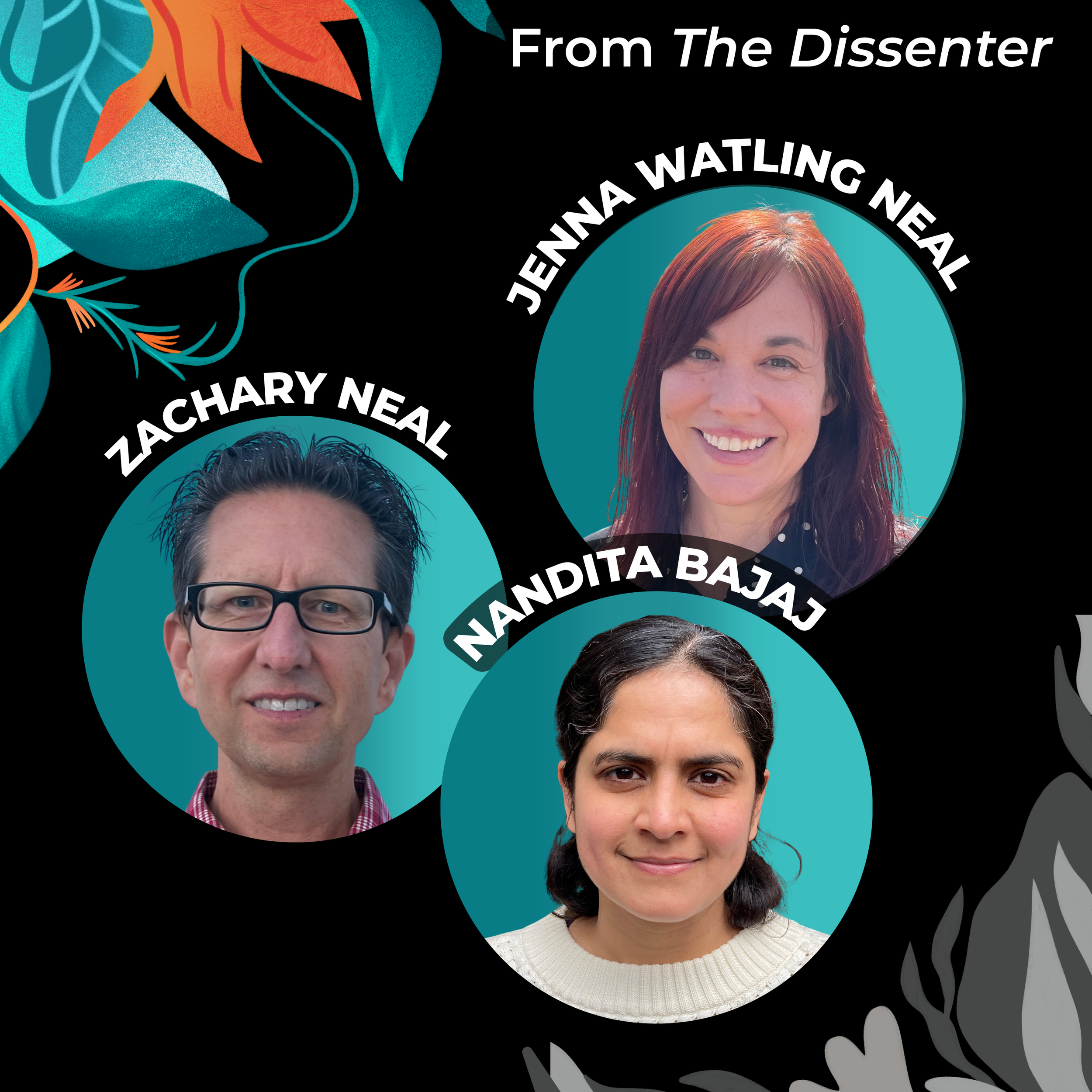



The “birthgap crisis" isn’t supported by the evidence. Nandita Bajaj joins childfree researchers Jennifer Watling Neal, Zachary Neal, and podcast host Ricardo Lopes in this republished episode of The Dissenter podcast. They take on the disinformation prevalent in the film Birthgap, from widespread involuntary childlessness and unmet desires for children to the supposed economic catastrophe of falling fertility, and share the facts from their project Birthgap Facts. Highlights include:
Why the claim in Birthgap that 80% of women without children are “childless by circumstance” is unsupported by the evidence, which shows that the vast majority of people without children have chosen not to have them;
Why declining fertility is increasingly driven by people choosing smaller families, including one and two-child families, rather than primarily by growing numbers of people having no children;
What the evidence shows about parents being no happier or more satisfied with their lives than nonparents, and why regret among people who choose to remain childfree is not prevalent;
Why challenging pronatalism does not mean supporting antinatalism, the belief that having children is ethically wrong;
What the evidence says about claims that people want larger families than they are having, and why greater control over fertility generally leads people to choose fewer children;
Why access to contraception and cultural support for its use has a greater impact on fertility than increasing educational access for girls and women;
How pronatalism can be used by nativists who oppose immigration to encourage population growth among racial, ethnic, or religious groups they consider more desirable;
Why measures such as the old-age dependency ratio can overstate the economic burden of aging by overlooking the facts of healthier older populations, increased female labor-force participation, and fewer dependent children;
How a smaller working-age population can benefit younger workers through higher wages, stronger benefits, and better working conditions;
Why population collapse due to declining fertility rates is not imminent and can't be predicted from current trends.
MENTIONED IN THIS EPISODE:
-
Nandita Bajaj (00:00):
The evidence suggests that as soon as people, especially women, have the choice to control their fertility, they tend to have fewer or no children. And in the last 70 years, fertility rates have been declining from five children on average per woman in her lifetime to now around 2.3. And that is happening across all countries, all religious settings, all political settings, all education settings.
Zachary Neal (00:30):
And so when people have the choice about whether to become parents, increasingly they choose not to become parents. So much of this boils down to the extent to which people have that choice, and maybe even more importantly, the extent to which people recognize they have that choice.
Jennifer Watling Neal (00:49):
And that's sort of a myth that's out there that being a parent is going to make you a happier person than somebody who doesn't have kids. But in our own work, we've looked at the life satisfaction of parents and of childfree people, and we've found absolutely no difference in life satisfaction. We've also looked at late life regret, the amount of life regret that older parents and childfree people experienced over the age of 70, and we didn't observe any differences. So older childfree people had no more life regret than older parents.
Nandita Bajaj (01:20):
Those excerpts are from me, your co-host, Nandita Bajaj, along with psychology professors and researchers of the childfree choice, Zachary Neal and Jennifer Watling Neal on the Dissenter Podcast. Hi everyone. Today we are republishing a recent episode from the Dissenter Podcast hosted by Ricardo Lopes, where he interviewed the three of us about our project, Birthgap Facts. In 2023, along with a group of leading researchers in the fields of demography, reproductive rights, and environmental studies, Population Balance created a website project called Birthgap Facts, a fact-based critique of Stephen J. Shaw's film Birthgap. Our project debunks the film's unsubstantiated assertions that population collapse due to declining birth rates is imminent and that rising childlessness is behind this alleged crisis. Zachary, Jennifer, and I were invited by Ricardo on his podcast in early 2026 to discuss our findings. And here is that conversation.
Ricardo Lopes (02:26):
Hello everyone. Welcome to a new episode of The Dissenter. I'm your host as always, Ricardo Lopes. Today I'm joined by three guests, repeat guest, Nandita Bajaj. She's the executive director of Population Balance. And I'm also joined by Zachary Neal, professor in the Department of Psychology at Michigan State University. And he focuses most of his research on network backbones and childfree individuals. And also Jennifer Watling Neal, professor in the Department of Psychology at Michigan State University. And she's interested in understanding the prevalence, characteristics, and experiences of childfree adults. And today we're going to talk about childfree choices, a critique of Stephen J. Shaw's documentary Birthgap, and pronatalism and some other related topics. So welcome to all of you. Nandita, you're a return guest. Nice to see you again. And Zak and Jennifer, nice to meet you.
Nandita Bajaj (03:27):
Thank you, Ricardo. Great to see you.
Jennifer Watling Neal (03:29):
Thanks for having us on Ricardo.
Zachary Neal (03:31):
Yeah, I'm looking forward to this conversation.
Ricardo Lopes (03:34):
Okay. So Jennifer, perhaps I will start with you. What is it to be childfree? Because I guess that when most people hear the term childfree, probably they have some misconceptions about what it means, right?
Jennifer Watling Neal (03:50):
Yeah, that's a great question, Ricardo. So people who are childfree are people who don't have any children, and more importantly, they don't want any children. So they don't have the desire to have children. And that makes them pretty different from other types of non-parents. So you have some people out there that I would call them not-yet parents. Those are folks that don't have any children yet, but they want to have children in the future. There's also people who don't have any children, but really, really wanted to have children. Those people oftentimes we would refer to as childless. So childfree people, the thing that differentiates them is that they don't have the desire to ever have children.
Ricardo Lopes (04:31):
So childfree is always voluntary, right?
Jennifer Watling Neal (04:36):
It is a voluntary state, yes.
Ricardo Lopes (04:38):
Okay. And childless is the term you would use to refer to people who are involuntarily childless.
Jennifer Watling Neal (04:47):
Yeah, that's exactly right. So sometimes in the academic literature, you'll even see childfree people refer to as voluntarily childless. And childless people refer to as involuntarily childless.
Ricardo Lopes (05:00):
Okay. So just to dispel some perhaps misconceptions here that people might have, does childfree have anything to do with being anti-children? I mean, is it that people who are childfree just don't like children? I mean, does it have anything to do with that or not?
Jennifer Watling Neal (05:20):
No. So being childfree doesn't actually necessarily mean that people don't like children. That's sort of a myth about childfree people. In fact, there's a lot of childfree people out there that are in jobs that are related to children. So it's childfree teachers, childfree pediatricians. So actually being childfree, it doesn't necessarily mean that you hate children. It just means that you don't want to have children personally for yourself.
Ricardo Lopes (05:46):
Yeah. So Zak, perhaps I will ask you this question. Is a childfree choice something that people advocate for or try to impose on others, or is it simply a decision that they make for themselves?
Zachary Neal (06:02):
Yeah, it's a great question. I think it varies by individual. The vast majority of people that we've encountered that are childfree or identify as childfree simply see it as a personal choice they've made for themselves. Now, there may be some people out there who identify as childfree and advocate or identify some of the advantages of a life without children, but being childfree itself is not an advocacy position. Certainly there's no agenda on behalf of childfree people that are attempting to impose or cause other people to not have children. For the majority of childfree people, this is just a personal choice they've made for themselves, and they're perfectly happy that some other people may be childfree. Some other people may want to have children. Some other people are parents, and they're perfectly okay with others living the reproductive lifestyle that they've chosen for themselves. So it's really an individual choice.
Ricardo Lopes (07:05):
I mean, I guess that no one's out there doing activism to try to create policies to prohibit people from procreating.
Zachary Neal (07:15):
It's certainly not something that we've seen.
Ricardo Lopes (07:17):
Yeah, me neither. So I don't know which of you wants to answer this question, but I would like to ask you about, are most people without children as Stephen J. Shaw tries to make the case for in his documentary Birthgap childless by circumstance? Or do they really not want children? I mean, basically the claim in the documentary is, and I'm going to cite it here, a 2010 meta-analysis by Professor Renske Keizer would suggest that 10% of women who are childless are childfree, having chosen not to become mothers, and 10% are childless for medical reasons, including infertility. So that leaves a whopping 80% of women without children childless by circumstance. Is there evidence to back that claim?
Zachary Neal (08:11):
It's certainly a claim that we're familiar with and that we're aware that Mr. Shaw and others have made. We've not been able to locate the 2010 meta-analysis that he refers to in his film, and we've asked him to point us toward this study, and he's been unable to do so. We're very familiar with Dr. Keizer's work on childfree and childless populations. And we've been unable, even in conversation with her, to find anything to support this claim. In fact, Dr. Keizer's own work suggests that among people who do not have children, the majority are voluntarily childless or childfree. And the set of people who are childless by circumstance or childless for biological reasons is much, much smaller. Our own work using data on adults in the United States supports this. We find that among people who permanently are without children, the vast majority are in that situation voluntarily, while relatively small numbers are biologically childless or are what we might call socially childless, childless because they've not been able to find a partner or can't afford to have children. The vast majority who permanently do not have children are in that situation because they've chosen not to have children.
(09:37):
So to answer your question, we've been unable to find any support for Mr. Shaw's claim in our own data. We've been unable to find any support for that claim in Dr. Keizer's research and attempts at asking him for pointing us to the data that supports it have come up empty-handed. So we really don't see any evidence to support that claim.
Ricardo Lopes (09:59):
Yeah. And another claim that he makes in the documentaries, there is no trend towards smaller families. People who do become parents are just as likely to go on to have two, three, four, or more children as decades ago. It's all about having the first child with childlessness having exploded. I mean, is childlessness the cause of declining fertility rates as he argues there?
Jennifer Watling Neal (10:27):
I don't think that there is evidence that it's just childlessness. Certainly folks who are childfree are not contributing to increasing fertility rates. We know that. However, we also are still seeing trends towards smaller families in a lot of places. And Nandita, I know that you did some work on the fact sheet for this, so I don't know if you want to jump in here as well.
Nandita Bajaj (10:49):
Yeah, definitely. Evidence actually shows that there's a strong trend towards smaller families, not necessarily driven by childlessness. In most countries that belong to the OECD, which is the Organization for Economic Cooperation and Development, more and more people are delaying childbirth, so they're having children later and often fewer children. So there has been, for example, a decline in teenage pregnancies within the US that has been a really huge contributor to declining fertility rates. But also there's been a huge decline in the number of people having four or more children. Instead, we are seeing a rise in one child families, two child families. And definitely, as Jenna said, there are more people who are childfree by choice, but they're not that strongly contributing to the declining fertility rates. It's more the delayed parenthood and fewer children.
Ricardo Lopes (11:54):
But people who are childfree, people who decide consciously that they do not want to have children, do we have a good understanding of the reasons behind that decision?
Jennifer Watling Neal (12:07):
So our own research really hasn't asked people why they don't want to have children, but other research has examined that. And people tend to give a really wide range of reasons. So some people might talk about the high cost of having children. Some people talk about restrictions on freedom or career growth. Some people talk about medical risks, and in some places there's restrictions on reproductive freedom that may make people cautious about having children. There's climate change, there's political forces. But at least in the United States, a Pew survey that came out in 2021 found that the majority of childfree adults said that the reason for not wanting to have children is that they just didn't want to have children. So for the most part, it's just a strong desire not to have children that's driving it and not something specific.
Ricardo Lopes (12:55):
Yeah, that's interesting. And one claim that we hear from many people who are pronatalists is that people with children are happier than people without children. Is there any evidence to support that?
Jennifer Watling Neal (13:10):
So there isn't any evidence to support that. And that's sort of a myth that's out there about childfree people and about parents, that being a parent is going to make you a happier person than somebody who doesn't have kids. But in our own work, we've looked at the life satisfaction of parents and of childfree people, and we've found absolutely no difference in life satisfaction. We've also looked at late life regret. So childfree people, especially women, are often told they'll regret their decision later in life, but there's very little evidence that that actually happens. In some of our own work, we compared the amount of life regret that older parents and childfree people experience over the age of 70, and we didn't observe any differences. So older childfree people had no more life regret than older parents. So there's not a whole lot of evidence that parents are somehow happier than childfree people, that they have more life satisfaction, that they have less regret.
(14:05):
Really, what seems to make people happy is doing what they want to do. So if you want to have children, you become a parent, that would make you happy. If you don't want to have children and want to remain childfree, that will make you happy.
Ricardo Lopes (14:17):
It's very interesting because it's always easy for people to find a few cases, a few stories of people who regret not having children to put in documentaries and then try to extrapolate from those specific cases to the broader population and try to make a case that, oh, because particularly women, because they are told that they can dedicate themselves to their career, to professional development, and they can wait until their late 30s or 40s to have children. I mean, that's the reason why they end up not having children and then they regret it. But that's not really one of the reasons that leads people to not having children or is it?
Jennifer Watling Neal (15:07):
Yeah, there's not really evidence of that, at least in the data that we've looked at. And generally speaking, if that were the case, if women were delaying childbirth to focus on their careers, for example, we'd expect to see a lot more of those childless people in our data. The prevalence of childless people would be much higher. Zak spoke about that earlier. But what we see is actually the prevalence of childfree people tends to be higher among permanently childless people. So we're not really seeing evidence of that.
Ricardo Lopes (15:38):
So this is an interesting one. I'm very curious about hearing from you. I mean, what do you think about these questions specifically? Have humans really evolved an instinct to reproduce or simply an instinct to have sex? Because I mean, one thing is different from the other.
Nandita Bajaj (16:00):
Yeah. And I would say in looking at the research from anthropologists and biologists is there's a difference between the word instinct, which is something that we cannot control. It's just something naturally that happens compared to a drive, like a biological drive. We may have the drive to have sex, and that's not even universal, but there's no kind of instinct that we cannot live without it, that it's so natural that we cannot control it. So in that way, neither the desire to have sex nor reproduce could be considered an instinct. But to go further, in terms of the drive, you could say that the capacity and urge for sexual activity is deeply rooted in evolutionary traits that facilitate reproduction. But the specific conscious desire to rear children is heavily influenced by social, cultural, environmental and individual factors rather than a single universal biological drive that everyone has.
(17:14):
Even the fact that throughout history, we have had people who have chosen to not have children, even though it was not as easily accepted, the choice, people always found ways to avoid having children tells you that not everybody's wired to want children. And also you see cases of people who have had children who do not engage in parental or nurturing types of behaviors. And so it would be also wrong to just assume that people who do have children naturally have some kind of a biological drive to nurture. That's not always the case either. Drives like nurturing drives can be cultivated, but for the most part, there's sufficient research to support that not everyone has even a biological drive to have sex or to have children. Sex definitely facilitates reproduction, but for millennia, people have also found ways to avoid that through herbs and abortifacients and natural contraceptives.
(18:23):
But the social bias, and this is my area of research, pronatalism, the social bias to have children is so strong that we're often made to believe that we all are meant to have children. We hear cultural notions of things like the biological clock or the maternal instinct, or even for men, this kind of notion that virility is tied to how many children you have that often drives people to have children not from a liberated or an authentic place, but rather from societal pressures.
Ricardo Lopes (19:02):
Yeah, we certainly live in societies that have a pronatalist bias, correct?
Nandita Bajaj (19:10):
Definitely. Yeah. I mean, pronatalist bias is extremely strong across all cultures, across the political spectrum, across all types of religions. And really the roots of pronatalism can be seen with the start of empires and city states about 5,000 years ago when elites needed to strengthen states by having large populations. And that's when you see very strong delineation in terms of the gender roles where women were expected to produce lots of children and men were expected to participate in war and be strong, et cetera. So a lot of the gender norms came about then. And a journalist and author Angela Saini, her research also shows that in hunter-gatherer societies, women actually didn't have as many kids as they did after the rise of civilizations. So pronatalism really became institutionalized through religion, through laws, through policies, through media, through cultural norms and different punishments that were put into place for people who didn't have children or large families, and rewards and even medals were rewarded to people who had children and large families.
Ricardo Lopes (20:37):
Which is interesting because sometimes we even hear from people who make arguments like Stephen J. Shaw makes in his documentary that one of the reasons why there are more people nowadays who are childless or childfree than before is because people are exposed to ideas like antinatalism or something like that as if antinatalism is or ever was popular in society.
Nandita Bajaj (21:10):
That's another really huge misconception is that when people who are interested in promoting reproductive rights and reproductive autonomy and challenging pronatalism, they are automatically advocating antinatalism, which is not true at all. Antinatalism is a philosophical or ideological position that sees having children as unethical. And that is not the case for most people who are childfree. Like Zak spoke about earlier, most people who are childfree simply want that choice to be available to everyone. And most people who are challenging pronatalism are challenging the coercive pressures that make it difficult for people to make liberated choices. We should be living in societies where whether you become a parent or not are equally valid and legitimate and acceptable choices in society.
Ricardo Lopes (22:16):
So I guess we've already ended up addressing this question to a large extent, but do people who reproduce really tend to want large families? Because that's another kind of claim that Stephen Shaw makes in his documentary.
Nandita Bajaj (22:35):
No. Not only do we not have any evidence to support that, we actually have evidence that supports the opposite. The evidence suggests that as soon as people, especially women, have the choice to control their fertility, they tend to have fewer or no children. And we have been seeing that in the last 70 years, fertility rates have been declining from what used to be five children on average per woman in her lifetime to now around 2.3. And that is happening across all situations, all countries, all religious settings, all political settings. It's really about choice. As soon as people have choice, they tend to have fewer children. On the other end of the spectrum, there are all these politicians and economists and religious leaders who are really panicking about fertility rates declining. And a big reason for that is all of those institutions for 5,000 years have relied on a growing population to keep their institutions strong.
(23:47):
Now that we are seeing this decline happen, really for the first time in history through choice, the institutions that have relied on population growth are being threatened. And so they are trying all sorts of pronatalist policies. Either they are trying to bribe people by giving tax credits and baby bonuses to encourage them to have large families or they are instituting coercive policies like abortion bans and contraceptive restrictions so that people don't have a choice to not have children. They're forced to have kids. In both cases, whether it's coercive or it's supportive pronatalist policies, they are not working. Even in the most progressive Nordic countries where we have very generous parental leave policies, childcare subsidies, healthcare subsidies, great gender equality, shared care work between partners, you are not seeing that trend of declining fertility reverse. And that just shows that once people have choice, no amount of government intervention is going to reverse that because people are not having kids for the state.
Zachary Neal (25:11):
Yeah, I think...
Ricardo Lopes (25:11):
Oh yeah, go ahead. Sorry.
Zachary Neal (25:13):
Yeah. So I was just going to add to Nandita's point. So she was just speaking about the case of Nordic countries, which are very wealthy, very highly developed countries that have lots and lots of supports for potential parents. And we don't see those supports reverse a trend toward lower levels of fertility. We also see that, so Jenna and I have just completed a study of developing countries, largely throughout Sub-Saharan Africa, but really throughout the world. And so looking at the other end of the spectrum, and one of the things we see even in these developing countries that tend to be much poorer, have many fewer resources, one of the strongest predictors of whether or not an individual will be childfree, will choose not to have children, is the country's level of human development. That is the level of access that individuals have to things like education and healthcare.
(26:06):
And so even among these much poorer countries, we see that as access to healthcare increases, as access to education increases, the likelihood that an individual will choose voluntarily to not have children also increases. And so this is a trend that we see among the highly developed world in these sort of Nordic countries that have lots of wealth, lots of supports, but also in much poorer countries. When people have education, when people have access to healthcare, more broadly, when people have an opportunity to choose whether or not to have children, increasingly they choose not to have children. And so much of this comes down to the ability to make a choice.
Ricardo Lopes (26:49):
And I would imagine that having access to education also implies having access specifically to sex education. And in the case of healthcare, having access to planned parenthood. Would those things be included there as well or not?
Zachary Neal (27:06):
Certainly. So access to healthcare could include access to things like contraception, to fertility planning, access to education could include access to sex education, but it also more broadly and especially in developing countries for women, access to education represents an opportunity for self-actualization, the ability to have a career, to have a job, to do fulfilling work. And so as people gain access to these things that allow them to be the person they want to be, it gives them the choice to have children or to not have children. And when people have the choice about whether to become parents, increasingly they choose not to become parents. So much of this boils down to the extent to which people have that choice and maybe even more importantly, the extent to which people recognize they have that choice, that they are not required to have children. They can choose to have children perfectly okay, but they can also choose not to have children.S o much of this has to do with choice.
Nandita Bajaj (28:15):
And if I can add one more thing to bolster that point is there is another study, it's a Swedish study that looked at 136 countries and the fertility data for those countries. And it shows that one of the greatest drivers of declining fertility rates, even ahead of education is access to modern contraception. Even in settings where people do not have the ability to go to school or get higher education, which we believe should be universal human rights, it doesn't need to be a precursor to choice. As soon as people have access to fertility control, regardless of education level, fertility rates start declining across all education settings.
Ricardo Lopes (29:07):
Which is interesting, right? Because pronatalists and particularly the religious pronatalists, not all of them necessarily, but at least some of them also tend to be against contraception.
Nandita Bajaj (29:21):
Yes, it's true, and it's often the case. And you are seeing a lot of restrictions on contraception or abortion are being driven by a combination of nationalist and religious forces.
Ricardo Lopes (29:36):
So let me address another argument that Stephen Shaw makes in his documentary and that we very, very commonly hear from, I guess, all pronatalists and particularly the ones that worry about declining fertility rates. So is there any evidence that we are headed towards population collapse? And I mean, what would population collapse even mean here?
Nandita Bajaj (30:03):
No, there is no evidence that we're headed toward population collapse. Human beings have been around for at least 250,000 years, and for over 95% of that history, our population did not go above 10 million. Today, we are at eight billion and counting. And one of the biggest drivers of population growth has been pronatalist pressures through patriarchal control over women, but also the exponential growth because of access to fossil fuels and industrialization. And so my point is that our current population is the largest population we've ever had in the history of homo sapiens. And we are expected to be heading toward 10 billion people this century. Population is going to continue to grow until the 2080s, and then we might start to see some decline, but very, very slow decline. And demographers are not comfortable projecting past 30 to 40 years. After that, information becomes extremely unpredictable.
(31:18):
And so we don't know what's going to happen after that, but our population is not headed toward collapse. If anything, we are seeing signs of ecological collapse in terms of our biodiversity plummeting and our ecosystems crashing because of the human activity and presence and what we are doing in terms of climate change and other ecological crises we're facing. But in terms of population collapse as the way most people like Stephen Shaw are claiming, there is no evidence to support that we are going to go extinct anytime soon.
Ricardo Lopes (31:57):
And I mean, even if people are a little bit worried, and as you said, I don't think that there's good reasons for people to be worried about even the global population reducing a little bit after it gets to nine or 10 billion. Isn't nine or 10 billion humans more than enough to keep the standards of living we have now?
Nandita Bajaj (32:24):
Having that many people actually interferes with all people having a good standard of living because we currently, even at eight billion and counting, are using 80% more resources and producing more waste than earth can handle. And there is great inequality in terms of how those resources are distributed and how the impacts of these ecological crises are distributed where some of the countries with the highest fertility rates often are also the countries that are going to suffer the most from migration and death because of these issues. And so currently we don't have enough at this level of population to allow everyone a good standard of living. And so a declining population actually enables us not just to have more habitable planet, but also to be able to distribute resources and wealth more equitably across all populations.
Ricardo Lopes (33:27):
Do you think that there's evidence to claim that? I mean, because some people are worried about declining fertility rates, particularly in the more developed countries. Do you think that if we have enough people in the world that perhaps some of these people are anti-immigration because what they really want is for the right people, the right people in their mind to have babies and not just people in general?
Nandita Bajaj (33:59):
I think it's fair to say that in many cases that is true. A lot of the current pronatalism within these industrialized countries is being driven by anti-migrant rhetoric and sentiments where yeah, there's a concern that we don't have enough of the right kind of people, so we don't want to bring other people into our countries. You can see that in Hungary. Urban made the statement that for Hungary, we need more Hungarian babies. For us, migration is a form of surrender. You're seeing that current rhetoric in the United States where while at the same time President Trump is pushing for a lot of coercive pronatalist policies, he calls himself the fertilization president, there's also a real anti-migrant sentiment there. So it is true for many countries, but it's not necessary for pronatalism to be alive and well. Even countries that are pro-immigration can be very pronatalist.
(35:02):
They just want more people, doesn't matter who they are. And they are often driven by economic reasons. They just want to keep the economy growing. And I can speak to that later if you like.
Ricardo Lopes (35:15):
Yeah, I mean, I was just trying to say that certainly, at least in some cases, there's a link between a pronatalist narrative and a far right racist xenophobic narrative.
Nandita Bajaj (35:30):
Very much so. Yes.
Zachary Neal (35:33):
One thing I might add is this link between pronatalism and far right ideology may occur in some places. It may be tenuous in other cases, but there's also a subtle link when we think about the metrics that get invoked in these conversations. So on the one hand, the focus is often on a country's total population. And the concern is often expressed in terms of a falling total population and the implications of that for the country's economic and social wellbeing. On the other hand, the focus is often on things like fertility rates, which are only focused on the number of births in a country. And by focusing on those two metrics, it sets up a dialogue in which the speaker sort of implies the only way to increase a country's population size is by increasing its fertility rate by having more native births. And obviously that's not necessarily the case.
(36:32):
A country's total population could increase by having higher levels of immigration, but very rarely does migration feature into that conversation. And so by focusing on the one hand, total population size, and on the other hand, fertility rates, it implies and sets up this impression that the only way to boost a country's population is by boosting fertility. But that's simply not the case. There are lots of different factors that influence a country's total population size. Fertility is really just one of those pieces. So some of this link between pronatalism and immigration is baked right into the metrics that are used in these sorts of conversations.
Ricardo Lopes (37:16):
Another issue that we haven't tackled yet has to do with aging populations. I mean, is it really the case that aging populations necessarily need more babies? And that's another claim made by Stephen Shaw in his argument. So what do we know about that?
Nandita Bajaj (37:37):
Yeah, so that is probably one of the most common arguments that is being brought forth when it's not driven by religious or nationalist reasons to grow fertility. Many progressive countries are concerned about falling birth rates because of economic reasons, primarily being this notion that we will not have enough working age people to support the social security or pensions and healthcare for an aging population. And that is based on a metric called the old age dependency ratio, which was developed about 75 years ago that looks at how many people there are working age. If you can believe it, the UN still uses 15 to 64 as their working age population and 65 and above and 15 and below as dependents, young people and old people that are dependent on the working age population. And the metric is quite old. A lot of people who are still using that metric are failing to see the dramatic shifts that have happened in the last 75 years.
(38:53):
Number one, people are living longer and healthier lives. So a 65-year-old today is likely to be active and working and wanting to stay active. It's true for many people that depending on their health, most people want to remain employed in meaningful work and are employed beyond 65. The other issue here is as fertility rates have gone down in the last 70 to 75 years, we have seen female labor participation rates go up significantly. So that is missing is more older people are working, more females are working, but also there are fewer dependents under 15 because people are having fewer children. So the weight of dependence from the lower end of the age group is shifting more toward the higher age group. And the third part is that since people are living healthier lives and longer lives and in most industrialized countries, they do not require serious health support until the last several years of their lives.
(40:07):
So this notion that as soon as you turn 65, suddenly your health bills are going to skyrocket, are based on an outdated metric, which is not representative of today's data. And the other thing that's often not talked about is the extreme chronic degree of joblessness among people who are jobless, not by choice, but because of discrimination. It could be ageism, it could be sexism, it could be ableism. So people with disabilities, people who are seniors, people of color, people who are foreign-born migrant workers often are unable to find work because of discrimination. So there are so many opportunities for policies to actually become more caring and more inclusive if you really wanted to solve that issue of having a greater working age population. But in my work, we also really challenge this notion that we need to just keep feeding the machine basically to keep our labor inputs high so that we get money to support the elderly.
(41:21):
We need to really shift our economic structure so it's not constantly dependent on this input of growth. We just need more people, whether it's children or migrants, to keep that formulation going. We need to shift our economic structures. There are lots of different economic models that are out there that talk about wellbeing and caring economies rather than growth economies. And so there's no shortage of ideas here. Another thing to discuss would be why are people like Stephen Shaw and others not challenging the extreme inequality and wealth distribution? The fact that the top 1% has more wealth than the bottom 50%. There is such an immense opportunity there to apply appropriate progressive taxes there to help with redistribution that can then go toward social safety nets like retirement pension and healthcare for older and younger people alike. It's just a really outdated and kind of sexist and ageist argument that we need to keep producing more babies to help elderly people who are seen as burdens.
Ricardo Lopes (42:38):
Yes, we can tax the rich of course, but then there's also the thing that many of these people do not consider in their projections when it comes to social security in the future and so on. That has to do with over time productivity tends to increase. And so if productivity increases, we need actually fewer people to sustain the same number of retirees. So I mean that's another thing. And it probably will go on increasing due to new technological developments and so on, and people having higher and higher education. So it's to be expected that it will go on increasing and that will also contribute to us needing fewer people to sustain the same number of dependent people. And the other thing as well that I would add is that we tend to think that just because we pay pensions to older people, that's just social spending, but actually those people also contribute to the economy because they have to spend their pensions in different kinds of services and products.
(43:54):
So it's not that we are just spending that money that at the end of the day, the economy's negative, right?
Nandita Bajaj (44:03):
Yes, that's right.
Ricardo Lopes (44:04):
So about the growing population, Nandita, you've already mentioned that of course it's bad for the environment, the climate for us to have more and more and more people consuming and polluting and so on. But I guess that the other thing here as well that many times people do not consider is that having fewer people also has benefits in terms of accessing social services and better wages. Because when there's fewer workers, usually wages go up, for example, and it's easier for the state to provide good quality social services to fewer people as well.
Nandita Bajaj (44:48):
Definitely. And that's a great point that you bring up is for all of the panic around declining fertility rates and not having enough people in the workforce, part of that is a constantly growing population allows companies and industries to keep wages low because it keeps competition high, which means the benefits and the working conditions that are being provided for people are often quite poor because they are seen as easily disposable. Someone else will work for cheaper if you don't want to work. Whereas if you have tighter labor markets, it does provide opportunity to provide greater wages, greater working conditions, greater benefits, but also to make the workplace more inclusive toward people who are unable to find work because of discrimination, as I mentioned before. So I agree with you that fewer people provides not just better working opportunities, but also as Zak talked about, human development index goes up because you don't require all that money to go toward building more infrastructure and more hospitals and schools, et cetera, but you can put that money toward better social services for the people who are currently there.
(46:17):
In many countries where population is still growing really quickly, the services and infrastructure is not able to keep up with the growth in population. And so you see the human development index quality is very, very poor because there's not enough services and money available to support the people.
Ricardo Lopes (46:40):
So a different kind of question now about women's reproductive rights, because as we've already mentioned here, many pronatalists tend to support policies that are, for example, anti-abortion, anti-access to contraception and so on. So would you guys say that pronatalism generally speaking also represents a threat to women's reproductive rights?
Jennifer Watling Neal (47:10):
Yeah, I think it can. So we have seen in some cases pronatalist policies that roll back reproductive rights. In the US, the right to abortion had been protected by the Supreme Court decision Roe v. Wade. But in 2022, that decision was overturned by Dobbs v. Jackson, for example. And after that decision, abortion and other reproductive rights varied by the state. And what's interesting about it though is that we also know that when reproductive rights are rolled back or when there's threats to reproductive rights, that might actually backfire in terms of doing what pronatalists want. So pronatalists want that to lead to having more births, but we kind of studied this in Michigan. So in Michigan, there was significant confusion after Dobbs v. Jackson. There was a zombie law in the books that made abortion illegal. And so when Dobbs v. Jackson came out, that law was there.
(48:03):
And then there were multiple conflicting court decisions during that period where things kind of went back and forth whether women had the right to an abortion. And we actually studied the childfree prevalence during this confusion. During that period of confusion, we observed that the number of Michigan adults identifying as childfree rose from 21% before the decision to nearly 26% right after. So these policies, even though they're sometimes rolling back women's rights to reproductive care, they can actually lead to more women deciding, I'm just not going to have children because I don't have the reproductive healthcare, for example, available to me. And Nandita, you probably also have thoughts about those as well.
Nandita Bajaj (48:45):
Yeah. Thank you for that specific example in the US, because I think it's so helpful to see that. And I think pronatalism in general is very harmful to all people in general because it really prevents authentic liberated decision-making, whether it's subtle pressures coming from parents to give them grandchildren, or it's messaging in the media about gender reveal parties or baby bumps in terms of celebrity gossip. It's this notion that everybody wants to have children, everybody should have children. It's like romanticization of parenthood when in reality it's not the case for most parents. That is not what it looks like, the way we see it in movies. But to answer your question more directly about a threat to reproductive rights, pronatalism is so pervasive across the globe that people who are unable to have children or don't want children are often ostracized or marginalized or punished in society.
Ricardo Lopes (49:52):
Particularly women. Right.
Nandita Bajaj (49:54):
Particularly women. And if you look at what are the drivers of population growth today, it is heavily coercive pronatalism. So I'll give you some statistics. Today across the globe, including progressive countries with strong gender equal laws, half of all pregnancies are unintended. And that's because of pronatalism. There's even internalized notions of people not wanting to have an abortion because there's so much stigma attached to that or lack of access to contraception. But then 640 million women and girls that are alive today were married as children. So child brides who then went on to have lots of children while they're still young is one of the greater reasons for population growing, and that's a form of pronatalism. And if you look across the globe, especially in lower and middle income countries, there are over 250 million women who want to avoid the next pregnancy, who don't want to have a child or another child, but they cannot make that decision.
(51:12):
And that sometimes is a problem with access. They cannot access healthcare services, but more often than not, it's these religious and cultural messages that prevent women from actually exercising that choice, myths that using contraceptives will make you permanently infertile or it'll give you cancer or it's a sin. And same goes with men. Not producing enough children or not having any children, means you're not a masculine man. And men will get punished in their own ways by being pushed out of communities and societies if they don't have children. So yes, pronatalism of any kind prevents liberated choices, but especially the coercive kind is a direct threat to reproductive rights because women and girls are getting illegal abortions and dying from those because legal abortions and legal contraceptives are not available.
Ricardo Lopes (52:17):
Yes. Earlier when I asked you directly about women's reproductive rights, it was not because I was trying to imply that men cannot be victims of discrimination for being childfree. Of course they can be, and they are. It's just that since it's women or females that basically get pregnant, they are usually the ones that tend to get most discrimination from society. They are the ones that are discriminated the most for being childfree, not wanting children and so on. And I mean, when it comes to abortion specifically, it's interesting because actually many people argue, and even doctors and people who are associated with healthcare argue, and I think rightly so, that abortion is a healthcare issue because women who don't want to have children, I mean, they're going to do abortions anyway. It's just that they're going to do them in environments that are not safe, that are not in a clinic or a hospital.
(53:22):
And so it's a matter of healthcare. And also the other thing is that anti-abortion policies actually tend to promote abortion because the number of abortions go higher when there's not a legal access to abortion. This has been studied, for example, in Nordic countries here in Europe, which have the most progressive policies that are the most gender equal and so on. The number of abortions actually goes down by it being legal and accessible in the healthcare system.
Nandita Bajaj (54:00):
Yes, that's an excellent point, Ricardo. And Guttmacher Institute is another great research think tank that provides a lot of data on what you just said. Countries, nation states that don't have strong reproductive healthcare access tend to see increase in illegal abortions. Because like I said, half of all pregnancies around the world are unplanned. Meaning even if you are using contraceptives, no contraceptive is fail-safe. And so these accidents happen, and so abortion should not be seen as some kind of a last resort. Availability to legal abortion should really be part of reproductive healthcare because so many pregnancies are unwanted and unplanned.
Ricardo Lopes (54:50):
Yeah. So is there anything else you would like to add? Some final message just before we go. I mean, anything else about topics that we've discussed here like childfree choices or pronatalism that you would like for people to know?
Zachary Neal (55:08):
Ricardo, I guess one closing point, and this is something that we've heard from others as we've shared some of our research on childfree adults, just to remind your viewers that much of this is about choice. And for those that have children or are maybe considering having children, want to have children, if that's what they want to do, that's fantastic, and they should. And I think everyone would wish them the best. But for those of you, your viewers who don't want children, our research is increasingly finding that that's a very large population. If they choose not to have children, they'll be joining a very large group of others who have also chosen not to have children. And that choice is okay too. I think one of the messages we're trying to get out in our research is not to advocate that people have children or advocate that people don't have children, but to advocate choice and to encourage people to follow the reproductive life course that makes sense for them.
(56:07):
And for some people that's having children and for other people that's not having children. And both paths are okay. Both paths are normative. They'll find themselves in good company no matter which direction they choose.
Ricardo Lopes (56:21):
Great. So Nandita, Zak, Jennifer, thank you so much for coming on the show. I really love your website, by the way, the Birthgap Facts website. So thank you so much for doing this. It's been great fun to talk with you.
Nandita Bajaj (56:36):
Thank you so much, Ricardo. It was great to talk to you.
Jennifer Watling Neal (56:40):
Thanks, Ricardo.
Nandita Bajaj (56:41):
That was a republished episode from the Dissenter Podcast. If you enjoyed this conversation, be sure to check out Ricardo's podcast. We will return with the regular interview for our next episode of the OVERSHOOT Podcast in two weeks. Thanks everyone.