
The Oceans’ Deadliest Animal
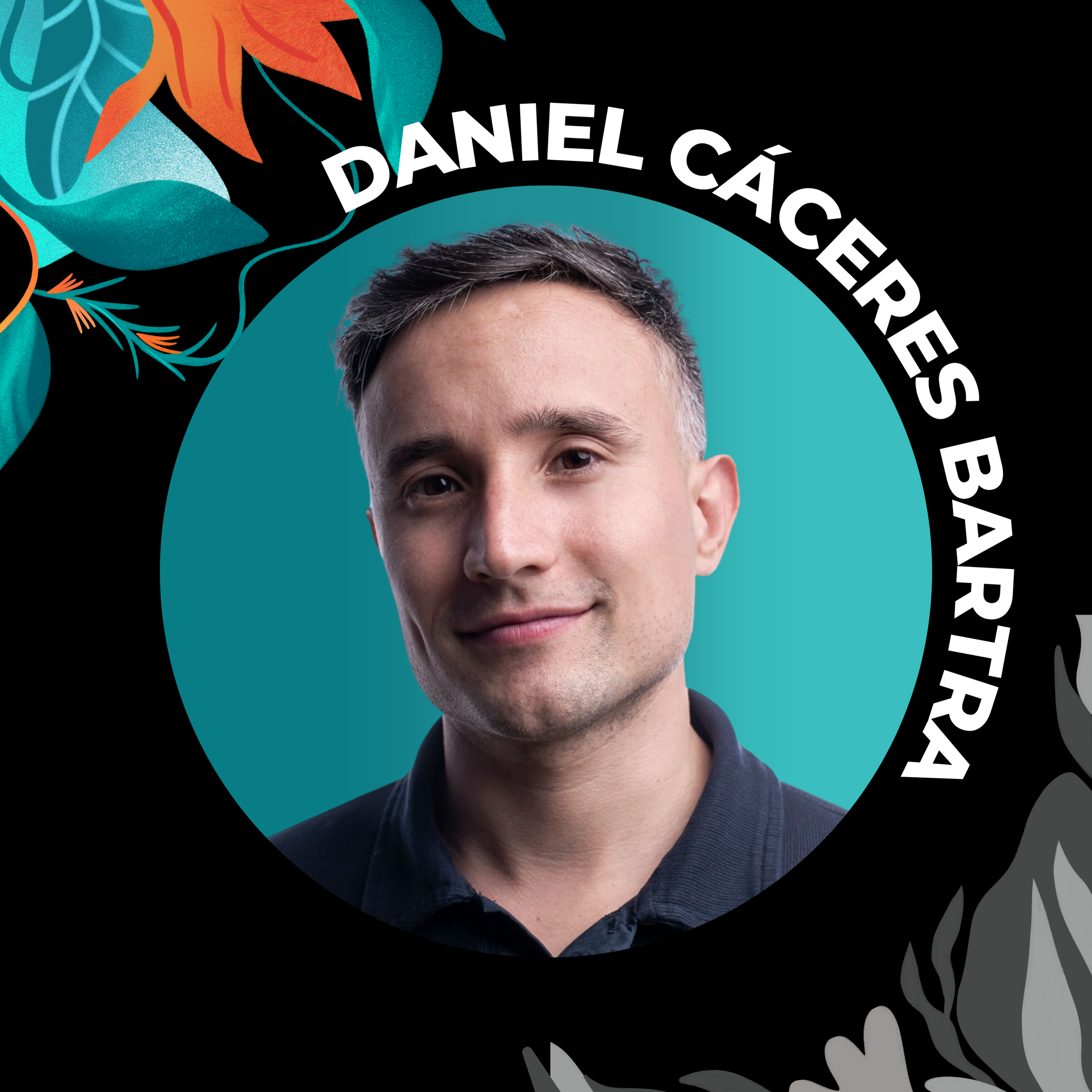



Oceans are the next frontier of destructive human expansionism and extraction. Marine biologist and ocean life advocate, Daniel Cáceres Bartra, argues that human population growth and expansionism have already devastated nonhuman life on land, making it critical to protect the oceans before they suffer the same fate. From overfishing to deep-sea mining, Daniel advocates for top-down international action to protect marine life before humanity consumes the last great frontier of biodiversity. Highlights include:
How Daniel became disillusioned with the fact that academic marine biology in Peru was captured by the commercial fishing industry and decided to pursue ecological advocacy;
Why Daniel believes that ‘waiting until we have enough science’ to protect biodiversity means more species will experience population crashes and biodiversity loss;
How Daniel's experience as a diver inspired him to protect life in the oceans before humanity decimates marine life as it has wildlife on land;
Why the assumption that small-scale fishing means small-scale impacts on marine biodiversity is misguided;
How the denial of small-scale fishing's impacts can also extend to the false assumption that indigenous groups, whose populations numbers and technological sophistication continue to grow, cannot also engage in overfishing;
How deep sea mining threatens fragile ocean ecosystems and why resisting it offers a rare opportunity to stop an industry of destructive extraction before it begins;
Why Daniel is a firm believer that, despite the fact that they're often not popular, international, top-down approaches are required to protect biodiversity;
Why Daniel sees human overpopulation and the resulting human expansionism into virtually all ecosystems on Earth as inarguable ecological facts that explain much of our biodiversity crisis.
MENTIONED IN THIS EPISODE:
-
Daniel Cáceres Bartra (00:00):
So there's an assumption that small-scale fisheries, for example, means small-scale impacts. And there's an assumption that traditional communities can actually coexist with nature in a better sense. So there's a complete denial of the impact that human context overall has on biodiversity, regardless of their identity, regardless of their origin, regardless of their tradition, there's always an impact to biodiversity in a sense, and it's specifically with the amount of people that we are today. So you cannot talk about the 1%, you cannot talk about the issue with industrialization, you cannot talk about capitalistic system and deny overpopulation. So every time I'm in the UN spaces and they say, Hey, well, you have to consider the local communities, I always mention, when you talk about local communities, do you mean also the dolphins? Do you mean the fish? Do you mean the reef? Because actually the ancestral communities in all the coastal areas is biodiversity. Biodiversity was established millions of years before the arrival of any human in our coast.
Alan Ware (01:00):
That was marine biologist, dive instructor, and ocean advocate, Daniel Cáceres Bartra. In this episode of OVERSHOOT, we'll hear him talk about the devastating impacts of human expansionism on ocean life and his efforts in combating population denial, human supremacy, and industrial extractivism.
Nandita Bajaj (01:30):
Welcome to OVERSHOOT, where we tackle today's interlocking social and ecological crises driven by humanity's excessive population and consumption. On this podcast, we explore needed narrative behavioral and system shifts for recreating human life in balance with all life on Earth. I'm Nandita Bajaj, co-host of the podcast and executive director of Population Balance.
Alan Ware (01:55):
I'm Alan Ware, co-host of the podcast and researcher with Population Balance. With expert guests covering a range of topics, we examine the forces underlying overshoot - the patriarchal pronatalism that fuels overpopulation, the growth-obsessed economic systems that drive consumerism and social injustice, and the dominant worldview of human supremacy that subjugates animals and nature. Our vision of shrinking toward abundance inspires us to seek pathways of transformation that go beyond technological fixes toward a new humanity that honors our interconnectedness with all of life. And now on to today's guest.
(02:35):
Daniel Cáceres Bartra is a marine biologist, diving instructor and representative for the Sustainable Ocean Alliance, SOA. In 2017, he founded SOA Peru, currently the largest network of young ocean leaders in Peru. Daniel has been an ocean advisor for presidential candidate Veronika Mendoza, an advisor for the vice president of the Peruvian Climate Change Commission Congressman Ed Malaga. He's led the youth summit at the Costa Rica Immersed in Change event. He's also been a youth delegate for Our Ocean conferences, part of the official Peruvian delegation for multiple climate conferences, part of the French delegation for the Montreal Convention on Biological Diversity and an observer at a conference of the International Seabed Authority. Daniel received the Agent of Change Award from the Scientific University of the South in 2017, and he was mentioned as Latin America's 100 Most Committed Climate Figures by Forbes in 2023 and by Sachamama in 2024. He's a Mission Blue co-champion for the Tropical Sea of Peru Hope Spot. He won the Population Matters Earth Champion Award in 2024 and is part of Explorers Club 50 in 2025. And now today's interview.
Nandita Bajaj (03:52):
Hi, Daniel. Welcome to the OVERSHOOT Podcast. We're really excited to have you here.
Daniel Cáceres Bartra (03:57):
Thank you so much to both of you to have me here. It's an honor to be here.
Nandita Bajaj (04:00):
And Daniel, you bring together such different perspectives as both a marine biologist and a dive instructor while also having deep experience with ocean advocacy and youth organizing in protection of ocean life. And your advocacy has given you firsthand experience with navigating the intersection of science and politics in Peru and in the international campaign against deep sea mining. We're really looking forward to learning more about the oceans as well as your efforts in protecting ocean life today. What led you to become interested in ocean life, study marine biology, and then become an advocate for the protection of the oceans?
Daniel Cáceres Bartra (04:42):
So ever since I was little, I've always wanted to work with biodiversity, with life. I first wanted to be a palontologist because I wanted to study life in the past before us, and then wanted to be an entomologist because I wanted to study insects. And then I realized that studying insects, for example, made me have to work on plate control and pesticides, and it's something that I didn't want to do. I wanted to take care of our life overall. And then Peru had just recently opened what's marine biology. There's only one university in Peru that has marine biology, even though we're an ocean nation. So I was like, this is going to be a good adventure. I think this is something that's going to make me work close to biodiversity. So that's why I studied it and it opened up the whole ocean biodiversity world for me.
(05:24):
And then since diving, I think I have been able to see the life of the ocean from a perspective that's not utilitarian, that's actually very coexisting, where we have to observe or just watch. So I think divers have a very special relationship with the ocean than not everyone that lives with the ocean have.
Nandita Bajaj (05:43):
Indeed. And you've talked about how while you were studying marine biology, a lot of what you were encountering among your professors was a very utilitarian worldview of studying ocean life and often in the interests of the fishing industry, et cetera, which is huge in Peru. Can you talk about your experience in academia as you were navigating your desire to protect life while pushing back against this utilitarian worldview?
Daniel Cáceres Bartra (06:15):
Yes. So first, like I mentioned, Peru has only one faculty of marine biology that has just been recently created. Well, at the same time, there's been fishing science for more than a century that have been existed in Peru. All around the coast, there's fishing science, fishing science, fishery science, fishery science. So our perspective in Peru is very on the industry, on fishing, on fishermen, on giving voice to fishermen, giving voice to extractive companies. We are one of the world's biggest fishing countries because of anchovy, for example. And also at the same time, we come from an academia world that's very passive, very submissive to the status quo. So usually you don't challenge. If you work in the academy, you create science for the industry, you create science for the fishermen, you create science for the government whose interest comes in representing the economic sectors and also the social sectors like the fishermen constantly.
(07:09):
So actually having a precautionary approach to things or having an ecosystem based management, something that is considered basic around many of the world's fisheries countries is considered radical here. Considering even, for example, establishing quota that considers other species, mammals, birds, it's ridiculed constantly. So there's a very big challenge from bringing these questions up. Even for example, for marine protected areas, Peru has one of the least amount of marine protected areas. We have less than 7% of our country has marine protected areas, but at the same time, that 7% of marine protected areas is based on six marine protected areas. And this six of them allow all fishing practices to still occur inside of them. Why? Because for Peru, the vision has been that we create marine protected areas that can coexist with people, so we still allow them to fish inside. So there is an assumption that small- scale fisheries, for example, means small-scale impacts.
(08:12):
And there's an assumption that people that have identity and people that have connection can actually coexist with nature in a better sense. So there's a complete denial of the impact that human context overall has on biodiversity regardless of their identity, regardless of their origin, regardless of their tradition. There's always an impact to biodiversity in a sense. And it's specifically with the amount of people that we are today. I mean, in Peru right now, we're 31 million humans that require protein daily to survive. And a big amount of that protein comes from the ocean. So there has been an impact with increasing protein demand specifically as we're growing constantly in there. So I usually challenge the narratives in Peru. It's not like the rest of the world, for example, like the Global North where they're usually the biggest impact is only from the big companies. Here's some of the big impacts not only comes from the industry, but also comes from the small-scale fisher.
(09:08):
So every time I'm in space and they say, Hey, well, you have to consider the local communities. I always mention, when you talk about local communities, do you mean also the dolphins? Do you mean the biodiversity, the fish, the reef? Because actually the ancestral communities in all the coastal areas is biodiversity. Biodiversity was established millions of years before the arrival of any human in our coast. The first coastal humans that we had in Peru arrived around 16,000 years ago while biodiversity in the coastal areas established with the Humboldt ecosystem more than three million years ago. So the true ancestral local communities here is biodiversity and no one usually advocates for them.
Nandita Bajaj (09:47):
So well said. This is one of the many aspects of your work that we admire so deeply is how you challenge this notion of human supremacy of what community even means and who gets to decide what belongs to whom and the way we've taken over what we call resources from nature. And as you describe the harms that the extractive industries have done, you've also become a really steadfast advocate for ocean life. Can you talk about what brought you to that kind of work shifting away from your background in marine biology in academia to deciding to become an advocate?
Daniel Cáceres Bartra (10:32):
I think it was basically the frustration that constantly there's so much issues going on with biodiversity, biodiversity loss is increasing rapidly, dramatically. And the constant push for the, we're not going to act until there's enough science. And that's a big frustration because we're never going to have enough science. If we're going to wait to have enough science, if we're going to be able to have the experts in every taxonomic field, if we're going to wait to have the technology that we need to do all the assessments that we need to just start acting to protect biodiversity, we're going to have species going extinct. We're going to have populations crash constantly. And I've seen the academia be complicit where they usually say, oh, well, we cannot create a marine protected area because you have not done enough assessment on this taxonomic group or have you assessed the nutrient cycle on this water column?
(11:25):
If we wait to have enough science to actually be able to create the necessary measures that biodiversity need, it's really going to take us down a path where humans itself are going to be harmed because we're going to start losing biodiversity services that provide to every human group, specifically the vulnerable human communities that we advocate for constantly. So I think that there's a moment where we really need to start just promoting of action, precautionary approach, conservation approach, even if it's uncomfortable to economic sectors and even if it's socially uncomfortable to vulnerable groups, because right now we're in a biodiversity crisis. It's usually not getting enough attention as a climate change crisis.
Nandita Bajaj (12:07):
Yeah, we totally agree.
Alan Ware (12:09):
And you've had so many hours exploring underwater life and we're wondering what you've experienced on some of those dives that's really changed your understanding of the ocean in a way that just reading scientific papers, looking at data on a spreadsheet never could. Could you share some of what diving brings to you in terms of your deeper awareness of the ocean?
Daniel Cáceres Bartra (12:32):
Yes, absolutely, Alan. So terrestrial ecosystems have been crashed. That's something that we know in data wise, and we know that the foundation of ecosystem, which is the loss of biodiversity of ecosystems, have actually existed and co-occurred with human arrivals to ecosystems. In the Australia ecosystem, biodiversity loss started 40,000 years ago. In the North American South American ecosystem, it started 19 to 17,000 years ago. In the Rapanui Island, which is usually used as an example, there was a complete ecocide around a thousand years ago when the Rapanui community first arrived to the Rapanui Islands. So there was a big trend of loss of biodiversity in terrestrial ecosystems that has always co-occurred with the rival of humans, independent of their tradition, independent of their consumption rate, independent of their religious beliefs, independent of their mythological views of their practices. There was still an impact to biodiversity that occurred and biodiversity loss.
(13:28):
But on the ocean, it was complete difference. Biodiversity loss has actually occurred much more recent because the ocean has been a big frontier. We're talking about ocean, we're talking about more than 96% of all the living space for biodiversity that there is because we're talking about not only the superficial area, but we're talking about depth. The average depth of the ocean is 4,000 meters. So we have not been able to impact as we have been able to impact terrestrial ecosystems. So in the ocean, in the marine ecosystem, there's a huge opportunity and there's a huge opportunity to also see how biodiverse and how actual ecosystems used to work before humans impacted and before humans occurred. And that's why me diving, for example, and working with ocean biodiversity, I still have been able to see megafauna. We can still see the big whales. We can still see whale sharks.
(14:19):
I've still seen dolphins, still seeing big fish. This megafauna that interrestrial ecosystems went to extinct pretty quickly as humans arrive, this megafauna can still be seen in the ocean. And megafauna is an indicator of the health of an ecosystem. So the presence of megafauna still shows me that there's still a lot of hope and to prevent the same mistakes that we made in terrestrial ecosystems that we have. And it's crazy because there's a concept that's called shifting the baseline. So it's like if I've seen the ocean, let's say for 20 years and I can say, oh, 20 years ago I used to be able to see this fish, but now I don't see it anymore. But then I ask someone that's older than me, his baseline is going to be longer and longer and it's going to give me a clearer view of how the ecosystem actually functions.
(15:03):
But in my baseline, which is I'm 31 years old, I've seen rapid changes. I've seen dramatic loss of ecosystems. I've seen invasive species. I've seen what dead zones have done with lack of oxygen reefs. I've seen what oil spills have done and how difficult it has been for them to recover after two or three years that it makes me wonder how actually ecosystems will be able to thrive if we take out all the human pressure overall. So I think diving has been able to give me a sympathetic view and really a non-utilitarian view because divers, you cannot take anything. You cannot hunt if you can do scuba diving. And that's why I'm at the UN spaces and they're always wanting to include local communities and traditional communities in the space. I'm like, Hey, hey, if you're going to include local communities, don't just include fishermen, include divers, include the surfers, include the women's swimming group that's constantly swimming there. Why are you only constantly including the fishermen as if they have a superior intrinsic value and relationship with the ocean that the rest of us don't have?
Alan Ware (15:58):
And as a diver, you must be confronted with your own ignorance about what you're seeing on a daily basis, right? There's so many interactions between all the organisms down there that there's no way your book learning or any spreadsheet is going to give you that information. So the wonder that you receive, I imagine on those dives just accentuates your ignorance and your curiosity and desire to protect what you don't understand.
Daniel Cáceres Bartra (16:24):
Exactly. And why we don't need to understand it all to be able to protect it.
Nandita Bajaj (16:28):
Yes. And I often hear from so many people who use this reason as a justification for wanting to travel to exotic places so that they can see all of the wildlife that exists, so they can convince themselves that it's worthy of moral concern or worthy of protection. But as you're doing, and as we often say, one of the best things we can do to protect the wild is to leave it alone. And you've spoken a little bit about the threats that you are seeing in ocean life. Can you talk about what some of the primary threats are to life in the ocean from human activities now?
Daniel Cáceres Bartra (17:08):
Yes, absolutely. So I think most of the threats that I constantly see are because of human expansion. I see how constantly as our population is rising, we're expanding our distribution along the coast, which means new housing on the beaches, new motorized vehicles on the beaches, new stores, new pollution sources, new water extraction sources, new invasive dogs being introduced in beaches, new people interacting with marine birds that are resting or with sea lions that are given their offspring. So I think the biggest impact that I see, it's coming because of expansion of range and distribution, which is coming specifically because of our increased population size in Peru. I've seen how, for example, when I was little, when my parents used to go to pristine beaches, beaches that had no people, no one inside for kilometers. Now these beaches either one of them has an urbanization. If you go around there, you see pollution now there also, you see dogs tackling birds and we used to see crabs all around cleaning the beaches.
(18:06):
Now you don't see crabs because people are on their four-wheelers and their cars just running over and can destroy crab populations very quickly. I've seen, for example, a couple years ago, we went to the Paracas Reserve, which is a coastal reserve, which allows tourism because I think it kind of denies the impact of tourism that it has. And I went with some friends paragliding and one friend came back and he brought two eggs, which were ostredos eggs. He said, Oh look, I found this on the beach. I was like,This is an endangered specie. The reason this is a reserve is because these birds nest on the beach and you're bringing them. He's like, Oh, I want to leave them back. It's like, There's no way. You're not going to recover them. I mean, you've already touched it, you're going to leave it there. And this bird's nest specifically on the sand, on the sand where the motorized vehicles, on the sand where people spend their summer on, so many issues that are not on papers, but you can constantly see and understand very quickly.
(18:57):
For example, in the north of Peru, it's a place where there's not so much people, but this is what's so interesting is that what I mentioned in the beginning, small-scale fisheries or small-scale extraction doesn't mean small-scale impacts. And what I mean by that, when we talk about, for example, reefs, biodiversity in every ecosystem, sometimes there is not enough population density of the animal. For example, parrotfish, there can be two parrotfish or three parrotfish per reef. So just one local spearfisher can destroy a complete population of parrotfish in one day in a reef. And what that means is that with no parrotfish, you don't have any more control of invasive caulerpa algae, for example. And now the reefs in the north of Peru, they're filling up with invasive caulerpa, expanding, expanding, expanding farther north to the northern ridge of Peru where it used to not be seen.
(19:48):
And it's pretty interesting because for example, even in this protected area that was created in the north of Peru, they allow the spearfishers to go into the reefs because again, comes to the notion that these people have been living with coexisting with nature for hundreds of years, thousands of years. The traditional communities, therefore they can coexist with nature. No, no, no. Small-scale extraction does not mean small-scale impacts. Even traditional communities are expanding their range also, expanding their practices, expanding their traditions. Grouper, for example, there's this grouper that has not been seen since 1986. And talking to some, for example, local fishermen in there, I was like, You know this grouper species that you're hunting, it usually takes six to seven years for them to mature. And their answer was, Oh, that's probably why I've never seen them have complete sexual reproductive organs in the ones that we take out. So there's probably a couple groupers that are hidden there in caves that are sustaining this whole extraction mechanisms.That's why it's so important to also create no-take areas, no-take marine protected areas because every human group has an impact regardless of their context, regardless of their tradition, regardless of their origin, how long they've been there.
Nandita Bajaj (20:53):
Yes. And I think often this justification that it's traditional communities or indigenous practices that we need to protect forgets the role that cultural imperialism has played in spreading through a lot of these colonial mentalities like extractivism, like development and growthism and consumerism, et cetera.
Daniel Cáceres Bartra (21:15):
Yes, I think the colonial perspectives have brought in the mass intensification, has brought the economic aspects that has increased destructive mechanisms, but also has brought, for example, many of the aspects that have also allowed for population growth to expand, for example, the creation of the modern medicine that's allowed for a more successful birth rate of increase of child survival. We lost our predators around 30,000 years ago. They used to help control populations because over a million years, our human population has been less than 100,000 individuals. It was 10,000 years ago that we finally reached the one million human mark, and it was basically because we got rid of our predators and there was nothing keeping control of our population in a sense. I mean, there's still a lot of traditional communities that deny the concept of extinction. They think with a couple sacrifices or some traditional practices you can bring back species, but that's not true.
(22:04):
And I think there's a lot of romanticization with indigenous communities and traditional communities because there was no data, there was no assessment. I mean, colonial practices increase because they also came at the same time that population increased tenfold. And sometimes we don't know if it was population impact or actually it was a colonial practice impact that had on this. Most things are attributed to colonialism. Well, when in truth, some of the impacts actually were because of human population size and dynamics rather than colonialism itself.
Nandita Bajaj (22:32):
No, this is such important perspective. Human supremacy, no matter which form of human has existed, has long been a value that we've espoused. Maybe not as strong as it is today, but as you're saying, just because it wasn't recorded in history doesn't mean that we have not been destroying habitats ever since we've been around.
Daniel Cáceres Bartra (22:56):
Exactly. Lack of evidence is not evidence of absence.
Nandita Bajaj (22:59):
Right. And Daniel, we're now also experiencing the beginning of what's being called a Super El Nino. Could you describe what the Super El Nino is and what are some of the likely consequences around the world, especially in your native Peru as you're seeing firsthand?
Daniel Cáceres Bartra (23:17):
Yeah. So basically Peru constantly has a cold current that comes with strong winds and upwelling systems. El Nino, what it does, it stops the upwelling system and it stops the winds in a sense. So it allows the tropical waters to go closer to the shore. And what this has allowed is for less productive waters to be in our coastal. So because usually our cold waters come with a lot of nutrients, abundance of anchovy and a lot of abundance of pelagic fish. Well, now this low rich waters don't bring enough nutrient supplies, some phytoplankton production to sustain all the ecosystem. For example, our marine bird in Peru, we used to have more than 16 to 32 million birds. When industrial fishing came, we went down to five million birds. And then El Nino of 82, 83 went down to from five million to 400,000 marine birds.
(24:04):
Then we recovered and in El Nino 97, we started El Nino with four million birds and ended the El Nino with a million birds around there. And now it's 2026, we're starting El Nino. We still have six months of warming with less than 600,000 marine birds, and we still have six to seven months of warming. So just because the impact itself, I mean, El Nino is going to have a critical impact just because of the shorting of food, but it's also going to be impact because there's overfishing. There's also local fishing that has nets close to where the nesting sites are. There's also tourism that scares of the nesting places in our islands. We have invasive rats that arrive with humans that are eating the eggs and eating the baby chicks of the marine birds. So we're in a crisis of marine birds, but we're still trying to solve the issue in the same way that traditionally has been approached.
(24:56):
And they constantly, for example, the Peruvian government thinks of wildlife saying, well, there is an issue with wildlife because of natural causes, we cannot interfere. We just have to observe and monitor. But now we're at a moment where humans have interfered negatively so much that we might have to reconsider whether interfering to compensate for the negative aspects actually is worth it. I constantly advocate in biodiversity loss, not only to observe and monitor, but to actually help reduce the negative pressures to biodiversity to allow for natural repopulation, but also to consider some active restoration and active repopulation mechanisms to compensate for the historical negative aspects that we have been doing on wildlife. For example, in El Nino is going to affect everywhere. I mean, it's going to have an effect in California now and now it's affecting around the world to change climate patterns. And this is because it's aggravating because of the amount of emissions that we have by the industries.
(25:52):
The industries are responsible, but the industries, if you see the report of emissions, it's very common for people to just blame the 1% and not to understand that this 1% that's creating most of this 90% of emissions actually have industries that exist to sustain our human population, human practices. So you cannot talk about the 1%, you cannot talk about the issue with industrialization. You cannot talk about capitalistic system and denied overpopulation.
Alan Ware (26:23):
And as we get more of these extreme El Nino events, the baseline temperature of the ocean is moving higher, right? So every El Nino could have much more extreme impacts.
Daniel Cáceres Bartra (26:35):
And not only it's stronger, but actually more constant. We used to have gaps 40 years, 100 years per Nino. Now this El Nino comes after three years of El Nino that we have. So that's why our bird population was able to recover constantly. So we have more frequent El Ninos because we're 430 parts per million of CO2 in the atmosphere.
Alan Ware (26:54):
With eight plus billion people, like you had mentioned, now these extremes affecting the infrastructure, the food, everything those eight plus billion people rely on, and of course all the other species that you study. And you've been coming increasingly involved in opposing deep sea mining, which is kind of the last frontier of industrial extraction. So for listeners who might not be familiar with it, what is deep sea mining and why is there so much corporate interest in mining the deep sea?
Daniel Cáceres Bartra (27:26):
So deep sea mining is the first human commercial activity that we will be able to plan and regulate before it starts. It's an activity that's not started commercially yet. And what it is is basically taking minerals out of the deep sea. The deep sea is everything under 200 meters. So we're talking about taking minerals either from the abyssal plane, which are these flat ecosystems that have nodules, which are round rock-like forms filled with minerals and ecosystems that are filled with silt-like sediment, which is very, very stable. So if you pick it up, you create a cloud of sediment, and you also have extraction of minerals in sea mounts, which are mountains underwater mountains. And you also have from hydrothermal vents, which are these chimneys that are at the bottom of the sea that are constantly throwing out hot water from the deep sea that have unique ecosystems that are extremophiles of bacteria and living organisms that live in extreme ecosystems.
(28:21):
And a lot of this life that lives next to this mineral rich ecosystems like the polymetallic nodules or the cobalt crust in the sea mounts, of the polymetallic sulfites in the hydrothermal vents, most of this biodiversity has evolved and it's dependent on the minerals that are there. So we're talking about life. If you take out these minerals, you take out the life directly and you put them in danger of extinction immediately because they're nodule dependent, they're hydrothermal vent dependent, they're crust dependent ecosystems. And these species have evolved already with very high stressors, very cold temperatures or very hot temperatures on one side, very dark, dark ecosystems. So their food source is a very little abundant and very long-term reproductive adaptations. Like for example, some organisms can live up to 11,000 years in the deep sea, for example. So we're talking about reproduction ages that expand after more than 600 years to start reproducing.
(29:17):
So we're talking about very vulnerable, very fragile ecosystems. So what we're advocating for is basically to, Hey, hey, hey, we don't need these minerals, but we do need this life. At the same time, the deep sea ecosystems are the ones that sequester most of the carbon from the atmosphere that the sea surface captures. So we do need this life at the deep sea.
Alan Ware (29:37):
Right. And when I heard you talking about the deep sea, the seabed plains where these nodules are and how the high pressure, the cold, the dark of that environment creates very slow growth reproduction. I had no idea of the long-lived creatures, how long it takes for them to reach reproductive age, how fine the silt is and how that will disturb the entire ecosystem if they start trawling mining equipment down there?
Daniel Cáceres Bartra (30:06):
Yes. Yes. The silt, for example, the size of a grain particle is an indicator of energy in the habitat. So for example, if you find a place with big rocks, big boulders, you know there's been high energy habitat because there has to be a lot of either water movement or a lot of energy to move those boulders. But if you find an ecosystem with very, very, very, very, very small grain silt, for example, you know there has been ecosystems with very, very little energy that's accumulated for thousands of years. And you can see that in polymetallic nodule ecosystems, this silt is meters deep, therefore it's millions of years. So just very little to no energy. So if you put any trawling machine or any machine that picks up nodules there, you're going to lift all this silt that comes with also toxic minerals, toxic metals, and actually also filled with carbon that can eventually, if it goes up to the surface, can activate the carbon pump and release carbon to the atmosphere instead of sequestering.
Alan Ware (31:01):
And a lot of this is being done in the name ostensibly of the renewable energy future to get the nickel and cobalt and all these other metals. And it's leading to this push to destroy one of the last untouched areas of the world. Or in the case of the US, I've heard with Trump that he's using national security as the excuse to go after deep sea mining, where countries like the US will claim we need this to existentially stay alive for national security purposes, which then can excuse all kinds of environmental destruction.
Daniel Cáceres Bartra (31:35):
All different excuses for things we don't really need right now. I think some countries are seeing it as a race and that's what made political motivation and they're seeing it as a game if they're going to be the ones left out or if they're going to be the ones that participate on it also. And I think that can summarize the political interest in a sense because even some countries that advocated for moratorium, they're saying, Oh, well, if it's going to happen, actually I need to be in it. If there's going to be a chicken with golden eggs, I need to also be part of this eventually. I think that now the pressure has mostly come from the US, from US companies or Northern America based like TMC, the metals company, have been pushing for this because they have so much pressure from investors to start this activity.
(32:15):
While the precautionary approach came a lot for example from countries from regions that really were saying, Hey, let's look about the impacts. Let's analyze the ecosystem services and everything. But I think now the push for political positions on deep sea mining is actually coming from economic aspects. For example, countries that have land-based mining and they will be displaced with this new offer of minerals that could come. It could affect their land-based prices. So this is now a motivation also for countries to start taking on for a moratorium. And also the economics is not adding up for countries that will even join deep sea mining. It seems that it might not be economically feasible in a short term or even long-term for some minerals because there's so much technology investment in it, so much assurance and the prices might drop, the prices might change. And urban mining is growing also, which is picking up minerals from urban sources like landfills, for example, that might be much more economically feasible and much cheaper.
Nandita Bajaj (33:08):
Right. And the International Seabed Authority, which is responsible for regulating mineral exploration and exploitation is very much driven by these same interests, right? How many of the people working at ISA are marine biologists and ecologists like you who are actually fighting for protection of the seabed?
Daniel Cáceres Bartra (33:28):
Yes. I mean, there's a conflict of interest because actually the ISA, International Seabed Authority, will also sustain itself from the income of the deep sea mining minerals. So the regulator itself is going to receive money from the ones that are regulates. So there's a big conflict of interest. But yeah, I think that it's an activity that does not need to occur, but there's also pressure, for example, from the International Seabed Authority that has a mandate by UN-CLOS that they think that if they don't finish the regulations and doesn't start regulations, they won't be able to fulfill the mandate and they have legal implications at the same time. So it's because we wrote international agreements, I think, with wrong perspectives in the past.
Nandita Bajaj (34:05):
Yeah. I mean, that seems like it's coming out of the playbook of almost all of the industries where the regulators and the industries are kind of working with a revolving door where regulator will eventually go work in a high profile position for one of these industries or vice versa. So the burden of proof falls on people like you who are trying to protect ecosystems and not those who are proposing to industrialize it. What kind of efforts are you seeing from people like you in trying to push back against these industries?
Daniel Cáceres Bartra (34:42):
So in Peru, for example, we wrote a bill in the drafting of this bill where we actually proposed a moratorium on deep sea mining indefinitely. So this was the first bill to be presented that considers a deep sea mining moratorium nationally or national waters indefinitely because people used to say, Oh, it needs to be 10 years. It needs to be 20 years. You cannot put a moratorium for longer than that because then you need to constantly have your institutions prove to the government why you need to extend the moratorium for 10 more years or 20 years. So exactly that. Why does the government institutions need to have the burden of proof to sustain? No, no, no. It's like let's put an indefinite moratorium and if eventually companies want to do deep sea mining, let them give us all the proof that we need that they're not going to have any impact, that it's not going to impact fishing, it's not going to impact superficial ecosystems, it's not going to impact the services, it's not going to impact the biodiversity in a sense, and it's going to be able to recover itself.
(35:33):
It's going to be able to compensate it. You bring me the proof and if you have enough proof and we're satisfied with it, then we can lift the moratorium up. It's not that it's going to have an end date for the moratorium and then institutions are going to have to come to Congress and be like, Hey, we need the 10 more year moratorium. No, no, no. This time the burden of proof needs to be an extractive companies. And that's how it should have been with fishing and that's how everything should have been. We shouldn't be advocating for marine protected areas. 100% of the ocean should be no take. If you want to fish, anyone wants to fish, you bring the burden of proof and show me how you're fishing, where you want to fish, how much you're going to fish, what you're going to fish, what impact it's going to have, how long you're going to fish, how the ecosystem's going to recover, how it's not.
(36:09):
And maybe then we could have determined that only 7% of the proven ocean can be used for fishing. Instead of right now where over 90% of the ocean is open to fishing in Peru and we have less than 7% where still fishing is allowed. And if we want to increase 1%, we have to beg, spend millions of dollars to show the evidence that it needs protection. No way, things have been done backwards and we have to get things fixed.
Alan Ware (36:31):
So you've worked hard to protect Peru's ocean there. The tropical sea is to the north and the more temperate cold water is to the south. And as you're saying, the burden of proof typically falls on environmentalists or those who care about marine life to prove why you shouldn't do something instead of the industry having to prove why they should go ahead and exploit it. What are some other lessons you've learned in those many efforts that you've taken to protect this Peruvian Sea?
Daniel Cáceres Bartra (37:02):
That who does our science institutions belong to, I think that's very important. In Peru, we only have one national marine research institute and this only national marine institute, which is called IMARPE (Instituto del Mar del Perú), belongs to the Ministry of Production, the one that regulates fisheries at the same time. So most of its science goes to quotas, fishing resources. So for example, Peru has more than 500 marine fish species, but only around 30 species of them are the ones that get fished, less than 50. What about their other rest of the species? Who's assessing this population? Who's assessing the impact that fishing has on the rest of the fishing population? All the species that we don't fish, the ecosystem. Why don't we have a marine research institute that can promote marine protected areas? We had an oil spill three, four years ago, a huge oil spill. Our marine research institute was not there to do the constant assessments and evaluation.
(37:51):
Why was it not there? Why don't we have a marine research institute constantly doing the analysis for biodiversity impacts for oil spill impacts instead of just bowing down to the industry and the sectors? That's why we also presented a bill that would have taken out the IMARPE (Instituto del Mar del Perú) and would've passed it to the ministry of environment, what would've been the ideal. Not only do I think that the scientific institutes should be under ministry of environment, but also I think that fishing areas, administrative fishing need to be also under ministry of environment because resources are biodiverse and should be able to be assessed it, but it's a complete dispute of narrative and political dispute that needs to happen.
Alan Ware (38:26):
And you've talked a little bit about the fishers have these preexisting rights that go back historically that somehow trump marine protections. And I suppose these fishing communities have traditions of fishing and as their population's increased and the fishing intensity just increases. And you've talked about these different lenses of perception - that the fishers see the ocean as a place to get fish and the shippers is kind of the ocean is just a road and the divers view it as a place of great beauty. And it seems like that the fishing lens especially gets an enormous emphasis throughout Peru between the regulatory agencies, the way that the fishers have these preexisting rights. All of it seems like you're going up against this enormous inertia historically. And I read a little bit about the Humboldt upwelling, how productive that was and how they crashed it in the '70s or they overfished at one point and then it has come back, but they're always probably trying to push it to the maximum extent of that anchovy fishery, I would imagine.
Daniel Cáceres Bartra (39:31):
Yeah. So the fishing industry, the anchovy fishing industry calls themselves the most sustainable fishing industry in the world. They attribute that to themselves and even the government says that we're the most sustainable because they're constantly just assessing population of anchovy. So if they're only assessing population of enchovy, this is something that I talked about at a quorum the other day, I was like, so we're losing marine birds dramatically. We're losing marine mammals. We're losing most of the predators who depend on anchovy. So even if we drive all of our anchovy-dependent species to extinction, next year the fishing industry is going to come and say, Hey everybody, we have more fish this year. Look how amazing, how sustainable we are, see we're the most sustainable, because they're measuring sustainability just based on their anchovy population. You cannot measure sustainability based on that. You have to measure sustainability also by diversity impacts.
(40:22):
Bycatch, bycatch itself, just how many animals are dying on the fishing nets of anchovy that are not being counted on that do not get published because they don't have to publish publicly on that, that we're not assessing. How can you tell me the most sustainable fishing industry in the world and not tell me about your bycatch impact? They're actually suing the government to be able to fish inside the MPA, marine protected area, they can't fish right now. They're suing the government to be able to fish there because they said that they've done it before in the past and therefore they can still be sustainable. But I was like, the purpose of this marine protected area is to protect sea lions and to protect marine birds. You're not going to go in there. Just the simple fact that you're going to kill at least one sea lion takes the right away from you for wanting to fish in some marine protected area. It's crazy.
Nandita Bajaj (41:04):
And as we've talked a little bit about this, Daniel, you've been involved in so many different efforts to influence these political decision makers both internationally through the UN and within Peruvian national politics. And you just talked about how some of these kind of UN meetings are still a coverup for the industry where they invite certain stakeholders but not the others. Can you talk about what some of the common threads you've seen in terms of the greatest obstacles when you work with these political decision makers and also what are the most effective strategies that you've found in working with them to help specifically protect the oceans?
Daniel Cáceres Bartra (41:48):
So I'm a very firm believer of international spaces and politics because I believe that in periods of crisis, there needs to be top-down approaches to things. I think if we had enough time for, if we still had a small amount of human population, we were able to really thrive with biodiversity and there was not a biodiversity crisis. I think bottom-up approaches to solving issues would've been the idea. But right now that we're in a period of climate change crisis, a period of pollution crisis, a period of biodiversity crisis, I think we do need top-down approaches drastically. Just like for example, we did with the whales when our whale population was going down and we was almost driven to extinction, we had a top-down approach. The International Whaling Commission got together and said, Hey, we need a global moratorium on this. People thought it was very unfair.
(42:30):
I mean, communities in Peru hunted whales, communities in Chile hunted whales. I've talked to people that were alive when the whale banning occurred and they said that they protested, they rose up. They had no other income at the moment. It was very socially uncomfortable, but it saved the whales at the end. And now most of these communities do whale watching tourists and their economies has tripled with this. So I feel that in periods of crisis, we do need top-down approaches and we need to understand that these top-down approaches are not going to be economically pretty for the big industries and sectors and corporations and companies and countries, but at the same time, it's not going to be socially pretty or nice at a sense. And that's the thing is because in periods of crisis, the crisis itself is unfair. And if we really want to solve it, we really need to take drastic measures that won't be popular.
(43:16):
I'm very worried about constantly this narrative that the decisions that we need to solve the climate crisis or the biodiversity crisis need to be pretty and popular and fair and just when the measures that we need are not going to be socially pretty in a sense. And that's why I really do believe that science is so important in the international sector and for the top-down approaches that we need on that. And I think COVID, for example, was a great example of this, how we treated a sanitary crisis. The sanitary crisis, the health crisis was killing people. People were suffering, people were dying. What did we do? We listened to scientists. Scientists said, Hello, we need quarantine and we need vaccines. Countries all around the world implemented quarantine and vaccines. Quarantine in Peru crashed our economy. People lost their job. It aggravated poverty. It increased inequality, but we saved millions of lives.
(44:07):
Quarantine itself was horrible, but if we didn't take that uncomfortable measure, we would not have been able to save millions of life itself. I think the biodiversity crisis and the climate change crisis, they serve that type of attention. Scientists already know what we need to do, but we're still delaying it. And what I'm worried about this, how to influence the spaces is you should have to see what the country's interest is. Countries are very right-wing. They're very focused on the economical aspects and countries are very left-wing. They're very comfortable. They're very interested in the social aspects of things. I think none of these sites are really understanding the biodiversity crisis or the climate crisis, but we need one that's not going to be comfortable to either side, and that's why I think it's so difficult for it to be implemented.
Nandita Bajaj (44:48):
And what are some of those uncomfortable strategies that you've thought about?
Daniel Cáceres Bartra (44:53):
For example, we had a manta ban on fishing in Peru three years ago because IUCN said, Hey, manta populations are going very down. Stop. Ecuador did it. Ecuador banned it, Columbia banned it, Panama banned it. Peru did also. But you know what happened? The fishing communities rose and protested. And even the environmental organization said, How can you implement this without consulting the communities first? This has no legitimacy. The ban has been driven, has been outtaken. Now still communities in the north of Peru can hunt these populations, migrant manta populations that go to Columbia, Panama and Ecuador. So the population's going to still go down, but not because they're fishing them in Ecuador and Colombia and Panama, but because just in the Peruvian fishermen aren't going to stop in one small area. It's just leaving one small area open can destroy a whole migratory population.
Alan Ware (45:37):
And you've described yourself as an ecologist who wants to see humanity clearly rather than romanticizing our species. And you've used terms like overpopulated and invasive species to describe humanity's ecological impact. And those are strong words that we certainly resonate with, but also words that in our experience might not resonate with a lot of the environmental community. How are those ideas received by scientists, activists, policymakers you work with, and the young people that you work with?
Daniel Cáceres Bartra (46:06):
So there's a denial of ecological concepts all along. There's a denial of climate change, for example, from the global north. But the global north, for example, not only denies climate change in a lot of senses, they also deny overpopulation. The global north is a constant denier of overpopulation. And it's so interesting because they say that overpopulation is white supremacist, it's ecofascism. So I've read many books about how constantly the global north falls in denial of ecological concepts just because they're socially uncomfortable. For example, they denied the concept of evolution for hundreds of years. Even naturalism, biologists denied the concept of evolution because it said it promoted racism or it promoted race hierarchy, supremacy. That has nothing to do with it. Evolution is a fact. We are primates. We evolved in Africa. We got out of Africa 70,000 years ago. We've expanded rapidly, but evolution is a fact.
(46:57):
Also, for example, extinction. When Georges Cuvier talked about the concept of extinction in 1765, people rose against him because they said, how dare you mention that species can go to extinction that will mean that God has no power. Even Thomas Jefferson sent Georges Cuvier a letter saying there's no way that the mammoth that you're speaking about wen extinct because it's probably somewhere in the wilderness that we haven't explored yet because there's a God and he will not allow a species to go extinct. So always ecological concepts are socially uncomfortable, but they're truth. We are an overpopulated specie and that's a fact. We've been less than one million humans throughout most of our history. That's what our carrying capacity has said. At some point we were even less than 5,000 individuals as humans. So we are way past our carrying capacity. We cannot deny that. And even global north environmental movements deny overpopulation.
(47:48):
And why do I like mentioning the fact that we're an invasive species because it's global north environmentalists are constantly the ones that are denying this a lot. They're saying that the issue with the planet is not overpopulation, but it's actually our lack of connection, our lack of relationship with the planet and this lack of connection that actually colonialism destroyed this sense of white guilt that's present from the global north is actually distracting us from there. And I like mentioning invasive species because of this, because in Peru, we have eucalyptus as an invasive species, for example. Eucalyptus a tree, it's an invasive species. And even one eucalyptus, it's enough for us to be worried. It doesn't matter if this eucalyptus is a capitalist or if it's an industry or not. There are mere nutritional requirements of living. The water consumption rate it takes, it's already dangerous enough for the ecosystem that it lives in.
(48:38):
Lionfish, for example, and lionfish is an invasive species in the Caribbean that's destroying the reefs by eating all the native fish and fishermen around there are killing them, are harpooning them constantly because it's just true in the reef. This is an invasive species. It doesn't matter if their traditional knowledge doesn't matter if their religion beliefs doesn't matter the length that it was there. It's an invasive specie and we humans are an invasive specie and our mere existence in some ecosystems is an issue. There are places that we cannot live and we should not be present there. We should not be living in every coastal ecosystem, expanding to every Amazon region. We should not be expanding into every glacier. We should not be expanding into every desert. We don't need to expand everywhere. And I think that is what is so important. I've been called racist for speaking about this.
(49:22):
I mean, even with youth spaces in Latin America, they're falling for the trap of also repeating the climate change narrative to the biodiversity loss narrative. Biodiversity loss and climate change loss are different narratives, but this responsibility to the 1% that's a climate change narrative is trying to be used on the biodiversity narrative. Yes, climate crisis started around 250 years ago with the industry, yes. With emissions from the Industrial Revolution, yes. But biodiversity loss did not start 250 years ago. Biodiversity loss, like I mentioned, started thousands of years ago, 40,000 years in some regions, 17,000 years in some other regions. It accelerated with capitalistic systems, yes, but it was mostly with the cause of overpopulation. So yes, I'm very, very worried about these denials.
Alan Ware (50:05):
And as you make clear with climate change, the emissions can be radically different between the 1% and the 99%. But with food, there are big differences, but ultimately you're not going to have somebody eat a hundred thousand calories a day versus thousand. The difference is not as great. Every person needs a certain amount of food and has a certain impact. And as you're talking about these different traditional communities fishing and as their populations have increased greatly, these may be traditional practices, but when they're being practiced in a community that's five, 10, 20 times bigger than it was in the 1800s, it's going to have that much bigger of an impact. And I'm always amazed by the statistic I looked at researching this, that a billion people live within 10 kilometers of ocean shores and two billion within 50 kilometers. So yeah, the impact's on all the ocean from just the huge human population growth near the ocean.
Daniel Cáceres Bartra (50:57):
I think we're at a time period where we really need to be bold and brave and speak about the uncomfortable things.
Nandita Bajaj (51:04):
Yes. And that's a lot of the work that we do here at Population Balance. Population denial is one of the main things that we confront on a regular basis and having people like you is part of that work. And we are so glad that you could join us, Daniel. We are in deep admiration of the work that you're doing, both as a biologist and ecologist, but also a really steadfast advocate. We're really grateful for the time that you shared with us today. Thank you very much.
Alan Ware (51:36):
Thank you, Daniel.
Daniel Cáceres Bartra (51:37):
Thank you both, Nandita and Alan. It was an honor and I think this is a moment where we really need to stay strong together. And I think just being able to speak with you guys and being able to hear people that understand the urgency and understand the moment and can see our species clearly, I think it's very needed.
Alan Ware (51:55):
That's all for this edition of OVERSHOOT. Visit populationbalance.org to learn more. To share feedback or guest recommendations, write to us using the contact form on our site or by emailing us at podcast@populationbalance.org. If you enjoyed this podcast, please rate us on your favorite podcast platform and share it widely. We couldn't do this work without the support of listeners like you and hope that you will consider a one-time or a recurring donation.
Nandita Bajaj (52:22):
Until next time, I'm Nandita Bajaj, thanking you for your interest in our work and for helping to advance our vision of shrinking toward abundance.