SOCIAL JUSTICE

Beyond Social Inequities Toward Social Justice

Capitalism: An Infinite Growth Model for a Finite Planet

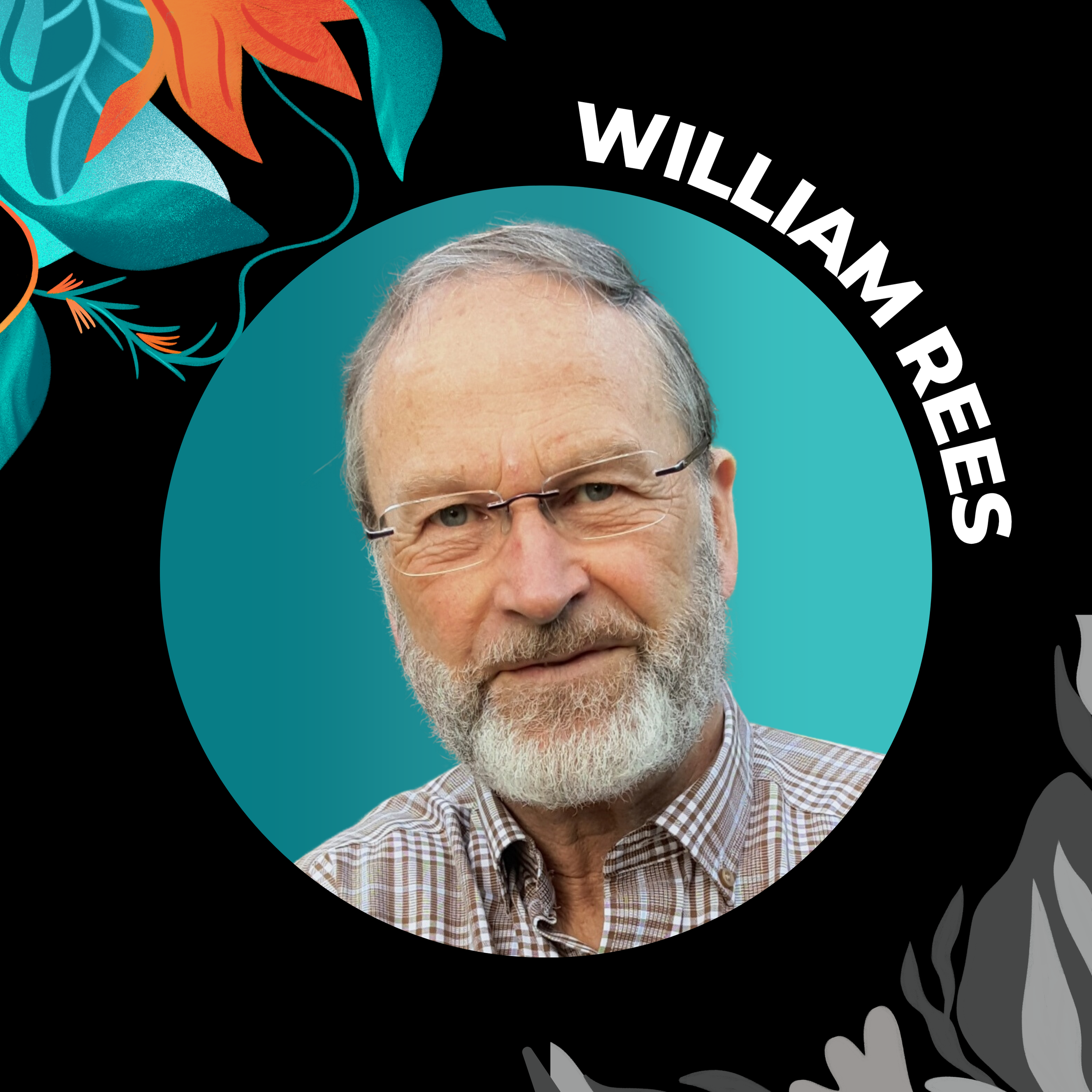
“The only way out of overshoot is less production and less consumption, so it means a much smaller economy and far fewer people.”  Population Balance Advisor Dr. William Rees’ interview

“The only way out of overshoot is less production and less consumption, so it means a much smaller economy and far fewer people.” Population Balance Advisor Dr. William Rees’ interview

The fact that billions live in poverty while millions have enormous wealth is perhaps the greatest social inequity on the planet. Global capitalism has emerged as the organizing system that most quickly converts resources into consumer products - along with enormous amounts of waste and pollution. It rewards the minority on the planet who actually have ‘capital’ i.e. resources and money.

Capitalism’s centuries-long history is rooted in the earlier colonial takeover of native lands. The fundamental fallacy infecting industrial capitalism is that unlimited growth both of population and the economy is possible on a finite planet. And it rests on the flawed conceptual foundation that ever-increasing amounts of the natural world can be turned into “resources” purely for human purposes—without suffering catastrophic consequences for humans and the natural world alike.

Now, global capitalism encircles the globe and its resource-hungry, polluting ways have become the default mode of operation of the global economy. Capitalism and its growth addiction depend on an ever-expanding population to supply ever-growing numbers of workers and consumers. As we continue to grow global population and consumption, the devastation of the planet worsens, the social injustices of the present remain unaddressed, and the social injustices of the future loom larger and larger.

Poverty and Compromised Well-Being

Current world population of nearly 8 billion of us on the planet makes poverty worse for billions of people around the world. For people living closer to subsistence level, population pressure means more forests are cleared for farmland, more water is drained, and more animals are hunted for meat. It also makes rural people, desperate for a livelihood, willing to have their land turned into monocropped plantations by global corporations—who then have little incentive to care for the long-term sustainability of the ecosystems they devastate for short-term profits.

For people moving into the world’s megacities, overpopulation can mean too many people competing for too few jobs, living in substandard housing, with not enough schools or health clinics to meet growing needs. The basic necessities of clean water and sanitation become luxuries when people are crammed into ever-growing urban slums.

Human population pressure leads to degradation of the environment. As the environment is degraded and resources are spread among a growing population, human health suffers. Basic human rights to adequate food, water, shelter and physical security suffer. The functioning social order can break down and create spiraling conflict and violence that creates even greater suffering.

Weakening of Democracy 

A larger and larger population means that each citizen has effectively less representation in a democratic governing body. For example, at the time the United States was founded there was one representative for every 30,000 U.S. citizens. Now, with a dramatically larger population, it is one representative for every 760,000 U.S. citizens.

Also, as societies get larger, they need larger, more complex bureaucracies to help society function smoothly. This means more and more of peoples’ daily lives are governed by rules that are made far removed from their local communities. 

Larger bureaucracies and less representative governing bodies mean that the average person, and especially the least powerful and most marginalized, have less ability to influence the laws and policies that govern much of their lives. 

Pandemics

The growth in human numbers—combined in many parts of the world with crowding, poor hygiene and health care, pollution, and close interaction of people and farm animals—has led to ideal conditions for pandemics. Massive rural-to-urban migration in developing countries is making the situation in large urban centers increasingly desperate, with growing slums that lack basic sanitation and water—and it is likely this migration will greatly increase in future years.

At the same time, encroachment by people into previously wild habitats has led to the spread of new diseases to humans. Ninety percent of all infectious diseases in Africa, Asia, and Latin America are waterborne, thanks to lack of sanitation and proper water treatment in many areas. The public health infrastructures of poor countries are unable to respond to new disease threats because they are already underfunded and overwhelmed by the existing disease burden. Rapid growth of the populations in these countries leads to stagnating economies that do not generate the funds needed to provide basic health care to those who need it most.

Environmental Injustice

Our expanding human footprint is also a leading cause of environmental injustice both in the developing and overdeveloped world. In our highly unequal and unjust world, most consumption is done by the world’s richest. But the poorest suffer the greatest consequences of the pollution caused by the richest people’s consumption.

At the local level, the poorest and least politically powerful communities are typically harmed greatest by industrial polluters such as factory farms, landfills, trash incinerators, coal plants, and toxic waste dumps.

At a global level, climate change is making many parts of the world less and less livable. The poorest individuals, communities, and nations have the fewest resources to adapt to the onslaught of climate instability while the richest—who are responsible for most of the emissions—suffer the least.

Majora Carter, Population Balance Advisor on Environmental Injustice

Climate Refugees

Two out of every five people in the world live within 100 kilometers of the coast. Over the coming century, rising seas will send tens or hundreds of millions of people in low-lying areas to higher ground. Droughts, floods, fires, and extreme weather will send additional millions on the move.

Continued population growth means adding more and more people to places likely to experience climate catastrophes. And population growth in potential climate refugee destination communities means less willingness and ability of those communities to welcome climate refugees.

Our Vision for Social and Planetary Justice

We envision a future where our cultural, political, and economic systems recognize their role as subsystems of the ecosphere. Such a vision requires us to adopt an alternative economic model that recognizes we live on a planet of finite resources and that respects natural limits to growth.

Such a model will inherently consider real environmental costs and impacts, and it will not require the impossibility and undesirability of a never-ending growth in population and consumption—at the cost of the well-being of individual human beings, animals and our planet.

With smaller families and decreasing consumption we can shrink the footprint of humanity and more easily change the growth-addicted paradigm of global capitalism to a more sustainable social and economic model. We promote these values through education and collaboration.

Education

unsplash-image-gHho4FE4Ga0.jpg

We offer the following services free of charge to help make the connections between our current economic and political models, overpopulation, and ecological collapse, as well as solutions:

Collaboration

unsplash-image-ycW4YxhrWHM.jpg

We support and partner with organizations that advocate for for environmental and social justice from a framework of a sustainable population, through initiatives such as:

  • Campaigning to bring eco-centric economics on to the agenda of governments, financial regulators and individual financial firms

  • Campaigning for redirecting subsidies from environmentally-destructive industries to those that work to protect and restore the environment

  • Supporting the integration of eco-centric economic models and sustainable population into school curricula