


ESSAYS
Selected essays from our team and colleagues on ecocentrism, reproductive choice, kinship, and simplicity.

The metaphysics of human supremacy
In the wake of nihilism, the metaphysics of human supremacy, the (profane) terrain of existence becomes constituted as one to conquer and denature, and as “frontier” and blank slate for anthropos to doodle upon and dabble with at will, whim, or for whatever purpose.
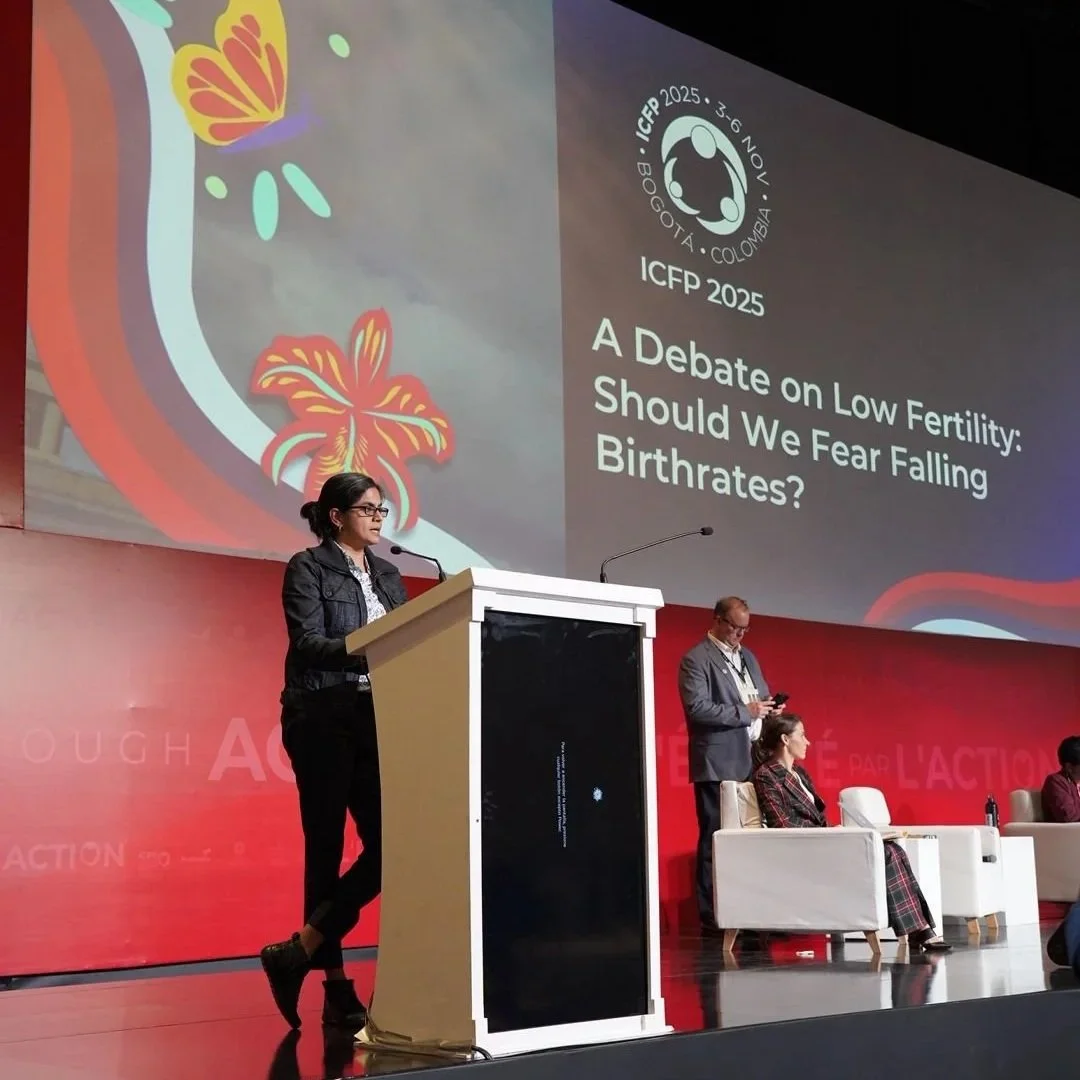
Leading global discussions on pronatalism and low-fertility alarmism
From winning an international debate at the world’s largest family planning conference to being invited on leading feminist platforms, our team at Population Balance, under the leadership of ED Nandita Bajaj, is leading the global charge on connecting the dots between ecological overshoot, pronatalism, and low-fertility alarmism.

AI is a performance of progress, not the real thing
It would be reasonable to see the AI rollout as history’s most diversified form of mass theft. The initial “training” of generative AI programs involved stealing copyright-protected intellectual property across fields of knowledge production, the arts, media, virtually every form of culture. Many jobs, too, are threatened by this act of theft.

‘Act for life and not death’: social movements and nuclear abolition
Nuclear weapons are not the only way states can kill people. These weapons, as peace activist Ray Acheson has argued, “are part of the spectrum of institutionalized violence” and operate “at the intersection of patriarchal, racist, colonial, and capitalist oppressions”. To indulge in a pun, we should not confine nuclear disarmament to its own silo.

Is progress a four-letter word?
According to Samuel Miller McDonald, writing in his formidable first book “Progress: How One Idea Built Civilization and Now Threatens to Destroy It,” the story amounts to “a piece of propaganda” fashioned to justify a new relationship with the natural world, in which progress is equated with expansion of the “ecologically destructive” Sumerian city-states that arose in Mesopotamia 5,000 years ago.
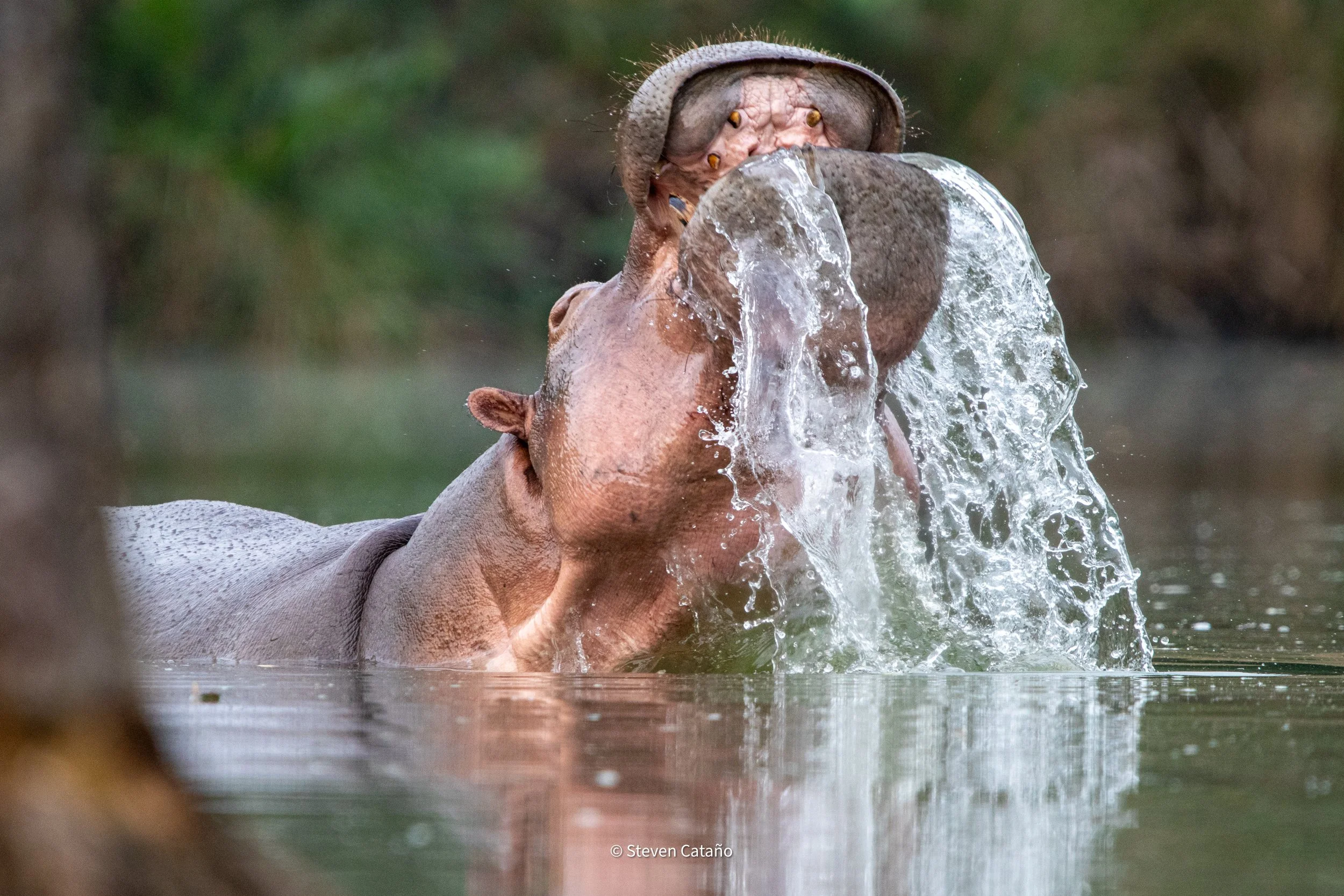
Bioxenophobia: The uncertain fate of Colombia's alien hippos
The dogma of the "invasive" species is difficult to shake for most researchers, despite mounting evidence to the contrary. Science is not immune to dogmas, and we want to help the cause of respecting the "new wild". Killing nature, to "protect" nature, makes no sense at all.

The perils of population denialism
We are in a state of extreme overshoot, which is driven by too many people on the planet consuming too much. This should not be a controversial statement. And yet, bringing up the population issue, or even the term “overpopulation”, has become so taboo, that many reputable environmental organizations, journalists, and academics will engage in complicated mental gymnastics to deny this biophysical reality.
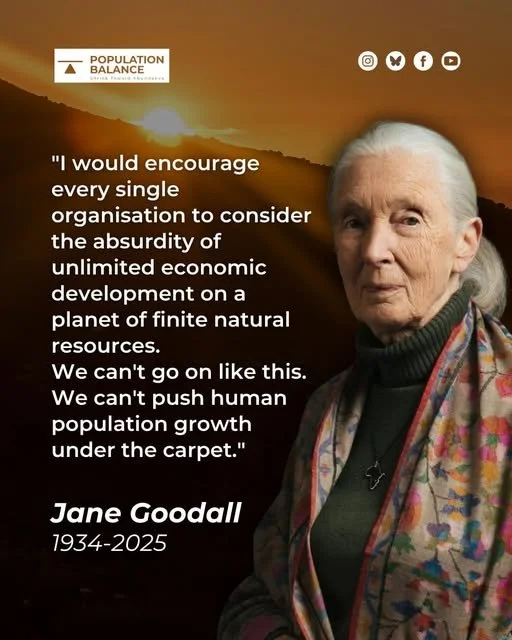
In Memoriam: Dr. Jane Goodall
We honor the life of Jane Goodall, whose vision and compassionate lifelong work expanded our sense of kinship and reciprocity with the living world.

The mad religion of technological salvation
A science journalist and PhD astrophysicist, Adam Becker spent the last several years investigating the futurological vision of our tech-bro masters – and found it’s a bunch of nonsense.

‘You are obliterating yourself’: The cost of caregiving as a middle-aged woman
As a feminist and full-time caregiver to ageing parents, I’m rethinking what empowerment really looks like.

Regarding misanthropy
The matter of misanthropy never seems to go away, ever raising its head whether as defiant affirmation or bitter accusation. Some people take pride in being misanthropes. Others are forced to suffer the charge. Deep greens are regularly suspected of misanthropy. Indeed some (a minority) readily avow it. This encourages the label to be applied to all.

Ink
For most of my adult life, I have wanted to undergo something that the National Health Service calls female sterilization. It is a non-reversible operation in which one’s fallopian tubes are blocked. While the procedure is relatively minor in nature—it can be done under local anesthetic—the idea of it has caused my friends almost as much distress as it has my mother.

Mirror, mirror on the wall… (eco-hacking AI)
A recent essay produced by AI has been greeted with shock and awe in some quarters. Sam Altman, CEO of OpenAI, declared it to be the first AI essay to make a deep impression on him. ChatGPT presents it as “an AI model good at creative writing.” The Guardian was impressed enough to post it.
In this blog I will be scare quoting the word “writing” when attributed to AI.

Making a case for compassionate entomology
My motivation for writing this piece is to offer a counter to the prevailing viewpoint among entomologists, which is that the goal of attaining more knowledge and greater understanding generally trumps concerns for the survival and well-being of individual organisms. Through such an outlook, killing a bumblebee is justified if it allows her to be identified to species level.

WITNESS: Tiger magic
You’ve probably heard that tigers are endangered, and some of their subspecies critically so. But a century ago, 100,000 tigers roamed the world. They lived in a wide diversity of habitats, including rainforests, temperate and boreal forests, mangroves, river floodplains, and steppes.

In the supermarket of democracy, choice is an illusion. Is there a real alternative?
Too many decades have been lost to the myth that liberal democracies will deliver.

WITNESS: Tales from the Sargasso Sea
Growing up in Athens, Greece I remember vividly the fascination my high school classmates and I shared about “the Bermuda Triangle.” In hushed tones we spoke about this mysterious remote region where ships and airplanes—if they made the grave error of wandering into or over it—would disappear.

Eat, Pray, Pollute
In Barcelona and beyond, people are rising up against a tourism industry that strains infrastructures, commodifies culture and destroys ecosystems.

I’m childfree, not childless. This is what it means.
Intellectually, ecologically, and spiritually, the childfree offer a compelling and wider imagination around belonging and care. They raise — not children — but standards of an ethical life.

A re-commitment to reproductive autonomy and responsibility will help secure a socially just and ecologically sustainable future
While the elevation of reproductive rights [at the 1994 Cairo Conference] appeared commendable, its shift away from demographic and ecological issues has been calamitous and has undermined many of its own social and reproductive justice goals.