

‘You are obliterating yourself’: The cost of caregiving as a middle-aged woman
This article was first published in The Indian Express on Aug 7, 2025.
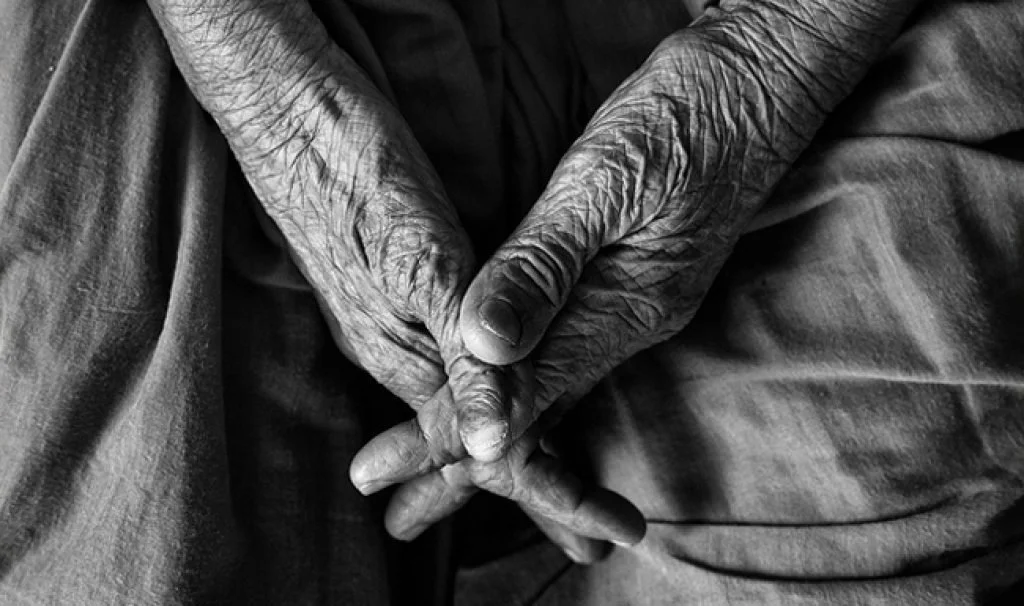
Credit: Vinoth Chandar/Flickr/CC.
As a feminist and full-time caregiver to ageing parents, I’m rethinking what empowerment really looks like
“You are obliterating yourself”.
This message from a close friend hit hard. While other friends had conveyed this via euphemisms (“please look after yourself”), her straightness felt like a crescendo to other voices of concern.
The obliteration she refers to may have started when I switched from a regular job to independent work. My presence in the circle of comrades thinned. Then, I quit the metro I was born and lived in for the suburbs of a smaller city. In parallel, as my elderly parents’ physical and cognitive abilities decline and their dependence grows, full-time employment turned into part-time. Possibilities of work, income, and socialising dropped. Currently, in the absence of a paid caregiver, “work-from-home” has become “stay-at-home”.
All these physical and social re-locations mark a retreat (part-chosen and part-imposed) from the public to private, from visibility to near-invisibility, from having a voice to quietness.
It is this gradual withdrawal that my friend called obliteration — the erasure of my social-public participation and contribution. My friends rightly fear that as a middle-aged woman with depleting professional capital, a non-existent social life, and full-time care of elderly, disabled parents, I could be on a professional and personal free fall.
For a self-proclaimed feminist, this erasure may be seen as going rogue. That I am doing the opposite of what I believe in, betraying the principles of our “ism” and setting the wrong example — giving up an active public-political life for a private-domestic one. I may seem “trad”, the American expression for “traditional” women who stay at home for domestic work and care. (For a neighbour, I am at the “correct” place for a woman to be — home! On the other hand, a progressive acquaintance introduces me as a caregiver to my parents while completely “obliterating” my professional work). This is what feminists object to and fear for us “women” and others with marginal identities. By tending solely or mostly to the biological family, I am also (inadvertently) tending to the idea that blood ties deserve our most, and care has to be exclusive. Instead of surrendering to patriarchy, I should have resisted the engulfment harder. I have undone – in my tiny way – the hard struggles of our foremothers who wanted more from their lives than endless cook, wash, repeat.
Listen to our interview with Dr. Nandy.
My choice-cum-compulsion to quit full-time employment makes it seem hypocritical when I oppose feminised care and all that it entails — dropping our jobs, interests, leisure, friendships, and even health to only and solely serve the family, mostly through the most productive years of our lives.
But, in the utter absence of collective, quality, and affordable care, what are my alternatives?
I have heard this question — and the dread that accompanies it — ad infinitum from friends as “who will look after us when we are old?” Unsurprisingly, some have children and others are childfree. None of us has a clear answer.
At present, though, my only choice is to purchase care from — who else but — women who themselves cannot afford to outsource their caregiving obligations. This obviously entrenches the cruel conundrum of caregiving — the outsourcing of labour by women of the privileged class and caste to women of the labouring class and caste.
To circumvent this unfair conundrum in the trivial way I can, I have been pairing the outsourcing of care with insourcing. To be able to do this “job” well and not hand over the heavy lifting to the hired caregiver, this insourcing needed all those pullbacks I made from my work, city, and leisure over the years. However, many of us cannot be without an income and/or the meaning it brings, and so we live our everyday managing stressfully-tight gigs of “work” and “home”.
While we challenge this paradigm of women-shouldered care, what must we do to transcend the suffering this “obliteration” causes?
Because human experience is too sprawling to be contained in a singular frame, there is, thankfully, another deep reading. My slow, meandering and yes, privileged, understanding is that such obliteration and its opposite – let us call it “becoming” — may not always be mutually exclusive and in conflict. That becoming may not always be, or remain, a space of meaning and joy. That such obliteration cannot hamper other facets of human becoming. It carries the potential to free us from the tyranny of “becoming”, that performative race of seeking and chasing, sparked by the relentless need of the ego-mind. It can be a chance to spot — and even know — the “I am” at the back of our “I am so-and-so” narratives of the self. It can be a pause, at times, allowing us briefly to loosen the tight clasp of our social identity and conditioning. Such a translation does not deny or whitewash the obliteration of women’s public and social selves because nothing can justify the gendering and un-rendering of our lives. It supplements our becoming as we struggle with obliteration.