

Leading global discussions on pronatalism and low-fertility alarmism
From winning an international debate at the world’s largest family planning conference to being invited on leading feminist platforms, our team at Population Balance is leading the global charge on connecting the dots between ecological overshoot, pronatalism, and low-fertility alarmism.
Our debate win - “Should we fear falling birth rates?”
Our team recently attended the International Conference on Family Planning in Bogotá, Colombia, which attracted with 3,500 attendees from 120 countries. We were invited to participate in a debate “Should we fear falling birthrates?” Our team, represented by ED Nandita Bajaj and UNFPA’s Sabrina Juran, was on the NO side and we argued that low-fertility alarmism not only threatens to reverse the gains in reproductive autonomy, it entirely ignores our state of extreme ecological overshoot driven by the exponential growth in human presence and activity. Our call to abandon the growth-obsessed economic model that primarily enriches the elites while killing the planet in favor of caring economies that respect ecological limits won us the debate by an overwhelming majority of votes.
Our interview on the conference live stage
We were interviewed by several journalists, one of which resulted in an article that was published by feminist organization Repro Uncensored titled: Pronatalism and the myth of the global fertility crisis.
Another one was a live stage interview with Dina Chaerani on our work exposing the millennia-old toxic ideology of pronatalism that is becoming increasingly vicious as women globally are refusing to produce more babies for economic, religious, or nationalist goals. We urged the "family planning" community to understand the links between pronatalism, reproductive rights, population growth, and ecological destruction.
Our interview on the Ask a Feminist podcast
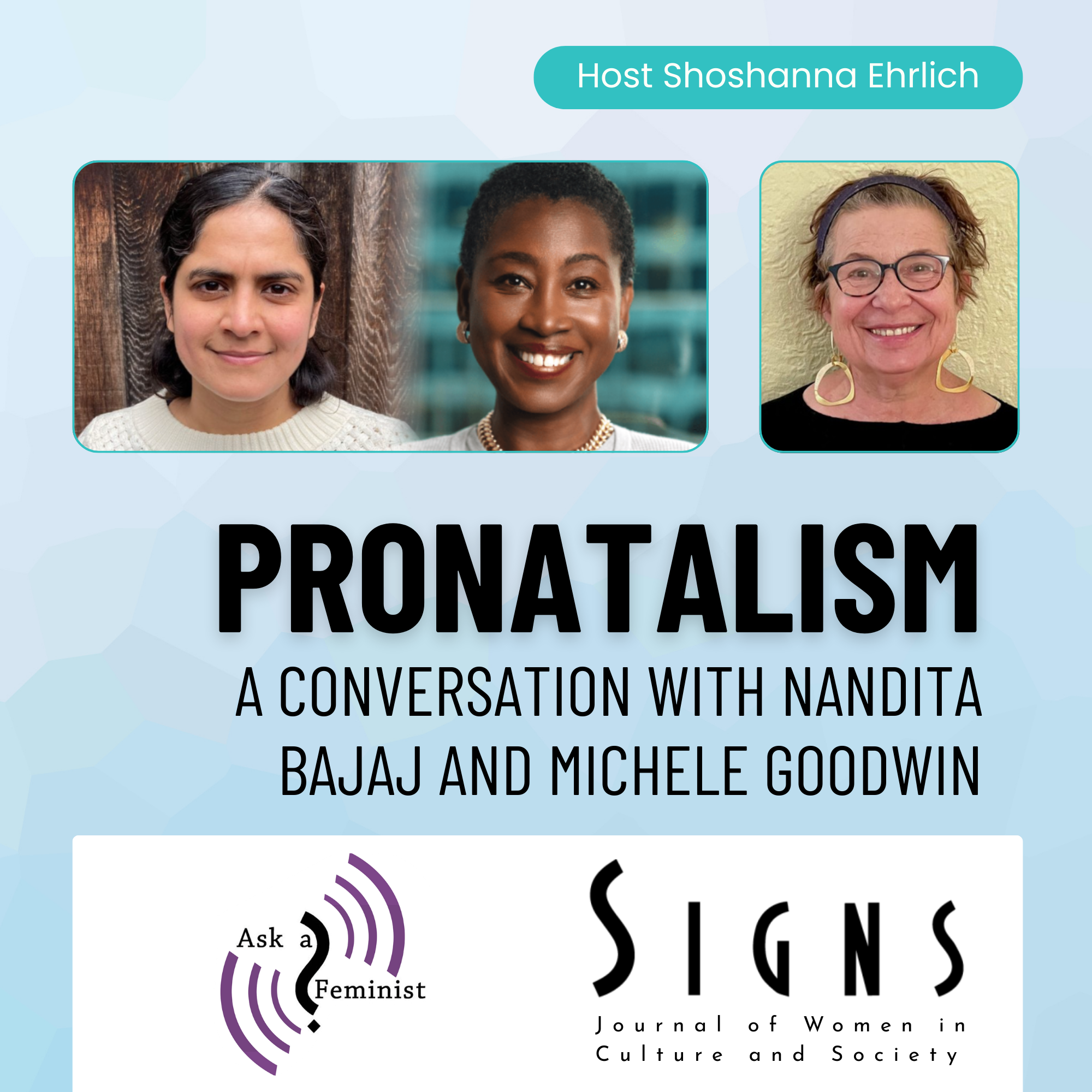
Along with leading feminist Dr. Michele Goodwin, Nandita was invited on the Ask a Feminist podcast, a project of Signs Journal, the leading international journal in women's studies to discuss her work on pronatalism. She deconstructed the millennia-old ideology of pronatalism that encourages or coerces reproduction and argued that pronatalism is inherently anti-feminist. The powerful institutions of empires, nation-states, militaries, economies, and religions have long exploited women’s reproductive labor to fuel population growth, and now are threatened by falling birthrates that are a result of greater reproductive agency. Together, Michele and Nandita offered a feminist critique of the ideologies underlying this reactionary pronatalism and urged progressives to avoid this alarmist trap.
Our book talk event in Toronto


Nandita moderated a book talk in Toronto about pronatalism, childfree relationships, and intergenerational friendships, featuring Nicole Louie (Others Like Me: The Lives of Women Without Children) and Molly Peacock (The Widow's Crayon Box), which drew a full house. In addition to highlighting the rich lives of women around the world who don’t have children, including ourselves, we discussed the vital role that books like Nicole’s and Molly’s and podcasts like Nandita’s play in helping to normalize the childfree choice.
Our media pitch at the Women Deliver pre-conference event
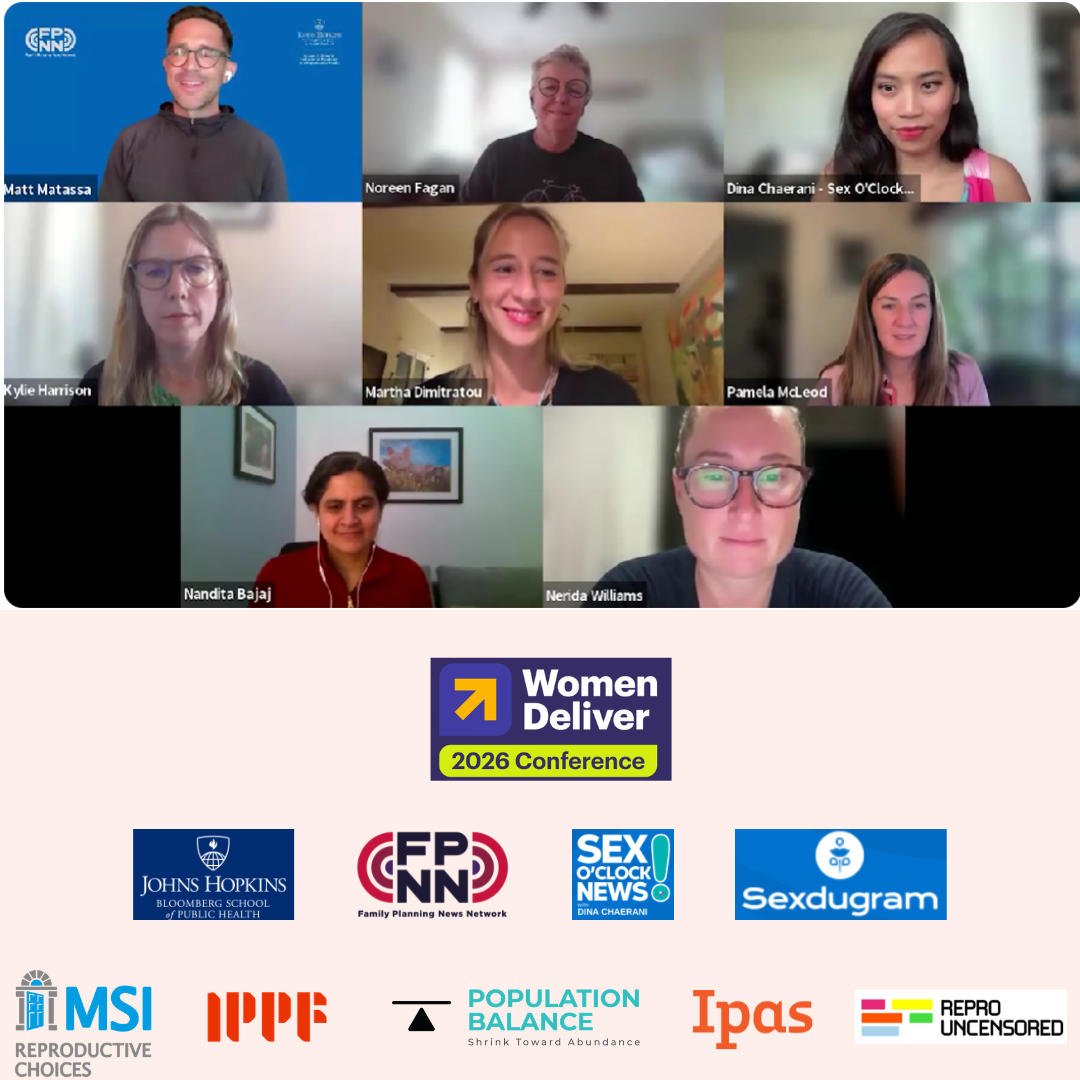
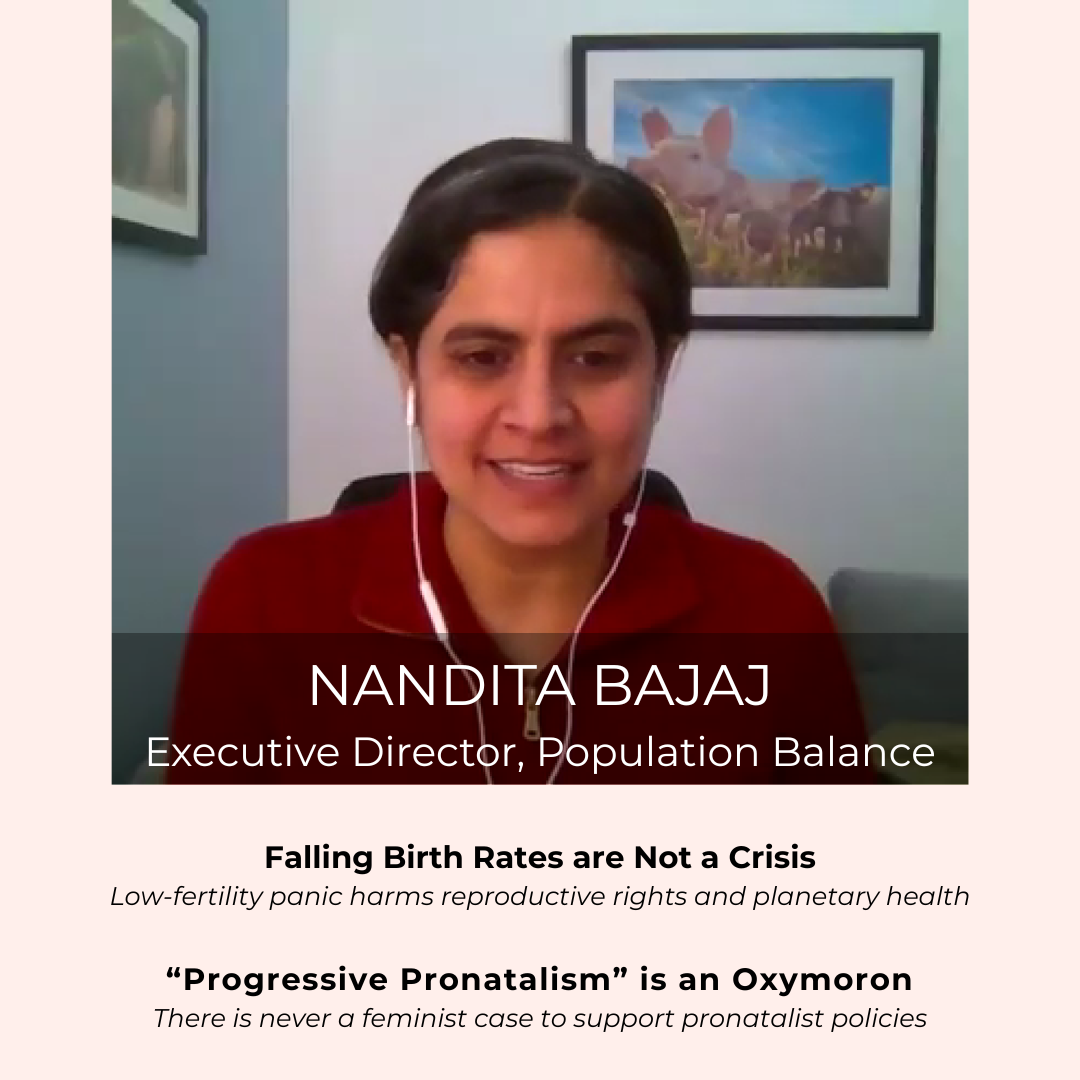
Nandita was also invited to present her work on the harms of low-fertility alarmism and pronatalism at the Women Deliver 2026 pre-conference media event hosted by the Family Planning News Network and the Johns Hopkins Bloomberg School of Public Health. The event was attended by several hundred journalists from around the world, and we were thrilled to share the stage with leading sexual and reproductive health and rights groups, including International Planned Parenthood Federation, MSI Reproductive Choices, IPAS, and Repro Uncensored.
We are grateful to all involved for helping to bring light to these hugely important, yet underrepresented, issues of social justice and planetary health. Population Balance is proud to be the leading voice on the interconnected issues of pronatalism, population growth, and ecological overshoot.